
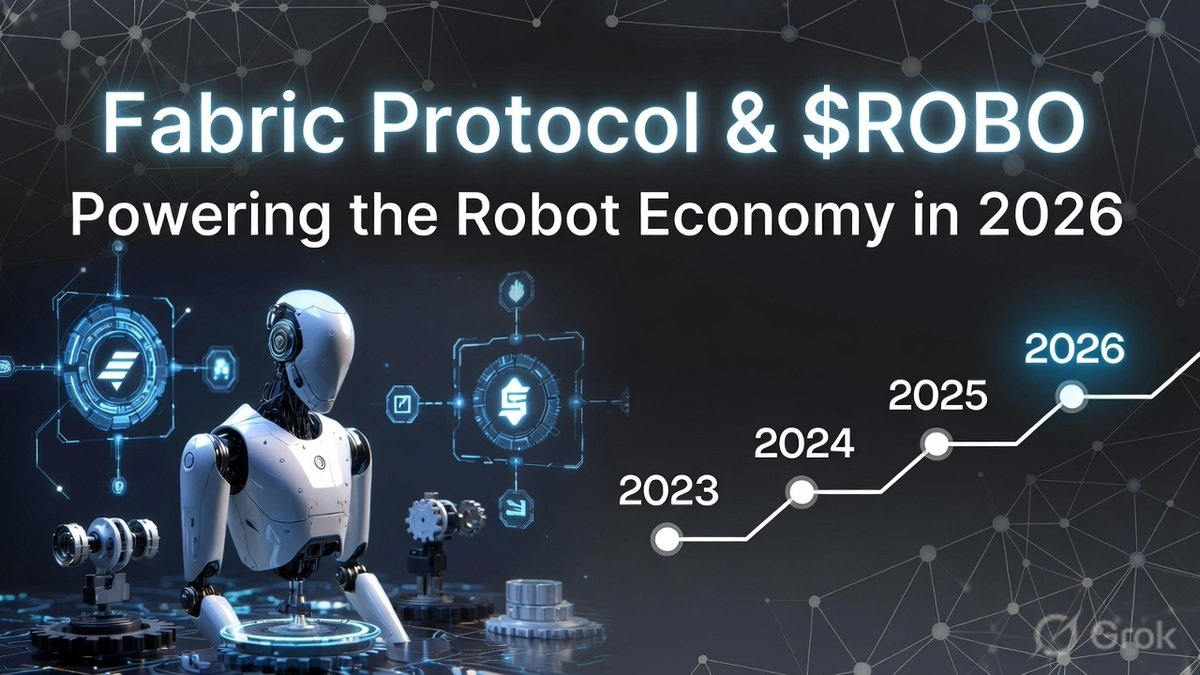
 @Fabric Foundation The development of open digital networks has often been driven by a simple question: how can individuals collaborate across the internet without relying on centralized institutions to coordinate trust? Different projects approach this question in different ways, but the underlying goal remains the same. Fabric Protocol represents one such effort. Supported by the Fabric Foundation, the project presents itself as a global open network designed to connect participants through a shared infrastructure that emphasizes transparency, coordination, and distributed participation. At the center of this system sits the token, which functions as a structural element of the protocol rather than as a speculative instrument.
Understanding Fabric Protocol requires looking beyond the typical framing of blockchain projects. Instead of focusing on transactional throughput or digital assets as endpoints, Fabric frames its system as a network architecture that organizes collaboration. In this sense, the protocol is less about isolated technical features and more about how different participants interact within a shared digital environment.
The Fabric Foundation plays a central role in stewarding the broader ecosystem. Operating as a non-profit entity, it supports research, development, and community coordination related to the protocol. Its presence reflects a design philosophy common among open networks: separating long-term stewardship from direct ownership of the infrastructure. By situating development within a non-profit structure, the project signals that its guiding framework is intended to remain open and collectively shaped rather than directed by a single commercial entity.
Fabric Protocol’s architecture revolves around the idea that networks function best when their rules and operations are transparent and accessible. In practical terms, this means that the infrastructure allows participants to join, contribute, and interact with the system without requiring permission from centralized authorities. Such openness is not merely a philosophical stance. It directly influences how the protocol organizes its technological components and how responsibilities are distributed among participants.
Within this framework, the token serves as an operational layer of the network. Rather than acting as a standalone digital asset detached from the protocol’s internal mechanics, the token functions as a tool through which different forms of participation are recorded and coordinated. The design positions $ROBO as a component that helps maintain the rhythm of the network’s activity.
One of the defining characteristics of Fabric Protocol is its emphasis on collective infrastructure. Many digital systems rely on centralized platforms that act as intermediaries between users. Fabric attempts to replace this arrangement with a network model where infrastructure responsibilities are shared among participants. The protocol enables nodes to contribute to the functioning of the network while maintaining transparency around how information flows through the system.
This approach reflects a broader shift in thinking about internet architecture. Early digital networks often relied heavily on centralized service providers to coordinate activity. Over time, developers and researchers began exploring alternatives that distribute these responsibilities across multiple actors. Fabric Protocol fits into this lineage of experimentation by offering a framework in which coordination emerges from shared rules embedded within the protocol itself.
 The presence of the token within this structure highlights how digital tokens can operate as functional components of network design. In Fabric’s case, the token helps structure the interactions that occur within the system. By embedding the token into the operational mechanics of the protocol, the network creates a unified medium through which participation can be recognized and accounted for.
This design choice reflects a careful balance between technological abstraction and practical coordination. Tokens in open networks often serve as mechanisms for aligning behavior among participants who may not know one another. Fabric Protocol incorporates as a way of organizing this alignment within its infrastructure. The token becomes part of the protocol’s language, allowing different participants to interact through a shared framework.
Another aspect of Fabric Protocol worth examining is its emphasis on openness as a design principle. Open networks require a particular type of governance structure, one that accommodates participation from individuals and organizations across different regions and backgrounds. The Fabric Foundation’s role in supporting the protocol suggests an awareness of this challenge.
By maintaining a non-profit structure, the foundation provides continuity without exerting direct control over how the network evolves. Instead, it acts as a steward of the protocol’s guiding principles. This distinction is subtle but important. Open networks often struggle with questions of direction and coordination. Having a foundation that focuses on maintaining the integrity of the protocol’s framework allows the ecosystem to develop organically while preserving a shared reference point.
Fabric Protocol’s technical philosophy also emphasizes modularity. Rather than constructing a rigid system that prescribes every possible interaction, the protocol is designed to support a range of applications and services that can be built on top of its infrastructure. This modular approach encourages experimentation within the boundaries of the network’s core architecture.
In practice, modular systems tend to foster a more dynamic ecosystem. Developers can build new tools or integrate existing technologies without needing to modify the foundational layer of the network. Fabric Protocol’s structure reflects this logic. By providing a flexible infrastructure, the protocol allows different participants to explore how distributed networks can be used to coordinate activities and share resources.
 Within this context, operates as a connective element that links different components of the ecosystem. Tokens in distributed networks often serve multiple roles simultaneously, acting as instruments of coordination, accounting, and participation. Fabric Protocol integrates $ROBO in a way that supports these functions without positioning the token as the sole focus of the system.
This integration highlights a broader design philosophy that prioritizes network functionality over isolated features. In many digital ecosystems, technological components are introduced as standalone innovations. Fabric Protocol instead presents its elements as parts of a cohesive structure. The token, the infrastructure, and the governance framework all interact to shape the overall network.
Examining Fabric Protocol also invites reflection on how digital communities organize themselves. Traditional online platforms typically rely on centralized management structures. Decisions about infrastructure, policy, and user interaction are often made by a small group of administrators. Distributed protocols approach these questions differently. By embedding rules within open systems, they attempt to create environments where coordination emerges from shared participation rather than hierarchical oversight.
 Fabric Protocol’s design reflects this perspective. The network’s architecture encourages participants to contribute to its operation while maintaining visibility into how the system functions. Transparency becomes a central component of trust. Instead of relying on institutional authority, participants rely on the clarity of the protocol’s rules and the openness of its infrastructure.
This emphasis on transparency also shapes how the Fabric ecosystem communicates its objectives. Rather than framing the protocol primarily through narratives of disruption or competition, the project presents itself as an infrastructure experiment. Its focus lies in exploring how distributed systems can facilitate cooperation across global networks.
The role of the Fabric Foundation reinforces this orientation. Foundations within open technology ecosystems often act as custodians of shared resources. They support development initiatives, maintain documentation, and coordinate community engagement. In the case of Fabric Protocol, the foundation’s involvement signals a commitment to sustaining the network’s open character.
The presence of the $ROBO token within this environment illustrates how digital tokens can be embedded into broader infrastructural contexts. Rather than functioning as detached assets, tokens can serve as tools that enable coordination among participants who operate within a shared digital framework. Fabric Protocol’s design demonstrates how this integration can occur without overshadowing the network’s broader purpose.
Another notable aspect of the project is its emphasis on collaboration across geographical and institutional boundaries. Open networks inherently invite participation from a diverse range of contributors. Developers, researchers, and independent participants can interact within the same ecosystem. Fabric Protocol’s open structure reflects an understanding that meaningful innovation often arises from such intersections.
 By enabling participants from different backgrounds to interact through a shared protocol, the network creates an environment where ideas and contributions can circulate freely. The infrastructure becomes a meeting ground rather than a controlled platform. This approach aligns with the broader ethos of open technology movements that emphasize collective experimentation.
Fabric Protocol also raises questions about how digital infrastructure evolves over time. Unlike traditional software products that follow a linear development path, open networks often develop through iterative contributions from multiple actors. The presence of a token such as adds another layer to this process by providing a mechanism through which participation can be structured and recognized.
Yet the token does not define the network’s identity. Instead, it operates within a broader ecosystem shaped by the protocol’s architecture and the foundation’s stewardship. This balance between technological components and institutional support reflects a nuanced approach to network design.
Ultimately, Fabric Protocol represents an attempt to rethink how digital coordination can occur in a decentralized environment. By combining open infrastructure with a token-based participation mechanism, the project constructs a framework in which collaboration is mediated by shared rules rather than centralized oversight.The presence of the Fabric Foundation provides continuity and organizational support, while the token integrates participation into the network’s operational fabric. Together, these elements form a system that explores how distributed networks can function as cooperative infrastructures.
Seen through this lens, Fabric Protocol is less about individual technological features and more about the broader idea of networked collaboration. Its design encourages participants to interact through transparent mechanisms that prioritize openness and shared responsibility.
In a digital landscape often defined by centralized platforms, projects like Fabric Protocol offer an alternative perspective. They suggest that networks can be organized around collective infrastructure rather than proprietary control. Whether examined from a technological, organizational, or philosophical standpoint, the protocol presents an interesting example of how open systems continue to evolve.
The significance of Fabric Protocol ultimately lies in how it frames the relationship between technology and collaboration. By embedding coordination mechanisms directly within an open network, the project illustrates one possible path for organizing digital participation. The token, the protocol’s infrastructure, and the stewardship of the Fabric Foundation together form a cohesive experiment in building shared digital systems.
Through this combination of design choices, Fabric Protocol contributes to the ongoing conversation about how the internet might continue to develop as an open and collaborative environment.
@Fabric Foundation #Fabric $ROBO
