
I came across the story of this 985 master's degree holder late at night, and I sat silently at my desk for a long time, not even noticing that the cup of water in my hand had gone cold.
There are no clichéd plots, no extreme surprises, only a highly educated elite who has gradually fallen from the peak over ten years, like a dull knife, cutting into the hearts of ordinary people struggling in the workplace, afraid of being left behind by the times.
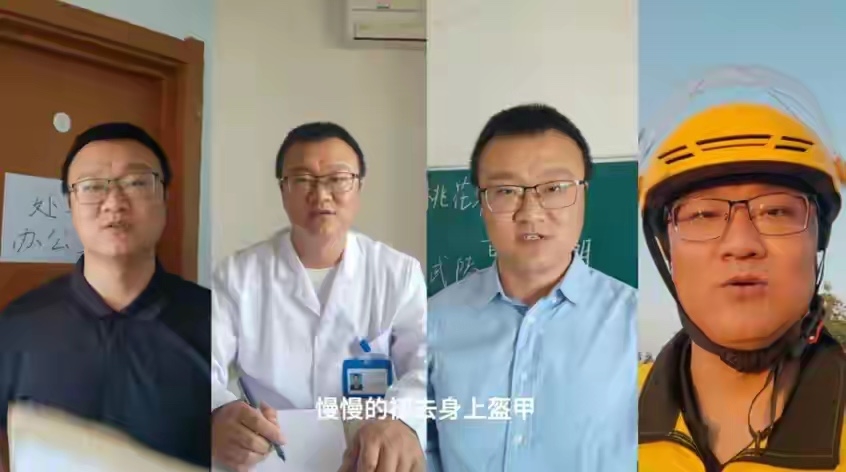
The protagonist of the story is named Chen Mo (pseudonym), 38 years old, a master's graduate from a 985 university, formerly a department director at a major internet company in Beijing, with an annual salary of a million, holding company options, and regarded by others as a definite 'winner in life.'
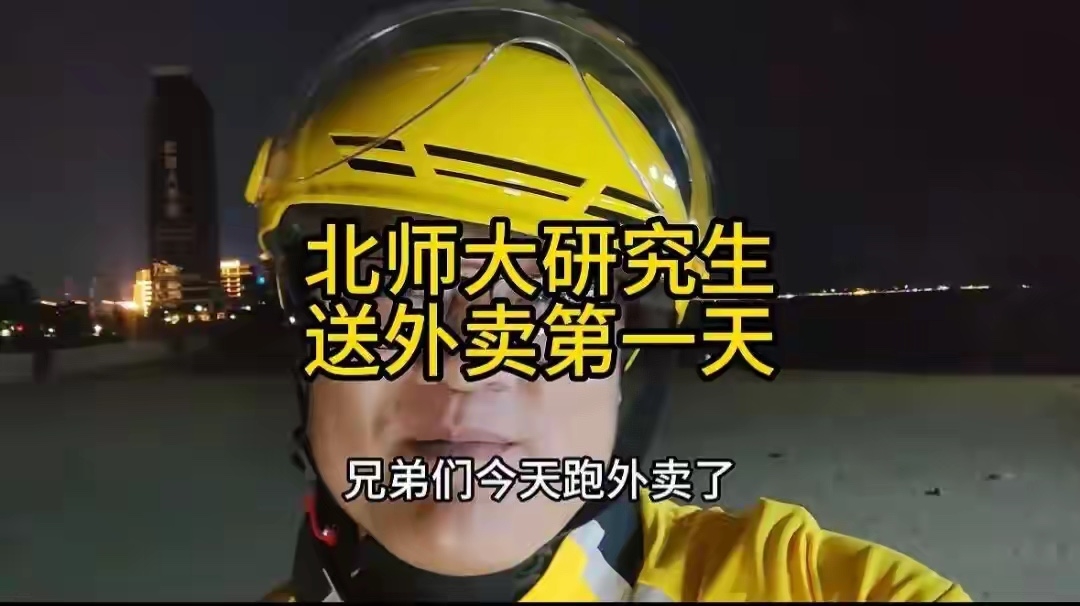
No one would have thought that ten years later he would be dressed in a delivery worker's uniform, riding an electric bike through the streets of Beijing, delivering food to the office building where he once worked. His life did not collapse overnight; it gradually fell into the abyss through ten seemingly inconspicuous slips.

The first slip occurred in 2018. The internet industry's dividends peaked, and large companies began large-scale layoffs. Chen Mo's department was overall optimized, and he stepped down from the position of department director, receiving a compensation package of N+1. At that time, he was full of confidence, thinking that with his prestigious university education and experience in a large company, finding a job would be a piece of cake. He even took the opportunity to take his family on a trip abroad. He had no idea that this was not just a simple job loss; it was the beginning of his downhill journey.

The second slip occurred when he joined a medium-sized internet company as vice president. It was thought to be a new starting point, but within less than half a year, the company's Series C financing unexpectedly broke down, the funding chain was directly severed, and the company announced bankruptcy. He not only did not receive the promised salary, but even the equity he had previously negotiated became worthless.
The third slip occurred when he partnered with friends to start a business in the enterprise service sector. Just as they had built a team and established the minimum closed loop, the pandemic hit. Partnering companies began to terminate contracts, yet office rent and staff salaries could not be reduced. After struggling for 8 months, the entrepreneurial project was declared a failure, and the hundreds of thousands he had saved were almost completely lost.
From the fourth to the tenth fall, it was more like a never-ending nightmare.
He invested the remaining money into the then-popular P2P, but the platform crashed, and he lost all his principal.
Following friends to buy stocks and private equity, encountering a bear market, the account was directly halved.
Putting all his savings into opening a community fresh food store, he encountered repeated lockdowns and ultimately had to transfer it at a low price.
Trying to do live streaming sales and paid knowledge sharing, but without the halo and resources of large companies, he can't even reach the traffic threshold, and all the money invested has gone down the drain.

In 10 years, after 10 falls, a former executive with a million-dollar annual salary ended up having to register as a delivery worker to make a living.
Some say he is too unlucky, some say he is too aggressive and doesn't know when to stop, but after reading his story, I can only feel endless sighs.
Does he not work hard? From a regular family, he got into a top university, and from a grassroots employee to a director at a large company, he works harder than 90% of people.
Does he lack capability? Being able to become a department director at a large company and lead a team to create a business volume of over a hundred million, his capability is beyond doubt.
But why did he ruin a good hand of cards in the end?

The answer is actually very simple: throughout his life, he has relied on platforms, industries, and a single salary income, yet he has never established his own underlying assets that can transcend economic cycles.
All his glory, all his income, and all his risk resistance capabilities are dependent on the large company's platform and the dividends of the internet industry. When the platform's halo disappears and the industry's tide recedes, he is like a fish washed up on the beach, with no power to resist.
Every investment and every attempt he made later were short-term speculations, never seizing a long-term, core value era track, never establishing a cash flow pipeline of his own. Thus, when risks arose time and again, he could only watch helplessly as he slid down step by step, with no backup plan to turn the tide.

This is also the core reason why I want to deeply dissect the Fabric Foundation project with all ordinary people today.
I'm not here to paint a picture of overnight wealth, nor to promote any speculative projects. I spent a full 18 months conducting due diligence on this project from the underlying technical architecture, core product logic, global industry progress, governance structure, economic model, to ecological closed loop, even investing my own real money and tracking the on-ground data for over half a year before daring to share with everyone here.
I dare say this is the most fair and certain opportunity for ordinary people to establish their own underlying assets, resist the risks of life slipping away, and truly regain control of their lives. The following content has no half-truths; all data comes from official white papers, public cooperation announcements, and verifiable industry reports. I will explain the essence, core value, and significance of this project to ordinary people in clear terms.
1. The core essence of Fabric Foundation: not a speculative target, but the foundational infrastructure of the AI robot era, capable of transcending all economic cycles.
The core reason for Chen Mo's life to slide down is that all his income and value depend on a declining industry and a platform that could disappear at any moment, without seizing the truly long-term track that can transcend economic cycles.
From the day of its inception, Fabric Foundation has deeply rooted itself in the most certain and essential super track of human society in the next 30 years—the AI robotics industry. It is not about short-term trendy business but the foundational infrastructure of the entire industry; this is also the core reason it can transcend economic cycles.
Let me share a well-supported industry trend backed by authoritative data: According to the latest global robotics industry development white paper published by the Boston Consulting Group (BCG) in 2026, by 2035, the global AI robotics industry market size will exceed $100 trillion, becoming the third super industry cycle in human society after the internet and mobile internet.
Regardless of whether the economy is rising or falling, or how the industry changes, if companies want to reduce costs and increase efficiency, they must replace manual labor with industrial robots; if merchants want to improve service efficiency, they must use commercial service robots; if families want to enhance their quality of life, they must use household smart robots. This is a rigid demand across the entire industry and all scenarios, and it will not disappear due to any black swan events or fluctuations in the economic cycle; this is the true track that can transcend cycles.
Yet this trillion-dollar super track has been trapped for decades by a fatal bottleneck—system fragmentation.
Just like the mobile phone market around the year 2000, each brand such as Nokia, Motorola, and Samsung had its own closed operating system that was incompatible with each other and had no data exchange. The current robotics industry is similar: factory robotic arms, delivery robots in restaurants, and floor-cleaning robots at home, each brand and category has its own exclusive closed system that is incompatible. If a company wants to develop a robotic application, it has to repeatedly develop dozens of systems for different hardware, leading to development costs of millions, which small and medium-sized enterprises simply cannot afford, severely slowing down the overall industry's adoption rate.
The OM1 universal robotic operating system developed by Fabric Foundation is the ultimate solution specifically designed to address this industry's fatal pain points. It is currently the only universal operating system in the world that has achieved complete hardware adaptation, full scenario compatibility, and full linkage, recognized globally as the 'Android system of the robotics world.'
I will explain the core value of the OM1 system in plain language, so that even if you don't understand technology at all, you can see its irreplaceability at a glance.
The OM1 system uses a three-layer core architecture that connects everything, thoroughly addressing the industry's fragmentation pain points while constructing a completely self-consistent business ecosystem.
1. Underlying Hardware Adaptation Layer: backward compatible with over 98% of the mainstream robotic hardware chips, sensors, and actuators globally. Whether it is industrial robotic arms, restaurant delivery robots, logistics sorting robots, or household cleaning robots, and regardless of brand, model, or purpose, they can all seamlessly connect to the OM1 system without any underlying modifications. According to the official testing data published by Fabric Foundation, the OM1 system can directly reduce the development cost of robotic applications by 92%, and shorten the development cycle from the industry average of 6 months to as short as 7 days.
2. Intermediate Layer AI Capability Layer: It has built-in the most comprehensive library of robotic AI models globally, covering visual recognition, motion control, natural language interaction, autonomous navigation, and other all-scenario AI capabilities. Developers can directly call upon these without having to train models from scratch, greatly lowering the application threshold for AI capabilities, allowing even small entrepreneurial teams to quickly develop robotic applications suitable for all scenarios.
3. Upper Application Development Layer: It provides zero-code, visual development tools, allowing ordinary people with no programming background to quickly build their own robotic applications, truly achieving low-threshold participation for all groups and making the development of robotic applications no longer exclusive to technical personnel.
What does this mean? It means that the OM1 system will become the foundational infrastructure for the entire future AI robotics industry, just as Windows is to PCs and Android is to smartphones. In the future, the vast majority of global robotics manufacturers, application developers, and physical enterprises will connect to the OM1 ecosystem. It will become the universal underlying operating system for the entire intelligent era, and its ecological value ceiling is the entire $100 trillion global robotics market.
More importantly, these are not empty words written in the white paper; these are real progress that has already been implemented and can be verified.
As of March 2026, the OM1 system has officially cooperated with 27 major global robotic hardware manufacturers, including ABB, KUKA, and Siasun Robotics, completing adaptation for the entire product line; the application scenarios have covered five core areas: industrial manufacturing, catering services, logistics warehousing, medical care, and home services, with over 320,000 commercial and household robotic devices connected globally; in the whole of 2025, the number of registered developers within the OM1 ecosystem exceeded 120,000, and over 87,000 robotic applications were developed, with the annual transaction volume within the ecosystem exceeding $1.8 billion.
In 2025, Fabric Foundation was selected as one of the 100 most influential AI companies in the world by Time Magazine, and was also included in the top 30 global robotics innovation companies by MIT Technology Review. The global chip giant NVIDIA has included the OM1 system in its core official cooperation plan for the global robotics ecosystem, providing chip-level technical support and ecological empowerment.
What does this mean for us ordinary people? It means you no longer have to, like Chen Mo, pin your life on a platform that could disappear at any moment or an industry that could decline at any time. What you have grasped is the most certain super track for human society in the next 30 years, the foundational infrastructure for the entire industry; as long as the AI robotic industry is developing, your underlying assets will continue to appreciate and will never become worthless due to industry changes or platform disappearances. This is the true backup plan that can resist the slipping of life and transcend cycles.
2. Fabric Foundation for Ordinary People: Completely self-controlled underlying assets, completely ending the dilemma of a 'platform-dependent life'.
Chen Mo's life tragedy has another core pain point: throughout his life, he has never owned an asset that is completely controlled by himself and cannot be deprived by any external factors.
The money he has in the bank can be lost due to investment failures; the wealth management products he bought can become worthless due to platform crashes; his income can be abruptly interrupted due to unemployment; all his assets depend on external platforms and institutions, and none of them are completely controlled by him. When risks arise, he has no backup plan and can only slide down step by step.
The Fabric Foundation fundamentally solves this problem from the bottom-up technical architecture; it provides us ordinary people with an underlying asset that is completely controlled by ourselves, cannot be deprived, frozen, or misappropriated. This is also the most essential difference between it and all investment targets in the market.
The foundation of Fabric Foundation is a mature blockchain asymmetric encryption technology + decentralized identity DID system. This system is the foundational cornerstone of the entire OM1 ecosystem and the core guarantee for ordinary people to control their own assets.
Specifically, Fabric Foundation will generate a globally unique, blockchain-verifiable decentralized identity DID for each ecosystem user. This DID is not bound to any real identity information like your phone number, ID number, or bank card number; its only corresponding object is the unique, non-reproducible private key in your hand. All your digital assets, equipment ownership, income rights, and data confirmation certificates within this ecosystem will be encrypted and recorded on-chain through this DID, permanently recorded on the globally distributed nodes of the blockchain, with properties that are immutable, non-deletable, non-misappropriable, and non-freezable.
What does this statement mean? Let me break it down for you in plain terms:
Your assets will always be at your disposal. The ecological native assets you hold are all stored encrypted on-chain through your private key. Without your private key authorization, even the project party itself, even judicial institutions, even top hackers cannot touch a single penny of yours, let alone transfer, conceal, or freeze your assets.
Whether you are unemployed, have failed in entrepreneurship, or have encountered any black swan events in life, this asset will always belong to you; no one can take it away, no one can seize it. It is your safety cushion and your backup plan against risks. Even if you hit rock bottom, it can give you the confidence to stand up again, and you will never find yourself in a situation like Chen Mo, where all savings are lost and even daily livelihood becomes a problem.
More importantly, this DID identity system has already been deeply integrated with the OM1 robotic operating system. All smart devices connected to the OM1 ecosystem complete identity confirmation, data encryption, and access control through the DID system. All the benefits you gain from the ecosystem, whether it's equipment leasing income, application development income, or node service income, will be directly paid into your on-chain account through smart contracts, without any centralized institution being able to intercept or misappropriate it, truly achieving 100% autonomy and control over the income.
This is the most precious thing that Fabric Foundation offers to ordinary people: it allows us to no longer depend on any platform, any institution, or any enterprise, and we no longer need to place our sense of security in the recognition of our bosses or the dividends of the industry. We can control our own assets, manage our own income, and dictate our own life's bottom line, completely ending the dilemma of a 'platform-dependent life', and will never again fall into the decline of life due to the disappearance of a platform or the recession of an industry.
3. The ecological closed loop of Fabric Foundation: for ordinary people.