


In the crypto market, most people focus on the short-term fluctuations of token prices, but the uniqueness of BARD lies in the fact that its value comes not only from market sentiment but is also deeply embedded in the institutional design of the Lombard protocol. It is both a speculative target and an 'institutional asset', which makes the price trend of BARD present a completely different logic compared to traditional DeFi tokens.
1. Price Observation: Short-term Volatility and Long-term Anchoring
- In the short term, BARD experienced significant price fluctuations after its listing on Binance, mainly influenced by the unlocking rhythm, early speculative funds, and market sentiment.
- The medium-term trend depends on the minting scale of LBTC and cross-chain demand. The larger the minting volume of LBTC, the higher the staking demand for BARD, resulting in positive price feedback.
- Long-term value is tied to the protocol's cash flow. When the protocol begins to repurchase BARD using part of the income from cross-chain fees, Vault management fees, etc., the market will gradually form a valuation framework similar to 'cash flow discounting.'
In other words, the price of BARD will not be driven by a single narrative but will gradually switch among the three logics of 'emotion - demand - cash flow.'
Two, Token Economics: Lock-up Release and Ecological Priority
- Total supply is fixed at 1 billion, with an initial circulation of 22.5%.
- The allocation mechanism emphasizes 'long-term binding': investors and the team will unlock over four years, with a high proportion for ecological incentives and the foundation, ensuring protocol expansion and security are prioritized.
- The core lies in the release rhythm: BARD does not have a one-time large-scale unlocking but rather a linear release, avoiding severe short-term selling pressure, which allows the token price to have a stronger 'time repair' effect.
This model allows BARD's value performance to align more closely with long-term institutional accumulation rather than pure capital speculation.
Three, Development Direction: The 'Coordinator' of the Bitcoin Capital Market
- BARD's governance function ensures that the protocol can adjust rates, liquidity, and security parameters based on market demand, similar to a 'policy tool.'
- BARD's staking properties make it a cross-chain secure collateral, transforming security issues into priceable risk premiums.
- BARD's ecological expenditures drive the participation of developers and partners, thereby enhancing network effects and market consensus.
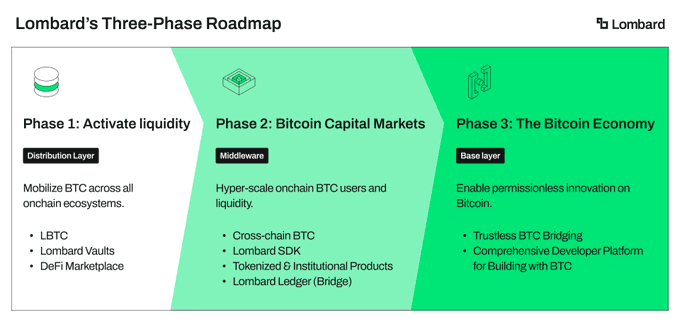
In the future, the development direction of BARD will depend on two key variables: first, whether LBTC can become a mainstream Bitcoin cross-chain asset, and second, whether the foundation can transform token allocation into sustained network growth.
Four, Trend Outlook: From Speculative Product to Institutional Asset
BARD's market logic is currently in a transformation phase:
- Initially, it resembled a 'narrative-driven speculative product,' with prices sensitive to unlocking news and market heat.
- As the protocol accumulates real income, BARD will gradually evolve into an 'institutional asset,' similar to LDO and BNB, achieving value anchoring through repurchases and dividends.
- Ultimately, it may become a 'necessary holding' for the Bitcoin capital market rather than just a speculative tool.
This dual-track evolution means that BARD's valuation should not solely rely on market conditions but needs to analyze its 'long-term embedded' value from an institutional perspective.
Conclusion
The true uniqueness of BARD lies in its upgrade of tokens from speculative chips to institutional tools. Price is merely a facade, reflecting whether the financialization of Bitcoin can enter the 'institutional' stage. If LBTC is the flow that makes Bitcoin liquid, then BARD is the gate and scheduler of this hydraulic engineering. In the coming years, the value evolution of BARD may witness the maturation process of the Bitcoin capital market.