
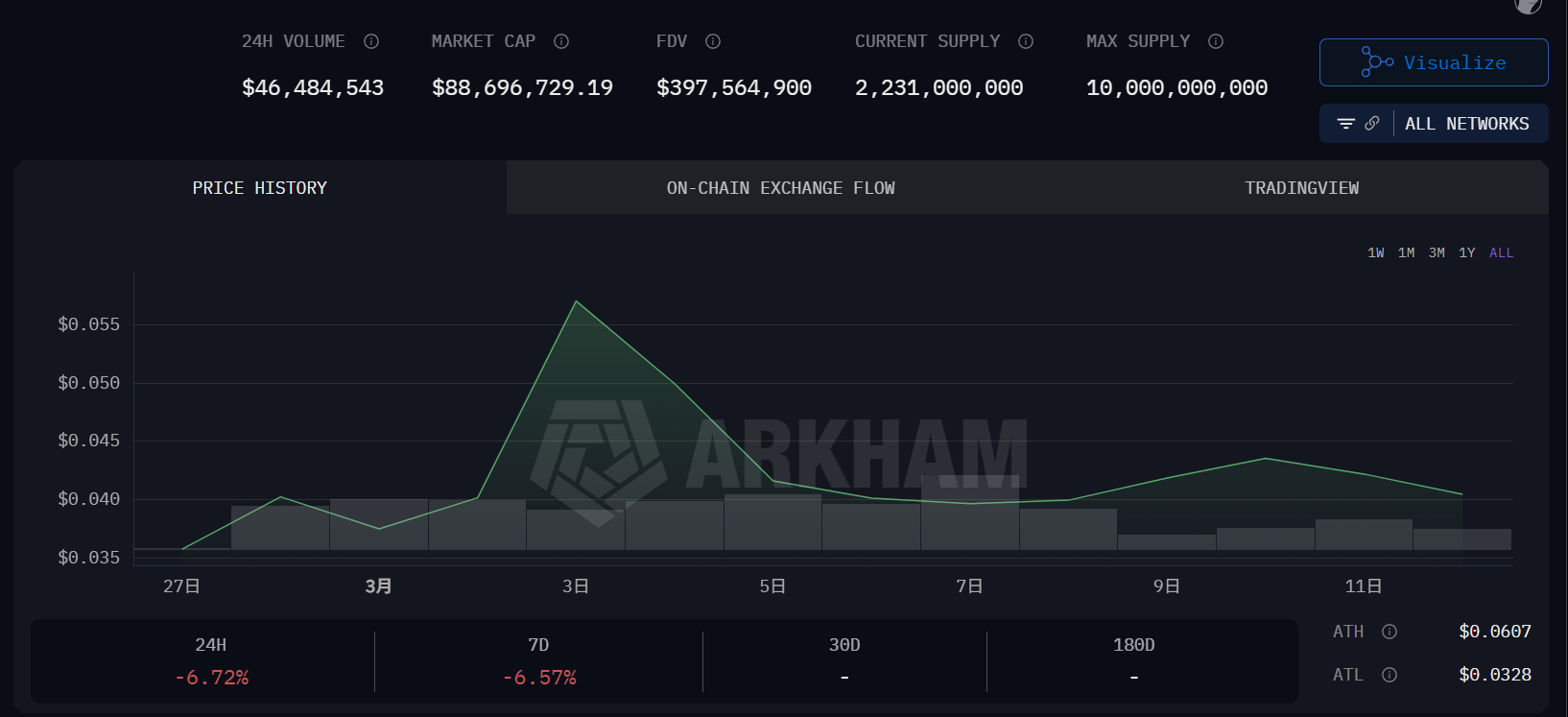
In 2026, AI has transitioned from a chat tool to physical implementation, and the robotics sector is becoming the next trillion narrative. The Fabric Protocol, as an infrastructure project, connects blockchain with the physical world through the token $ROBO —robots are no longer just tools, but entities that can independently create value and participate in the economy. Recent on-chain data shows that the circulation of ROBO stabilizes at around 22%, with active trading over 24 hours. Does this indicate that the ecosystem is about to explode?
Dissecting the core mechanisms of Fabric Protocol
Fabric is not just a simple token project, but a modular robotics protocol:
• Robot identity layer: Each robot is given a unique DID (decentralized identity) via blockchain, achieving verifiable ownership and historical records.
• Economic execution layer: ROBO serves as gas fees, staking rewards, and task settlement currency, supporting autonomous trading by robots (for example, automatically receiving payment after completing logistics tasks).
• Interoperability: Collaborating with AGI projects like OpenMind, robots can call advanced AI models to perform complex tasks.
These designs allow the 'machine economy' to move from concept to executable: a cleaning robot, after completing community tasks, automatically receives ROBO dividends, then stakes to earn profits, forming a positive cycle.
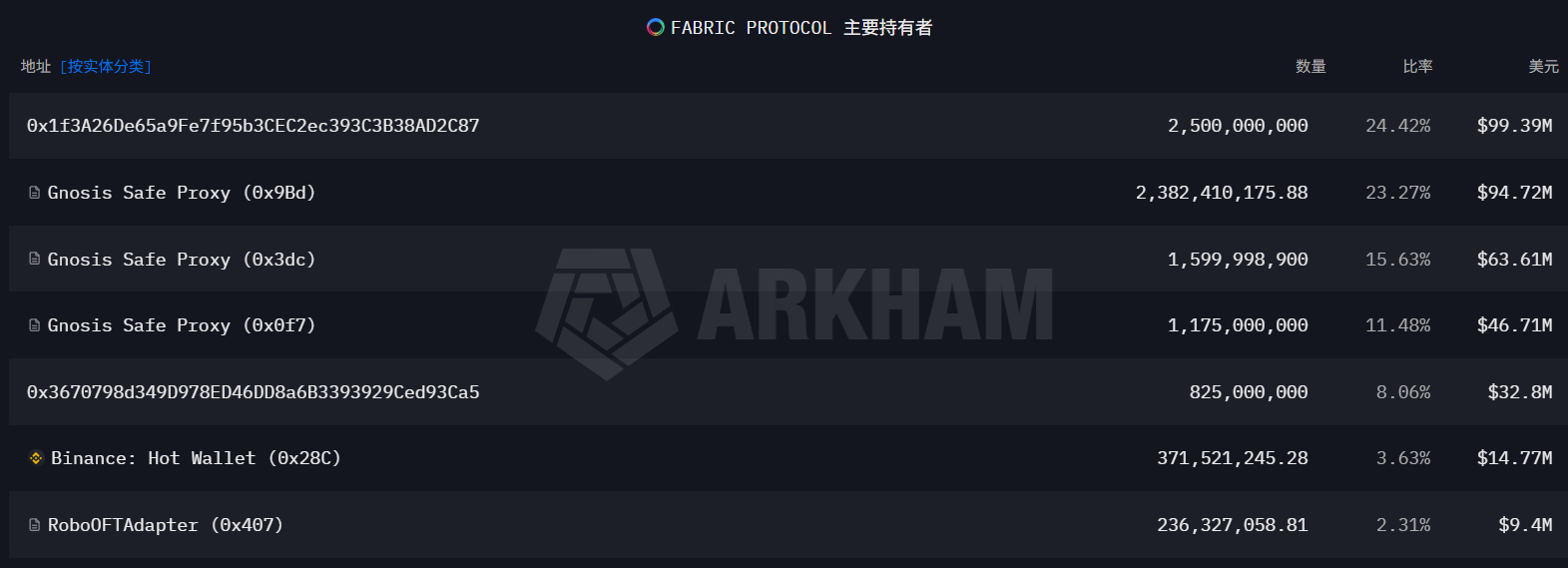
• Holdings: The top 100 addresses account for about 35%, a decrease compared to the early days of the launch, showing clear signs of community involvement.
• Trading volume: The peak volume in the 24h after Binance's listing exceeded 10 million USD, stabilizing recently but with increasing depth.
• Whale movements: A small number of large holders have moved to the staking pool, with the locking ratio increasing, indicating long-term confidence.

Why does Fabric Protocol have potential?
1. Industry dividend: Robotics + AI is a hot topic in 2026, with huge demand for physical implementation.
2. Strong practicality: Unlike pure memes, ROBO has clear use cases (staking, governance, payments).
3. Ecological synergy: Collaborating with Virtuals Protocol, OpenMind, and others to create network effects.
Of course, risks are also present: long technology implementation cycles, regulatory uncertainties, and high market volatility. The project team needs to deliver continuously.
Personal opinion
Fabric Protocol's ROBO is not a short-term speculative coin, but a representative of the infrastructure narrative. If the robot economy explodes as expected, it could be the underlying catcher. In the short term, look at the liquidity brought by Binance's listing, and in the medium to long term, focus on the ecological landing progress.
What do you think about the future of the robot economy? Will you participate in ROBO's staking strategy? Feel free to share your views in the comments and discuss together!