
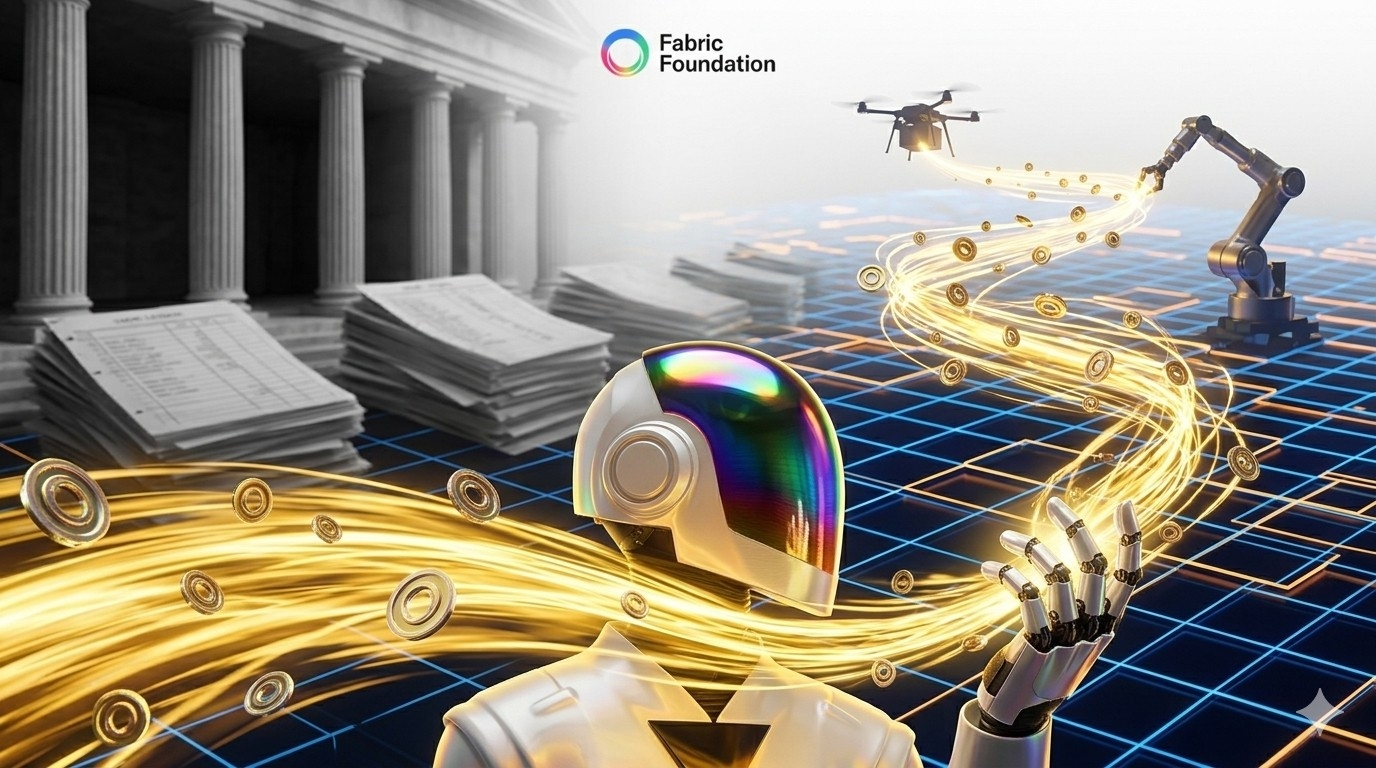
Have you ever wondered why your bank transfer between two cities of the same bank takes up to three business days, while WhatsApp/Telegram messages arrive in seconds? Because money is still moving through the infrastructure built for people and corporations. For machines, it does not exist. @Fabric Foundation builds it.
But first, let's take another look at the market parameters of the native token of the Fabric Protocol network. The fourteenth day after launch - this token is already operational:
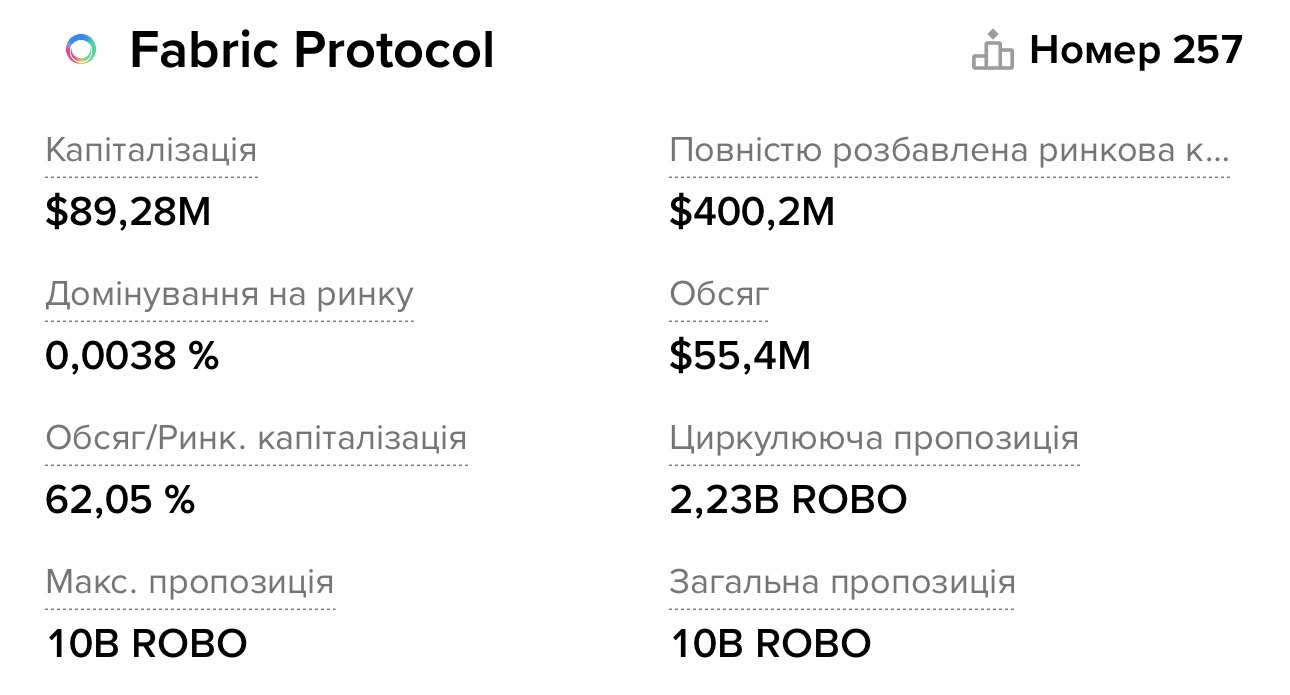
The trading volume has increased thanks to the ongoing promotional campaigns for trading on Binance for spot and futures, the market is moving. But while most are looking at the price, we should look at what the protocol is actually building - and why this token is here.
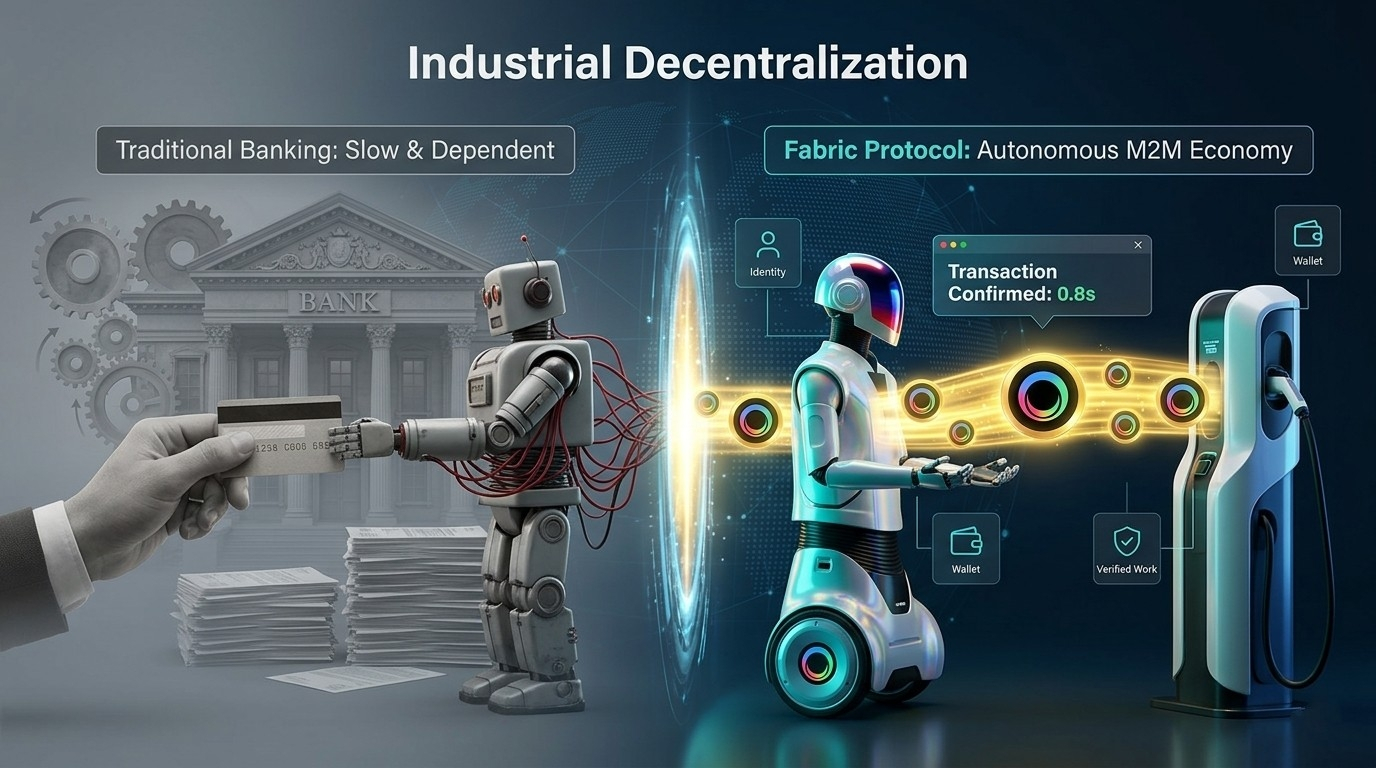
The main mechanism of Fabric is not protocol management and not staking. It is that machines can pay each other directly, without banks, without traditional Visa or Mastercard, without a central server. Machine-to-machine payments. This is not a marketing slogan. This is a real economy where a device itself decides who and how much to transfer - and this transaction happens in seconds, not three working days. This moment - where a machine becomes an independent economic agent - is the real news in Fabric. Not another AI token. A new role for autonomous devices, of which there are increasingly more.
Imagine a simple scenario. An autonomous warehouse robot has finished its shift and needs to recharge. It does not wait for a command from a human. It independently finds an available charging station - another device in the Fabric network, checks the price per kWh through an on-chain oracle, makes a micropayment in ROBO, and connects. The transaction takes place in seconds, with a fee of $0.001-0.01 on Base. Everything is verified - PoRW confirms that the charging actually occurred. No Excel spreadsheets, no accountants. Just two devices that agreed through the Fabric protocol.
Or a more complex case: two drones on a farm. One collected data on soil moisture, the other on temperature. They exchange data packets via ROBO. The first pays the second for measurement accuracy, the second pays the first for processing speed. The entire task calculation is automated through a smart contract. If one of the devices sends incorrect data - verified calculations block the payment and the protocol reduces the bond through a slashing mechanism (whitepaper, section 8.2). No arbitrator. No human intervention. The system itself determines who did the job and who did not.
Why does it work only with this token? Because the token is native to the network. It simultaneously serves as fuel (transaction fees), collateral (operator's stake for priority in the task queue), and currency for transactions between devices. Without it, a device cannot sign a transaction or have a wallet in the network. This is not just crypto for robots. This is market mechanics where a machine becomes a full-fledged economic agent for the first time - not a tool in the hands of corporations, but an independent market participant. This is why the whitepaper describes six different types of utility for the token: access, payments, delegation, governance, coordination of device registration, and rewards for contributions. This is not just diversification for the sake of marketing - each of them is needed for a specific function in the network.
Why is it important to discuss this now? Because the ROBO market is currently primarily evaluating the token through the lens of governance and speculation. But the real value lies elsewhere: in the fact that every new device in the network is a new participant in the economy that needs ROBO to operate. Not for holding, not for voting - but literally to initiate the next transaction. This is structural demand that grows with the number of devices, not with the speculative mood of the market. And this fundamentally distinguishes Fabric from projects where the token is just a voting right.
Where are the numbers? There are currently few such payments in the network - the protocol is at an early stage. But the mechanism itself is already described and technically launched. If the first pilot projects appear in Q2-Q3 - warehouses, farms, delivery robots - ROBO will no longer be just another AI token. It will become a necessity for any fleet looking to operate autonomously. According to current market data, the circulating supply is about 22% of the total 10 billion tokens:
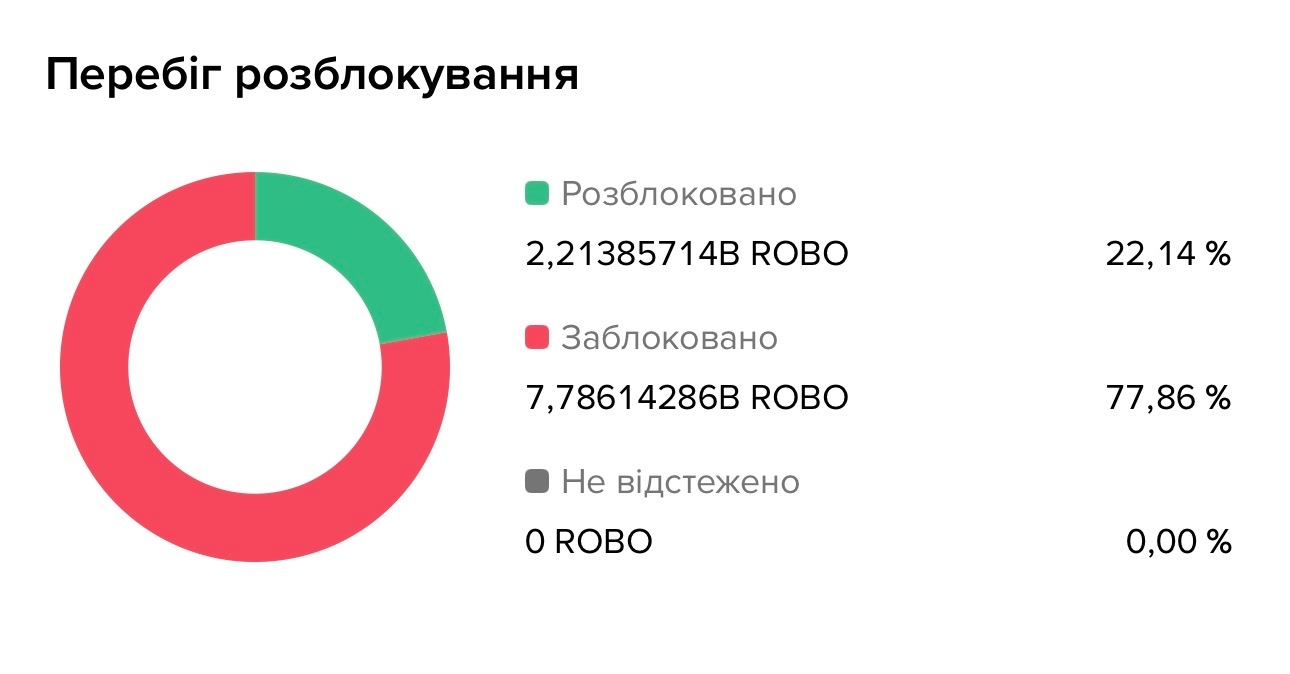
For the infrastructure that could potentially replace part of corporate payment systems, this is a very modest estimate. But the key word here is potentially. The potential is realized only if there are enough devices in the Fabric network to create real token circulation through transactions, not through speculation.
The risk is real. If verified calculations turn out to be too slow for real-time payments - all this mechanics will remain a theory on paper. Latency in the physical world is not forgiven. A robot waiting three seconds for transaction confirmation before opening the warehouse door is already a different scenario than the one described in the whitepaper. But if this token shows the first real calculations between devices - not in a test network, but with real robots in real conditions - this will be the moment when holders stop looking at price candles and start looking at the number of transactions in the network. This will be the real signal for reevaluation.
So I closely monitor this indicator: when the first robo device pays another for charging not in a test but live - and this transaction appears on-chain. Are you ready for a world where your vacuum cleaner buys electricity on its own - or do you think it will take years?