

A sudden wave of selling has shaken financial markets after roughly $650 billion in market value disappeared from the U.S. stock market in just 15 minutes. The sharp drop unfolded quickly, catching many investors off guard and triggering a surge of volatility across major indexes. Moves like this remind everyone just how fast modern markets can react when fear or uncertainty suddenly takes over.
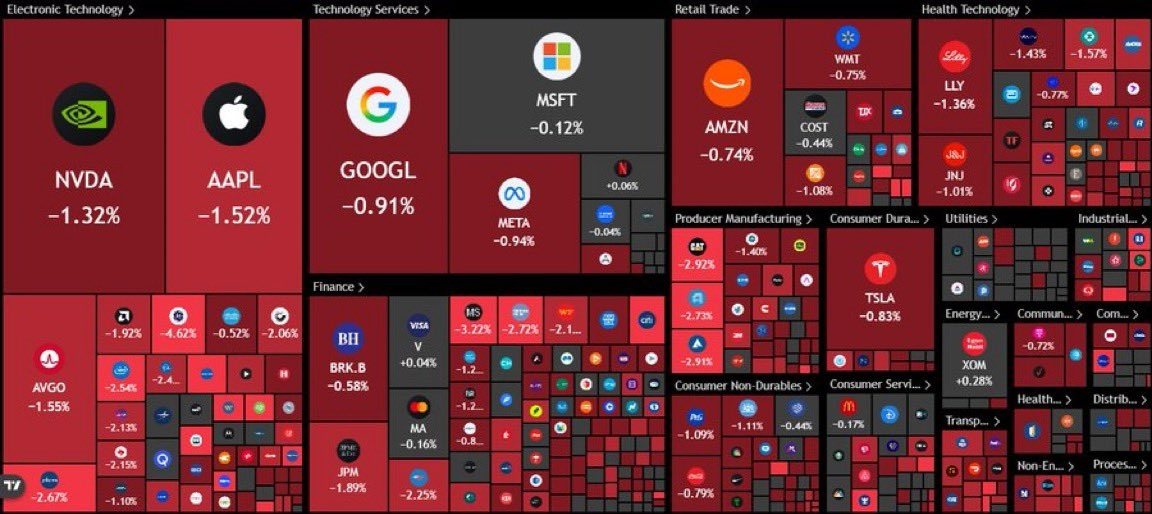
From my perspective, moments like this reveal the fragile balance that often exists inside financial markets. Prices can remain stable for long periods, but when sentiment shifts, the reaction can be immediate and dramatic. Large institutional trades, algorithmic systems, and global investors all respond to the same signals at once, which can amplify the speed of a market move.
In today’s financial system, billions of dollars can flow in or out of markets within seconds. When selling pressure begins to accelerate, automated trading systems can intensify the momentum. These algorithms often respond to volatility, price levels, and liquidity conditions, which means a sudden drop can quickly turn into a cascade of sell orders.
Another factor behind these rapid declines is investor psychology. Markets are driven not only by economic fundamentals but also by confidence. When uncertainty rises—whether due to geopolitical tensions, economic concerns, or unexpected headlines—traders often move quickly to protect their capital. That shift from confidence to caution can cause massive amounts of value to disappear in a very short period of time.
It’s also important to understand that when headlines say hundreds of billions of dollars have been wiped out, it refers to the total market value of companies falling as stock prices drop. The money itself hasn’t physically vanished, but the value investors assign to those companies has suddenly decreased as selling pressure takes over.
Still, moves like this can send shockwaves across the global financial system. Sharp declines often affect retirement accounts, institutional portfolios, and international markets that are closely linked to U.S. equities. Because the U.S. stock market plays such a central role in global finance, even a short burst of volatility can ripple across the entire world economy.
For now, investors are watching closely to see whether this sudden drop turns into a deeper correction or simply a brief moment of panic in an already volatile environment. Financial markets have a long history of dramatic swings, and episodes like this are a reminder that stability can change in a matter of minutes.