
When I look at Fabric Protocol and their token ROBO, I do not think about price action as much as I think about the overall structure. When it comes to creating a reliable platform for general artificial intelligence, it is crucial to ensure that it is verifiable, accountable, and not tainted.$ROBO

The overarching idea of Fabric Protocol is to leverage blockchain verification for artificial intelligence and robotic operations. Although this is a more theoretical approach to eliminating blind trust in AI and robotic providers, it actually aligns well with the overall trends of Web3 and decentralized artificial intelligence.$ROBO However, that alone is not enough to eliminate overall risk. While it may verify that data has been sent or processed correctly through cryptography, it does not necessarily assess whether it is ethical, accurate, or safe in context.
The issue of collusion among validators is another problem lurking in the background. If the validation power is in the hands of a few, then decentralization becomes irrelevant no matter how open source it is. Economic incentives can inadvertently create conditions for collusion instead of honest participation.
Another issue is sustainability. There is a need to create incentives for validators and operators without making it unsustainable in terms of inflation. When tokens are created in quantities larger than necessary in the world, that is not good for sustainability.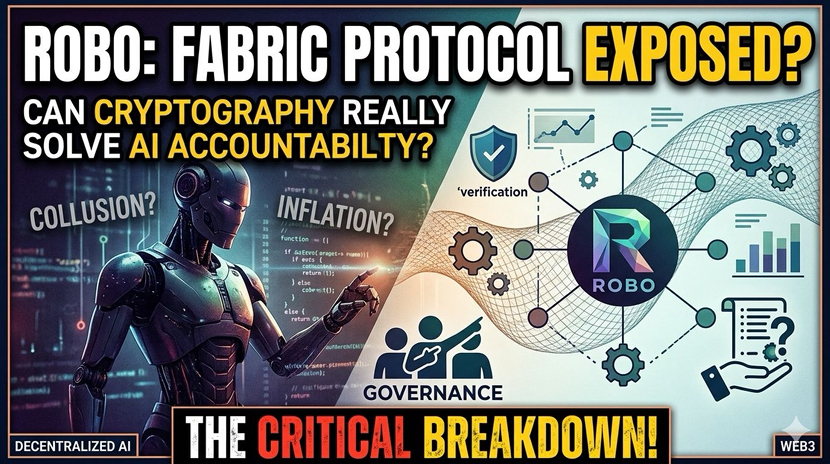
Finally, there is an issue of compliance. Is it feasible for Fabric's validation process to be used for some kind of legal or regulatory process for AI in general? For that to happen, there must be clear audit trails, participation must be part of governance, and accountability must extend beyond the smart contract code.
Ultimately, the test of how well Fabric functions is not about how innovative the technology is, but whether it maintains openness and decentralization in terms of participation, validation, and governance. $ROBO #ROBO @Fabric Foundation

