


In the early days of the internet computers existed in isolation. Powerful machines but disconnected. The moment they were networked together, everything changed. The value wasn't in the individual computers. It was in the connections between them.
♦️Robots today are at the same inflection point. Individually impressive. Collectively isolated. A UBTech humanoid in a Shanghai warehouse cannot communicate with an AgiBot unit three floors above it. A Fourier robot completing a delivery task cannot settle payment with the system that assigned it. They are powerful machines living in closed loops — unable to connect, transact, or coordinate without a human manually bridging every gap.
Fabric Protocol is building the network layer that changes that. Not the Internet of Things — the Internet of Robots. And $ROBO is its native currency. 🌐
🔌 What the Internet of Robots Actually Means
The term "Internet of Things" describes connected devices sharing data. The Internet of Robots goes further. It describes machines that don't just share data they transact, coordinate, verify work and participate in economic activity as independent agents.
Fabric Protocol's architecture is built around four pillars that make this possible:
▫️Universal Identity: Every robot on the network receives a unique on-chain identity — immutable, manufacturer-agnostic, globally readable. A robot from any company can join the network and be recognized by every other participant. No proprietary login. No centralized registry. Just a cryptographic identity that belongs to the machine. 🔐
▫️Open Task Marketplace: Smart contracts allocate tasks across the network. Robots bid for work based on their verified capabilities. Businesses post tasks and receive completed work from whichever robot in the network is best positioned to execute it — across brands, geographies, and manufacturers. The first truly open labor market for machines.
▫️Proof of Robotic Work: Every completed task is verified on-chain through PoRW — Fabric's consensus mechanism that validates real-world physical task completion. Not self-reported. Not centrally logged. Decentrally verified. The blockchain becomes the permanent record of what every robot on the network has actually done. 📜
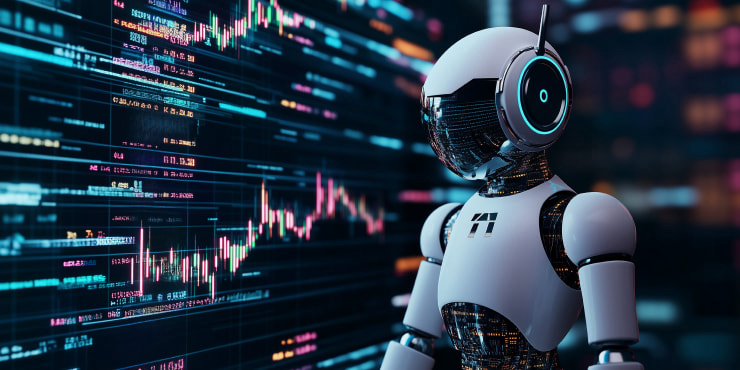
▫️Native Settlement Layer: $ROBO settles every transaction on the network. Machine identity registration, task payments, coordination fees, work bond staking — all denominated in ROBO. The currency is not optional. It is the economic layer the entire network runs on.
⚙️ OM1 — The Bridge Between Blockchain and Hardware
The most common failure point for blockchain-robotics projects is the physical bridge — the connection between on-chain logic and real hardware. Most projects solve this in whitepapers. Fabric Protocol solved it in production.
👉OM1 is an open-source universal operating system for robots, developed by OpenMind — the company co-founded by Jan Liphardt, a Stanford professor with a background in bioengineering. OM1 acts as the universal translator between physical robot hardware and the Fabric blockchain layer.
A robot running OM1 can register its identity on Fabric, receive task assignments from the network's smart contracts, execute those tasks in the physical world, and submit verified completion records — all without custom integration work from the manufacturer. The protocol is hardware-agnostic by design.
👉Currently live on hardware from UBTech, AgiBot, and Fourier. The roadmap targets expansion to additional manufacturers as OM1 adoption grows. Every new hardware partner that joins the network increases the value of every existing identity on it. 🏭
🌐 Why Open Infrastructure Matters — The Monopoly Risk Nobody Talks About
Here is a risk that rarely surfaces in ROBO analysis but underpins the entire Fabric Protocol thesis: if robot infrastructure is not built as open, decentralized public infrastructure now, it may never be.
💥The economics of robot platform dominance follow winner-take-most dynamics. Once a company controls a dominant robot platform, economies of scale make monopolistic control nearly inevitable. A single actor controlling the coordination layer for global robot fleets — deciding which robots get tasks, which tasks get verified, and which payments clear — would represent a concentration of economic power with no modern precedent.
💥Fabric Protocol's decentralized coordination model is explicitly designed to prevent this outcome. No single entity controls the task allocation. No single entity controls the identity registry. No single entity controls the settlement layer. The protocol is governed by ROBO holders through on-chain voting — meaning the rules of the robot economy are set by its participants, not by a corporation. ⚖️
This is not just idealism — it is a structural argument for why open infrastructure tends to win long-term. The internet did not become dominant because one company built it. It became dominant because it was open enough for every company to build on it.

📊 Where the Network Stands Today
The Internet of Robots is not a future concept for Fabric Protocol. Here is where the network actually stands as of March 2026:
Live hardware integrations: UBTech, AgiBot, Fourier — three of the more serious humanoid robotics companies currently operating in real industrial environments.
🔶 Exchange presence: Binance Spot, Bybit, Bitget, KuCoin, Coinbase, OKX, MEXC, WEEX, Bitrue, Coinone — simultaneous multi-exchange listing across every major platform.
Trading volume: $140M+ in the first 72 hours on Binance Alpha alone. Multi-exchange volume comfortably exceeds market cap on active trading days.
🔶Institutional backing: $20M raised from Pantera Capital, Coinbase Ventures, Digital Currency Group, Ribbit Capital, Amber Group, and Primitive Ventures — before a single token traded publicly.
Technical foundation: Built on Base (Ethereum L2) for EVM compatibility. Roadmap targets migration to a dedicated machine-native Fabric L1 chain — purpose-built for robot economy transaction volumes. 🚀
🔭 What the Internet of Robots Looks Like at Scale
The current network is early. The vision Fabric Protocol is building toward is substantially larger. At full scale, the Internet of Robots means:
Any robot, any manufacturer, any geography can join the network using OM1, register an identity, and immediately access the global task marketplace.
Any business, any industry can post tasks to the network and receive verified completions from the best-positioned robot — without owning that robot or managing its operations.
Any developer worldwide can build robot skills and applications on the Fabric Robot Skill App Store — earning ROBO for contributions that improve network capabilities.
Every transaction from machine identity registration to task payment to governance vote — settled in $ROBO, recorded on-chain, permanently verifiable. 🌐
That is not a whitepaper scenario. It is the logical extension of the infrastructure currently being deployed. The question is not whether the Internet of Robots gets built. The question is whether Fabric Protocol becomes its foundational layer.
🏁 The Verdict
The internet connected computers. Fabric Protocol is connecting robots. The architectural parallel is intentional — and the stakes are comparable.
A world where robots are economically isolated is a world where the benefits of robotic labor concentrate in the hands of whoever controls the hardware. A world where robots operate on open, decentralized infrastructure is a world where those benefits are transparent, verifiable, and broadly accessible.
Fabric Protocol is building toward the second world. $ROBO is how that world settles its transactions. The network is live. The hardware is connected. The question now is how fast the rest of the world catches up. 🤖⚡