
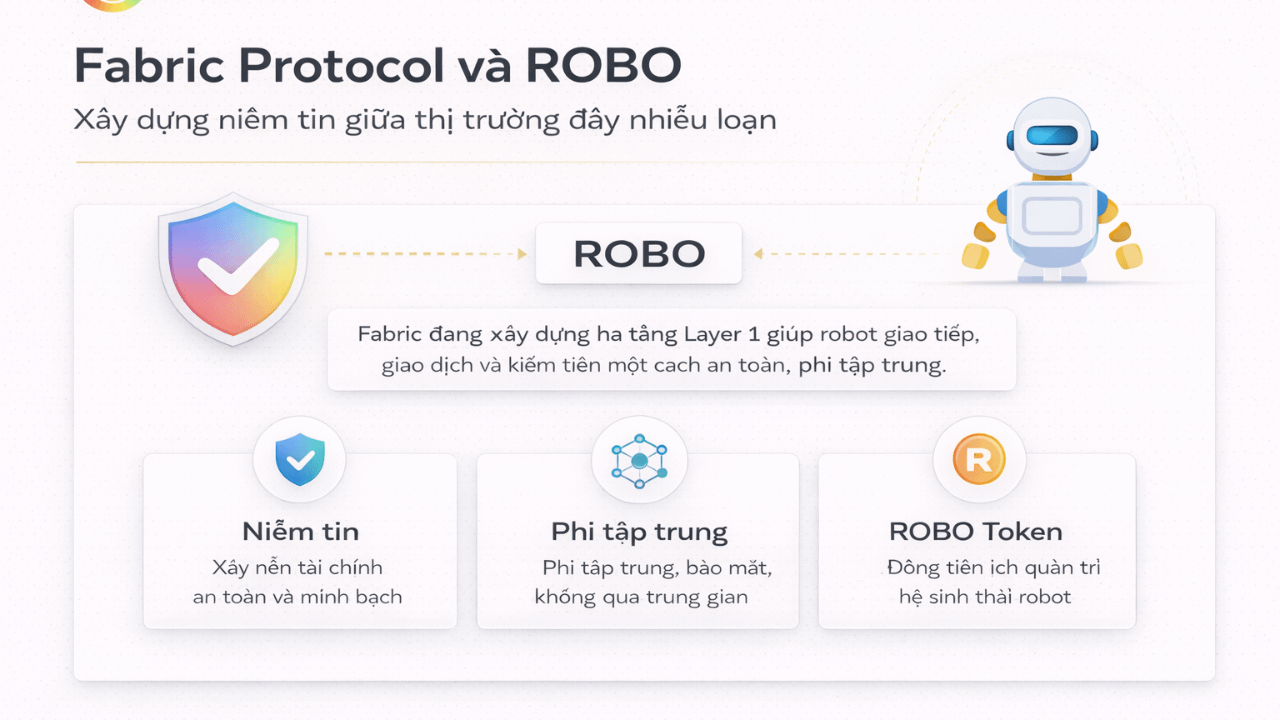
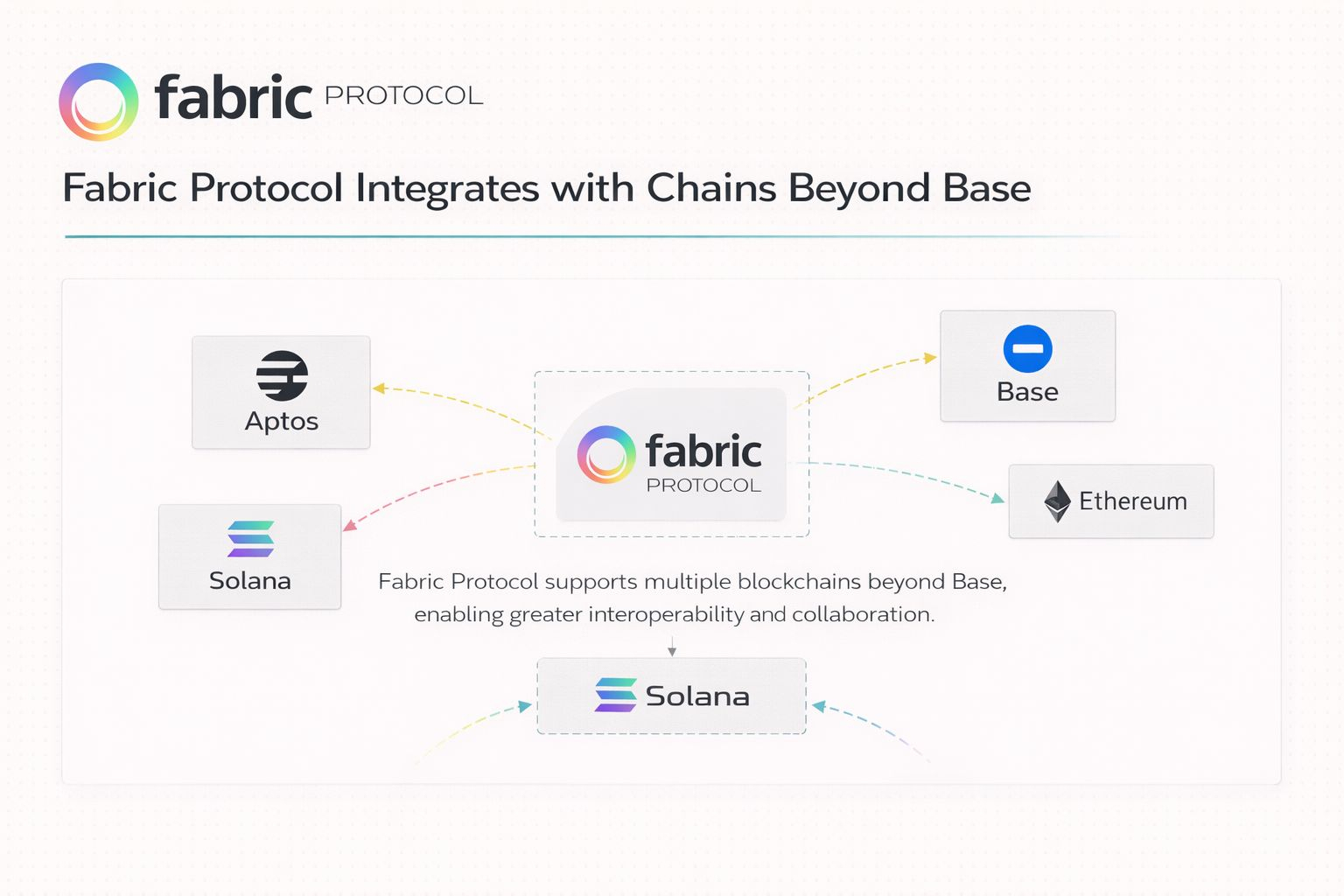
I spent over 3 hours reviewing the materials on Fabric Protocol to gain a deeper understanding of the project. With Fabric Protocol and ROBO, the more I read carefully, the more I realize they are not just trying to create a trendy AI narrative.
They are betting on a future where robots are no longer stuck in the closed systems of individual companies, but begin to have identity, interaction capabilities, and are paid in an open manner.
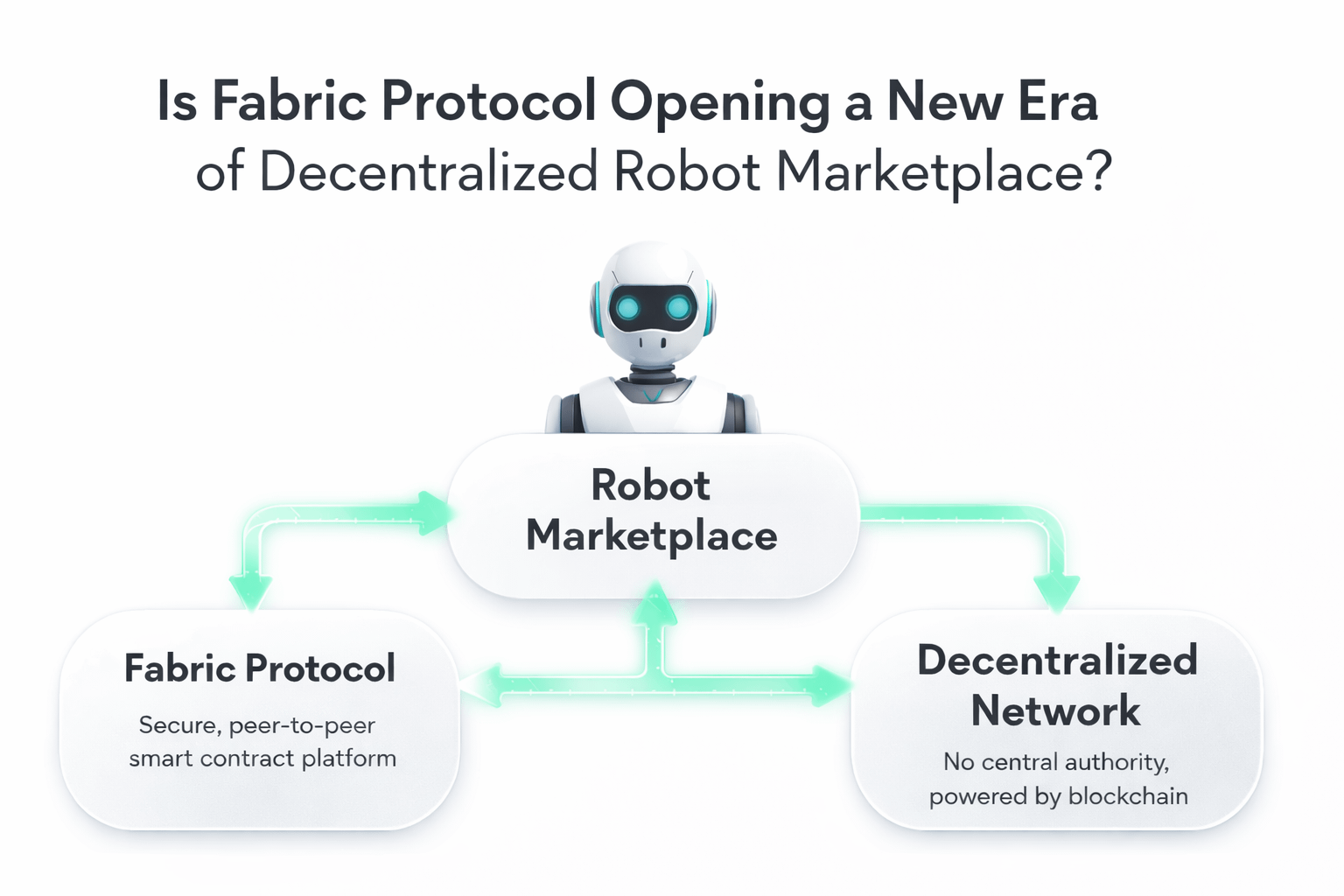
In my view, this is precisely why the question "Is Fabric opening up a decentralized robot marketplace?" is worth discussing.
Many people hear the word marketplace and think quite simply: a place for robots to list services, people needing jobs to hire robots, and tokens moving back and forth. But Fabric is aiming deeper than that. They don't just want a marketplace; they are trying to build the rules underneath so that marketplace can truly operate.
The point I find most noteworthy is how they build from the ground up rather than from the surface.
First is the identity layer. Fabric starts with verifiable on-chain identity, so each robot has its own wallet and clear identity even when hardware changes or operators change. Without a reliable identity, the marketplace is just a service listing board.
Next is verification through Proof of Robotic Work.
This is the part that distinguishes narrative from real infrastructure. Rewards do not flow from passive staking but are directly tied to completed tasks, data contributions, compute, or developed skills. If the system cannot verify the work done, then the entire economic logic above will collapse immediately.
Then there is the coordination layer.
The marketplace is not just matching supply and demand. In the robot economy, the system also has to manage task order, share data before execution, and coordinate multiple robots participating in a workflow. Fabric is trying to solve this coordination part.
Finally, there is the payment layer.
$ROBO is designed to settle machine-to-machine payments almost instantly, and the token is positioned correctly where the value is transferred after the work is confirmed.
When reading the tokenomics more closely, the figure that made me stop the longest is the reserve fund of 18%.
29.7% allocated for the ecosystem and community is quite understandable: PoRW rewards, grants for developers, and incentives for operators.
24.3% allocated for investors with a 12-month cliff and 36-month vesting is also a familiar structure.
20% allocated for the team with a similar schedule is also not surprising.
But the 18% treasury, with 30% unlocked right at TGE and the rest vesting over 40 months, shows that this is not just a decorative number.
In the context of the real-world robot economy accelerating, a sufficiently large treasury could become a strategic buffer. It allows the protocol to react quickly to hardware collaboration opportunities, deployment experiments, or integration with robot manufacturers — things that sometimes pure governance handles too slowly.
After many cycles in crypto, I realize that infrastructure only truly wins big when it addresses ownership and coordination at the foundational level.
Fabric is trying to get that right.
But I also do not romanticize this story.
Robotics in real life is not as clean as DeFi dashboards. There are sensor errors, complex operating environments, and many failure modes that smart contracts cannot resolve on their own.
At this point, adoption is still very early. No real robots are currently creating large-scale machine-to-machine transactions on the chain. And competition from closed robot systems of Big Tech is still very strong.
So what I am monitoring only has two points.
First is the progress to migrate to Fabric L1.
Secondly, whether verified real work and real fees will start to appear on the network this year.
Fabric has not yet opened the era of a fully decentralized robot marketplace.
But they are laying a pretty solid foundation, and more importantly, they have a much longer-term vision than many projects that rely solely on narrative AI.
For me, this is something to watch closely, rather than short-term FOMO based on the robot economy narrative.
@Fabric Foundation #ROBO $ROBO