
ETH price is approximately $3,850-$3,917, down 3.12%-3.73% in 24 hours, with a market cap of about $469B. Short-term net outflow reflects dominant selling pressure.
• RSI indicator is oversold (<30), suggesting a potential rebound, but perpetual contract funding rates are bearish (negative shift), increasing downside risk. Analysts predict short-term support at $3,850; if broken, it may fall to $3,000; long-term target is $12,000 (based on institutional demand).
• Macro background: Trump's tariffs and Federal Reserve GDP data have triggered market turbulence, with the overall crypto market declining (BTC -2.17%). ETH to BTC ratio is bearish (-21 points), while SOL is strong against ETH (+32 points), indicating a rotation of funds to other Layer 1s.

2. Funding rate and accumulation trends.
• Funding rate: The average funding rate across the network over 8 hours is 0.0029%, positive but extremely low (Binance +0.0032%, Bybit +0.0100%, BitMEX +0.0096%).
The change in funding rate turns negative (e.g., contract 5m -0.007%), indicating a decrease in payments from longs and an increase in advantage for shorts. Historically, low positive/negative funding rates are often accompanied by price pullbacks, but if it turns positive, it can trigger a long squeeze.
• Spot accumulation: In September, ETH ETF net outflows were $251M (9/25), including Bitwise outflow of $27.6M, with total assets under management at $25.59B (accounting for 5.46% of ETH supply).
However, institutional accumulation overall is strong: ETFs like BlackRock hold over 6.5 million ETH (worth $128B+), with an inflow of $3.7B early in September. Whales/institutions accumulated 218,750 ETH ($9.43B) in September, accounting for 14% of the supply.
This can explain the positive net inflow of spot in 24h: long-term accumulation supports the bottom, but short-term ETF sell-offs lead to net outflows.
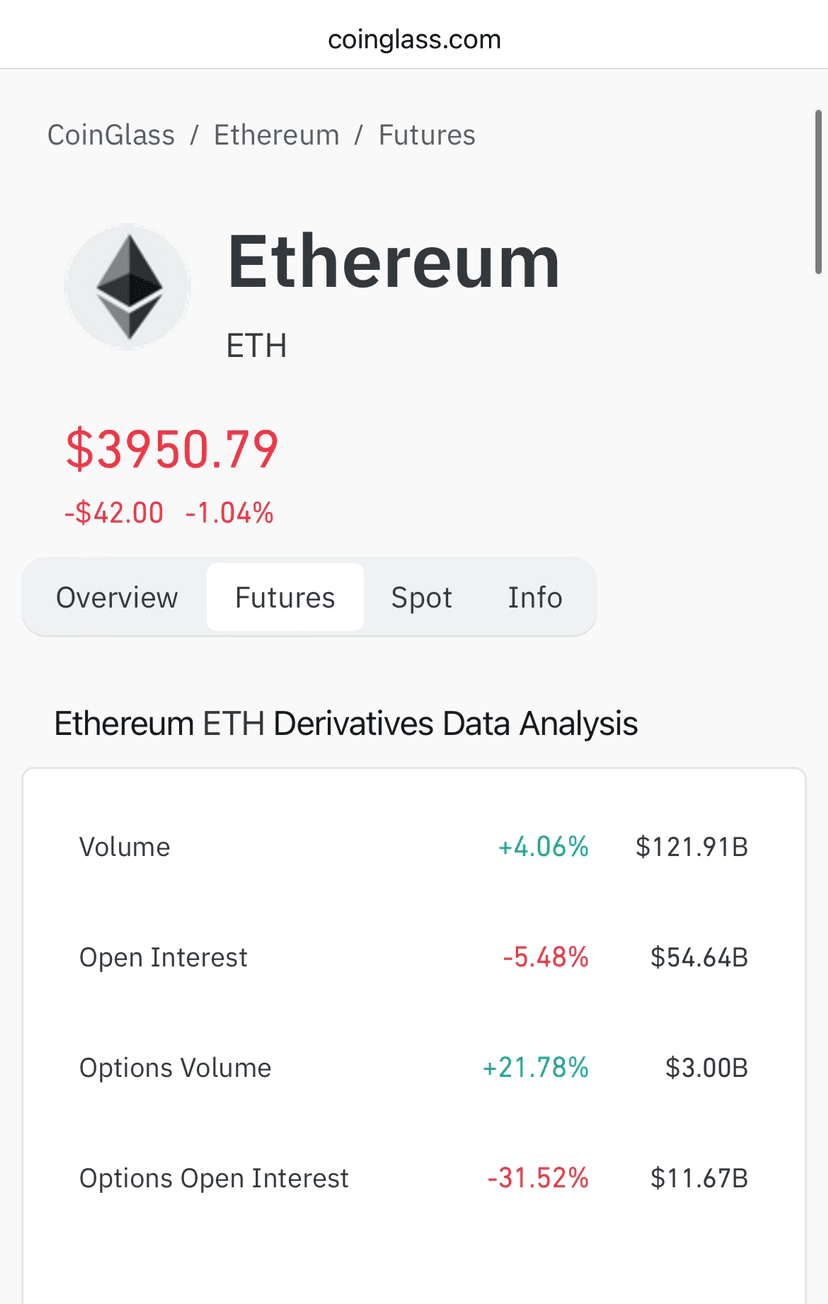
• Contract/futures accumulation: 24h open interest decreased by 5.84%, trading volume at $130B (spot only $9.96B), with long-term net outflows from contracts (e.g., 24h -391 million) reflecting leveraged position reductions. The negative change in funding rate indicates potential liquidations. Coinglass data shows that the inflow trend for ETH futures was strong early in September (institutional FOMO), but slowed in the middle and later stages. The perpetual contract funding rate mechanism aims to anchor the spot price, and the current low rate indicates a market neutral to bearish bias.
3. X community sentiment and event-driven.
• Sentiment in September shifted from early bull market (e.g., institutional FOMO, $5K target) to a bear market in the middle and later stages.
As of 9/22 post: ETH -6.48%, funding rate neutral, no short squeeze.
9/19: The funding rate rises to 18.6%, but positions decrease by 6%, indicating volatility.
9/25: ETH/BTC bear market, community concerns about a pullback.
• Event: The ETH Foundation sold 10,000 ETH ($43 million) to fund development; the Fusaka upgrade improves scalability, with institutional interest increasing by 116%. However, ETF outflows and government shutdown risks amplify selling pressure.
Comprehensive clues and risks/opportunities.
• Bear market signals: Recent contract funding accumulation has slowed (short-term rates plummeting, long-term net outflows), combined with low funding rates and ETF outflows, suggest increasing short-term downward pressure. This may indicate a price test of $3,500 support, stemming from institutional profit-taking and macro uncertainty. Short-term net outflows in spot reinforce 'sell panic'.
• Bull market potential: Long-term net inflows and institutional accumulation in spot (e.g., BlackRock buying $33.8B) indicate bottom buying opportunities. RSI oversold + low funding rate, if reversed, can trigger a rebound to $4,000+. Looking long-term, ETH as a yield-bearing asset (3% staking) and DeFi infrastructure ($910B TVL) supports a $9,889/2030 forecast.

