
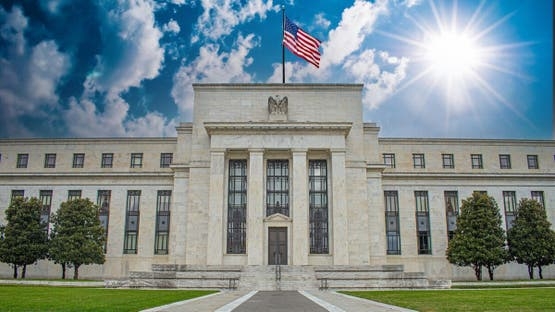
The U.S. Federal Reserve is awaiting a complex meeting today, Wednesday, amidst overlapping pressures from the war in Iran, concerns about renewed waves of inflation, and mixed signals from the U.S. labor market. Despite all these factors, the outcome seems almost predetermined: keeping interest rates unchanged.
Financial markets are currently pricing in an almost negligible chance of an interest rate cut at this week's meeting or anytime soon. Meanwhile, futures contracts indicate that the first step toward a rate cut may not come before September or October, and even then, investors expect only a single cut during 2026.
The Fed is currently targeting a range between 3.5% and 3.75%, which is likely to remain unchanged. It is also not expected that updates to the economic projections will carry any substantial changes compared to the forecasts from last December.
Iran War.. and oil pressure
Before the outbreak of the war, traders expected the rate cuts to begin in June, with another step before the end of the year. However, the attacks and their impact on oil prices and inflation prompted markets to recalculate, even though the Fed usually "overlooks" temporary energy shocks in its decisions.
However, all eyes will be on the speech of Fed Chairman Jerome Powell, especially since this meeting may be his second-to-last as the head of the council.
Said the chief investment strategist at "Russell Investments", Bai Chen Lin: "The decision is nearly predetermined, but any signal from Powell regarding the interest rate path will be extremely important. The U.S. economy is still strong, which means the ceiling for cuts has become higher."
Market leadership.. and Powell's influence limits
Experts at "Bank of America" believe that Powell's ability to guide the markets will depend on whether investors consider his comments a reflection of the committee's entire viewpoint and not just a personal stance.
Former Fed Vice Chairman Roger Ferguson expects the statement's language to be cautious, particularly in describing inflation, growth, and jobs. Ferguson expects the Fed to prioritize inflation over labor market indicators, stating: "The biggest concern now is rising inflation. The target is 2%, and the Fed has been far from it for years, raising questions about its commitment to this target." according to what was reported by "CNBC" and reviewed by "Al Arabiya Business".
Home
News
Saudi Arabia
Markets
Sports
Arabic TV
Arabic programs
Technology
Varieties
Articles
The latest
Podcast mix
Advertising material
Federal Reserve Bank (U.S. Central Bank) - iStock
Federal Reserve - iStock
The Fed
Markets are awaiting the Fed's decision on interest rates.. a hold is expected and critical messages.
Mixed signals from the labor market and renewed concerns about inflation
America
Riyadh - Al Arabiya Business
Published on: March 18, 2026: 09:09 AM GST
Last updated: March 18, 2026: 12:21 PM GST
Listen to the article
The audio text is automatically generated by a system.
4:14
x1
3 minutes
For reading
The U.S. Federal Reserve is expecting a complex meeting today, Wednesday, amid overlapping pressures from the Iran war, renewed concerns about inflation waves, and mixed signals from the U.S. labor market. Despite all these factors, the outcome seems nearly predetermined: to keep interest rates unchanged.
Financial markets currently price in an almost zero chance of a rate cut at this week’s meeting or even anytime soon. Futures contracts indicate that the first step toward a rate cut may not come until September or October, and even then investors expect only a single cut during 2026.
The Fed is currently targeting a range between 3.5% and 3.75%, which is likely to remain unchanged. It is also not expected that updates to the economic projections will carry any substantial changes compared to the forecasts from last December.
The minutes of the U.S. "Federal Reserve" show a division among its members and recent discussions about raising interest rates.
Economy
The minutes of the U.S. "Federal Reserve" show a division among its members and recent discussions about raising interest rates.
Iran War.. and oil pressure
Before the outbreak of the war, traders expected the rate cuts to begin in June, with another step before the end of the year. However, the attacks and their impact on oil prices and inflation prompted markets to recalculate, even though the Fed usually "overlooks" temporary energy shocks in its decisions.
However, all eyes will be on the speech of Fed Chairman Jerome Powell, especially since this meeting may be his second-to-last as the head of the council.
Said the chief investment strategist at "Russell Investments", Bai Chen Lin: "The decision is nearly predetermined, but any signal from Powell regarding the interest rate path will be extremely important. The U.S. economy is still strong, which means the ceiling for cuts has become higher."
Market leadership.. and Powell's influence limits
Experts at "Bank of America" believe that Powell's ability to guide the markets will depend on whether investors consider his comments a reflection of the committee's entire viewpoint and not just a personal stance.
Former Fed Vice Chairman Roger Ferguson expects the statement's language to be cautious, particularly in describing inflation, growth, and jobs. Ferguson expects the Fed to prioritize inflation over labor market indicators, stating: "The biggest concern now is rising inflation. The target is 2%, and the Fed has been far from it for years, raising questions about its commitment to this target." according to what was reported by "CNBC" and reviewed by "Al Arabiya Business".
All eyes on the points
Investors will get a clearer picture when the Fed releases its "Summary of Economic Projections," which includes what is known as the "Dot Plot," a map of committee members' interest rate path forecasts.
Despite the sensitivity of the phase, observers do not expect significant changes. The Fed may slightly raise its growth and inflation forecasts, but the basic expectation of only one rate cut this year will likely remain, even with the objections that arose in previous meetings.
The chief global strategist at "JP Morgan Asset Management", David Kelly, wrote: "The Fed will confirm that the Middle East conflict has added more uncertainty to inflation and job forecasts. However, the projections may look very close to those issued three months ago."
Unprecedented political pressures
Aside from the economy, the Fed is subject to an unusual political climate. President Donald Trump has renewed his attacks on Powell, stating that the Fed "should have held an emergency meeting and cut interest rates". He added, "Even a third grader knows that now is the right time to cut rates."
But ironically, the Trump administration itself is obstructing the process of replacing Powell. Kevin Warsh's nomination to head the Fed is still pending due to a case led by U.S. Attorney Janine Pirro against Powell regarding the renewal of the Fed's headquarters. Republican Senator Thom Tillis has announced that he will block the vote on the appointment until the case is resolved.


