
In short trading in the crypto circle, the difference in predictions does not necessarily determine victory or defeat; what truly distinguishes is the response strategy.
Professional players can 'see wrong but do right', timely correcting their predictions.
Amateurs often 'see right but do wrong'; even if they predict the market correctly, they can't hold onto their gains.
Especially for small capital wanting to establish a foothold in short trading, it's more critical to adhere to 3 practical rules rather than learning complex techniques first.
1. Split funds into three parts, with capital preservation as the priority.
Divide small capital (e.g., 2500U) into 3 parts, each used independently: the first part for short trading, with no more than 2 trades per day, avoiding frequent operations for small profits; the second part waits for trends, firmly staying out of the market until the weekly chart shows a bullish arrangement and breaks out with volume; the third part is for emergencies, adding positions moderately during sharp market fluctuations to ensure not easily eliminated from the market. Lessons learned from past full margin liquidations prove that diversifying funds can lock risks within controllable ranges.
Second, enter in the direction of the trend, and take profit when it's good
In short-term operations, don’t grind against a volatile market; focus on three entry signals: if daily moving averages are not in a bullish arrangement, stay out; if the market breaks through previous highs with strong volume and closes firmly, enter with a small position; when profit reaches 30% of the principal, take half of the profit first, set 10% trailing stop for the remaining part — neither let the profit retreat nor leave too much risk for market reversal.
Third, control emotions, execute mechanically
Before each trade, a plan must be established: set stop loss at 3%, close position immediately if touched without hesitation; when profit reaches 10%, adjust stop loss to cost price to lock in basic gains; stop trading at 12 a.m. every night; no longer stare at K-line — the longer you watch, the more likely your emotions will be swayed by fluctuations, leading to mistakes in operation.
Market opportunities are always there, but once the principal is exhausted, there are no more opportunities. Small funds wishing to grow steadily from 2500U should first practice these three rules to mechanical execution, then study technical indicators later.
—— Protecting risk is essential to maintaining the possibility of profit
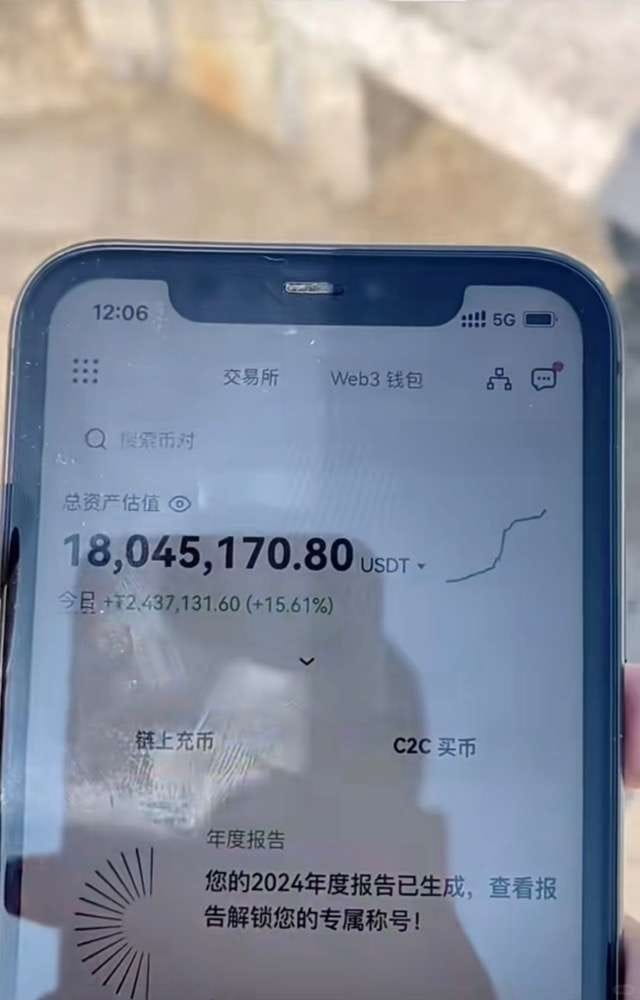
The news at 3 a.m. woke me up, and I cursed who was not sleeping so late. It turned out to be a message from my childhood friend.
He said that in three months, with 10x leverage, he went all in; when the coin price dropped by 3%, he got liquidated! I asked if there was any other way to rescue it?
I feel helpless, but he is my good brother, so I taught him these three practical methods that saved him!
① Always keep 80% of the principal "protect the base camp"
True full position is not about going all in, but rather "light position trial and error"
In battle, how can you put all supplies on the front line?
Retain 80% of the principal; even if you have five consecutive stop losses (10% each), total losses will still be controlled within 10%.
② Set a "3% life and death line" for each trade
Before placing an order, first calculate: How much loss can this trade withstand at most?
Single losses should not exceed 3% of total funds.
For example, if opening 10x leverage at 2000U, set a stop loss 1.5% below the cost price in advance
③ Only act when there is a "clear trend"
During sideways fluctuations, never touch full positions!
If the 4-hour K-line hasn't broken previous highs, the market fluctuations are like a drunk walking; entering at this time is just paying transaction fees to the exchange, be wary of the temptation of "profit scaling"; full positions are tools for capturing trends, not impulsive orders driven by emotions.
According to my gold strategy, how could I get liquidated?
Strictly follow these three rules: Always use only 20% of funds for trial positions, set stop loss within 3%, and only enter when the trend breaks out.
Whether it's full position or partial position, it's just different fishing nets — some use it to catch big fish, while others use it to catch rocks. How many chances do you have to make mistakes?

To survive, a set of logic is essential.
Step 1: Cut off the gambler's mentality; learn to "survive"
I require fans who are in the red to stop trading for 48 hours; don’t open any positions
Write out the past liquidated positions one by one. The result is definitely exactly as I thought:
Position sizing is indiscriminate; it’s either fully invested or heavily invested.
Without a stop loss, once the market reverses, you're just waiting to be liquidated.
The mindset is based on feelings; it’s either fear of missing out or greed taking over.
I told him: "The market will not give you opportunities just because you are anxious. The first step is to learn to survive.
📊 Step 2: Three-segment position, rolling capital gains
The method I used with him is my own "three-segment position model"
Exploratory position (20%): First test the waters, if the market is wrong, immediately stop loss
Confirmation position (30%): Once the trend is established, add to the position
Explosive position (50%): Only after the trend is fully established will I heavily invest in an explosion.
But real players filter out false signals with small losses and capture true trends with large trades
Step 3: In 51 days, from 780U to 21,600U
In our first trade, we steadily made 92U.
I told him: What you want is not to get rich quickly, but to have continuous small victories, accumulating a snowball for position growth.
Since that day, he has almost strictly followed my advice
Review every day; don't open brainless positions
See the trend, build positions in three segments
After making a profit, lock in 30%, and continue rolling the rest
Result:
Day 15, account balance reaches 2,300U
Day 28, broke through 7,800U
Day 51, account balance 21,600U
The methods I apply to everyone I guide
But to be honest, I still have two key rules that I haven't disclosed
They determine whether a person can transition from stability to true windfall profits
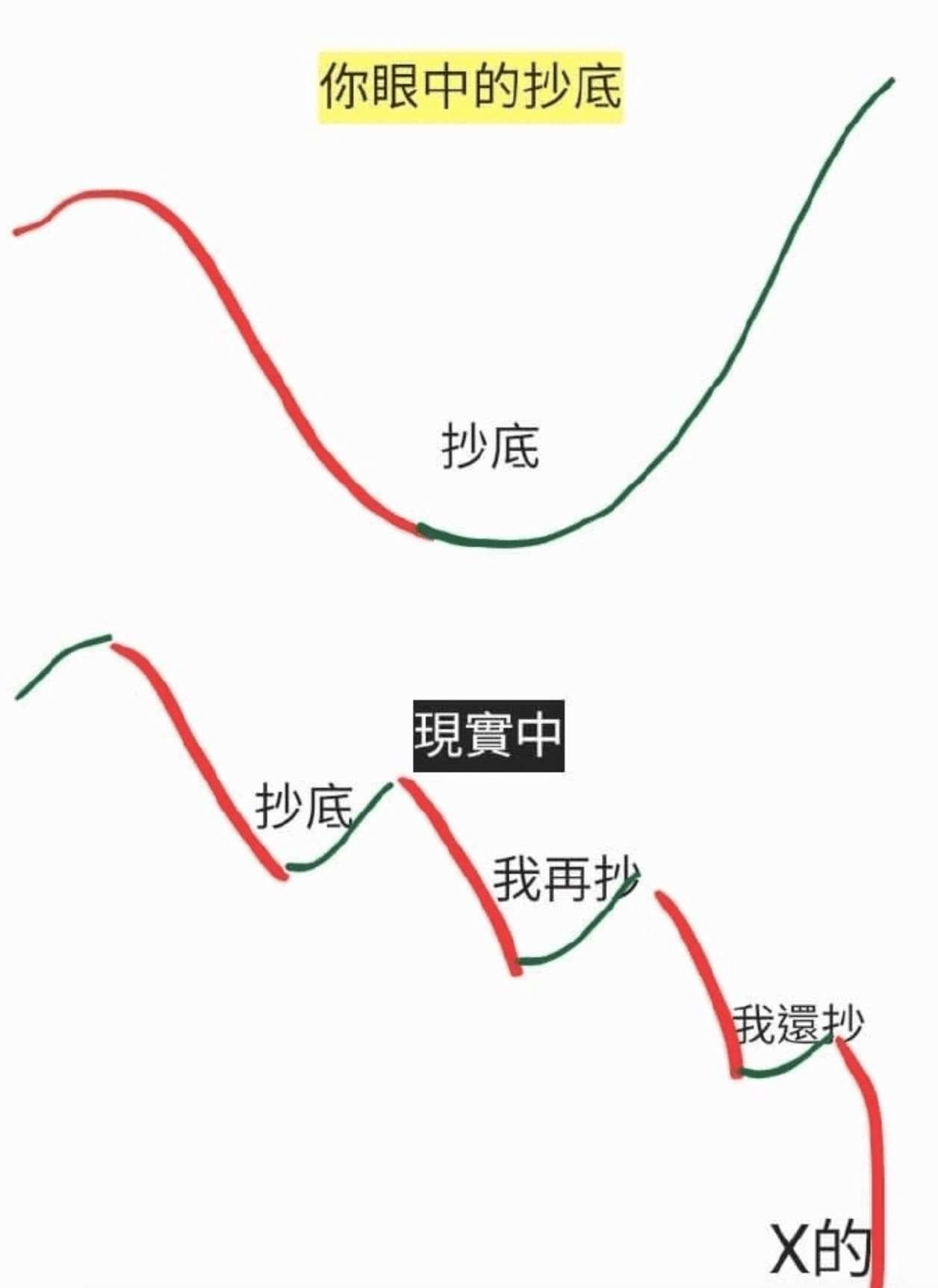
The dumbest trading method in cryptocurrency circles, I followed it for half a year, and my account multiplied by 8
I'm not smart, but I can execute
You all trade coins by studying K-lines, watching on-chain data, observing big players' movements, learning technical analysis... I don’t understand anything, I just use one method: buy low in sideways markets, sell high during surges.
It’s so <u>“stupid”</u>, but after half a year, I grew my principal from 10,000 dollars to 80,000 dollars without any liquidation; I never went all in once.
My simple three-step method:
Only trade coins that have been sideways for over 10 days
Don’t choose hot coins, don’t chase news. I specifically look for coins that no one mentions, that are moving sideways, not rising or falling.
Why? Because there is a rule in the cryptocurrency world: coins that have risen a lot will fall, coins that have fallen a lot will rise, and those that have been sideways for too long, <u>are very likely</u> holding back a big move.
Only enter one position; buy and let it sit there
No averaging down, no increasing position. Just wait. Generally, I watch a coin consolidate for about 10 days before buying in, set the stop loss, and then hold.
I call this farming.
Only leave after rising more than 30%.
Don’t wait for the highest point, and don’t be greedy. As long as <u>accumulated gains</u> reach 30%, I'll sell it, then look for the next sideways one.
Many people get liquidated because they "want to earn more," but I take profit when it's good.
Why can't 99% of people do this method?
Because it's too slow, everyone is eager to get rich
Because no one wants to stare at sideways markets like a fool
Because it’s too simple, everyone is chasing advanced techniques
Because no one can resist letting it sit without interfering
But to be honest, those who make big money in cryptocurrency rely on execution, not intelligence.
✅ In six months I've traded several coins:
TIA: It consolidated for 11 days, I bought in, went up 38%, and left.
ASTR: It consolidated for 13 days, bought in, <u>quickly surged up</u>62%, and left.
LPT: I got annoyed with it consolidating, just as I was about to sell, it <u>suddenly</u> surged 41%, and I exited completely.
Untraded (regretful): pepe, xrp <u>(discipline wasn't broken, but it's painful)</u>
You may not believe it, but don’t pretend to understand. This method isn’t suitable for everyone, but it is suitable for those who want to make stable profits, avoid liquidation, and don’t want to look at charts every day.
Don’t say you’ll try tomorrow. Tomorrow you’ll chase hot topics, chase K-lines, chase surges, and end up cutting losses again. <u>(Why not look for which coin is moving sideways right now?)
Today, I've compiled my experiences from real trading losses into 7 life-saving suggestions; novice friends must read carefully.
1. Make trades only after 9 p.m., avoiding "news traps"
The daytime market is like a "madman"; various fake positives and fake negatives fly around, and the market jumps up and down, making it easy to be deceived into entering as a "bag holder."
I usually wait until after 9 p.m. to operate; at this time, the news is basically stable, the K-line trends are clearer, and the direction is more definite, significantly reducing the probability of making mistakes.
2. Cash in immediately when making money; don’t be greedy!
Don't always think about "getting rich overnight"! For example, if I make 1000U today, I suggest immediately withdrawing 300U to my bank card and continuing to operate with the rest.
I’ve seen too many people who "made three times but wanted five times"; one pullback, and all profits vanished, even resulting in a loss. This kind of "bailing water with a basket" loss is truly to be avoided.
3. Look at indicators, not feelings; refuse to "gamble blindly"
Trading based on feelings is no different from blind guessing.
Install TradingView on your phone and check these indicators before trading:
•MACD: Is there a golden cross or death cross?
•RSI: Is there overbought or oversold?
•Bollinger Bands: Is there a contraction or breakout?
At least two of the three indicators must give consistent signals before considering entry; the win rate will be much higher.
4. Stop loss must be flexible; preserving profit is key
When you have time to watch the market, when you make money, manually move the stop loss up. For example, if the buying price is 1000, and it rises to 1100, then raise the stop loss to 1050 to secure part of the profit.
If you have to go out and cannot watch the market, you must set a hard stop loss of 3% to prevent sudden crashes from wiping you out.
5. Must withdraw funds weekly; digital to cash is reliable
Money not withdrawn is ultimately just a number game in the account!
Every Friday, without fail, I transfer 30% of my profits to my bank card, and roll the rest. Over time, the account funds will become thicker, and my mind will be at ease.
6. There are tips for reading K-lines; finding the right time frame is more efficient
•For short-term trading, look at the 1-hour chart: If the price shows two consecutive bullish candles, consider going long.
•When the market is stagnant, switch to the 4-hour chart to find support lines: enter the market when it falls near the support level, which is more secure.
7. Avoid these pitfalls! They are all lessons learned through blood and tears
•Leverage should not exceed 10x; beginners should ideally control it within 5x
•Don’t touch meme coins like Dogecoin or shitcoins; they are easily exploited
•Maximum of 3 trades per day; too many can lead to loss of control
•Absolutely do not borrow money to trade coins!
The last sentence I want to share with you: trading coins is not gambling; treat it as work, go to work on time every day, and shut down when it’s time; eat when you need to and sleep when you need to. You’ll find that money can actually be earned more steadily.
Essential for cryptocurrency circles! A complete analysis of K-line strategies
Today, I will explain K-line strategies in detail. K-line strategies are an important tool in technical analysis, applicable in stocks, futures, forex, and even in our cryptocurrency circle to assist trading decisions. Below, I will detail common K-line strategies.
Single K-line: signals of peaks and troughs
First, let’s talk about single K-lines. At the end of an uptrend, if a shooting star appears at a high position, that’s not a good sign. Its body is a small bearish candle, and the upper wick is at least three times the body, indicating that bullish strength is weakening and a top may form soon.
Conversely, at the end of a downward trend, if a hammer appears, with a small bullish candle, and the lower shadow is at least three times the body, this suggests that bearish strength is weakening and a bottom may form.
Two K-lines: the contest of bullish and bearish forces
Two K-lines can also reveal insights. At the end of an uptrend, if a bearish engulfing pattern appears, first a bullish candle, followed by a bearish candle engulfing the bullish candle, this indicates strengthening bearish pressure and likely a reversal.
And at the end of a downward trend, if a bullish engulfing pattern appears, first a bearish candle followed by a bullish candle that engulfs the bearish candle, this indicates that bullish strength is increasing and a reversal is likely.
Three K-lines: strong reversal signals
The combinations of three K-lines are also critical. At the end of an uptrend, when the evening star appears, the three K-lines are a bullish candle, a small bearish candle, and a bearish candle, and the third bearish candle must break the previous bullish candle by at least 50%; this is a strong bearish signal indicating that a top has formed.
At the end of a downward trend, if a morning star appears, the three K-lines are a bearish candle, a small bullish candle, and a bullish candle, with the third bullish candle breaking previous bearish candle by at least 50%; this is a strong bullish signal, indicating a bottom has formed.
Special K-line patterns: W-bottom and W-top
In special K-line patterns, W-bottoms and W-tops are also very common. A W-bottom occurs when the stock price falls to similar lows twice, with the second low slightly higher than the first, followed by a breakthrough of the neckline, signaling a reversal and a buying opportunity. A W-top is the opposite, where the stock price rises to similar highs twice, with the second high slightly lower than the first, followed by a drop below the neckline, signaling a selling opportunity.
Combined K-line strategy: strategies for different time frames
Let’s talk about the combined K-line strategies. In the 5-minute K-line buying method, a breakout with volume through the resistance line serves as a signal; during bottom oscillation, if the bottom rises and the volume accelerates upward, breaking through the box resistance line with consecutive bullish candles, then it's time to enter. Additionally, a large bullish candle after a drop with increased trading volume breaking through a downward trend is also a buying signal.
In the 30-minute K-line strategy, a rapid rise is indicated by the 77 and 99 moving averages leveling off and tilting upwards, with the stock price firmly above them, followed by a brief adjustment and rapid surge. The foot buying method means when the 13-line shows a high-low foot shape, with no volume on the right foot and a MACD golden cross, you can enter with a small amount and increase your position once the volume bullish candle breaks above three moving averages.
In the 60-minute K-line strategy, the morning star appears as a gap up after a decline, closing with a medium or large bullish candle, indicating the beginning of a rebound. The water lily effect occurs when a large bullish candle crosses above the 5, 10, and 20 moving averages, forming a bullish arrangement; a volume-contracted pullback is a buying point. The double bottom is similar to the aforementioned W-bottom, where the stock price drops to similar lows twice, breaks through the neckline, and a pullback does not break the neckline, confirming the bottom.
Combination strategy tips: key K-lines and retracements
There are also many combination strategy tips. Key K-lines are those that have persistent one-sided movements before reversals, and the volatility space of key K-lines has clearly increased, like large bullish or bearish candles or long upper wick doji, which can serve as entry signals. Percentage pullbacks occur when the price breaks and then pulls back to a specific percentage position, closing with a large bullish candle, allowing for entry, with stop loss set at previous lows.
Practical application and precautions
In practical situations, one must consider different time frames; when the trend is clear in the larger time frame, trading key K-lines in the smaller time frame yields better results. Also, choose clear and easily recognizable K-line patterns, avoiding ambiguous ones. Be patient and wait for the market to show a perfect trend; do not intervene prematurely; ensure the timing is right.
However, K-line strategies also have limitations. You can't solely rely on K-lines to determine buy and sell points; you must also consider other indicators like MACD and trading volume to enhance judgment accuracy. Additionally, be sure to manage risks well, set stop losses to avoid large losses. Regularly study K-line knowledge, such as books on (Japanese candlestick techniques), and combine them with practical experience.
The philosophy of K-line strategies and market adaptation
K-line strategies also have their philosophy, requiring patience and discipline, maintaining a calm mindset in the face of market fluctuations. Wait for the right timing before acting; don't rush and adjust your mindset to avoid greed and fear.
Different market characteristics are different; stock market, futures, forex, and cryptocurrency circles may have different applicability of K-line shapes; adjustments must be made according to specific market characteristics.
Master the one-two-three principle, which refers to the three groups of K-line combinations: one line, two lines, three lines, to handle most market trend analyses. Using 4-hour and higher time frames is more effective but must be flexibly applied to specific market conditions. Common K-line combinations like hammer and doji have their respective buying and stop loss reference points. You can also combine with the Sakata method, which originates from the K-line analysis method in Japanese rice trading, emphasizing top and bottom signals of K-line combinations, applying it to practice after understanding the essence.
In contract trading in the cryptocurrency circle, K-line and trading volume analysis can also be used to rationally set positions, utilizing the high profit and loss ratio characteristics of thousand-fold contracts.
In summary, K-line strategies are an important tool for technical analysis but must be combined with fundamentals, liquidity, and other factors to improve the success rate of trades. I hope everyone can master these methods and earn a fortune in the cryptocurrency circle!


