

I worked overnight to analyze the 6 billion flow of EtherFi and found that RWA is the real winner. 25 million dollars were directed towards Plume's RWA protocol Nest. This number is not surprising in the total locked amount of 6 billion in EtherFi; what really caught my attention is the direction itself — the leader, which I view as a 're-staking barometer', is quietly adjusting its course. It is not the only one doing this, but its choices often signify that the tide is changing.
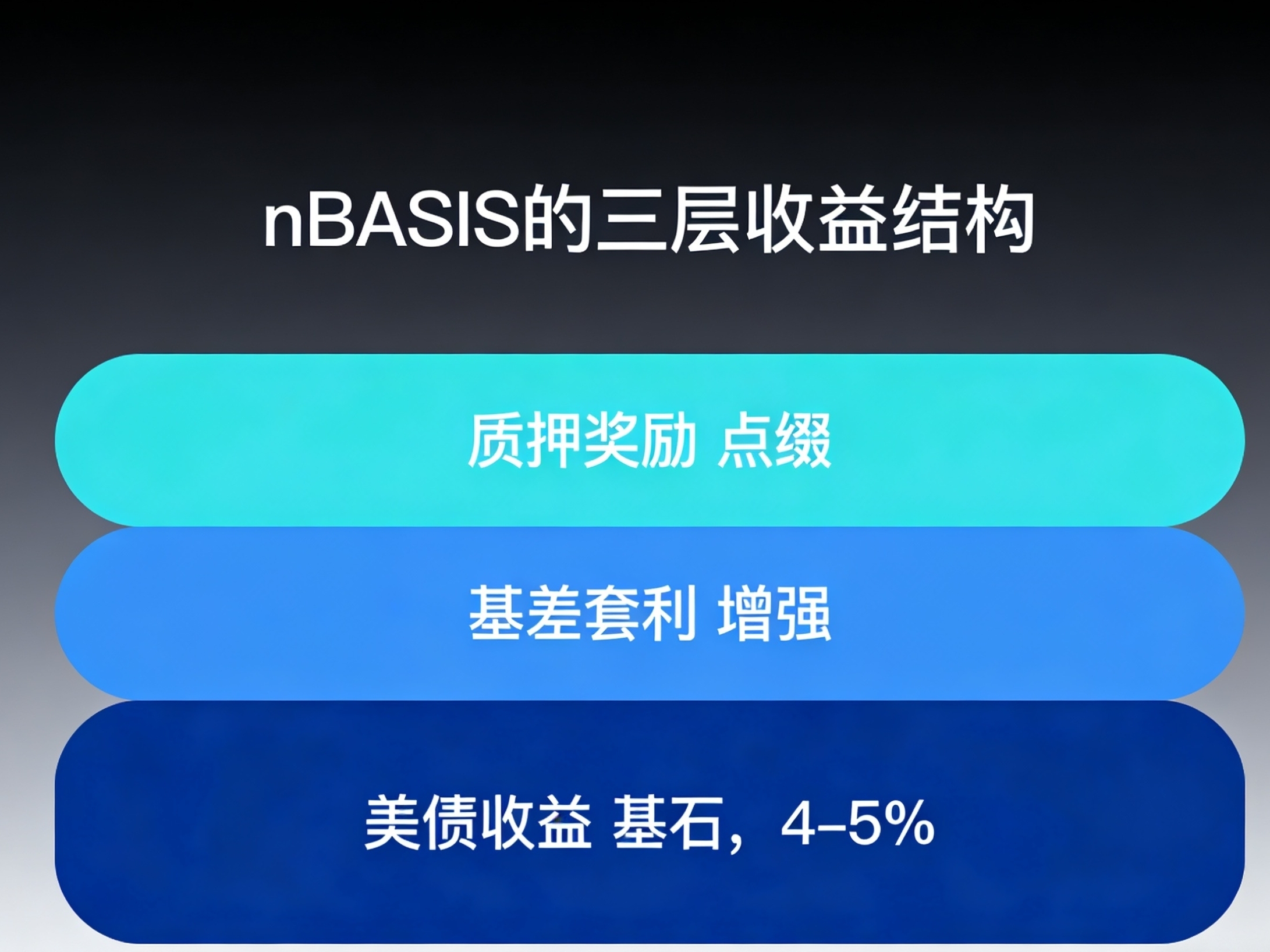
Digging into the underlying structure of nBASIS, what connects is Superstate's USCC fund. Three layered strategies are stacked together: U.S. Treasury yields as the foundation, basis arbitrage as an enhancement, and staking rewards as embellishments. Like a carefully crafted investment portfolio, each layer has its role. But what I care about more is not the yield numbers, but the diversity of yield sources. After experiencing the market fluctuations of the past two years, I am increasingly convinced that a single source of yield is a single risk exposure. In the crypto market, those who survive long understand the importance of spreading their eggs across different baskets. While you focus on APY, others are reconstructing the underlying assets.
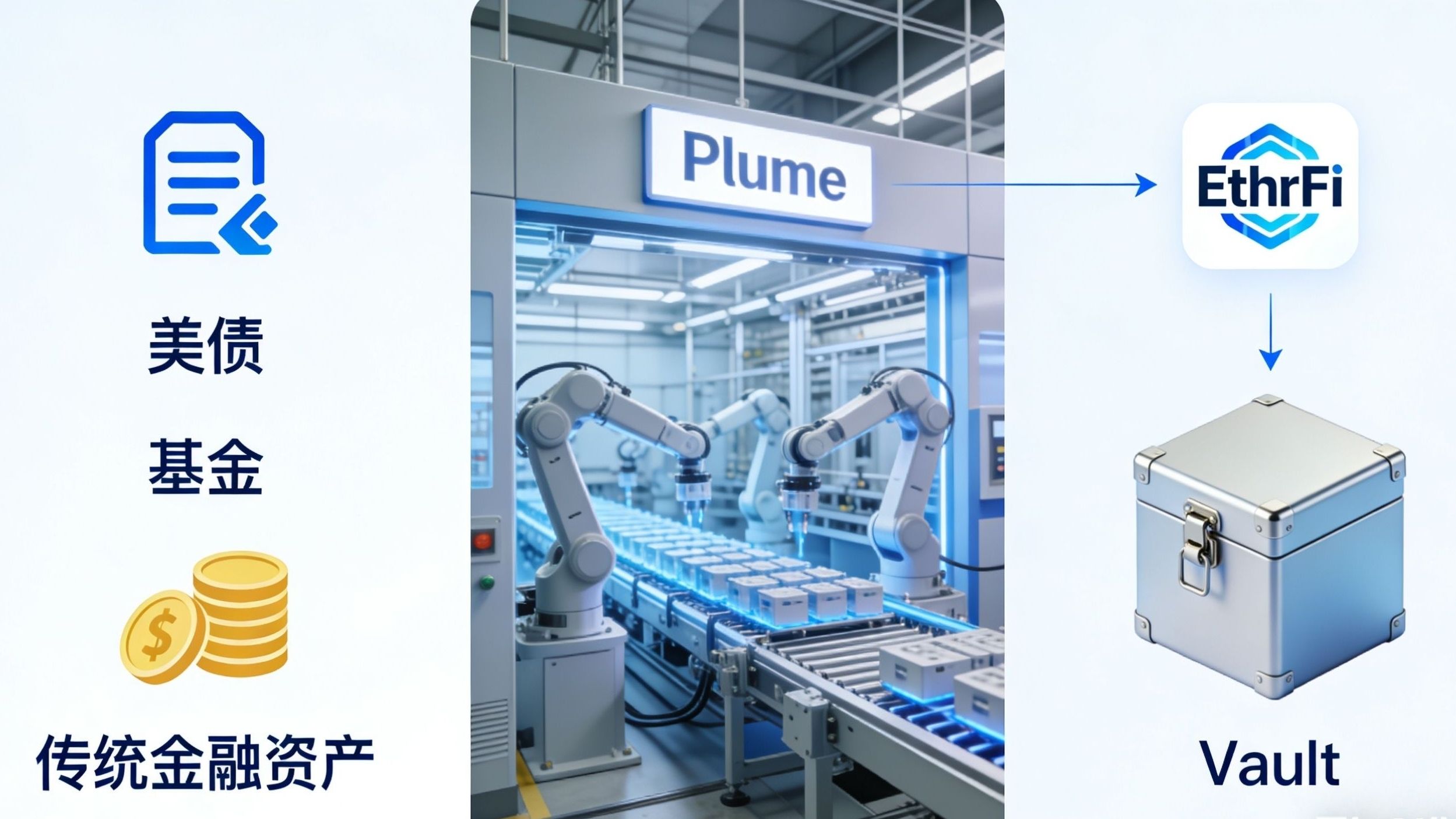
When talking about RWA, many people's first reaction is 'U.S. Treasuries on-chain'. But the real choke point has never been the asset side — U.S. Treasuries, funds, gold; traditional finance has as much as needed. The real bottleneck is the gap between compliance and user experience. Plume's cleverness lies in doing the dirty work that no one wants to do: registering as a transfer agent with the SEC. It sounds tedious, but this is the ticket for institutions to enter the market. It acts like an 'RWA assembly workshop', packaging complex underlying assets into standardized Vaults, then connecting to platforms like EtherFi that have traffic. You click 'Deposit', and you might not even perceive what the underlying is, but your funds are already compliantly resting in U.S. Treasuries.
Every time we talk about RWA, someone will mention the 'decentralization belief'. I understand this sentiment and respect it. However, after spending a long time in this industry, I have observed a phenomenon: those who are most dedicated to 'purely on-chain' often have half of their wallets in stablecoins, gathering dust. This itself is a metaphor — even the most steadfast believers need an inflation-resistant outlet. On-chain yields are indeed becoming competitive; lending, DEX fees, and staking rewards are being sliced repeatedly by countless protocols, and marginal returns are getting thinner. On the other hand, U.S. Treasury yields are out there, with risk-free returns of 4% to 5% in dollars, which is an option that no rational fund manager can ignore.
If I had to make a judgment, I believe the upcoming RWA track will head towards differentiation. Infrastructure projects will latch onto key nodes of the industrial chain, while roles like Plume, acting as an 'asset factory + compliance bridge', will naturally receive the most liquidity tilt. Asset-based projects compete on underlying quality and cost control; Ondo and Superstate are in this battleground, and whoever can offer more transparent and efficient products will win institutional funding's favor. Packaging projects will repackage RWA assets to create higher-yield derivatives, suitable for professional players but requiring more caution for ordinary users. My own allocation strategy is: infrastructure as the foundation, asset-based as support, and packaging as observation. Looking back after six months, those who do not allocate to RWA now may regret it like those who did not allocate to DeFi in 2021.
You might still be researching which Dex has lower slippage and which new project has a higher APY. There's nothing wrong with this; it's a way to survive in this industry. However, when protocols like EtherFi start leaning towards real-world assets, the rules of the entire game are being rewritten. Your ETH is no longer just a number on the chain; it can become part of U.S. Treasuries, a component of institutional arbitrage strategies, and a bridge connecting the crypto world and traditional finance. This is not a betrayal; this is the maturation of the industry. The most fascinating aspect of this industry is that it is always changing. What we need to do is stay open, keep observing, and then make our own choices at the right time.
Do you have exposure to RWA in your portfolio? I currently have 30% RWA as a base, how about you? A. Purely on-chain warrior B. Observing RWA C. Already onboard — let's chat in the comments section. #RWA #EtherFi #再质押 #美债