
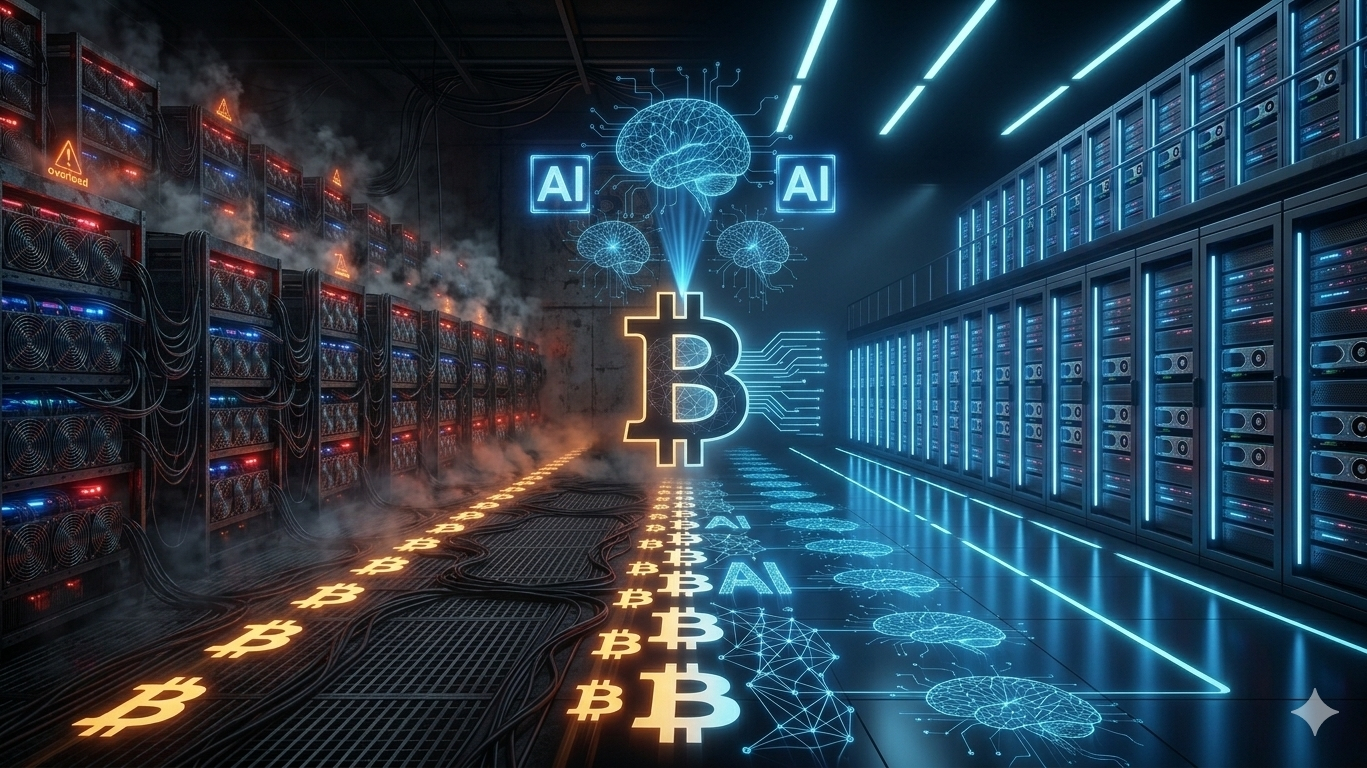
⚠️ 3 numbers that explain everything
What is happening with Bitcoin miners? The industry is experiencing its biggest transformation since the halving.
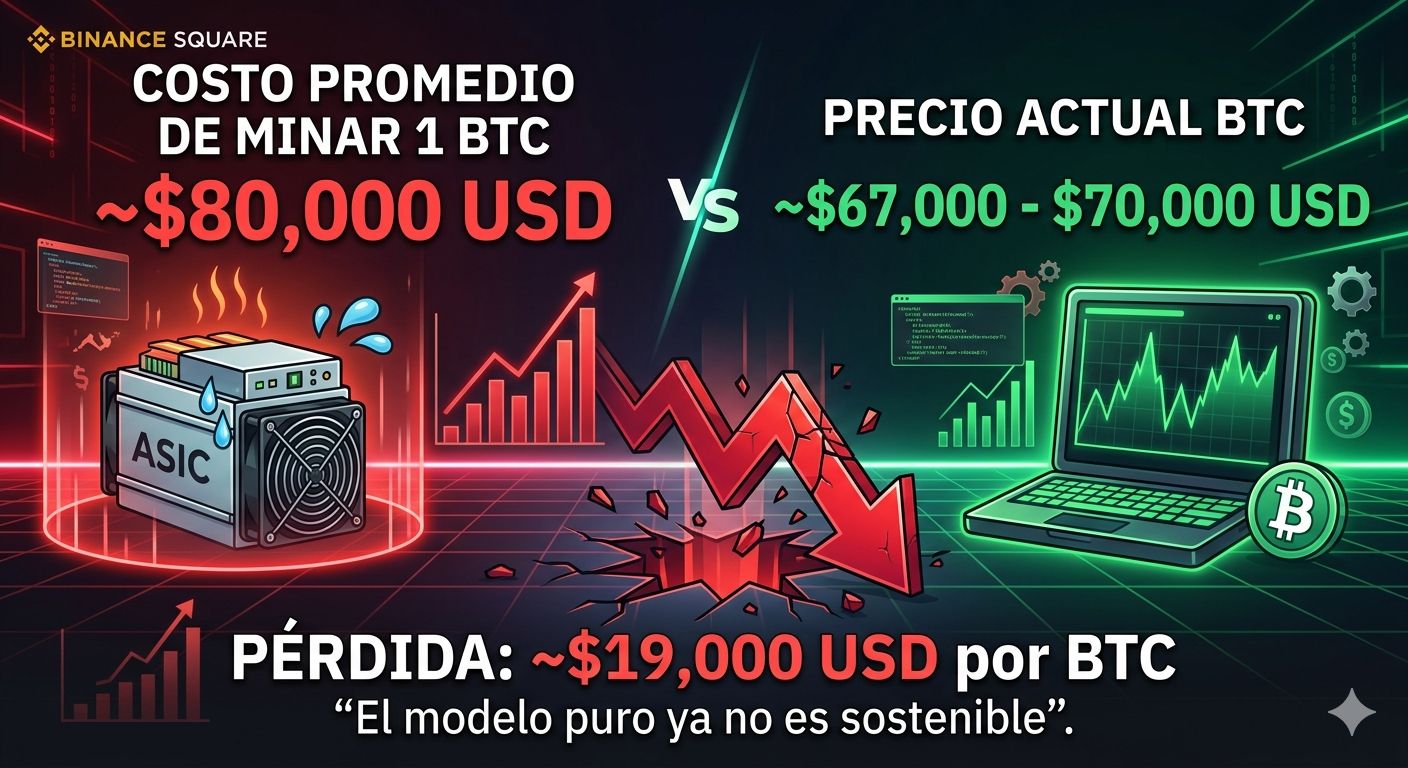
Average cost of mining 1 $BTC : around 80,000 USD.
Current price of BTC: around 67,000–70,000 USD.
Result: many miners are losing about 19,000 USD for each BTC mined.
In figures, that model is not sustainable. And the industry's response has not been to wait for the price to rise… but to completely reinvent itself.
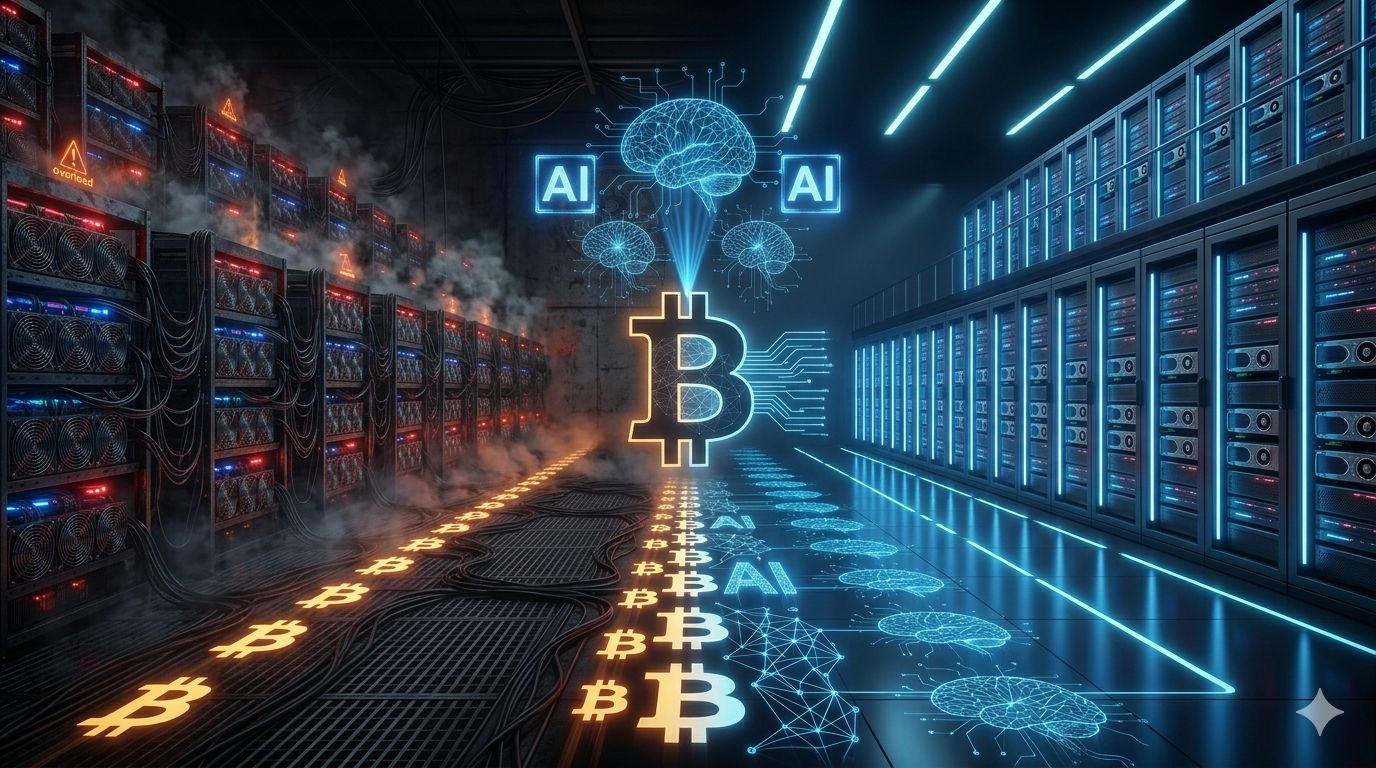
🤖 The answer: pivoting massively towards AI
The major listed miners no longer just talk about BTC: now they sign contracts for AI and high-performance computing (HPC) infrastructure.
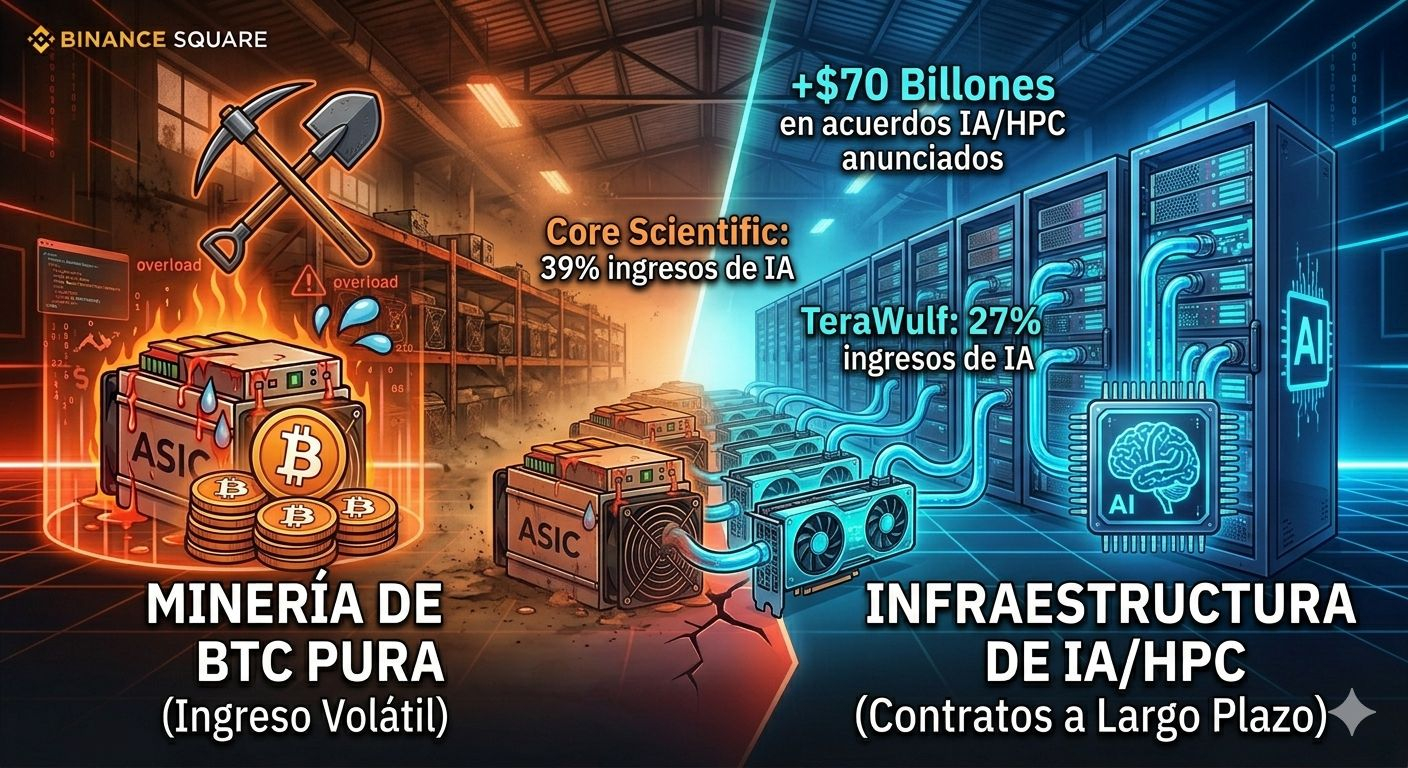
Over $70 billion in AI/HPC deals linked to BTC miners have been announced.
Examples:
Core Scientific signed a $10.2 billion, 12-year contract with CoreWeave.
TeraWulf secured $12.8 billion in HPC contracts.
Hut 8 closed a $7 billion AI infrastructure lease for 15 years.
This isn't just "signed paperwork": it's already generating real revenue.
Core Scientific already derives about 39% of its revenue from colocation services for AI workloads.
TeraWulf generates 27% of its revenue from this segment.
IREN is currently at around 9%, but is building up to 200 MW of liquid-cooled GPU infrastructure.
💰 How is this change being financed? By selling BTC
This is where the BTC market feels the direct impact:
Core Scientific sold approximately 1,900 BTC (around $175 million) in January and plans to liquidate almost all of its BTC holdings in Q1 2026.
Bitdeer reduced its BTC treasury to zero in February.
Riot Platforms sold 1,818 BTC for $162 million in December.
MARA Holdings sold $1.1 billion worth of BTC to pay off debt and fund its AI expansion, aiming for 30% to 50% of its revenue to come from AI and HPC by the end of 2027.
For the market, these movements send two clear signals:
Additional selling pressure on BTC from miners' treasuries.
A sign of strategic restructuring: these companies no longer want to depend solely on the price of BTC.
📉 The direct effect on Bitcoin: the hashrate falls for the first time in 6 years
The change in model is already being seen on the network:
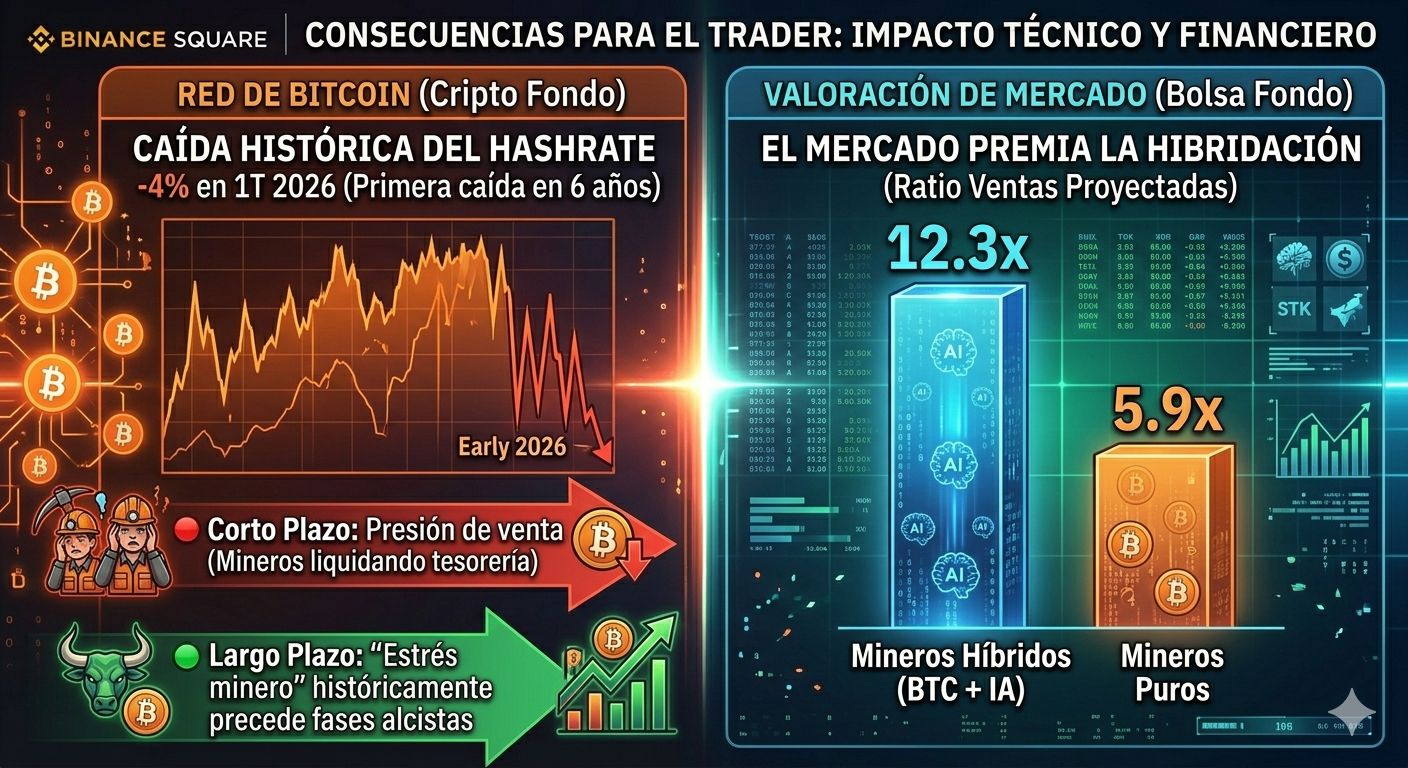
Bitcoin's hashrate has fallen approximately 4% so far in 2026, the first decline in a first quarter since 2020, following five consecutive years of double-digit growth.
It currently hovers around 1 zettahash per second.
For holders of $BTC , this means:
⚠️ Short-term risk: More BTC sales by miners + some miners leaving the network = additional pressure on price and hashrate.
✅ Long-term signal: Empirical evidence suggests that hashrate drops are usually followed, in the medium term, by positive returns in the BTC price.
Periods of prolonged mining stress have historically preceded new bullish phases.
In summary: the short term is more volatile, but the long term can take advantage of those "windows of stress" as accumulation opportunities.
📊 What the market is already valuing
The market already distinguishes between pure and hybrid BTC+AI miners:
Miners with secured HPC contracts are trading at 12.3 times their projected 12-month sales.
Pure miners are trading at 5.9 times that ratio.
This clearly indicates that the market no longer sees these companies only as "BTC miners", but as providers of computing infrastructure for AI, which also continue to contribute hash to the network.
🔮 Where is all this going?
CoinShares estimates that, by the end of 2026, listed miners could generate up to 70% of their revenue from AI, up from ~30% currently.
For much of the industry, AI offers:
More stable income,
Long-term contracts,
A more predictable monetization route than the pure mining model, which is highly sensitive to price and difficulty.
But everything has a key "hiccup":
What happens to BTC if the price remains below $80,000 while the hashrate continues to fall?
CoinShares expects that, in that scenario:
the hashprice continues to be pressured downwards,
the hashrate continues to decrease,
and more miners abandon the activity or make it secondary to AI.
That raises a question for the ecosystem:
Is the pivot to AI a betrayal of the spirit of Bitcoin… or is it the natural evolution of a business seeking to survive and capitalize on the next wave of computing?
🧠 Conclusion for traders and investors
What is happening in the mining sector is not just a matter of stockpiles, but a structural change with direct implications:
For the price of $BTC :
More selling pressure from miners in the short term,
but potentially positive signs of consolidation and restructuring in the long term.
For the Bitcoin network:
A falling hashrate can mean temporarily reduced security.
but also a lower supply of new BTC in circulation until the ecosystem rebalances.
For investments in mining:
Companies with AI/HPC contracts are already being valued as infrastructure, not just as “exposure to BTC”,
which opens up new strategies for changing the narrative (BTC → AI + computing).
Do you see the miners' pivot to AI as a betrayal of the Bitcoin ecosystem… or as the logical evolution of a business adapting to the next computing cycle?
#BTC☀ #AI #Mining #BinanceSquare #GoogleStudyOnCryptoSecurityChallenge


ETHUSDTPerp2,340.73-2.05%This content is for informational purposes only.informative and educationalThis does not constitute financial advice or a recommendation to buy or sell.
Always do your own research (DYOR) before making investment decisions.
