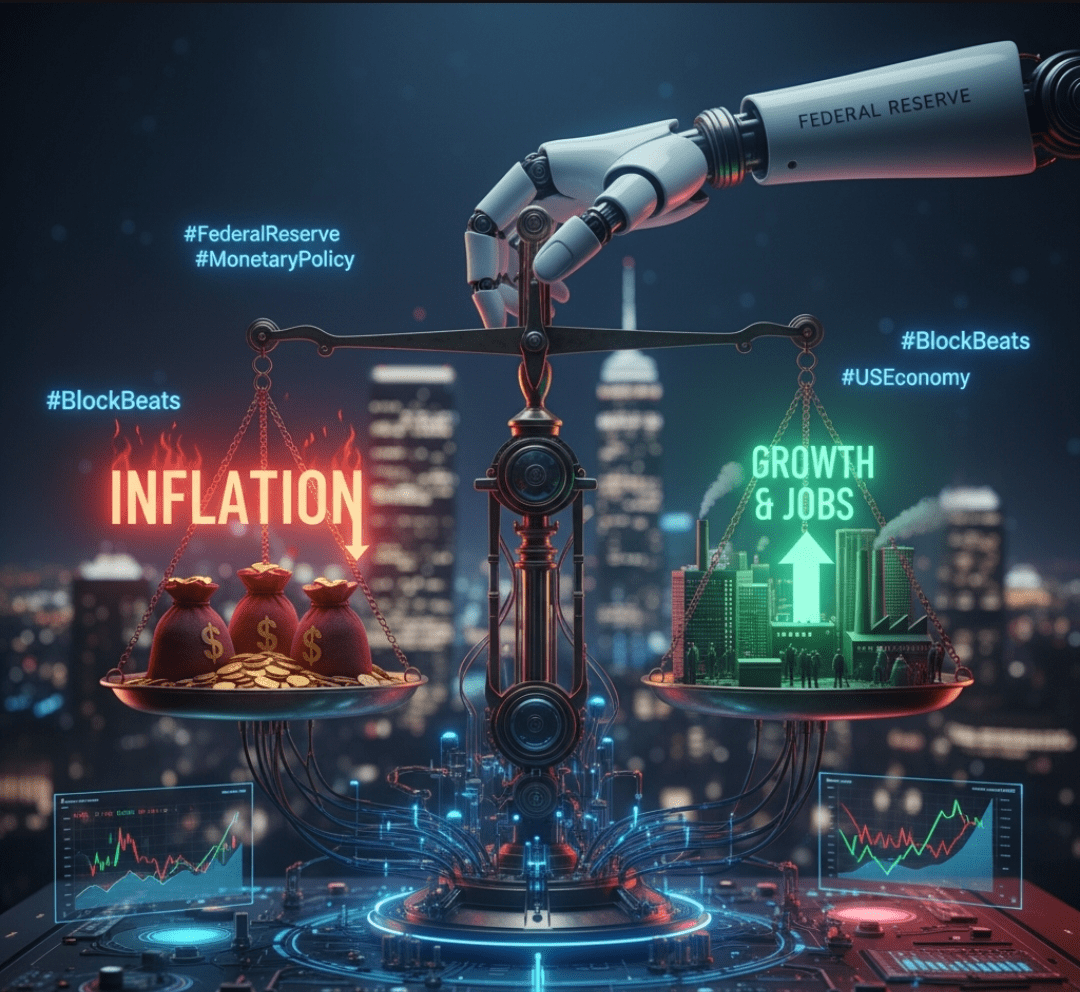
It requires a careful balance between controlling inflation and maintaining economic growth stability.
In light of the rapid economic developments, Milan, a member of the U.S. Federal Reserve, indicated that the current monetary policy has become more restrictive than necessary due to the decline in the neutral interest rate, which means that the current levels of interest rates may be putting pressure on economic activity more than required to achieve price stability. He considered that continuing on this path without adjustment could create new risks to growth and job opportunities and lead to a decline in market confidence, as excessively tightening monetary policy could have adverse effects on both productive and financial sectors. Milan clarified that the current economic environment differs from previous stages because the U.S. economy no longer requires the same degree of tightening that was necessary at the peak of the inflation wave over the past two years. While data shows a gradual decline in the pace of price increases, maintaining a very strict monetary policy could slow industrial and technological investments and weaken demand in the real estate and financing markets, increasing the fragility of future growth. He added that the Federal Reserve should handle the current phase with greater flexibility, balancing the goal of controlling inflation and supporting financial stability, as prolonged high interest rates will directly impact banks and small businesses that are already facing increasing financial challenges. He pointed out that accurately assessing the neutral interest rate is one of the most crucial elements in decision-making in the upcoming phase because this rate represents the point at which the economy balances between sustainable growth and price control. If the Federal Reserve remains strict in raising interest rates without considering the drop in the neutral rate, it could lead to a gradual economic contraction negatively affecting employment rates and consumer confidence. Milan indicated that expectations regarding inflation have become more optimistic now compared to last year, as core price indicators have begun to decline while consumer and business expectations about future inflation rates are stabilizing. This provides the Federal Reserve with a broader space to consider gradually adjusting its policy to avoid potential damage in the medium term. He added that the next phase requires a comprehensive assessment of the impact of high interest rates on vital sectors such as technology, energy, and real estate, as these sectors represent the main pillars of growth in the United States, and any slowdown in them will reflect on GDP and affect the position of the U.S. economy in the global financial system. Milan also emphasized the importance of paying attention to the impact of U.S. monetary policy on the global economy, as the dollar remains the dominant currency in international markets, and any additional tightening could lead to an increase in its value, creating pressures on emerging economies that rely on borrowing in dollars. Therefore, maintaining a delicate balance between combating inflation and stabilizing the international financial system has become a necessity that cannot be ignored. He noted that financial markets have begun to show signs of concern over the continued tightening, as investor appetite for high-risk assets has declined, and demand for government bonds has increased, reflecting fears of a potential economic slowdown. If the Federal Reserve does not act flexibly, these concerns may turn into a reality that threatens local and global financial stability. He affirmed that the central bank should adopt a gradual and measured approach, ensuring it maintains its credibility in combating inflation on one hand while preventing excessive contraction on the other. At the same time, he sees that the relative improvement in price indicators gives the Federal Reserve the opportunity to recalibrate its policies without harming investor confidence or the reputation of U.S. monetary policy in the markets. Finally, Milan pointed out that the ultimate goal should be to achieve a state of sustainable balance where price stability is achieved without stifling growth, and that this phase requires broader cooperation between financial institutions and decision-makers to steer the economy toward a more stable path that ensures growth, employment, and innovation simultaneously, emphasizing that hasty or stagnant monetary policy could be equally dangerous to the future of the U.S. and global economy.
#Federal_Reserve #السياسة_النقدية #الاقتصاد_الأمريكي #التضخم #الأسواق_المالية #BlockBeats