
In trading cryptocurrencies, stability is key. Many people want to get rich overnight, but in reality, stable profits often require 'simple methods.' These methods may not be stunning, but they are extremely reliable, helping you secure profits and firmly control risks.
Today, we will share a 'simple method'; making steady profits is a high-probability event. Also, there are three major taboos that you must not commit while trading cryptocurrencies.
Three major taboos: The three things you must not do when trading cryptocurrencies.
1️⃣ Don’t chase rises: Stay calm when prices rise and enter the market when they fall.
In the market, most people have the habit of chasing rises and selling on dips. When they see others making money, they rush in. However, such 'herd' operations are often the easiest to get trapped.
Remember: "Buy when it falls, sell when it rises."
When the market is in panic, you must dare to enter; when the market is overheated, you must know to calmly observe. By doing this, you can avoid most risks and stabilize your profits.
2️⃣ Don’t put all your eggs in one basket: Capital should be diversified, and risks should be controlled.
Many new traders often put all their money into one coin or one trade. This is an extremely dangerous operation.
Diversifying risks is a fundamental principle in trading cryptocurrencies. Don’t invest all your funds in one trade. For example, allocate 10% for long-term investments, 20% for short-term swings, and keep 30% as reserve funds to avoid significant losses.
3️⃣ Don’t operate with a full position: Leave yourself some margin to flexibly respond to market changes.
Some investors, in pursuit of higher returns, often choose to operate with full positions. But full positions mean that if you make a mistake, the risk will be amplified.
Keep some funds aside; not only can this avoid fatal impacts from market fluctuations, but it also helps you seize other opportunities that may arise at any moment. Remember: flexibility is key in short-term trading, not just blindly increasing positions.
Six tips for trading cryptocurrencies.
Trading cryptocurrencies not only requires avoiding the three major taboos mentioned above but also mastering some small operational tricks. These skills can enhance your operational efficiency and help you maintain control during market fluctuations.
1️⃣ Don’t rush to buy at highs, don’t rush to sell at lows.
If prices are already very high, you need to be patient and not rush to enter; when prices fall, do not rush to sell either. Wait until the market trend is clearer before making decisions.
Key: Timing is very important; wait for a suitable signal to avoid making emotional decisions.
2️⃣ Trade appropriately during sideways markets.
When the market is consolidating sideways, the trend is unclear, making both entering and exiting trades prone to market fluctuations. However, long-term low-level consolidation indicates a need to build positions appropriately and timely.
High-level consolidation periods are usually times of market uncertainty, and price fluctuations during these times often do not persist. Therefore, you should remain observant during this phase, waiting for clear trend signals before trading. However, long-term low-level consolidation indicates reasonable prices, and you should build positions in batches, waiting for the timing to reverse.
3️⃣ Look at K-line charts and follow the trend.
K-line charts are the 'magic tool' in cryptocurrency trading, as they can intuitively reflect market buying and selling sentiment. Learn to use K-line charts to judge market trends.
Operational principles:
Try to buy when there's a bearish candle, indicating a potential reversal in market sentiment;
Consider selling when there's a bullish candle, indicating that market sentiment is optimistic, allowing you to lock in profits.
For medium to long-term operations, you must look at the weekly K-line chart; for long-term operations, look at the monthly chart. For ultra-long-term, look at the quarterly chart. Buying should always be done during consolidation, and selling should be chosen at trend reversals.
4️⃣ The relationship between rebound speed and decline intensity.
Market rebounds are often proportional to the speed of declines. Generally, the faster it drops, the stronger the rebound; conversely, if it drops slowly, the rebound will appear weak.
Therefore, those trading short-term must pay attention to the speed and intensity of rebounds during market declines to judge whether quick profits can be made. For long-term trades, the intensity of declines should guide appropriate position building.
5️⃣ Pyramid building method.
The pyramid building method is a very stable investment strategy. Gradually increase positions when prices fall to lower buying costs. When the market trend is clear, gradually exit to lock in profits.
Operational techniques:
Buy in batches as prices gradually decline;
Gradually reduce holdings as the market rises.
6️⃣ Extreme rises and falls followed by sideways consolidation.
After experiencing violent rises and falls, the market often enters a sideways consolidation phase. During this time, investors must remain patient and avoid making position adjustments at extreme points.
Avoid: Do not sell everything at a high point, nor buy everything at a low point. Wait until the market stabilizes before taking further actions.
Finally
In the process of trading cryptocurrencies, 'stability' is the most important. Although these methods may seem clumsy, they can help you avoid most risks and steadily gain profits.
Remember the three major taboos, keep the basic principles of trading cryptocurrencies in mind, and gradually accumulate experience; you will be able to maintain a calm mind in this volatile market and earn profits steadily.
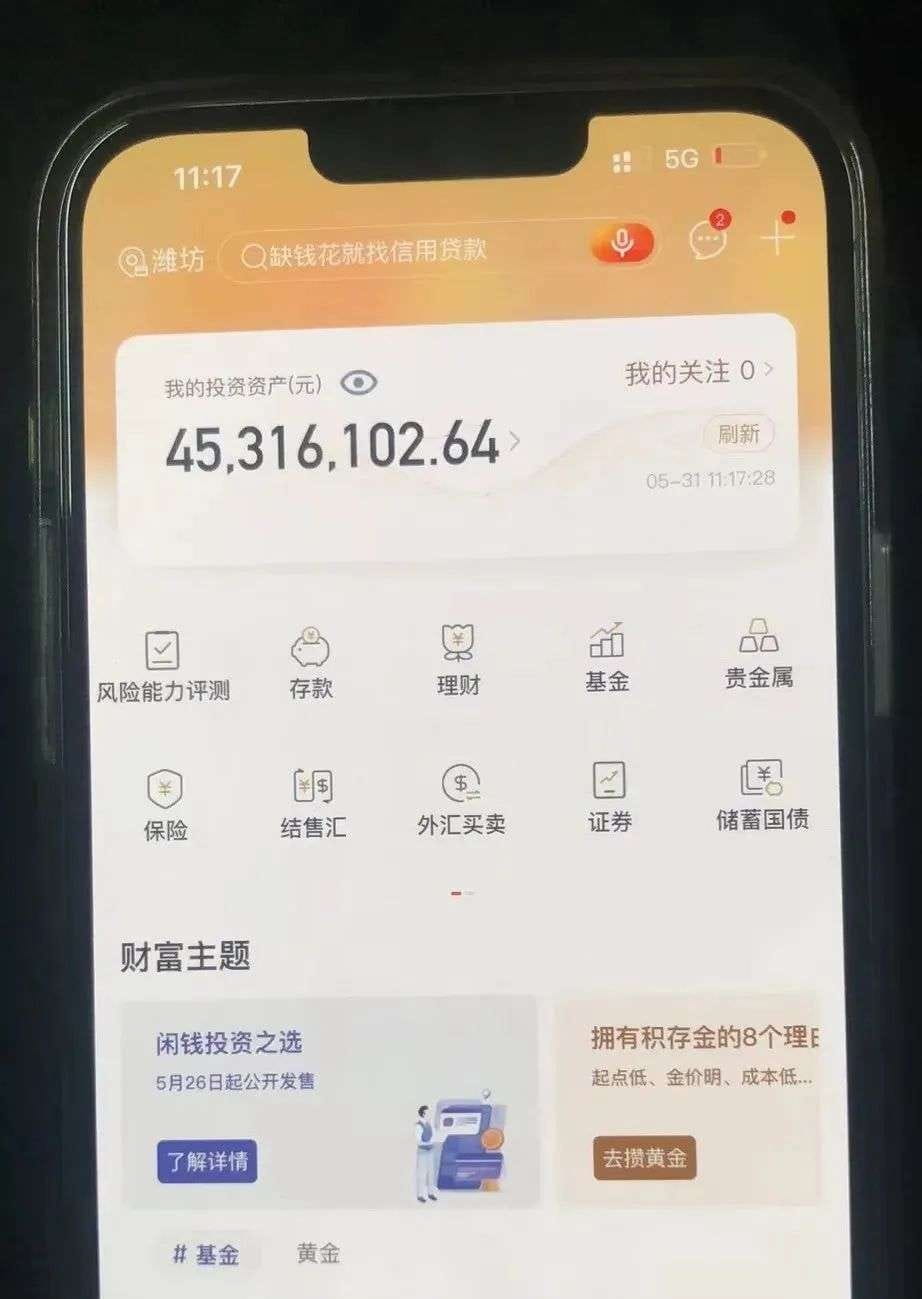
In the early years of trading cryptocurrencies, like many others, I stayed up late every day, closely monitoring the market, chasing rises and selling on dips, losing sleep over my losses. Later, I gritted my teeth and stuck to a simple method, not only surviving but slowly achieving stable profits.
Looking back now, this method, though simple, works: "If I don't see the familiar signals, I resolutely do not act!" It’s better to miss out on market movements than to place random orders. Following this iron rule, my annual return rate has remained stable at over 50%, and I no longer have to rely on luck to 'bet' on the future.
Today, I've organized the experiences I've gained from trading losses into seven life-saving suggestions. New friends must read them carefully.
1. Make trades after 9 PM to avoid 'news traps.'
The daytime market is like a 'madman'; all kinds of fake good news and bad news abound, and the market jumps around, making it easy to get fooled into entering as a 'bag holder.'
I usually wait until after 9 PM to operate; by then, the news is generally stable, and the K-line trend is clearer, making the direction more definite, greatly reducing the probability of stepping into pitfalls.
2. Cash out immediately after making money, don’t be greedy!
Don’t always think about 'getting rich overnight'! For example, if you make 1000 U today, it’s advisable to withdraw 300 U to your bank card immediately and continue operating with the rest.
I have seen too many people 'make three times the profit but want five times'; as a result, one correction wipes out all profits, or even leads to losses. This kind of 'basket case' loss should really be avoided.
3. Look at indicators, not feelings; refuse 'blind betting.'
Making trades based on feelings is no different from blindly guessing with closed eyes.
Install TradingView on your phone and check these indicators before trading:
• MACD: Is there a golden cross or death cross?
• RSI: Is there overbought or oversold?
• Bollinger Bands: Is there a contraction or breakout?
When at least two of the three indicators give consistent signals, consider entering the market; the win rate will be much higher.
4. Stop-loss should be flexible; preserving profits is key.
When you have time to monitor the market, manually adjust your stop-loss price upwards after making a profit. For example, if the buying price is 1000 and it rises to 1100, raise the stop-loss to 1050 to protect part of your profit.
If you need to go out and can't monitor the market, be sure to set a hard stop-loss of 3% to prevent sudden crashes.
5. Must withdraw profits weekly; digital assets must be turned into cash for reliability.
Unwithdrawn funds are ultimately just a number game in your account!
Every Friday, without fail, I transfer 30% of my profits to my bank card, leaving the rest to continue rolling over. Over the long term, this will thicken my account funds and provide peace of mind.
6. There are tricks to reading K-lines; finding the right cycle is more efficient.
• For short-term trades, look at the 1-hour chart: If there are two consecutive bullish candles, consider going long.
• When the market is stagnant, switch to the 4-hour chart to find support lines: Enter when it approaches the support level for steadiness.
7. These pitfalls must not be stepped on! They are all lessons learned through blood and tears.
• Leverage should not exceed 10 times; beginners should ideally keep it within 5 times.
• Don't touch coins like Dogecoin or Shitcoin; it's easy to get harvested.
• Don't make more than three trades a day; doing too much can lead to losing control.
• Absolutely do not borrow money to trade cryptocurrencies!
The last sentence I give you: Trading cryptocurrencies is not gambling. Treat it as a job, clock in and out every day, shut down at the end of the day, eat when it’s time, sleep when it’s time, and you will find—money actually becomes more stable.

"Crocodile spirit" is fundamentally based on patient waiting, with precise strikes as the key, and adaptability to the environment as the support.
"Crocodile spirit" is a philosophy and action strategy derived from the survival habits of crocodiles, fundamentally based on patient waiting, with precise strikes as the key, and adaptability to the environment as support; it is often used to guide investments, career planning, or personal growth.
1. Extreme patience: Wait for the best opportunity.
Crocodiles, when hunting, can lie in wait underwater for hours or even days, motionless, seemingly 'inactive,' but actually waiting for prey to let down its guard and enter the attack range. This 'stillness' is not passive waiting, but actively selecting opportunities—unperturbed by small temptations, only aiming at targets that can yield decisive results.
Corresponding to human scenarios: For example, in investments, do not chase rises and sell on dips; do not be swayed by short-term fluctuations, but wait for the market to present clear signals or value valleys; in careers, do not be impatient for quick success, but accumulate skills, observe trends, and wait for key opportunities to arise before taking action.
2. Focus and lock in: Concentrate on core objectives.
Once a crocodile locks onto its prey, it will be wholly focused, ignoring other distractions (like other small creatures passing by), always keeping its attention on the 'key target' that meets its survival needs.
Corresponding to human scenarios: When doing things, avoid 'multi-line warfare' or being greedy for more; instead, clarify the core objectives (like a key project or an important transformation), concentrate resources and energy to tackle them, without being distracted by secondary information.
3. Decisive action: Seize the opportunity without hesitation.
When the prey enters the attack range, the crocodile will launch a surprise attack at lightning speed (from lurking to biting the prey takes only 0.1 seconds), acting decisively and accurately, leaving no room for escape. This 'speed' is built on ample prior waiting and observation, not blind impulsiveness.
Corresponding to human scenarios: When opportunities mature (such as when market windows open, or cooperation conditions are met), do not procrastinate or hesitate, quickly mobilize resources for execution, avoiding missing out on good opportunities due to indecision.
4. Adaptation and resilience: Accept the environment and conserve strength.
Crocodiles are ancient creatures that have survived for over 200 million years, having gone through multiple environmental upheavals, relying on their strong adaptability: they can go months without food when resources are scarce, they lie in wait during harsh conditions, never directly confronting the environment.
Corresponding to human scenarios: When facing uncertainty (such as market fluctuations or industry changes), don’t blindly confront it, but adjust strategies, conserve strength, and wait for the environment to improve before taking proactive actions.
In short, the essence of the 'crocodile spirit' is 'to control movement through stillness, to seek victory through stability'—using patience to filter opportunities, using focus to lock in objectives, using decisiveness to seize moments, and using resilience to counter change. This strategy is particularly important in areas requiring long-term planning, and facing uncertainties (such as investment, entrepreneurship).
The key to stable profits lies in strategy, not luck!
The crypto world is ever-changing, with speculators everywhere; those who can traverse both bull and bear markets rely not on momentary 'luck,' but on a reusable, iterative trading system. Below are my personal practical experiences accumulated over eight years, may we encourage each other 👇
🔒 01. Market makers protect the market: Not falling is a signal.
"Everyone else is falling, but my family isn't."
When the overall market crashes, some coins remain stable, indicating:
There are market makers protecting the market;
Solid fundamentals or favorable news brewing.
✅ When encountering this situation: **Hold steady!** It may be a seed candidate for the next market cycle.
📊 02. Beginner’s guide to moving averages: The simpler, the more effective.
"Understanding moving averages means beginners won't lose."
Short-term: Observe the 5-day moving average; hold if it stays above, sell if it falls below.
Middle line: Observe the 20-day moving average and operate similarly.
✅ Don’t be tempted by complicated tricks; sticking to one method is key.
⚡️ 03. Short-term trading principles: Get in and out quickly; do not linger.
"Have you bought for three days without a rise? Get out!"
If you buy and don’t act for three days, switch coins;
If you incur a 5% loss immediately after buying, decisively stop loss.
✅ Maintain high efficiency of funds, leaving no space for emotions; this is the basic cultivation for short-term trading.
📉 04. Extreme drop rebound: A turning point seen after nine consecutive declines.
"It’s not that prices rise too sharply, but that falls can be too severe."
If the coin price is halved from a high point and continues to drop for more than 9 days, it is highly likely that:
Sentiment has fully released;
There may be a short-term strong rebound opportunity.
✅ Combine market volume with the overall market rhythm for decisive attacks; remember to take profit.
🐉 05. Leader faith: Recognize the strong, don’t pick the weak.
"Coins that rise quickly will also resist falling."
Leading currencies often possess:
Sector-driven capability;
Stronger capital support;
Clear narrative and main line.
✅ Do not hesitate to buy because of high prices; buy when the trend is established, and sell at the onset of reversals.
🔄 06. Bottom fishing VS Following trends: Don’t be obsessed with 'the lowest price.'
"It’s not that you can’t bottom fish; it’s that there’s always a lower bottom."
For currencies in a downtrend, it’s always unclear when the 'true bottom' will be.
✅ Instead of bottom fishing for a long time, it’s better to wait for a trend reversal:
Look for volume surges moving upwards;
Check if the moving average is turning.
Follow the trend to increase your win rate.
🔍 07. Strategy review: Based on luck? Or based on strength?
"One profit does not mean you will continue making money."
After each trade, ask yourself:
What is the reason for making a profit?
Was it my own judgment that was correct, or did the market just happen to cooperate?
✅ Make trading notes, organize thoughts, and gradually build your own strategy system.
🧘 08. Staying in cash is the best strategy.
"If you don't understand it, don't act."
When you are unsure about market conditions, staying in cash is the safest choice.
✅ The crypto world is not a casino; there’s no need to bet all the time.
Entering the market is for the steady appreciation of assets, not for emotional stimulation.
🚨 09. New coin investment: Popularity ≠ Value
"New coins trending on hot searches are often machines for cutting leeks."
New coins often surge due to high popularity and concentrated funds, but the problem is:
Lack of fundamental analysis;
Once sentiment shifts, a crash can be bottomless.
✅ Want to participate in new coins? Please:
Strictly control positions;
Set stop losses;
Don’t blindly chase highs.
🎯 Summary: Trading cryptocurrencies is not about who makes money the fastest, but rather who can last the longest.
The essence of investment is never about 'grabbing a single chance to get rich,' but rather about building a long-term stable profit system.
📌 Getting it right once is based on luck; getting it right a hundred times is based on the system.
May you not be a follower of high prices in the crypto world, nor be a 'leek,' but rather a long-term winner who calmly compounds and traverses both bull and bear markets.

