
If you want to earn passively from trading coins, don't play tricks. This 'foolproof winning method' has kept me from losing for half a year. Today, I'll guide you step by step — remember these 3 iron rules + 6 mantras, even a beginner can feast on profits! 👇 🌟 First, lock in these 3 things! Never be a big fool!
✨ ❶ Only act when panic hits! While others cut losses, I pick up bargains. Buying high during a rise is just giving money to the big players! Develop the habit of 'picking up chips on a green plate'. Buy in batches when the price drops by 5%/10%. While others are fearful, I smile secretly~
✨ ❷ Don't be a 'limit order hero'! Hanging orders and waiting for execution is too rigid; the market changes in seconds! If you see an opportunity, dive in directly. Hesitation turns you into fodder (I've missed out on 3 surges due to limit orders!)
✨ ❸ Never fill your position! Keeping 30% of your money is better than anything else! Cry when your full position drops, slap your thigh when your short position rises. Half position can be used for both offense and defense, there are always opportunities to seize~ 📈 6 must-know short-term trading tips! Memorize them and save yourself from losing 100,000+
1. Consolidate at high levels to wait for new highs, and consolidate at low levels to avoid new lows! Don't rush into sideways trading, wait until the direction is clear before taking action. Chasing the rise and selling the fall will only lead to death!
2. Don't trade during sideways trading! Don't trade! 90% of traders lose money because they're too clumsy! Keep your hands off the market during volatile trading periods. Reckless trading means paying fees to the platform!
3. Buy on the Yin line and sell on the Yang line! Quietly build a position when the K line closes green, and cash out in batches when the K line closes red. This is the opposite way to avoid being manipulated by the main force!
4. A slow decline leads to a weak rebound, while a fast decline leads to a strong rebound! Don't buy the dip when the decline is slowing down. A doji after a sharp drop is the signal. Wait for "acceleration" to buy the dip!
5. Pyramid buying! Buy 20% first, add 30% if the price drops 5%, add 50% if the price drops again. The more the price drops, the lower the cost. I'm happy when the main force dumps the market!
6. After a period of ups and downs, the market is bound to change! Don't go all in if it's been rising for a long time, and don't sell at a loss if it's been falling for a long time. The end of the sideways period is the decisive moment. If the market changes in the wrong direction, run away immediately!
💡 Finally, take note: Cryptocurrency trading is not about gambling on the size of the market. Engraving these 9 rules into your DNA, you can make smart money using “stupid methods”!
Remember - stability is more important than ruthlessness, and you can earn more by staying alive!
Add a caption for the image, up to 140 characters (optional)
Along the way, I have summarized the 6 iron laws of cryptocurrency trading, hoping to help you avoid detours!
Iron Rule 1: Market Sentiment Determines Trading Volume
Large volume but no price drop: When the trading volume increases but the price does not fall, it is often a signal to stop the decline.
Large volume but no price increase: The trading volume increases but the price stagnates, and the price may peak in the short term.
The rise requires continuous increase in volume: Trading volume should increase steadily during the rise; if it suddenly decreases or increases dramatically, the rise may be over.
Volume increases at key decline positions: When a key position is broken and volume increases during a decline, the decline is likely to continue.
Iron Rule 2: Buy and sell at key points
Resistance levels, support levels, and trend lines: When the price hits these points, act quickly!
Golden section: It is very effective in predicting pressure/support levels.
Iron Rule 3: Monitor the market in multiple time windows
1-minute line: Find entry and exit points.
3-minute line: Monitor the band positions.
30-minute/1-hour line: Determine the intraday trend direction.
Iron Rule 4: Stop Loss and End
After the stop loss is set, the order is over. Every transaction is a new beginning. Don’t let the previous order affect your mentality.
Iron Rule 5: Simple and Practical Position Management Method (Three-Part Method)
Buy:
When the price breaks through the 5-day moving average, buy the first share;
If it breaks through the 15-day moving average, buy the second share;
Break through the 30-day moving average and buy the third share.
Sell (Stop Loss):
If it falls below the 5-day moving average, sell the first share;
If it falls below the 15-day moving average, sell the second share;
Falling below the 30-day moving average, clear the position!
Rule 6: Have a clear selling strategy #BinanceAlpha
The high price falls below the 5-day moving average: sell one share first and observe the follow-up.
Falling below the 15-day and 30-day moving average: Sell everything without hesitation!
Five core questions for building a trading system:
What to buy? - Select the underlying asset (e.g. BTC, ETH).
When to buy? - Market entry timing (technical indicators, support and resistance).
How much to buy? - Position management (based on funds and risk).
When to sell? - Take Profit/Stop Loss points.
How much to sell? - Position exit strategy.
Among these, "what to buy" (selecting promising coins) and "when to sell" (taking profits) are crucial. "How much to buy" (position management) is even more crucial! My go-to strategy: 50-60% mainstream, 30% altcoins, and 10% futures trading. This method may not yield 10- or 100-fold returns, but it will allow you to truly preserve your profits during a bull market. The ultimate reason many people fail to profit is poor position management. "When to sell" and "how much to sell" must be carefully considered and executed according to your specific position planning.
Position Management: Methods and Options
What is position management? What are the tips for doing it well?
Three common methods:
1. Rectangular Position Method:
Divide the position into equal parts (such as thirds or fifths).
Applicable in volatile markets. Enter the market in fixed amounts and installments to share risk.
2. Funnel Positioning Method (Inverted Pyramid):
The position ratio increases gradually (such as 10%, 15%, 20%, 25%, 30%).
Suitable for: Expecting a continued decline (left-side trading/bottom fishing). Initially, keep a small position, leaving enough room to increase your position periodically (e.g., every 10% drop). Key: Control the intervals between increases and manage subsequent funds to avoid premature depletion.
3. Pyramid Positioning Method:
The initial investment is the largest, and the proportion of increasing positions decreases as the price rises.
Suitable for: Established uptrend (trading on the right side). Initially, build a strong position to establish a foundation, then cautiously increase your position in smaller increments. Remember the old Wall Street adage: "In a bull market, the most important thing is to hold onto your position until a clear reversal signal appears."
Summary: None of the three methods are inherently superior or inferior; the key lies in choosing the most suitable one based on market judgment. The essence of investing is the monetization of cognitive ability.
Final reminder:
Be sure to keep a certain percentage of liquidity in your account to give yourself some room.
Good position management is not static and should be adjusted according to market dynamics.
Investing originates from life and is a part of it. It can help us understand the true meaning of life and extract investment wisdom from life.

Add a caption for the image, up to 140 characters (optional)
What are the most commonly used operations in the cryptocurrency world?
As the saying goes, standing on the shoulders of giants helps you reach success faster. I hope my experience can be a valuable aid in your journey.
In addition, at the end of this article, I will also reveal a crucial profit-making system, which is the essence of my years of hard work in the cryptocurrency circle. If you are lucky enough to read this far and are eager to improve your attainments in the field of cryptocurrency trading, please be sure to savor it carefully, read it in depth, and I recommend saving it for future use.
What the heck is leverage? Can you please stop killing me?
Leverage, to put it simply, means using a small amount of money to leverage a large trade. Just like using a small crowbar to move a large rock, leverage allows you to trade much larger amounts with a small amount of capital. For example, 5x leverage means you can trade 5 dollars worth of Bitcoin with just 1 dollar. Sounds exciting, right? But be careful! Leverage can magnify both your profits and losses. Even a slight market move in the opposite direction could mean you lose more than your original investment. So, choose your leverage carefully and don't go too high right away—after all, the saying "If you're good at contracts, you'll have two tricks up your sleeve" is no joke.
What do cross-margin and single-margin trading mean? Will they affect my returns?
On the Binance trading interface, you will see two options: cross-margin and single-margin (also called isolated margin).
Full Margin Trading: As the name suggests, all your account balances are included, and losses are shared. If you have multiple positions open and one suffers a significant loss, the platform will withdraw funds from other parts of your account to cover the losses until all funds are depleted. In this model, risk is shared. Full Margin Trading is suitable for those who are bold but cautious, who believe they can weather temporary fluctuations with their entire account balance. However, if your account is relatively small, the risk of a margin call is very high.
Single Position Mode (Isolated Position Mode): In contrast, isolated position mode is like opening a small, independent "coffer." You can allocate a fixed margin to each position, so losses only affect that portion of your account, rather than your entire account. This mode is more suitable for conservative traders, as even if one position goes bankrupt, the others remain intact.
For example, if you have 1,000 USDT in full-margin mode and one of your positions suffers a loss, the platform will automatically use the 1,000 USDT to cover the loss for you. However, in position-by-position mode, you can allocate 500 USDT to each position. If one position loses all its money, the money in the other positions will not be affected.
How can I set up a take-profit/stop-loss function so that I don't end up losing money?
Stop-loss and take-profit settings, as the name implies, help you set your profit or loss expectations in advance, so that the trading platform will automatically close your position when these prices are reached. This is done to prevent the market from suddenly changing and causing you to lose everything before you can react.
Take Profit: When the price reaches the high point you set, the system will automatically help you sell and lock in profits.
Stop loss: When the price drops to the bottom line you set, the system will help you stop loss in time to avoid further losses.
However, the setting of take-profit and stop-loss should not only consider the latest price, but also the "mark price".
What is the difference between the marked price and the latest price?
Latest Price: This is easy to understand; it's the most recent market price, which fluctuates every second. If you're more focused on real-time market fluctuations, you can often use the latest price to set your take-profit/stop-loss orders. This way, as soon as the latest price reaches your set point, the system will automatically close your position.
Mark Price: The Mark Price is a bit more complex. It's a smoother, more stable reference price calculated by the platform based on factors like market prices and funding rates. It exists to prevent your positions from being unnecessarily liquidated due to short-term price fluctuations. Think of the Mark Price as the platform's "psychological price," which is generally more stable than the latest price. If you're not willing to be "killed" by short-term market fluctuations, use the Mark Price as a reference when setting your take-profit and stop-loss orders.
For example, you set a stop-loss order to sell Bitcoin if it falls to 63,200 USDT. If you use the last price, the system will immediately sell your position when it hits 63,200 USDT. However, if the market experiences a sudden and significant fluctuation, your position may be closed out even earlier than this price. Using the mark price to set a stop-loss is more reliable during high volatility, preventing you from being wiped out by a false dip.
Opening a position, closing a position, going long, going short, are you confused?
These are all trading terms. They're actually pretty simple, so let's break them down:
Opening a position: Opening a position means opening a new position and deciding whether to buy or sell.
Going long: You expect the price to rise, so you buy an asset (such as Bitcoin) and then sell it when it goes up. This is going long.
Opening a short position: You are bearish and think that the price will fall, so you borrow assets and sell them first, and then buy them back after the price falls. This is opening a short position.
Closing a position: Simply put, it means ending your opened position. Closing a long position means selling what you bought, and closing a short position means buying back what you borrowed to sell.
Funding Rate/Countdown, what does it mean?
Funding is a unique mechanism in perpetual swaps. Every eight hours, longs and shorts pay each other a fee. A positive rate means longs pay shorts; a negative rate means shorts pay longs. This is essentially a way for the platform to regulate market supply and demand, preventing a one-sided market. The countdown indicates the time until the next funding rate settlement. When the countdown ends, if you hold a position, you will either pay or receive the fee, depending on whether you are long or short.
After all this rambling, you might have gained a new understanding of contract trading. While it may seem alluring, the risks are also enormous. Leverage allows you to make a lot of money with a small investment, but it can also leave you with nothing. Therefore, caution and proper risk management are the key.
Add a caption for the image, up to 140 characters (optional)
Thousand-fold contracts, while seemingly fraught with risk at first glance, are actually my most profitable and highest-performing investment. Initially, this puzzled me, but I gradually realized that this was largely due to a clear set of trading rules I had unintentionally followed:
Total Position Setting: I always keep a fixed amount of capital for futures trading. For example, I always keep 300 Units in one account. This means my maximum loss is 300 Units, but if the market moves in my favor, I have the opportunity to earn tens of thousands of Units. This setting allows me to manage risk while still capturing profitable opportunities presented by major market trends.
Starting Amount: I always start my trades with a very low amount. This is based on the philosophy of stock market tycoon J.D. Livermore. He believed that if you're right from the start, then it's best to be profitable from the start. Therefore, I always start with a small amount to test the waters. Even if my total position is 300 U, I often start with a small amount in the single or double digits. This ensures that I'm profitable from the very beginning.
Scaling strategy: I only use profits to increase my position when there is a clear trend and profits are present. This strategy allows me to further maximize profits when the market trend is favorable while avoiding increasing risks in unfavorable market conditions.
Stop-loss setting: I adjust my stop-loss position based on market conditions to ensure I don't lose my principal. This is a key principle I adhere to in trading; it helps me stay calm during market fluctuations and avoid emotional trading decisions.
These four rules have helped me maintain strict trading discipline, and the logic behind them also applies to ordinary low-multiple contracts, because the principles are the same. Of course, before we begin, I still want to remind novice traders:
Contract trading is no joke, especially for those who believe there's some kind of contract trick or contract guru who can predict prices. Don't blindly believe you can make a fortune simply by following their advice. Never entertain such a notion. I don't have any secret formulas that will make you rich instantly. Furthermore, contract trading is extremely challenging, unless you can stick to using only a very small amount of money, such as 100 or 300 units. This aligns with the strategy of "small for big" rather than "large for small." I'm sharing a method, hoping to provide some reference for futures traders, nothing more.
As for the main skills:
First, transfer USDT to your exchange's futures account, but the total amount should not exceed 300 USDT. This amount is based on the proportion of funds I use for spot trading. Generally speaking, you can use 1% of your total funds as a guideline to determine the transaction amount, but do not exceed 300 USDT per transaction (this limit only applies to 1,000x futures).
Furthermore, I don't recommend trading with 100x contracts, as they're too risky and uneconomical. You should either choose low-yield contracts (less than 5x) and hold large positions, or choose high-yield contracts (500-1000x) and trade with very small positions. It's best to choose only the latter, as margin calls are inevitable with futures contracts, even with low-yield contracts. With 1000x contracts, you'll either have a margin call of 300 units or a massive profit, resulting in a very high profit-loss ratio.
Therefore, if you master the correct method, you will most likely be able to make money trading contracts. However, if an exchange doesn't have an ADL forced liquidation mechanism, you will likely be wiped out. Previously, my friends and I profited so much from the 1,000x contract on A.com that it was directly shut down...
What I want to emphasize is that the essence of contract trading is to use small to win big rather than use big to win small.
Furthermore, due to the extremely high multipliers of 1,000x contracts, handling fees and funding costs become relatively unimportant; opening the right position is paramount. Furthermore, handling fees for 1,000x contracts are significantly cheaper than other contracts at the same ratio. From another perspective, contract trading is essentially borrowing money to open a position, and only the interest on the borrowed money needs to be paid. If the position is liquidated, there's no need to repay the money, making it a very attractive investment.
Of course, if you don't trade according to my rules, you will lose money very quickly.
2. Starting Skills
Assume BTC is currently trading at 16500U and has been fluctuating for a long time. I am still bearish and expect a big rally. I recommend starting with 4U and 500X. Note that this is 2U out of 300U.
After opening a trade, don’t worry about whether the price goes up or down unless your position is liquidated. Just sit back and watch the show, and stay calm. This is equivalent to choosing a direction before you open a trade. In the short term, you’d better be more than 70% sure of this choice, and it would be best if you expect a big market trend to appear.
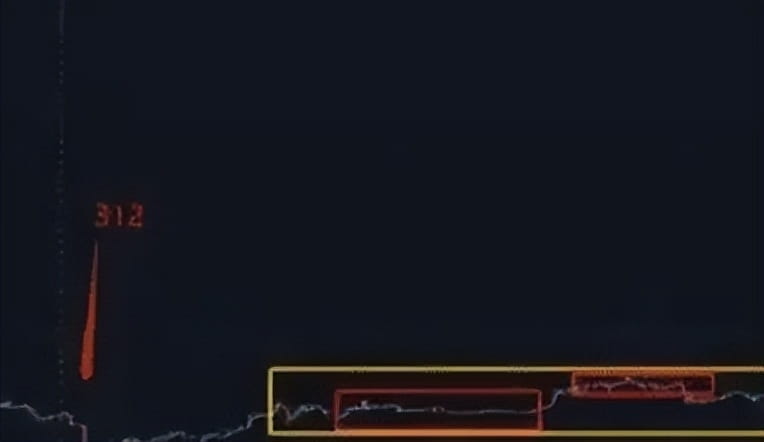
A big market trend usually appears after the K-line goes flat, as shown in the following figure:
Add a caption for the image, up to 140 characters (optional)
Market trends after March 12th
As shown in the chart above, in the market after March 12, each time the K-line becomes flat during fluctuations, a major upward or downward trend will eventually occur. It is at this time that it is more helpful to find opportunities to intervene. As for how to find opportunities, you can refer to some tutorials and observe the emergence of specific K-line patterns, such as the 2B structure.
In normal times, when opening a position, you may feel that the current position is not ideal for various reasons, so you can reduce your initial position, such as starting with 1U. Conversely, if you are particularly confident in a certain position, you can slightly increase it.
But you have to convert it. For 300U, if you use 10U to open 500X, the total position is 5000U, and your principal is 300U, which is equivalent to more than 10 times. The risk is relatively high and is not recommended!
Because the key to our starting position is to survive the volatility, don’t be greedy!
3. Tips for adding positions
For example, if the market indeed falls below 16,000 and there is a huge negative impact, and you combine the trading volume, MACD and other observations to see that there is a high possibility of a big drop, then you should consider adding to your position, and using your profits to add to your position. In fact, this is commonly known as rolling, which is almost the key to making a small investment with a small investment. However, rolling is a technical job, and this is where most people get liquidated. Here is the method:
At this time, the market is falling, my order has made a profit, 300U has become 400U (for example, I didn’t calculate the exact amount), so I will increase my position at this time.
Before increasing the position, I observed that my profit was already 100U. Then, I suggested setting a stop loss after increasing the position. The stop loss means a loss of 100U, and there will be 300U of principal left in the end.
Because we have already made money at this point, and the direction is likely to be correct, there is no reason to risk the principal anymore.
At this point, you should note that when you set a stop loss of 100U, it actually means that your original position was the principal of 300U, and now it is the profit of 100U. If you increase your position, you may be stopped out at any time.
Because, at this time you can actually proceed step by step. The first step is to set a stop loss of 100U. Don’t rush to add it. Wait until the profit expands and then add it a little bit at a time. It is best if you can withstand the volatility.
The secret here is not to be greedy. If you are not sure, don’t even add more. For a 500x contract, the profits are really huge, and the losses are the same.
There is also a timing issue that needs special attention when adding positions. It is best to add positions when waiting for a small rebound during a decline, or to add positions when there is a small pullback during an uptrend. The 2B structure is particularly useful here and is worth learning.
It is best to add to your position only two or three times, and then watch the market run - the more you add, the more dangerous it is during a pullback.
As shown in the above picture, the final profit of this order reached 25,000U. Finally, Network A closed my order in the name of maintenance... Otherwise, I would definitely have caught the bull market. My principal was 46U. The margin of 7U shown in the picture is because some of the funding fees were deducted.
The reason why Network A liquidated many of my and my group members' profitable trades was because they didn't have an ADL forced liquidation mechanism. This meant the exchange was acting as the other party's counterparty. Once I figured out this method, Network A was vulnerable to losing money, so they resorted to rogue behavior. Bkex, on the other hand, doesn't have this problem. Like Binance, it has implemented an ADL forced liquidation mechanism, which allows users to trade long and short positions without affecting the exchange.
4. Other Supplements
Short-term high-multiple is the correct way to play contracts, high risk but higher returns - note, I have to emphasize again, I am not asking you to play with high multipliers, especially novices, don’t even touch it because you don’t understand it, I am just sharing my thoughts and methods.
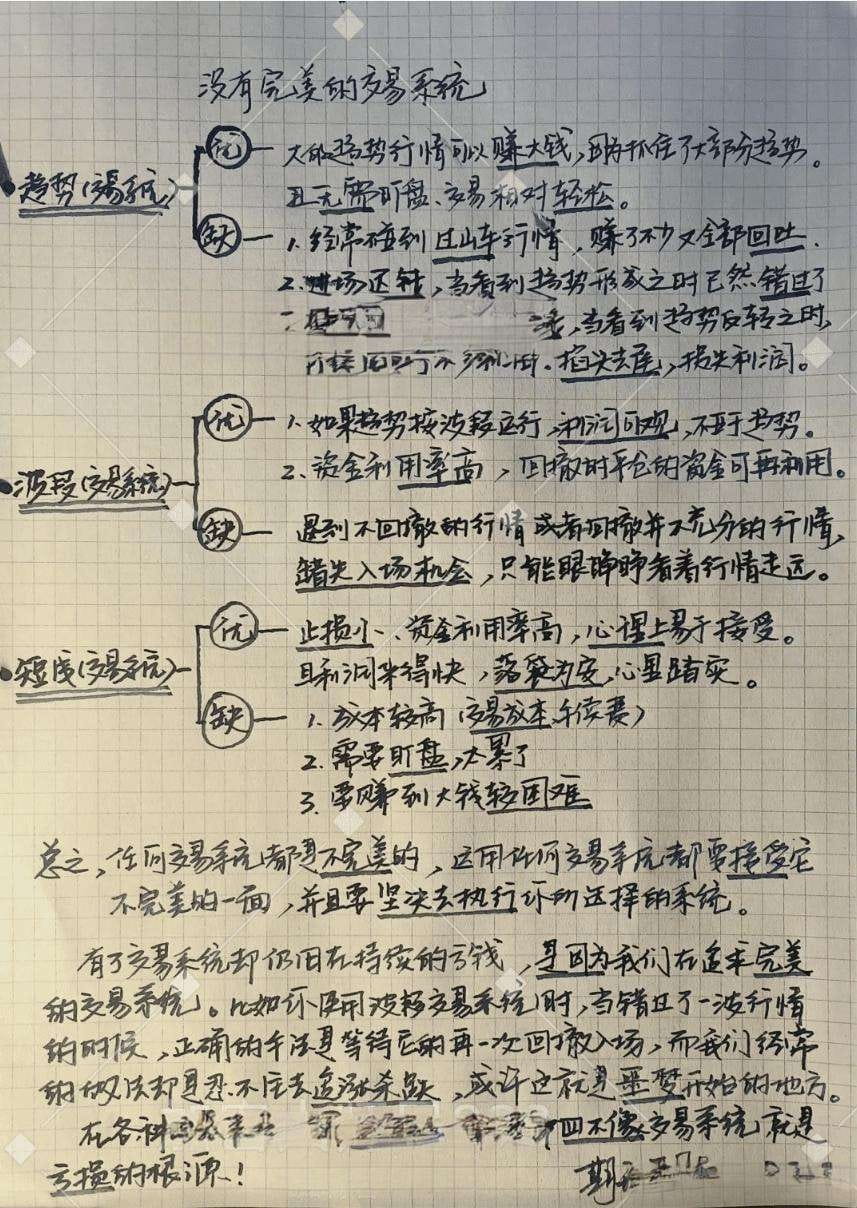
1. Gradually develop your own trading system
There is no holy grail in trading systems.
We can see that short-term masters like Ram Williams and CIS have very good long-term practical records, and the former’s books have sold a lot, but I have not seen a second Williams, because everyone’s mentality and system change slightly, and the trading results will vary greatly.
Therefore, if you want to wear the crown, you must bear its weight. Develop your own trading system, enjoy its advantages, accept its shortcomings, constantly summarize market rules, and constantly improve it to succeed.
2. Understand the profit and loss ratio
In a trading system, the profit-loss ratio is the core lifeblood. The true profit formula is quite straightforward: profit minus loss, minus commissions, the final number must be positive.
There are three types of trading modes. Let’s talk about the first two first:
The first type involves a high profit-loss ratio, a low win rate, and a low frequency. This is typically trend following, focusing on medium- to long-term trading. For example, Ouyang Zhaibai opened a long position at over 3,000 yuan and held on until it was liquidated by OKEX, which took almost half a year. There are also those who, with a capital of 100,000 yuan, made hundreds of millions in a single wave during the 2021 bull market. These are all ruthless trend players.
The second type is a low P/L ratio paired with a high win rate and high frequency. Short-term experts often employ this strategy, often achieving a 1:1 P/L ratio, a ridiculously low difference. Legendary traders of this kind are few and far between, and I'm not one to master them. Then there are those who rely on quantitative high-frequency trading to profit from the spread of exchange fees. These are high-end players, and exchanges will shut them down if they catch them. Ordinary retail investors should avoid joining in the fun.
The third type is a combination of a terrifying profit-loss ratio, a winning rate, and an extremely low frequency. This is a classification I created myself, called the third type of model, and it is also a killer feature unique to the cryptocurrency world:
For example, if I open a 300U order, the maximum loss I can tolerate is 300U. I can try this method many times, but if I nail it once, the profit-loss ratio explodes. Take the 46U order, for example. It went all the way up to 25,000U. If it weren't for the exchange's manipulation, it would have surged to 50,000U, a nearly 1,000-fold profit. With this strategy, even a win rate of less than 10% is acceptable—do you think a win rate under 10% is easy to achieve? Even with blindly placing orders, you can still achieve more than that.
Data shows that the average winning rate of retail investors is about 33%.
From a comprehensive strategic and tactical perspective, the system with a high win rate and low profit and loss ratio, the system with a low win rate and high profit and loss ratio, and my system can all work.
So don't be obsessed with the "must have a profit-loss ratio of 3:1 or more" dogma, and don't get hung up on whether to trade long or short. You can even do a combination of both. The key is to align your trading strategies and tactics and find a rhythm that's comfortable for you.