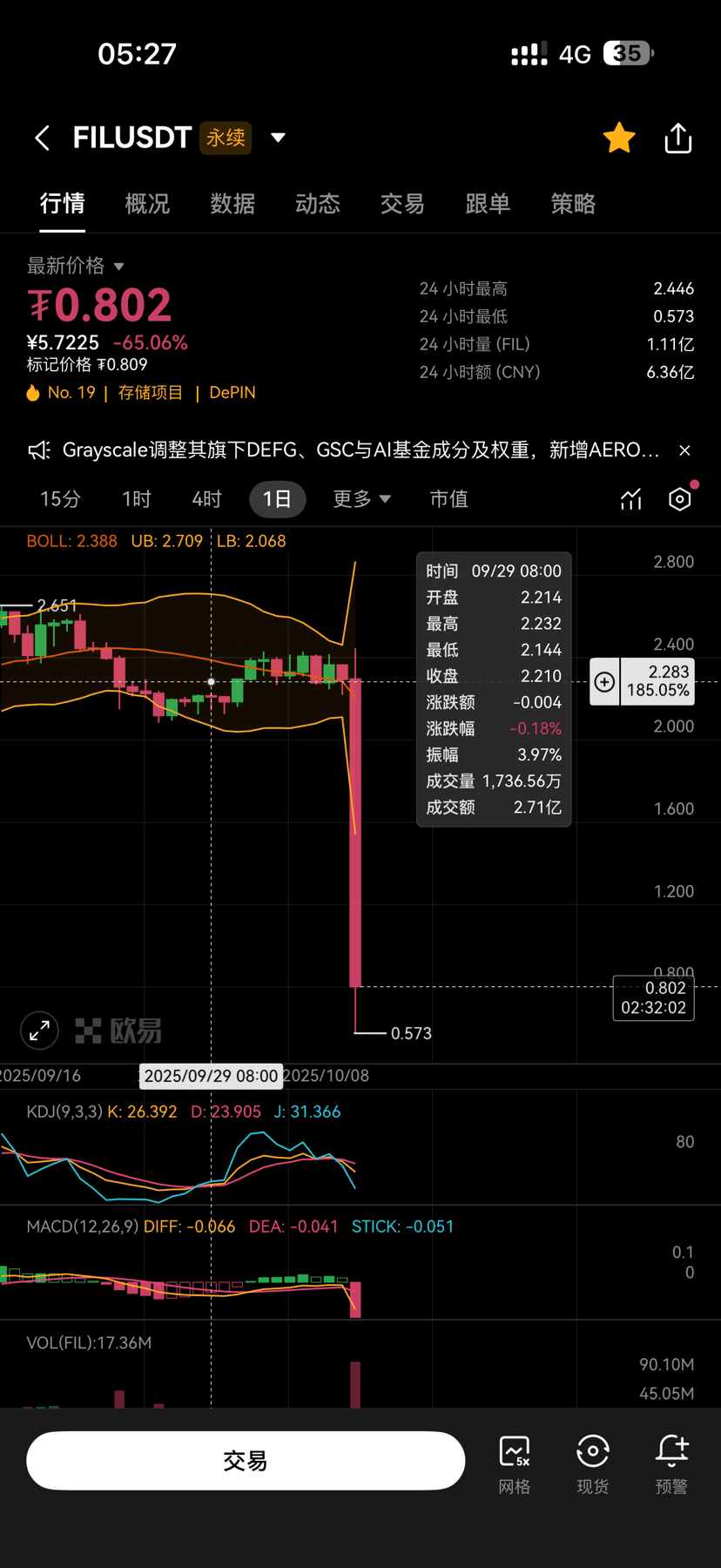
From the perspective of the cryptocurrency market, this liquidation event known as '1011' is a highly typical process of systematic risk release, which sharply exposes the vulnerabilities of high-leverage contract trading under extreme market volatility. There are several key points in the whole process that are worth in-depth analysis.
First, the market often brews storms in seemingly calm times. Bitcoin's unannounced decline that began on the evening of October 10 precisely indicates that large funds have already sensed risks and started to position themselves. The whale that established an $1.1 billion short position on Hyperliquid did not act by chance. Conducting such a large-scale targeted bet against a backdrop of a lack of obvious negative news suggests that it is very likely anticipating an impending macro-level black swan event. This type of proactive operation based on informational advantages or deep macro analysis has been seen repeatedly in the history of the cryptocurrency market.
Secondly, the news of Trump restarting the trade war with China and imposing a 100% tariff was the trigger for this chain reaction. However, it is important to note that news often lags behind price action. The real market crash began with a relentless decline at 5 a.m., while the dissemination of official news came later. This again confirms the role of the crypto market as a global liquidity barometer, responding most swiftly and violently to changes in global capital's risk appetite. The nearly 1% drop in Bitcoin per minute within 30 minutes, along with the general drop of over 50% in mainstream altcoins, clearly illustrates how liquidity evaporates instantly in extreme situations.
Comparing the global capital markets, the synchronized cliff-like drop of the S&P 500, Nasdaq, Hang Seng index futures, and A50 index futures indicates that this is a global risk asset sell-off. The cryptocurrency market amplifies volatility due to its 24-hour trading and high leverage characteristics, but the direction of volatility is highly consistent with traditional risk assets. This refutes the view that 'cryptocurrencies are decoupled from traditional markets' and instead proves that in a macro storm, the correlation of all risk assets significantly increases.
The whale that accurately shorted and profited $30 million before exiting exemplifies a classic risk hedging case. By establishing short positions in the derivatives market before uncertainty surged, it was essentially a clever operation to hedge against macro risks. This reminds us that there is always information asymmetry in the market, and large institutional investors often gain an edge through more advanced tools and sharper instincts.
From a more macro perspective, the escalation of trade protectionism policies will inevitably raise global inflation expectations, forcing central banks to maintain tighter monetary policies for a longer period. This is a long-term negative for all risk assets that rely on liquidity. The unique performance of gold has already indicated the flow of funds—risk aversion has become the primary task. Although some viewpoints suggest that cryptocurrencies should have safe-haven properties, the reality is that at the initial stage of market panic, investors first sell the most liquid assets (including Bitcoin), and only then do they sell other risk assets.
This disaster once again emphasizes the importance of risk control. Whether it is the liquidation of 1.6 million people or the halving of mainstream altcoins, it all stems from excessive leverage and risk exposure. In the highly volatile cryptocurrency market, the primary rule for survival is to manage position sizes and use conservative leverage multiples. Protecting principal is always more important than pursuing returns.
Finally, this series of events also leads us to reflect on the long-term positioning of cryptocurrencies. Although they fluctuate in sync with traditional risk assets in the short term, their characteristics of decentralization, global liquidity, and censorship resistance may play a unique role in hedging against fiat currency depreciation and restrictions on cross-border capital flows in the long run. However, this requires time for validation, and in the short term, it remains one of the most sensitive risk assets.
Reverence for the market is an eternal theme. No matter how large the bull market, not everyone can come away with gains; extreme volatility is always a friend to those without leverage and a nightmare for those with high leverage.#加密市场回调