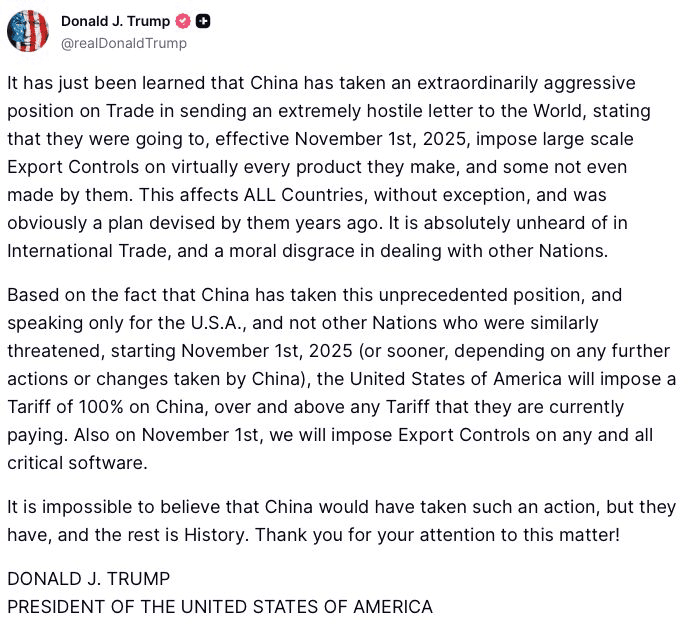
The markets picked up the message immediately: trade tension = inflation + slowdown.
The futures for the S&P 500 collapsed from 6750 to 6550, with the contagion moving down the risk curve — even reaching crypto.
Within minutes, a forced liquidation exceeding 9 to 19 billion dollars hit the market, in the largest event of its kind since the inception of the digital asset industry.
Top ten currencies plummeted over 40% in one-hour candles, and some pairs on low-liquidity platforms witnessed a flash crash to nearly zero levels.
Why did crypto shake like this?
The answer lies in interaction
Macro with Micro:
Macro: A 100% tariff announcement on China means 'bad' inflation and uncertainty in Fed policy. Investors rushed towards safe assets — the dollar, short bonds, and gold.
Micro: The crypto market is burdened with leverage. With every price break, long positions are automatically liquidated, causing platforms to sell into a void, creating a cascading series of liquidations.
The result? A vertical crash in prices instead of a gradual correction.
The reality of rumors and manipulation
Markets traded rumors about a 'whale' opening massive shorts minutes before the drop.
But the presence of pre-existing bets does not necessarily imply insider information.
High leverage makes any large trade capable of creating a self-fulfilling prophecy.
As for some platforms malfunctioning during the peak, it was the result of a mix of panic + peak visits + conservative security policies from liquidity providers.
The most important lesson for investors: leverage is the enemy in a storm.
Disaster or reset?
The answer depends on the timeframe.
In short, volatility remains high, and political speeches or statements from the Fed may increase it.
But in the structural timeframe, what happened served a necessary cleansing function:
Zeroing out excessive open positions (Open Interest).
Return of funding to neutral or negative levels.
The actual trading volume (Spot) increased compared to derivatives.