Crypto Markets Face Historic Volatility Amid U.S.-China Trade Tensions

Access Binance OTC desk on the VIP Portal
Overall Market
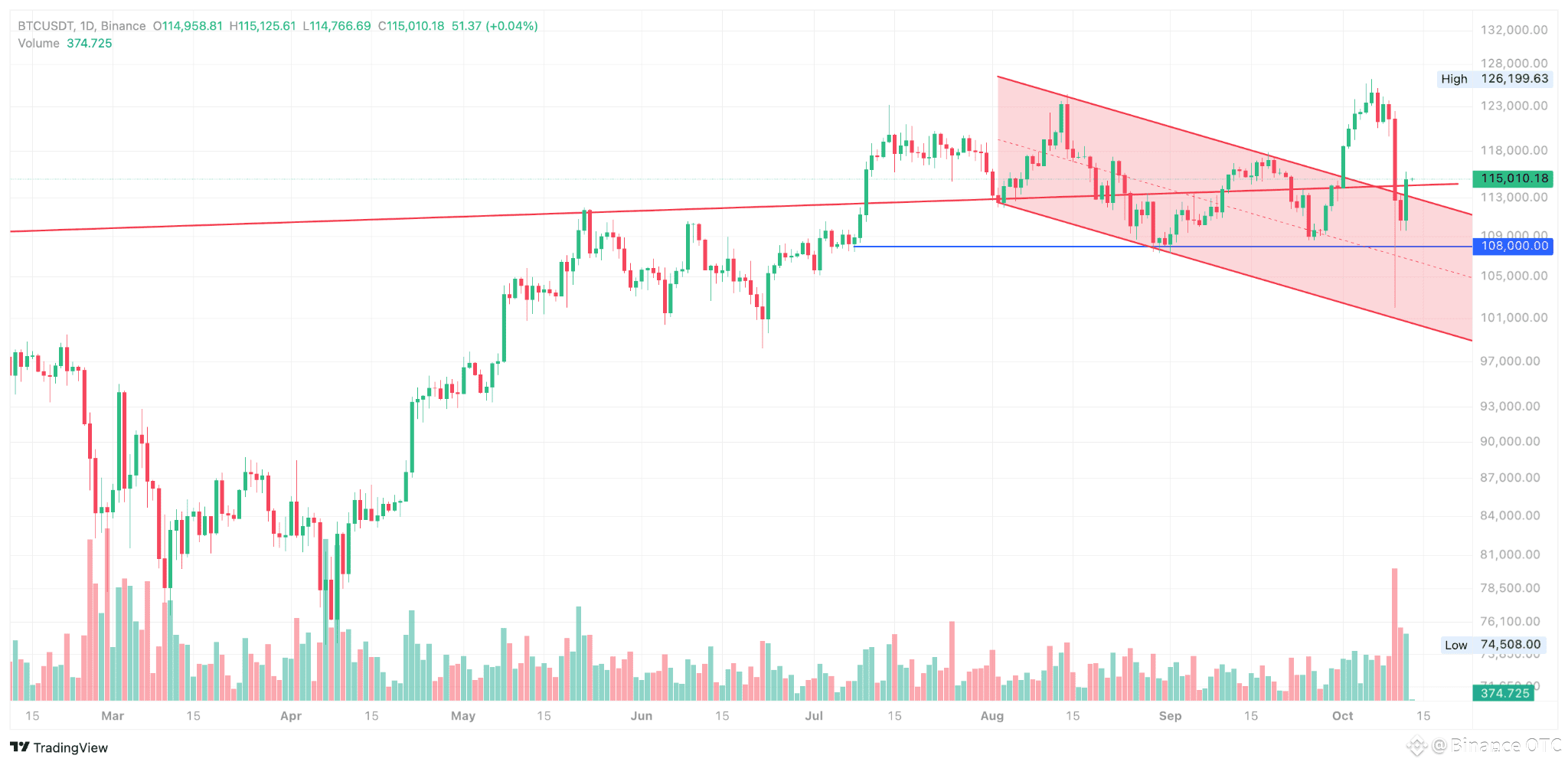
Data source: TradingView
Over the weekend of October 10-13, 2025, global financial markets, with cryptocurrencies at the forefront, experienced unprecedented volatility driven by escalating trade tensions between the United States and China. The catalyst was President Donald Trump’s announcement of sweeping 100% tariffs on Chinese imports, set to take effect on November 1, 2025. This announcement triggered a historic market crash on Friday evening, erasing billions of dollars in market value and forcing a wave of unprecedented liquidations across the crypto space.
The crypto market saw massive liquidations, with 24-hour liquidations reaching an extraordinary $19.1 billion across approximately 1.6 million traders. This figure dwarfs previous liquidation events, including the $1.2 billion liquidations during the COVID-19 crash in March 2020 and the $1.6 billion liquidations following the FTX collapse in November 2022. The scale of this sell-off underscores the heightened risk and leverage present in the market leading up to this event.
The market collapse was further exacerbated by growing concerns over potential supply chain disruptions affecting critical sectors such as technology, semiconductors, and blockchain infrastructure. Additionally, a concurrent U.S. government shutdown delayed the release of key economic data, adding to market uncertainty and panic. While the turmoil persisted into Saturday, the market showed signs of stabilization on Sunday following public reassurances from President Trump and Vice President J.D. Vance, who sought to de-escalate tensions through more measured rhetoric.
By Monday, Bitcoin ($BTC) had rebounded from its lows and was trading around $115,000. Ethereum ($ETH) and Solana ($SOL) also recovered, trading at approximately $4,170 and $198, respectively. Binance Coin ($BNB) emerged as one of the strongest performers, quickly recovering from the sharp decline and trading near its all-time high of $1,349.99, which was recorded on October 7.
The magnitude of the liquidation event indicates that the crypto market was significantly overleveraged, fueled by bullish sentiment that had built up throughout September. Expectations of a Federal Reserve rate cut at the end of October further encouraged traders to increase leverage. The liquidation on Friday night primarily wiped out long positions, while Sunday’s market rebound triggered a short squeeze, forcing short positions to cover. Our trading desk observed a marked decrease in open interest in the futures market, accompanied by a more stabilized market price as Asian markets opened on Monday.
As the cryptocurrency ecosystem continues to evolve, the correlation between traditional financial markets and digital assets has strengthened considerably. This growing interconnection means that macroeconomic headlines and geopolitical developments increasingly influence crypto market dynamics. From a market cycle perspective, Bitcoin’s price volatility has moderated on both the upside and downside, signaling its maturation as an asset class and reflecting broader adoption by mainstream investors. In contrast, smaller altcoins remain highly vulnerable to market swings. During this liquidation event, many altcoins ranked within the top 100 by market capitalization experienced drawdowns ranging from 50% to 80%. This highlights that, aside from the most liquid and established coins such as BTC, ETH, SOL, and BNB, many digital assets lack sufficient market depth and support during periods of stress.
Looking ahead, as the U.S.-China trade conflict persists, our desk anticipates that headline-driven volatility will continue to significantly impact global markets, particularly within the digital asset space. We strongly advise traders to exercise prudent risk management and carefully monitor leverage levels. For large-size trades, we recommend engaging with our OTC desk to minimize market slippage and ensure smoother execution.
Bitcoin ETF Tracker
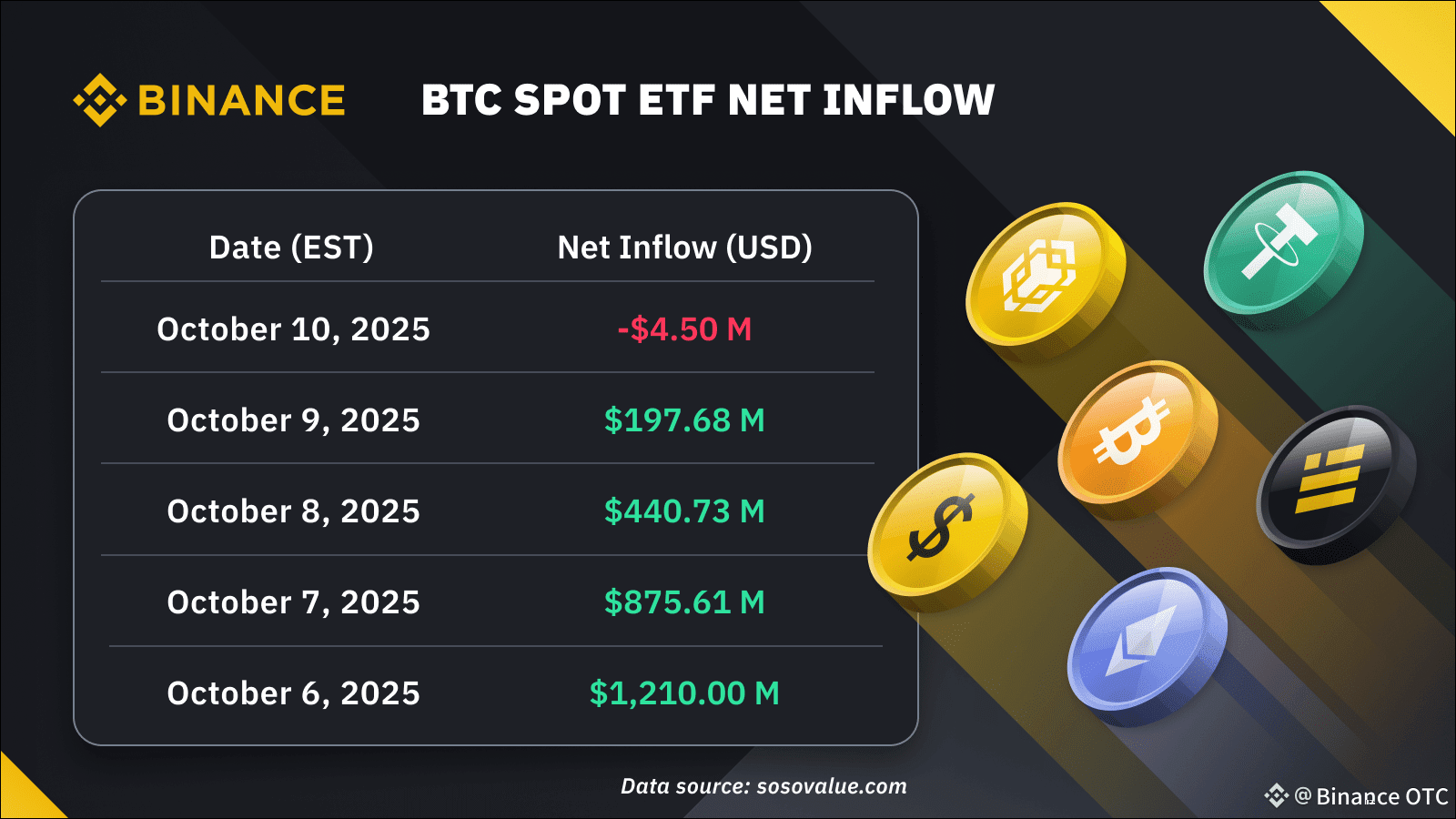
The above table shows the daily BTC spot ETF net inflow data for the past five trading sessions.
As shown in the table above, Bitcoin ETFs experienced a net capital inflow of $2.72 billion last week, despite a modest single-day outflow of $4.5 million on Friday following the escalation of the U.S.-China trade war. It is important to note that the massive liquidations that occurred over the weekend did not impact ETF investors, as the traditional markets were closed during that period, effectively excluding them from the extreme volatility.
Following President Trump’s recent softening of rhetoric regarding U.S.-China trade tariffs, Bitcoin’s price rebounded from Saturday’s lows and traded around last Friday’s closing level at $116,000. The limited trading hours of traditional markets provided ETF investors with a degree of protection from the sharp price swings seen in the crypto spot and futures markets. Additionally, the high level of regulatory oversight governing ETFs offers further safeguards, helping investors avoid the risks associated with sudden market fluctuations.
Why trade OTC?
Binance offers our clients various ways to access OTC trading, including chat communication channels and the Binance OTC platform (https://www.binance.com/en/otc) for manual price quotations and execution services.
Email: trading@binance.com for more information.
Join our Telegram Channel @BinanceOTCTrading (https://t.me/+0mkJQnbQiOdlZjk0) to stay up to date with the markets!
You can also reach out to us on Telegram (@Binance_OTC_Desk) to connect directly with our experienced traders for your OTC trading needs. We look forward to assisting you and providing exceptional service for all your OTC transactions.