

Cardano took 2nd place in quantum readiness in the Google Quantum AI study: what does this mean for the crypto industry
Google Quantum AI published an important whitepaper "Securing Elliptic Curve Cryptocurrencies against Quantum Vulnerabilities" (March 30, 2026). In it, researchers not only updated threat assessments from quantum computers but also analyzed how ready different blockchains are to transition to post-quantum cryptography (PQC) — cryptography that is resistant to Shor's attacks.
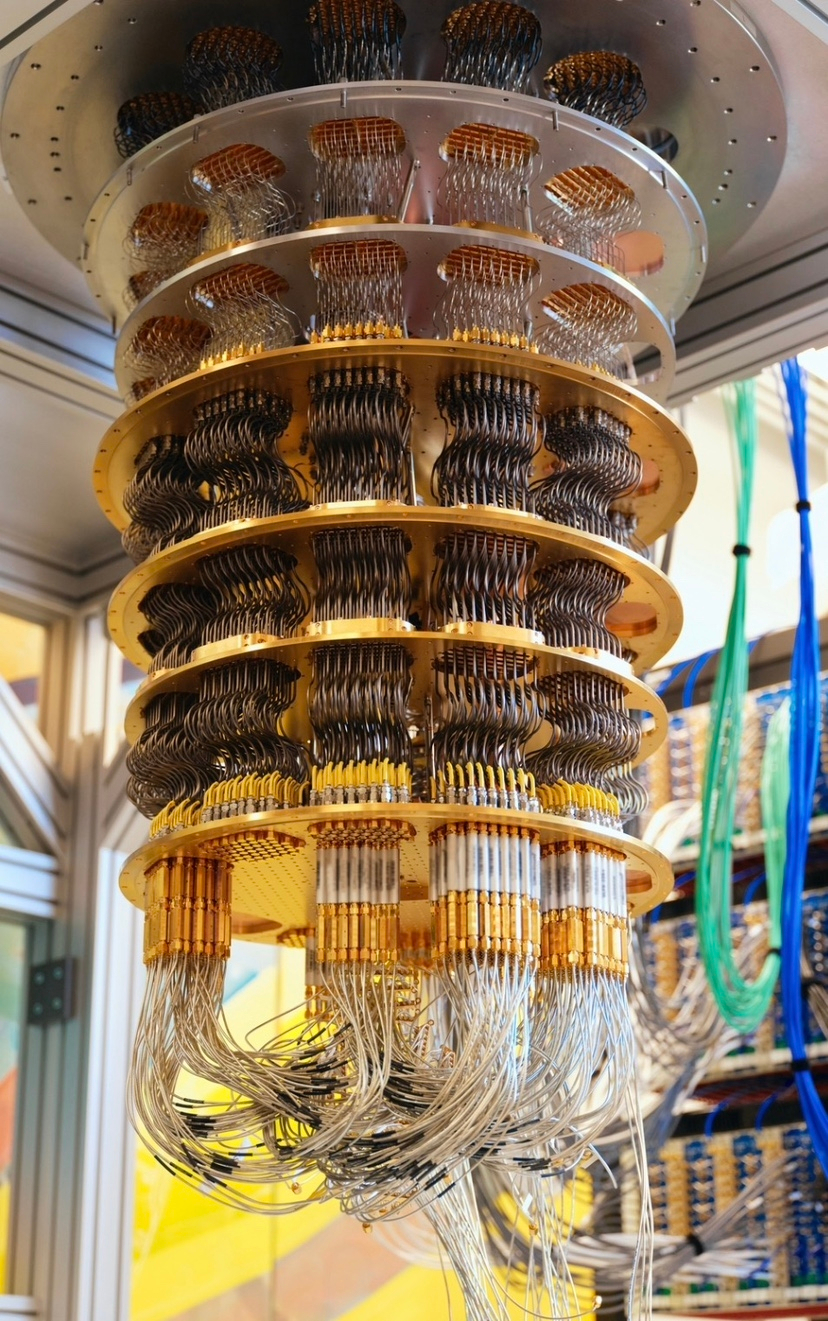
The results were unexpected for many: Cardano (ADA) took second place among all major blockchains in terms of readiness for quantum threats. First place was confidently taken by Algorand, while Cardano surpassed Bitcoin, XRP Ledger, Ethereum, Solana, and most other networks.
### Why are quantum computers a serious threat?
Modern cryptography in blockchains (primarily ECDSA on elliptic curves) is vulnerable to Shor's algorithm. When sufficiently powerful cryptographically relevant quantum computers (CRQC) appear, it will theoretically become possible to break private keys from public ones.
Google significantly reduced previous estimates of the resources needed for an attack:
- Now, to break a 256-bit elliptic curve, less than 500,000 physical qubits and just a few minutes of work may be enough.
- The company officially recommends starting migration to PQC right now and has set 2029 as a target for large-scale transition.
Without preparation, many blockchains risk hackers (or states) being able to retrospectively compromise old transactions and wallets.
### How did Google assess the readiness of blockchains?
Researchers looked at key factors:
- The exposure time of public keys (how long a key 'hangs' in the public domain and can be attacked);
- Support for key rotation;
- The possibility of protocol upgrades;
- The architecture of the network (UTXO vs Account model).
Top by readiness:
1. Algorand — the only one that has already conducted real quantum-resistant transactions in production (including Falcon signatures and State Proofs). Support for native key rotation provides a huge advantage.
2. Cardano — second place due to the extended UTXO (eUTXO) model. In Cardano, spending keys remain hashed until the funds are spent, significantly reducing the 'attack window' compared to account models (Ethereum, Solana, etc.).
3. Next are other networks, many of which fall into the medium or low tier due to long key exposure and difficulties with migration.
Cardano is mentioned in the report several times, highlighting the serious attention researchers pay to its design.
### What gives Cardano an advantage?
- The eUTXO model is one of the main advantages. Unlike Ethereum, where the public key becomes visible immediately after the first transaction, in Cardano it 'hides' longer.
- The flexibility of the protocol and the history of a scientific approach to development (Cardano has always positioned itself as a research-driven project).
- Active work on the future: Charles Hoskinson announced the Nightstream project — a lattice-based cryptography that should form the basis for privacy technologies (including sidechain Midnight). The project is being developed with the participation of researchers affiliated with Google and Microsoft.
Google Cloud, by the way, has already become a validator on the preview network Midnight and is testing staking — this is an additional signal of collaboration.
### Why is this important for investors and institutions?
In a world where security is one of the main priorities for institutional players, such recognition from Google Quantum AI acts as a powerful fundamental signal. Cardano is positioned not just as 'another smart contract platform' but as a blockchain that thinks 10–15 years ahead.
For DeFi, RWA (real-world assets), and large corporate solutions, long-term resilience to quantum threats may become a decisive factor in choosing infrastructure.
Of course, there is still time before the real threat (Google is targeting 2029+), but projects that have already begun preparations will gain a significant advantage. Algorand and Cardano currently look like leaders in this narrative.
### What's next?
- We expect other major networks (Ethereum, Bitcoin) to accelerate discussions on migration to PQC.
- For Cardano, this is an additional boost to its reputation. The community is already actively discussing the news, and it may attract the attention of developers and institutions.
- Keep an eye on the development of Nightstream and potential testnets for post-quantum solutions.
Output: Google Quantum AI not only warned the industry about the threat but actually created a 'readiness ranking'. Cardano, taking second place, once again confirmed its status as a technologically advanced project with a strong scientific background.
Crypto is not just about speed and TVL. It's about security for decades to come. And here, Cardano currently looks very confident.
What do you think? Does Cardano really set the standard for long-term security, or is it just a lucky narrative? Write in the comments 👇