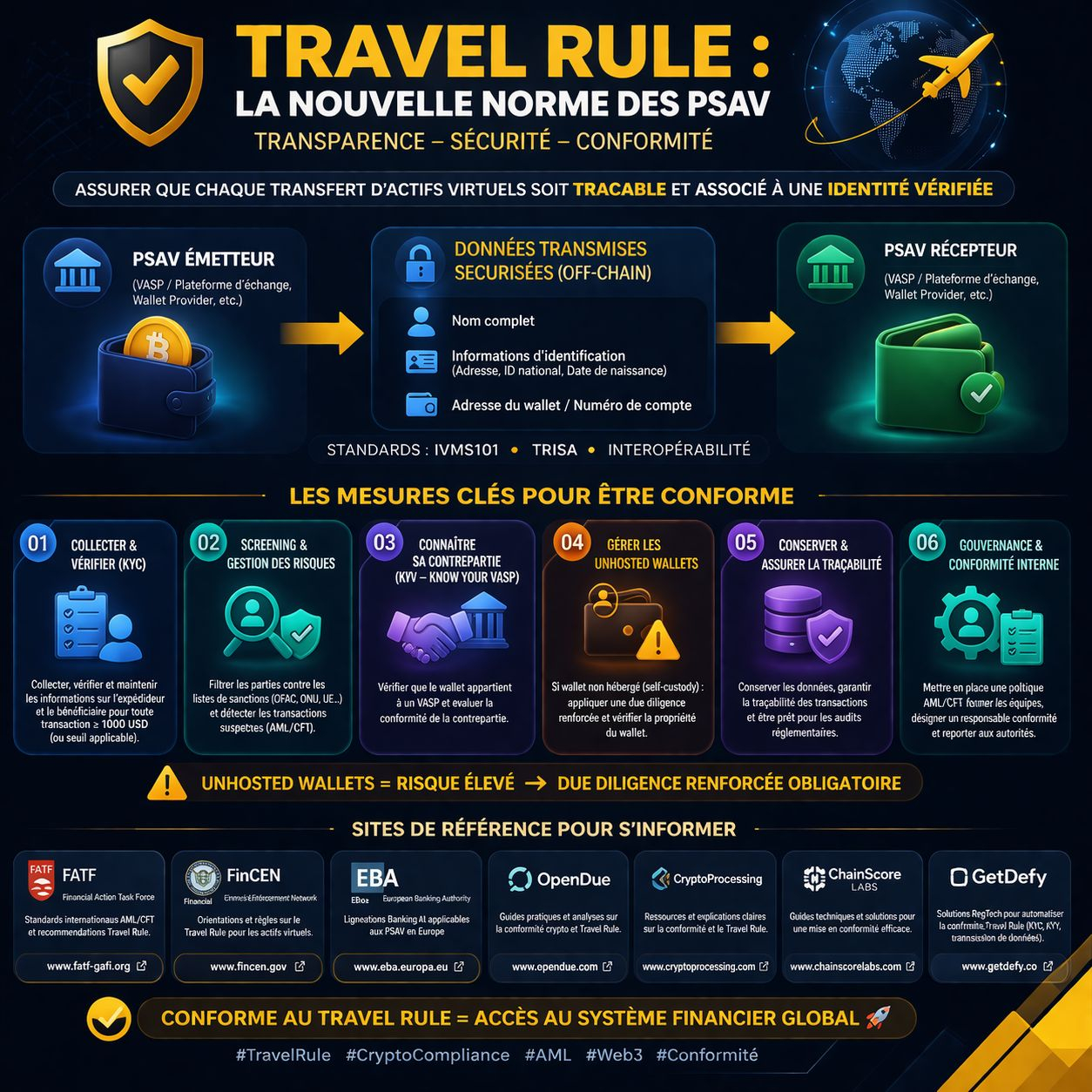
The compliance of virtual asset service providers (VASPs) with the Travel Rule, as defined by the FATF, is today a central requirement in the fight against money laundering and terrorist financing (AML/CFT). This rule requires VASPs to collect, verify, and transmit accurate information about the parties involved in any virtual asset transaction, in a transparency logic equivalent to that of the traditional financial system.
Specifically, VASPs must establish rigorous customer due diligence (CDD) procedures that reliably identify the sender and the recipient of a transaction. This information includes, in particular, the full name, identification data (address, official document, or date of birth), as well as the addresses of the wallets involved. This requirement particularly applies to transactions exceeding the thresholds defined by jurisdictions, generally around 1,000 USD. The challenge here is to ensure that each flow of virtual assets can be linked to a verified identity, thereby reducing the risks associated with anonymity or pseudonymity.
Beyond collection, the Travel Rule also mandates the secure transmission of this information between VASPs during transactions. This transmission does not occur directly on the blockchain, but via secure off-chain channels, relying on technical standards such as IVMS101 or protocols like TRISA. VASPs must therefore invest in technological infrastructures capable of ensuring the integrity, confidentiality, and interoperability of exchanged data. This technical dimension is today a key factor for compliance, but also for competitiveness.
Moreover, VASPs are required to integrate advanced risk management mechanisms, including transaction and counterparty screening using international sanctions databases (OFAC, United Nations, European Union). This approach allows for the early identification of suspicious transactions and prevents any involvement in illicit activities. In this context, knowing the institutional counterparties (Know Your VASP or KYV) becomes essential, particularly to distinguish transactions involving other VASPs from those made with unhosted wallets, which require enhanced vigilance measures.
In terms of governance, compliance with the Travel Rule also involves establishing a robust internal framework, including clear AML/CFT policies, the appointment of a compliance officer, continuous training of personnel, and maintaining comprehensive records to meet the requirements of supervisory authorities. Data retention and transaction traceability are indeed fundamental elements to ensure transparency and facilitate regulatory audits.
To support these efforts, several reference resources allow VASPs to inform themselves and structure their compliance approach. The official site of (https://www.fatf-gafi.org) serves as the main normative source, particularly through its recommendations and interpretative guides. In the United States, (FinCEN) also provides practical guidance on the application of the Travel Rule to virtual assets. In Europe, the (EBA) regularly publishes guidelines on AML compliance applicable to VASPs.
In addition, specialized platforms such as OpenDue, CryptoProcessing, or ChainScore Labs provide technical analyses and operational guides to better understand the challenges of implementing the Travel Rule. Finally, RegTech solutions like those offered by GetDefy facilitate compliance automation by integrating tools for collecting, transmitting, and verifying data in accordance with international standards.
Ultimately, compliance with the Travel Rule is not limited to a regulatory obligation: it is a strategic lever for VASPs wishing to sustainably integrate into the global financial ecosystem. In emerging markets such as those in West Africa, and particularly within the UEMOA, a proactive adoption of these standards represents a major opportunity for credibility, attractiveness, and access to international partnerships.