
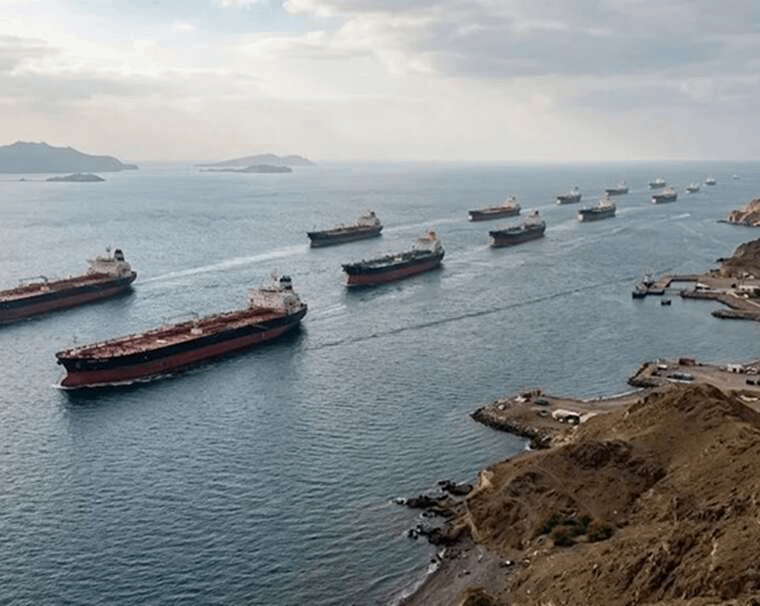
U.S. President Donald Trump agreed to postpone for two weeks the strikes on Iran that he promised to unleash on the country on the night from Tuesday to Wednesday, if the Islamic Republic does not immediately open the Strait of Hormuz. Iran's Supreme Leader Ayatollah Khamenei accepted the proposal and approved the ceasefire plan, reports The New York Times. Safe passage through the Strait of Hormuz will be possible within two weeks, Tehran confirmed.
"As a result of talks with Pakistani Prime Minister Shehbaz Sharif (...), during which I was asked to refrain from applying destructive force that was to be used tonight against Iran, and provided that the Islamic Republic of Iran agrees to a COMPLETE, IMMEDIATE, and SAFE OPENING of the Strait of Hormuz, I agree to suspend bombings and attacks on Iran for two weeks. This will be a bilateral CEASEFIRE!" — wrote the American leader in a post on the Truth Social platform.
According to him, the US has "come a long way" in working towards a final agreement for lasting peace in the Middle East. Trump's proposal of 10 conditions was called a working basis for dialogue, noting that there are agreements on most contentious points. In two weeks, the president believes, they can finalize them.
Israel will also join the ceasefire, the White House reported.
How the markets reacted
After it was announced that Pakistani negotiators had made a request, US stock indices reduced or completely reversed the daily decline, and after trading closed, futures surged sharply. An hour after Trump's post was published, S&P 500 futures rose by 2.3%, and Nasdaq Composite futures added 2.7%.
The price of Brent crude oil fell by 5.8% to $103 per barrel, trading will resume later. North American WTI plummeted by more than 16% and was priced at around $94 per barrel, while at the close of the session in the USA, the price reached $104.
"If a peace agreement is reached and the parties agree to open the strait, the price of oil could immediately drop by $15–30 per barrel," forecasted Dennis Kissler, senior vice president of trading at BOK Financial Securities.
As Bloomberg strategist Mark Cranfield notes, such a rise in S&P 500 futures during the Asian session is an unusual occurrence. According to him, it indicates accumulated demand for stocks after the volatility of recent weeks. Combined with the weakening of the US dollar, rising bonds, and a sharp drop in oil prices, this creates conditions for strong growth in Asian markets at the opening.
#USIsraelStrikeIranad , #WorldNews2026
We hope you enjoy watching. We are glad for each of our subscribers or attentive readers who shared interesting news with those who like to be informed about changes in global economic and political news. As often, economics and politics have a deep mutual influence on each other, and ultimately they turn out to be deeply interconnected phenomena.
Also, for those who like to stay updated on the operational coverage of changes in global financial and economic issues, there is always an opportunity to mark a liked article with a thumbs up, leave tips for the authors, or leave comments on this topic.