
In 1956, when Egyptian President Nasser announced without warning that the Suez Canal would be nationalized to raise funds for the Aswan Dam, leveraging the power of Egyptian nationalism, the British Empire, as one of the largest stakeholders and major shareholders, was the first to react. It quickly allied with France and Israel to launch military action, triggering the Second Middle Eastern War.
In tactical terms, Israel first captured the Sinai Peninsula, and the British forces rapidly took control of the canal area; however, in strategic terms, Britain faced a devastating defeat. The United States and the Soviet Union rarely reached a consensus and stood on opposing sides. Under financial pressure and nuclear deterrence, Britain was forced to withdraw in disgrace. At that moment, the world clearly saw the cards—once an empire on which the sun never set, it had lost the ability to control the global economic chokehold. The Suez Crisis became the epitaph for the end of British hegemony.
Fast forward to today, the echoes of history are reverberating over the waters of the Middle East. The imperial lifeblood challenging hegemony has shifted to the 'Strait of Hormuz,' which controls nearly one-fifth of the world's oil; the star of the show is now the U.S., the superpower of today.
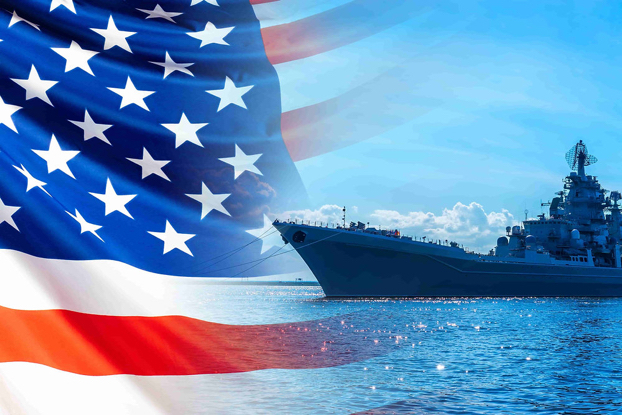
Despite the U.S. still possessing the largest navy and overwhelming firepower of the Fifth Fleet, in the face of Iran and its led 'axis of resistance' (including regional proxies like the Houthis in Yemen) employing asymmetric warfare, the U.S.'s 'absolute deterrent power' appears to be overextended. This weakening is not due to insufficiently sturdy warships but rather because military advantages can no longer be effectively translated into absolute control over regional order. When U.S. warships cannot guarantee the passage of merchant vessels, and when the red lines of the superpower are repeatedly tested by regional nations, American hegemony in the Middle East is heading towards irreversible decline amid the mire of asymmetric warfare and strategic fatigue.
Chokepoint loss of control and 'deterrence' inflation
Alfred Thayer Mahan's theory of sea power asserts that 'control of the seas is control of the world.' Modern world hegemony has almost always been built upon maritime influence. From Venice to Spain to Britain, prosperity and decline are tied to control over maritime trade networks. This is the current reality the U.S. faces in the Middle East; their proud military presence can no longer be equated with 'absolute security guarantees.'
The Strait of Hormuz, which controls the lifeblood of global oil, has seen the Iranian Revolutionary Guard repeatedly seize tankers or conduct aggressive military exercises in the area. Although the headquarters of the U.S. Fifth Fleet is stationed in Bahrain, and is close by, most of the time it can only manage passive defense, unable to fundamentally strip Iran of its substantive interference capabilities in the strait.
This phenomenon highlights that the U.S. is facing severe 'deterrence inflation.' When Iran and its proxies no longer fear U.S. retaliation, when major insurance companies cancel war insurance coverage for the Strait of Hormuz, and multinational oil giants prefer to halt shipping rather than bet their fortunes on the protection of the U.S. Navy, the U.S.'s substantive influence in these critical chokepoints has been significantly undermined. This evokes a strong sense of déjà vu, reminiscent of when Britain, despite winning military campaigns, still lost effective control over the Suez Canal.
Asymmetric warfare under 'cost-exhaustion strategy'
If the failure of deterrence is a sign of the decline of U.S. hegemony, then the exorbitant costs of responding to asymmetric warfare serve as a catalyst accelerating this weakening process.
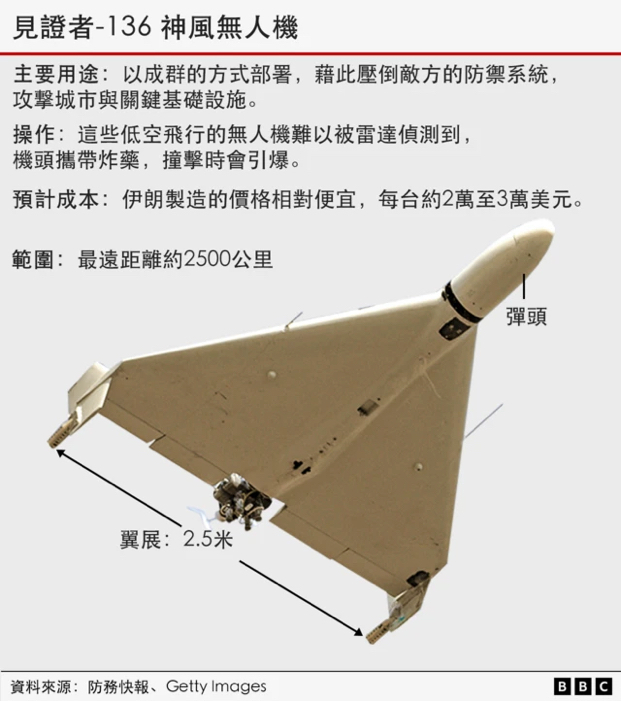
The 'Standard Missile-2' (SM-2) used by the U.S. military costs between 2 to 2.5 million dollars per unit, while the 'Standard Missile-6' (SM-6) comes in at nearly 4.3 million dollars each. In contrast, Iran's 'Shahed' suicide drones only cost about tens of thousands of dollars per unit. This means that every time the U.S. military presses the launch button, the financial cost is dozens to even hundreds of times that of the enemy.
The deeper crisis lies in the 'civilianization' and proliferation of drone technology, which allows asymmetric warfare to genuinely possess the potential to disrupt the strategic landscape. In the past, non-state armed groups were completely unable to challenge the air and sea power of superpowers. However, modern drones exhibit characteristics of long range, substantial firepower, and low cost, allowing ordinary nations to possess their own 'mini airstrike capabilities' at very low thresholds, breaking the traditional military powers' technological monopoly over air power and shaking the previously unchallengeable air and sea supremacy of superpowers.
Allied 'hedging'
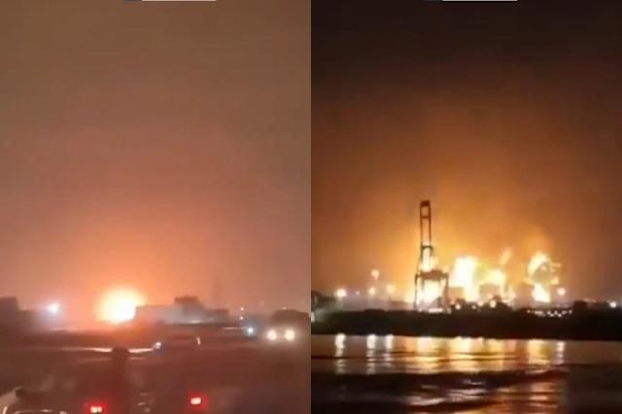
When military deterrence falters in the face of high-cost asymmetric warfare, the most immediate geopolitical consequence is the instability of ally systems. The foundation of U.S. hegemony in the Middle East has long relied on the understanding of 'oil for security.' However, when traditional allies like Saudi Arabia and the United Arab Emirates witness the powerful U.S. Navy unable to offer absolute protection even for Red Sea commercial vessels, their trust in the American umbrella inevitably diminishes.
This crisis of trust has prompted major Middle Eastern powers to start adopting 'hedging strategies.' They realize that betting national security entirely on a superpower whose strategic focus is eager to shift is too risky, and thus begin seeking diversification in diplomatic leverage, directly leading to the collapse of the U.S.'s 'one voice' status in the Middle East.
When traditional allies no longer obey commands, and when the mediator of regional conflicts is no longer just Washington, the U.S.'s control over the Middle East has weakened, evolving from a military 'lack of capability' to a diplomatic 'plate tectonics.'
The twilight of empires and the strategic dilemma of choice
Facing the 'Suez moment' in the Strait of Hormuz, Washington finds itself at a crossroads of major strategic adjustment: should it decisively pivot towards the Indo-Pacific or double down on controlling the Middle East chokepoints?
From an objective reality standpoint, the U.S. cannot and does not want to go all in to return to the Middle East. Thanks to the shale oil revolution, U.S. dependence on Gulf oil has dropped to historic lows, and public opinion at home has no appetite for large-scale military intervention. However, the U.S. also cannot completely withdraw, as its core allies and the global supply chain still rely on these maritime chokepoints. If China, Russia, and Iran are allowed to fill the vacuum, the U.S.-led global order will collapse from within.
Confronted with the strategic dilemma of 'staying is too expensive, leaving is too dangerous,' the U.S.'s future strategy in the Middle East is expected to be forced into a compromise-laden 'offshore balancing': attempting to promote a 'Middle Eastern version of NATO' to have regional allies shoulder more costs, while abandoning the pursuit of absolute control and instead maintaining a streamlined long-range deterrent, only striking when core interests are threatened.
The U.S. remains the most powerful military machine in the world, but the era of 'American hegemony,' where a single Aegis destroyer could send the entire region into a state of suspense, has quietly come to an end amidst the buzz of drones and the rerouting of shipping giants.