If your funds are within 50000 and you want to achieve quick success in the cryptocurrency space through short-term trading, please read this post carefully. After reading it, you will surely have an epiphany about the essence of short-term trading!
I am Yiyan, focused on cryptocurrency for 12 years, welcome to follow me!
I was born in 1987, and I have been in the cryptocurrency space for 11 years, fully trading cryptocurrencies to support my family for 5 years!
Not choosing finance or computer science in college is one of my biggest regrets in life. I started to get in touch with Bitcoin and blockchain online early on; the magical candlestick charts and disruptive ideas fascinated me. With infinite longing for the crypto world, I participated in trading early on, which began this journey full of challenges and opportunities.
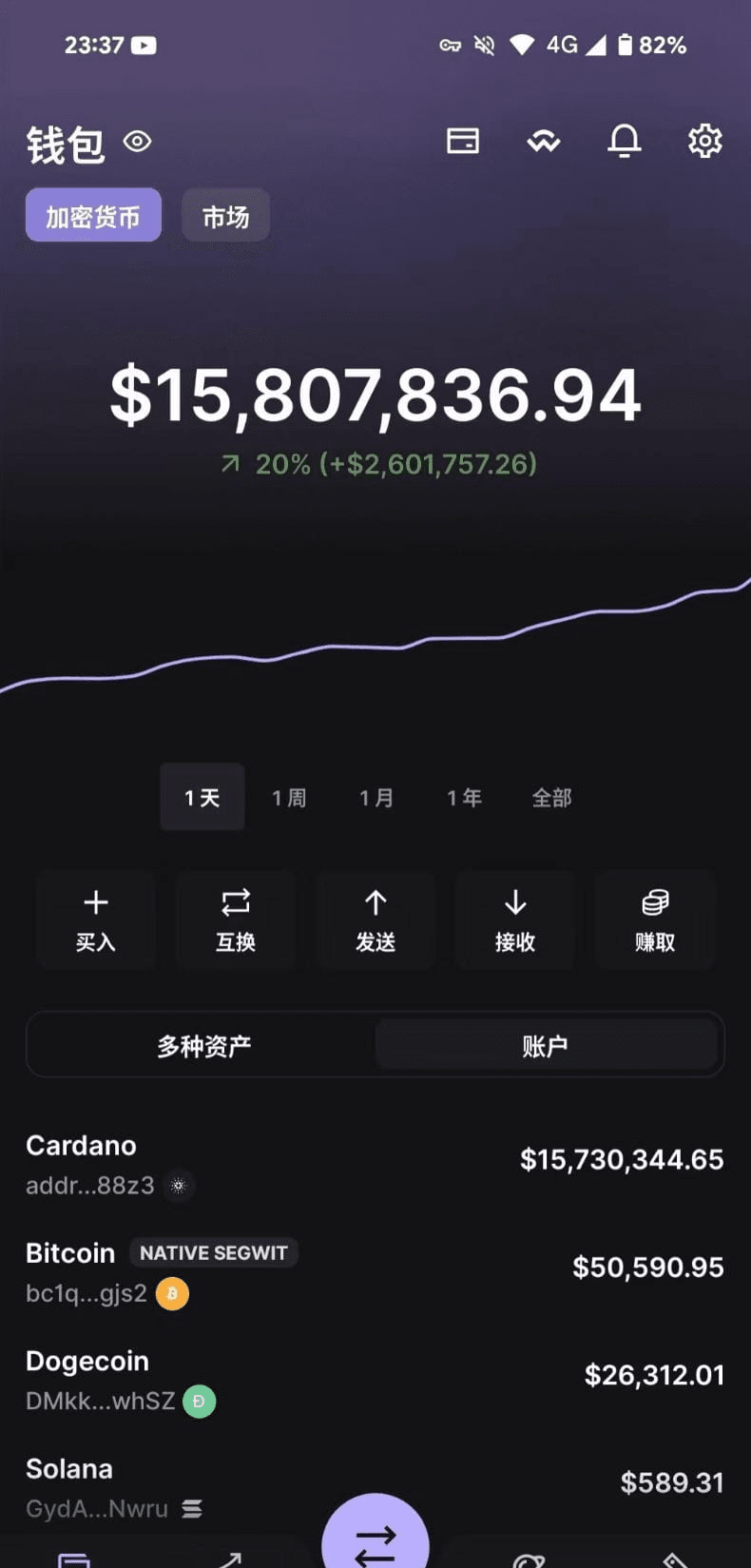
Like most friends who just entered the circle, at first, we are all fascinated by various technical indicators and on-chain data, constantly backtesting and trying to find the 'holy grail'; eager to buy 'low-priced' altcoins, or those that have already dropped more than 90%+, thinking their 'margin of safety' is higher. The cruel reality tells me that most of this initial understanding of the market is wrong and dangerous.
I later realized painfully that if you want to quickly and relatively controllably achieve profits in the highly volatile, 24/7 open coin circle, focusing on short-term trending hotspots is almost the only viable path (for small amounts of capital). The core of short-term trading lies in identifying the mainstream narrative track of the market and accurately grasping the emotional cycle. The mainstream narrative breeds leading coins, and the insane rise of leading coins further reinforces and spreads that narrative. Often, the biggest contribution and efficiency to your account come from catching those few leading coins at critical stages. In the raging bull market, they provide the strongest explosive power; during localized rebounds, they often initiate first and are relatively 'resistant to decline' (note: 'safety' in the coin circle is relative!). In 2021, I also captured the most rapid main upward wave in my career on leading coins like SOL and MATIC.
Buying the same coin at different market sentiment stages and narrative cycles can lead to vastly different results! The emotional cycle tells you: when to boldly strike, even leverage (cautiously!); when to hold back, or even short (if you have the ability); when to completely exit and observe. The mainstream narrative of the market tells you which direction the funds are attacking (is it AI, MEME, new public chains, or Layer 2?). This is the correct top-down speculative thinking. Unfortunately, many friends completely misunderstand this, going against the market sentiment, resulting in being ruthlessly harvested.
There is a saying that impresses me: 'If you do not occupy the high ground of cognitive awareness, FUD (Fear, Uncertainty, Doubt) and FOMO (Fear of Missing Out) will occupy it instead.'
Today, I share with you this set of short-term survival and offensive strategies in the coin circle, which is the core logic that supports me to survive and continuously profit in this market that is more brutal, faster, and more unpredictable than the stock market. If you can calm down to understand, practice, and ultimately internalize it, your understanding of 'trading coins' will surely undergo a dramatic change!
Closely follow Bitcoin's rise and fall
Bitcoin is regarded as the barometer of the coin circle, and the rise and fall of most small coins are influenced by it. Coins like Ethereum that have strong conceptual logic occasionally deviate from Bitcoin to show unilateral trends, but other altcoins generally cannot escape Bitcoin's 'control'. Therefore, closely monitoring Bitcoin's trading rise and fall can provide important references for trading other coins.
Seize the golden moments of trading
Every day from 24:00 to 1:00 the next day is a special trading period in the coin circle, prone to the phenomenon of 'catching golden lines'. This is the low trading volume period for most parts of the world, and various unexpected situations can occur. If you want to buy at a low price or sell at a high price, you can place an ultra-low buy order or an ideal lay-back price sell order before going to sleep; you might just be lucky enough to get filled.
Pay attention to the price trend of USDT
Generally, USDT and Bitcoin move in opposite directions. When USDT rises rapidly, be alert to a potential Bitcoin drop; conversely, when Bitcoin rises, it often indicates a golden low point for buying USDT. By grasping the relationship between the price movements of the two, you can make better trading decisions.
Pay attention to the financial news of central banks in various countries
The volatility of the coin circle is deeply influenced by the attitudes of various governments towards Bitcoin. If the government takes suppression or control measures, the market is likely to drop. Additionally, changes in U.S. financial policies, such as the recent news about taxing the wealthy, can also have a significant impact on the coin circle. Therefore, paying attention to the financial news of central banks daily is an essential task for traders.
Seize the key time period
Every day from 6 am to 8 am is a key period for judging buying and selling, and it can also be used to determine the trend of the day's rise and fall. If the price has been falling from 0 to 6 and continues to fall during this period, then this is a good time to buy or add to your position, and it is highly likely to rise that day; if the price has been rising from 0 to 6 and continues to rise during this period, then it is a selling opportunity, and it is highly likely to fall that day.
Pay attention to 'Black Friday'
In the coin circle, there is a saying of 'Black Friday', where significant drops often occur on Fridays, but there are also times of sideways movement or significant rises. While not particularly accurate, it's still necessary to pay a bit of attention to the news.
Value trading volume
Trading volume is the lifeline of digital currency. For cryptocurrencies with a certain trading security volume, if the price drops, there is no need to worry too much; holding patiently is likely to break even. It may take a week at the shortest, or about a month at the longest. If you have extra money, you can add to your position in batches to lower the average cost, which will lead to faster breakeven; if you don’t have extra money, just wait patiently; it often won’t let you down.
Avoid frequent trading
For the same cryptocurrency, holding onto spot trades long-term usually yields much larger returns than frequent trading, which tests the patience of investors. Frequent trading not only may increase trading costs but also easily leads to erroneous decisions due to emotional fluctuations.
The use of candlestick moving averages
In coin trading, candlestick theory has a certain applicability, but not all indicator analyses are useful. Although the accuracy of candlestick technology is not 100%, many people find it less useful after learning it. In reality, according to the experience of many experts, candlestick technology plays a key role in analyzing the long-term trend of coin prices. No matter which direction the coin price goes, it will be reflected in trading, and we can use these techniques to understand the movement of coin prices.
Moving average rules: Constructing a trend framework
In the trend cycle of the 1-hour chart, we can use three EMA moving averages to construct a trend framework: the fast line 21 represents short-term momentum, the midline 55 reflects the medium-term direction, and the slow line 144 defines the long-term trend. When the moving averages show a bullish arrangement of 'fast line > midline > slow line', the market is in a strong upward cycle; conversely, it is dominated by bears. This arrangement can effectively filter out noise; even if the moving averages show a turning point, as long as the order of arrangement has not changed, the trend direction remains valid.
However, moving averages have the disadvantage of lagging. We can use the 'trend candlestick confirmation' mechanism to compensate: When the price breaks through the arrangement of moving averages, wait for the 15-minute chart to show a similarly directed candlestick (such as a large bullish candlestick in a bullish trend) before entering; this can avoid false breakouts and capture acceleration phases of the trend. The parameter selection also has its logic; the 21-period corresponds to monthly volatility, the 55-period aligns with quarterly trends, and the 144-period resonates with annual lines. This combination has a stable win rate of over 65% in historical backtests of Forex, futures, and other products, with a risk-reward ratio of 1:2.3.
The support and resistance functions of moving averages
Important parameter moving averages have support and resistance effects. When the market tests important parameter moving averages from below, it will face pressure, with expectations of retracement or reversal downwards; when the market tests important parameter moving averages from above, it will gain support, with expectations of retracement or reversal upwards. In practice, we can choose these important parameter moving averages, combined with some reversal structures or patterns for trading.
For example, in the 1-hour chart of ETH/USDT in May 2024, the EMA 21/55/144 shows a bullish arrangement, but the price has tested the 55 moving average 3 times without breaking. At this time, observe the 15-minute chart and find that each time it retraces, it is accompanied by shrinking volume and a doji pattern, which is a typical 'trend continuation signal'. Eventually, ETH breaks the previous high, with a single wave increase of 37%.
Use moving average crossovers to judge trends and entry timing
The cross of moving averages is also a commonly used analysis method. Add two moving averages to the chart, with the smaller parameter as the fast line, which changes quickly; the larger parameter as the slow line, which changes slowly. There are two main uses for moving average crossovers: one is to judge the direction; when the slow line crosses above the fast line, it is a confirmation of a bullish trend; when the slow line crosses below the fast line, it is a confirmation of a bearish trend. The second is to determine entry signals; when the slow line crosses above the fast line, it is a signal to enter a long position; when the slow line crosses below the fast line, it is a signal to enter a short position.
For example, in a 1-hour chart of a certain spot gold, after the candlestick breaks below the moving average, it is determined that the trend is bearish. Wait for the candlestick to retrace and test the moving average for resistance without breaking it, then break below the previous low point to enter a short position, with stop-loss set at the high point of the retracement. After the first order is entered, if the market experiences another decline and retraces the moving average, gaining resistance, after the second low is broken, you can enter again to increase your position.
Combine moving averages with other indicators
Moving averages can be combined with Fibonacci retracement, MACD, and other indicators to improve the accuracy of trading decisions. For instance, after confirming direction with a moving average golden cross or death cross, the market usually has run a certain distance, and entering at this point may result in an unreasonable risk-reward ratio. By combining Fibonacci retracement to find key positions for trend retracement, you can enter with smaller stop-loss space and a more reasonable risk-reward ratio.
For example, when the market tests the moving average with the expectation of a reversal, if the MACD also shows a divergence pattern, it forms a resonance of market reversal. You can enter based on smaller moving averages in this situation, which allows for a smaller stop-loss space. If the market moves out, the risk-reward ratio will be relatively ideal.
Trading is a long-term practice. To achieve results in the coin circle, you must follow the rules and build your trading system. I hope this set of trading strategies can provide useful references for everyone in the coin circle, and I wish everyone can achieve ideal returns.
The key point is coming! Next, I will share the application of moving averages in candlesticks. We all know the importance of candlesticks in the stock market.
In the coin circle, these candlestick theories only apply to some extent; not all indicator analyses are valid in the coin circle.
Although the accuracy of candlestick technology is not 100%, and many candlestick knowledge seems less useful after learning,
Actually, according to the experience of many experts, candlestick technology still plays a key role in the long-term analysis of coin price trends.
No matter which direction the coin price is heading, it will be reflected in trading, and we can use these techniques to understand.
The trend of the coin price, candlesticks talk about probabilities, guiding you a bright path when you are confused.
Without further ado, let’s get to the point.
A big taboo in the coin circle: Traders who do not understand candlestick charts, this article will help you easily understand candlesticks.
Many people enter the coin circle, confusedly trading coins and hoping to make some money without understanding candlestick charts. In fact, the biggest taboo in the coin circle is not understanding candlestick charts, and now let's talk about the candlestick chart in the coin circle.
Candlestick: Also known as Yin-Yang line or Yin-Yang candle. See the specific meaning in the figure below:
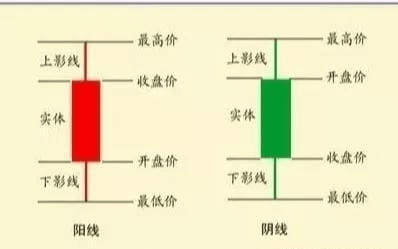
Candlesticks can be categorized into three types based on their shape: bullish, bearish, and doji.
Bullish candles include large bullish, medium bullish, and small bullish candles. Bearish candles include large bearish, medium bearish, and small bearish candles. When both are at the same price line, it means the closing price is equal to the opening price, a special form of candlestick at the same price level, such as doji, T-line, etc.
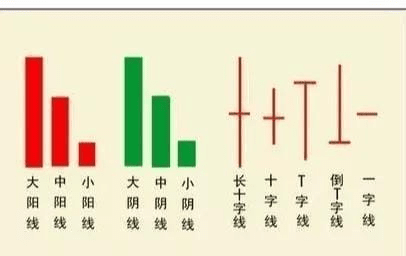
Candlesticks can be divided by time into daily, weekly, monthly, yearly candlesticks, and can also split the trading time within a day into several equal parts, such as 5-minute, 15-minute, 30-minute, 60-minute candlesticks, etc.
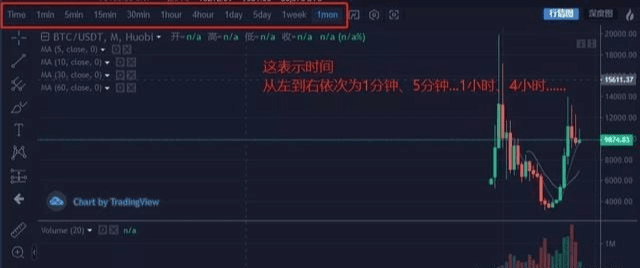
These candlesticks have different functions. For example, the daily candlestick reflects the short-term trend of the coin price. Weekly, monthly, and yearly candlesticks reflect the medium to long-term trends of the coin price. The 5-minute, 15-minute, 30-minute, and 60-minute candlesticks reflect the super short-term trends of the coin price.
The drawing methods of these are mostly similar. For example, the weekly candlestick, just find the opening price on Monday, the closing price on Friday, and the highest and lowest prices during the week, and it can be drawn. The time marked on the weekly candlestick on the computer is always the closing price time.
Monthly candlestick: Used to view long-term trends, allowing you to see the overall upward or downward trends of the market over larger time frames.
(Note: The 5-month moving average on the monthly K-line is equivalent to the 100-day moving average on the daily K-line, and is close to the 120-day line.)
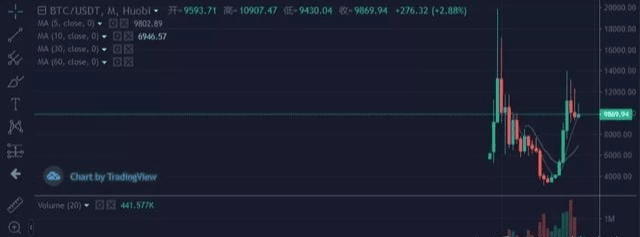
Example: When the 5-month and 10-month moving averages on the monthly candlestick show a top divergence or a death cross, it often signifies that a significant downward trend has begun. At this point, if you haven’t stopped loss, you must decisively cut losses and exit! Conversely, it indicates that a major upward trend has started, and if you haven’t entered a position, you should buy coins to enter.
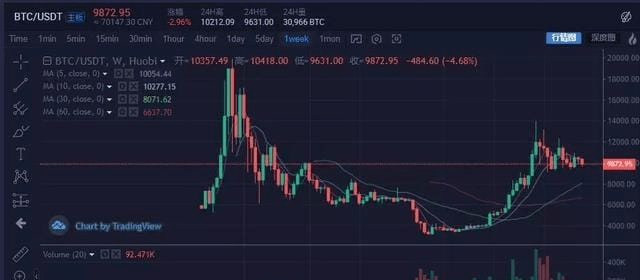
Example: When the 5-week and 10-week moving averages are bending upwards and show a golden cross, it means the market or individual coins have entered a strong state, and a good wave of movement is likely to occur.
Conversely, it means that the market or individual coins have entered a weak state, and there will often be a wave of significant downward movement. Therefore, at this time, you should timely stop-loss and exit without holding any delusions.
Daily candlestick: Used to view short-term trends, it is the most practical candlestick chart that is viewed daily.
Using short, medium, and long-term moving averages makes it easy to determine the strength of the market or individual coins. Using the daily MACD in conjunction with moving averages and changes in trading volume can better determine entry points for buying coins. During a strong trend, it can also better determine exit points on the daily candlestick;
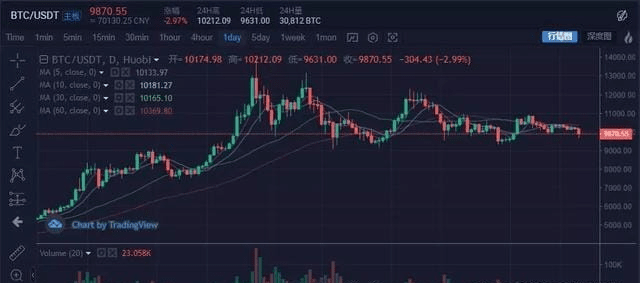
Minute candlesticks: Used to view ultra-short-term trends.
There are candlestick charts for 60, 30, 15 minutes, which can help you see the details of declines or rises that cannot be seen on weekly or daily candlestick charts. They are essential for short-term trading.
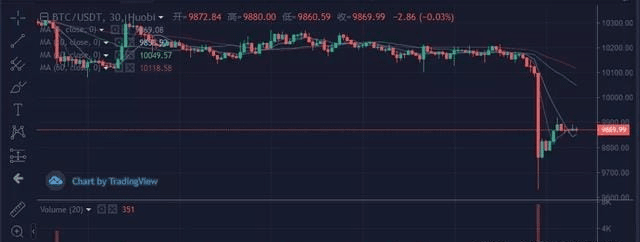
The 10-hour moving average of the 60-minute candlestick is equivalent to the 3-day moving average of the daily candlestick, and the 20-hour moving average is equivalent to the 5-day moving average of the daily candlestick.
So, when doing short-term operations, it’s better to refer to the 60-minute and 30-minute candlestick charts.
When you have 1 million in principal, the world really does change: even without leverage, a 20% rise in spot prices is 200,000, which is already a ceiling for many people in a year. More importantly, if you can grow from tens of thousands to 1 million, you have already grasped the logic of making money, and your mindset has also stabilized; from now on, it’s just a matter of copying and pasting.
Don’t keep shouting 'I want to earn tens of millions or a billion'; start from your own pocket. Bragging only makes the braggers comfortable; money is earned bit by bit.
The core of trading is distinguishing the size of opportunities: You can't always use light positions to grind, nor can you bet your life with heavy positions every day. Usually, practice with small trades, and when a big opportunity comes, pull out the 'big guns' - rolling positions are prepared for such times.
In a lifetime, rolling three to four times, going from zero to tens of millions is not difficult at all; it’s enough for ordinary people to step into the threshold of the wealthy.
So when is it suitable to roll positions? There are three situations; abandon all others:
1. In a long-term sideways market, when volatility drops to a very low level, it’s time to choose a direction.
2. In a bull market, after a big rise, if there is a sudden drop, this is the time to buy at the bottom;
3. When there is a breakout of a major resistance level on the weekly chart (or breaking a major support level), when the trend is about to change.
First, understand what rolling positions are: In a trending market, when money is made using leverage, the actual leverage of the position decreases. At this time, increase your position to let the profits continue to roll; this is rolling positions.
How specifically to operate?
- Floating profit increase: Buy again after making money, but first confirm that the holding cost has gone down, don’t add indiscriminately;
- Base position + T-trading: Split the money into several parts, with one part held firmly (base position) and the other part used for high selling and low buying. The ratio depends on how much risk you can bear; rolling half a position or rolling a third of the base position is fine. The core is to reduce costs and increase returns.
There are only two 'good times' to increase positions:
1. Suddenly breaking out of the convergent range in a trend, increase your position to ride the main upward wave, and quickly sell the part that was added once you’ve made a profit;
2. Trend retraces near the moving average, buy in batches, and wait for the next wave to surge.
Here’s another 'foolproof method' that helped me earn some small profits with almost no losses:
1. The market crashes, and your coin only drops slightly - it indicates that there are market makers protecting the price; hold on, and you will eventually profit;
2. Newbies should watch the 5-day line for short-term trading; hold if above the line, and run if it breaks; for medium-term, watch the 20-day line, similarly straightforward.
3. When the main upward wave comes, buy decisively if there is no volume increase. Hold on to gains when volume rises, and hold on when it shrinks but the trend hasn't broken; if volume drops and the trend breaks, quickly reduce your position.
4. After buying short-term, if there’s no movement for three days, you can sell; if it drops by 5%, don’t hesitate, cut losses;
5. If a coin falls by 50% from a high position and has fallen for 8 days - it is oversold, and a rebound may come anytime; you can give it a try;
6. Buy leading coins: They rise the most when they go up and are the most resistant when they go down. Don’t buy junk coins just because they have dropped a lot, and don’t hesitate to chase after leading coins just because they have risen a lot. What leading coins need is 'buy high, sell higher';
7. Go with the trend; the buying price is not about being lower but about being 'suitable'. Don’t guess the bottom when it’s falling, quickly discard coins that are not working; the trend is more important than anything else.
8. Don’t get carried away just because you made some money; continuous profit is the real skill. When reviewing, think: Was this luck or skill? Building a trading system that you can stabilize yourself is better than anything else;
9. If you’re not sure, don’t trade; staying in cash is also a strategy. In trading, first think about preserving capital, then think about making money. It’s not about the number of trades but the success rate.
The 'wealth code' of long-term trends:
- Halving cycle: Buy BTC, BCH and others 180 days before the Bitcoin halving, hold them for 30 days after the halving;
- Follow-up rise of the leading coin: If the leading coin rises by 200%, look for the second tier in the same sector that has risen less (less than 50%);
- Technical triple verification: Weekly MACD golden cross + daily breakout of the box + hourly volume increase with bullish engulfing, this is a golden entry point;
- Institutional positions: Looking at Glassnode, large addresses have been buying, and on-chain trading volume is also surging, which is a signal to start;
- Bear market dollar-cost averaging: Invest 10% of principal every month to buy BTC, ETH and other blue chips for 12 consecutive months, with a high probability of over 300% returns.
Risk warning: These strategies should be adjusted according to real-time market conditions. Newcomers should start with a simulation account. A single loss should not exceed 2% of total capital; the market is not an ATM.
Finally, I want to mention the most crucial point, which may seem unrelated to trading but is foundational:
Step out of the market and live a balanced life.
Just like viewing a landscape painting, leaving some white space is the essence. The time traders spend not trading is often more important than the time spent trading.
Body, mindset, family, interpersonal relationships... If these are not handled well, trading will definitely encounter problems. For example, if you lack a sense of security, you may struggle with positions; if you seek attention, you might operate blindly just to show off trades.
Fixing the holes in life allows you to relax and remain calm during trades. Just like those skilled traders, if there are no worries at home, no health issues, then during trades, their focus is solely on the market, how can they not win?
These 10 tips, write them down and stick them on your computer to look at every day.
Beginners always focus on 'how to buy and how to sell', but actually, the correct procedure for doing things is 100 times more important than analyzing the market or trading skills. Experienced traders often stumble on this point.
Think like a successful person, trade like a successful person, and handle your life like a successful person!