

In conclusion.
After I published that article last time, a friend asked me: "The multi-Agent programming assistant you mentioned, I downloaded it and tried it, it's quite useful. Is there anything new recently?"
Yes, and quite a few.
In the past month, we have revamped the entire system from skeleton to flesh; the core hasn't changed - it's still the multi-Agent programming assistant using domestic large models - but now it resembles a real development team more: it can plan tasks by itself, perceive your project structure, work quietly in the background, and inform you when tasks are completed or if issues arise, it will self-review and optimize.
This article does not discuss technical details, just one thing: what the current oh-my-coder can help you with.
Let’s start with a practical scenario.
Imagine this scene:
You open the terminal and tell it: "Help me refactor the user module of that old project, adding a third-party login."
Then you went to have a coffee.
After about an hour, your computer pops up a notification: "User module refactoring completed, all tests passed, do you want to accept it?"
You clicked in and saw that Architect has already drawn up the refactoring plan, CodeWriter finished writing the code, Reviewer has reviewed it twice, Tester has written the test cases, and Git Master has automatically committed the changes.
Throughout the process, you only said one sentence.
This is what oh-my-coder can do now.
How does it work?
The logic is actually very simple - division of labor and cooperation.
Just like a real development team, it's not just one person buried in writing code, but someone is responsible for analyzing requirements, someone is responsible for drawing architecture, someone is responsible for writing code, someone is responsible for reviewing, and someone is responsible for writing tests...
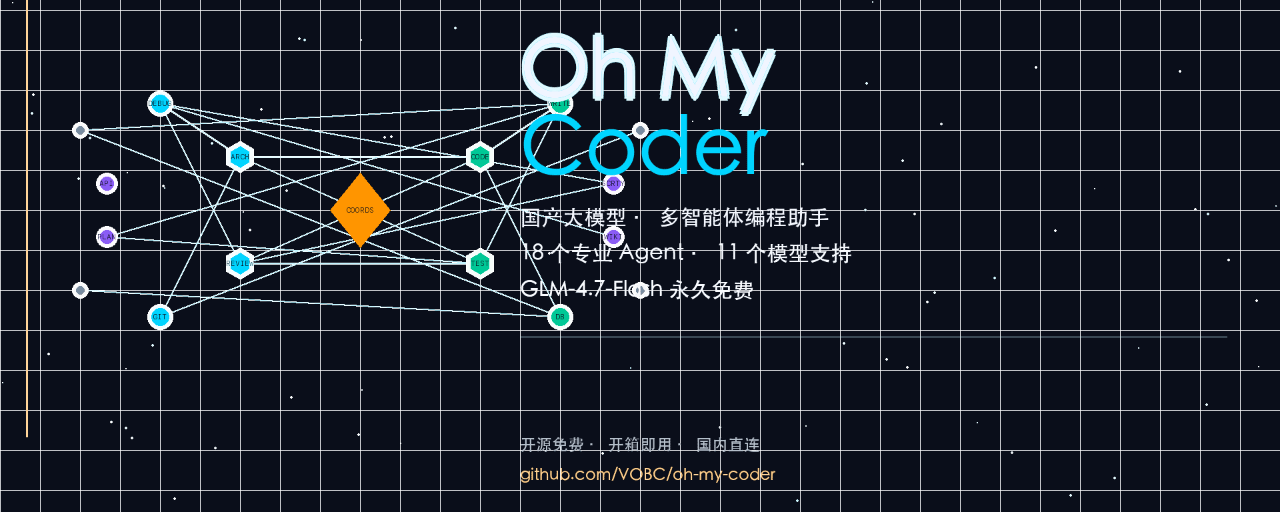
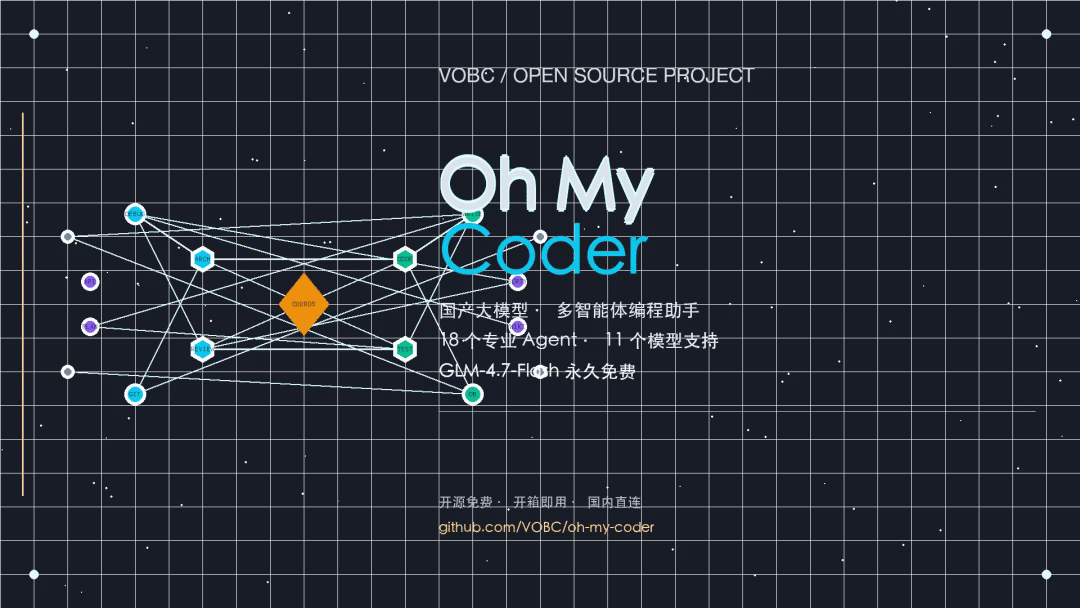
There are now 19 professional Agents in oh-my-coder, each with their own responsibilities:
Architect is responsible for designing architecture.
CodeWriter is responsible for writing code.
Reviewer is responsible for code review.
Tester is responsible for writing test cases.
Debugger is responsible for finding bugs.
Writer is responsible for writing documentation.
Security Reviewer is responsible for security review.
There are also those responsible for Git management, database design, API planning...
What you need to do is tell it what you want to do, and it will automatically assign the most suitable Agent to collaborate.
What has been updated this time?
1. It will "perceive" your project now.
Previously, the biggest problem with AI writing code was that it didn't know what your project looked like, and the generated code was incompatible with your actual project.
Not anymore.
oh-my-coder will automatically scan your project directory, understand the project structure, identify key files and dependencies, and before starting work, it already knows your project inside out.
The code generated this way is naturally more aligned with the actual needs of your project, reducing AI hallucinations and rework.
2. It can now work quietly in the background.
Traditional AI programming tools require you to keep the interface open and wait for it to work; if you close the window, it stops.
The current Quest Mode supports asynchronous tasks; you throw the requirements to it, it runs in the background, and you can do other things. When it's done, it notifies you for acceptance, just like a remote employee who never complains.
3. It has "memory."
Every time it completes a task, it automatically reviews: what was done well, where issues arose, and how to improve next time.
This means that the longer you use it, the better it understands your project and your coding style.
Not a one-time tool but an assistant that will grow.
4. It has become safer.
This is specifically highlighted.
What if AI executes a dangerous operation by mistake while running commands? For example, deleting files by mistake, exposing sensitive information, etc.
oh-my-coder now has multiple layers of security mechanisms: dangerous commands are automatically intercepted, all file operations are executed in an isolated environment, and it automatically checks for API Key or sensitive information leaks before publishing code.
Anthropic values safety so much that Claude Code can still make "low-level mistakes" like source code leaks, which have been blocked in advance here at oh-my-coder.
More models are supported now.
This is the question many friends care about the most.
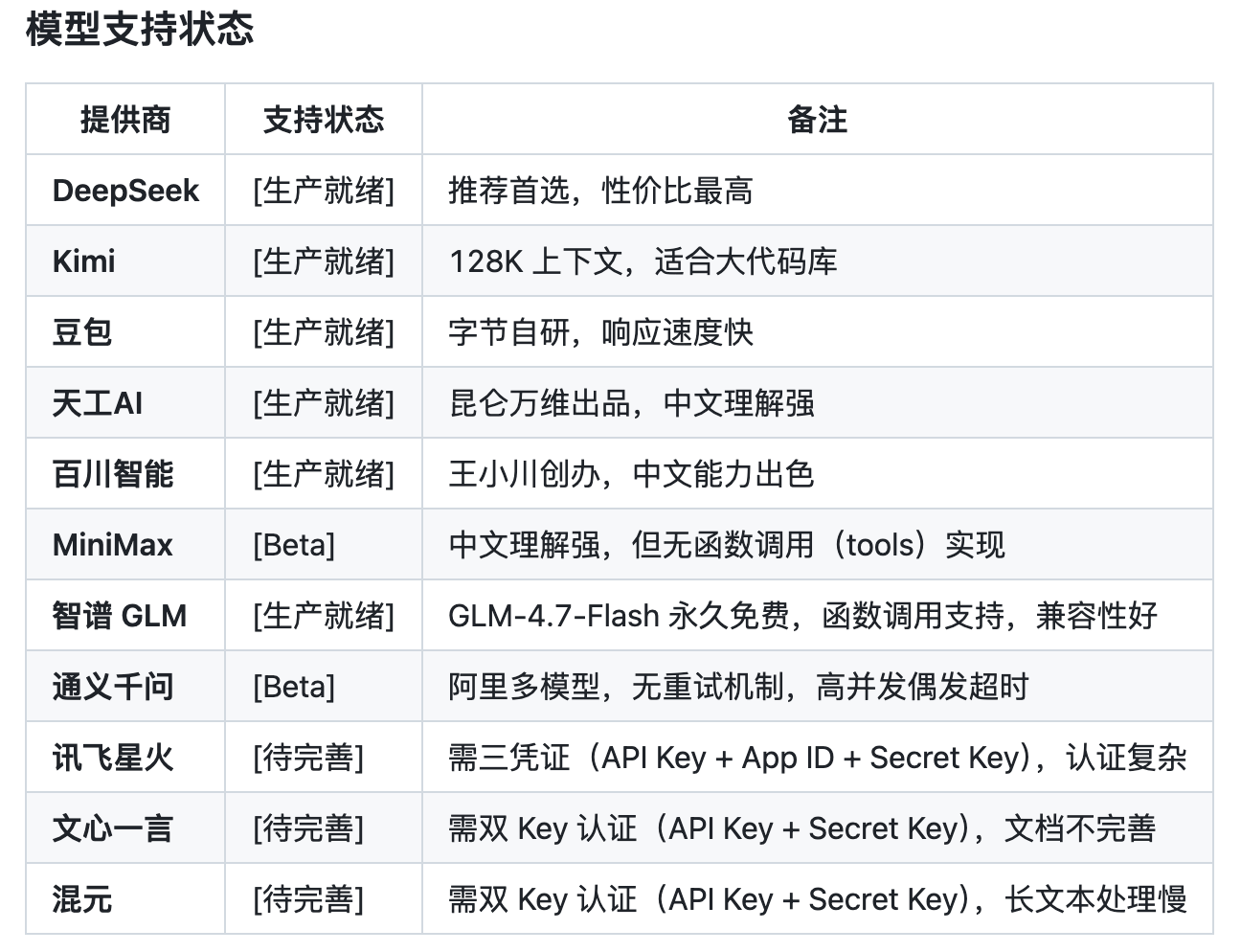
Currently, oh-my-coder supports 11 domestic large models: DeepSeek, Kimi, Doubao, Tongyi Qianwen, Zhiyu GLM, MiniMax, Baichuan Intelligence, iFlytek Spark, Wenxin Yiyan, Tiangong AI, Tencent Hunyuan.
Basically, the mainstream large models in the country are all connected.
The most recommended is Zhiyu's GLM-4.7-Flash, which is permanently free and sufficient for daily development, almost equal to no cost.
No need to mess with proxies, no need to bypass restrictions, no need for a monthly subscription; just configure a free API Key, and after three commands, you're set to go.
How does it compare to other tools?
oh-my-coder: GLM-4.7-Flash permanently free, fully open source, direct connection in China, 18 professional Agents, supports background tasks.
Claude Code: $20 / month + proxy, not open source, requires bypass, limited multi-Agent, does not support background tasks.
Cursor: $20 / month, not open source, many restrictions, does not support multi-Agent, does not support background tasks.
Qoder: will soon charge, not open source, supports domestic use, supports multi-Agent, supports background tasks.
Core advantages: free + open source + direct connection in China.
Claude Code requires a monthly fee, needs to bypass restrictions, and requires a proxy, Cursor also has a monthly fee; these two have high hidden costs for domestic developers.
oh-my-coder has lowered all these thresholds: one installation command, one line of API configuration, and you can start using it immediately.
Who is it suitable for?
Developers who want to quickly prototype - describe requirements, and code is generated automatically.
Teams that want more stable code quality - multi-Agent collaborative review to reduce human error.
Developers learning new technologies - AI explains code logic and architectural design.
Teams needing to refactor old projects - intelligent analysis + automatic refactoring plans.
Developers who want to improve test coverage - automatic test case generation.
How to get started?
Step one: installation (supports Linux / macOS / Windows)
curl -fsSL raw.githubusercontent.com/VOBC/oh-my-… | bash
Windows users also have a dedicated installation script, just double-click to run.
Step two: configure API Key (recommended free plan).
Go to Zhiyu's open platform to register an account, get an API Key, and then:
export GLM_API_KEY=your API key
Step three: Start working.
omc run "Help me write a to-do list CLI application"
Then? Then go brew a cup of coffee and wait for it to notify you for acceptance.
Final thoughts.
What is the happiest moment of doing an open-source project?
It's when a stranger stars it on GitHub.
Someone said in the issue, "I used it, and it really saved me a lot of time."
Someone in the group asked, "What is the difference between this and Claude Code?" and found the answer themselves.
If you think this tool is valuable, welcome:
Give GitHub a star; it costs nothing but lets more people see it.
Forward it to friends who write code.
If you encounter issues, raise an Issue to improve together.
If you have good ideas, submit a PR to make it better.
The meaning of open source lies here: everyone works together to make it better, and then everyone uses it.
GitHub:
https://github.com/VOBC/oh-my-coder
If you have questions or want to discuss the direction of AI programming, feel free to communicate on GitHub.
This article was assisted by oh-my-coder.
Further reading: Oh My Coder Chinese version officially released! Supports multi-agent programming assistants for domestic large models.
The OpenSea content you care about.
Browse | Create | Buy | Sell | Auction

Collect and follow the OpenSea Binance channel.
Stay updated with the latest information.