
Each year, new leaders and opportunities emerge in the cryptocurrency market. As 2025 approaches, some projects seem poised to advance with real momentum. These projects are not just speculative tokens—they address real problems and bring genuine innovation. For those who are closely watching, some of these projects stand out as strong contenders for growth. Let's take a closer look at three cryptocurrencies that may shine brightly this year.
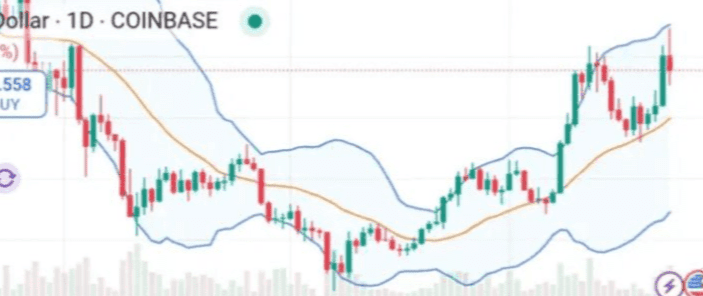
The Injective Protocol serves as a financial hub for blockchain assets. This network connects traders to various blockchains, such as Ethereum, Cosmos, and Solana. This means transactions are smoother, market access is more convenient, and the involvement of intermediaries is lower. Features like margin trading, derivatives, and futures set INJ apart. Many of these tools were once confined to centralized exchanges. In March 2024, INJ reached an all-time high of $52.62. By January 2025, the price fell to around $17.48. Nevertheless, this is still far above the early price of $0.6574 in 2020. Extreme volatility is common in the cryptocurrency market, and INJ is no exception.
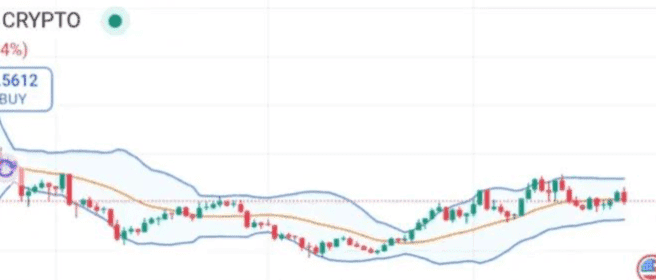
Arweave solved a major problem—how to permanently store data without relying on traditional cloud services. It is not a matter of monthly payments or trusting a company. Arweave uses Blockweave technology to store files across multiple nodes. You only need to pay once, and the data is securely preserved for life. Early buyers received substantial returns. In July 2020, the token was priced around $1.42. By November 2021, the price had risen to $89.24. By January 2025, the price was close to $14.30. This is lower than the peak but still far higher than early levels. Beyond price behavior, Arweave also provides real value. It protects everything from digital history to important records.
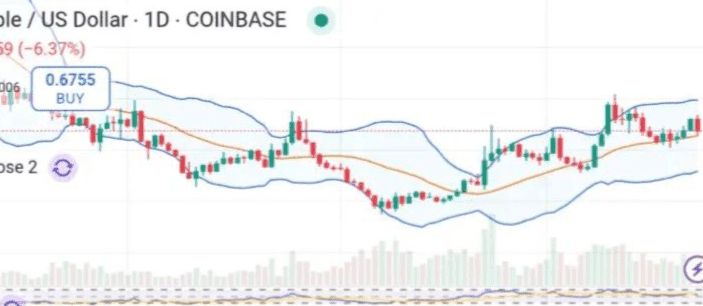
Immutable X makes Ethereum faster and cheaper, especially suitable for NFTs and applications. It uses zk-rollups to merge multiple transactions into one. This reduces gas fees and increases speed without compromising security. This helps developers and collectors work without incurring high costs. The historical highest price of IMX appeared in November 2021, reaching $9.52.
The lowest price occurred at the end of 2022, at $0.3781. In March 2024, IMX rose to $3.41, then fell back.
These fluctuations indicate that the market is under pressure, but the platform continues to move forward. Immutable focuses on speed, cost, and environmental technology, solving major challenges in blockchain.
Adoption rates may still be growing, but use cases remain strong.
Injective Protocol brings powerful trading tools to DeFi users. Arweave provides permanent storage without relying on large tech companies. Immutable solves the cost and speed issues of Ethereum NFTs and applications.
These three projects provide practical solutions and a solid foundation. Each project has enormous growth potential in 2025.
Survival Rule in the Cryptocurrency World: Break the 'holding on until the end' curse and become a clear-minded trader.
In the ever-changing cryptocurrency world, some become rich overnight, while others lose everything. Many enter this market with dreams of wealth, only to fall into the same deadly trap—reluctance to cut losses. I find that 99% of retail investors have a deadly bad habit: when the price of a cryptocurrency just drops, they tend to hold on with a sense of luck, unwilling to sell, eagerly anticipating a rebound, and the result is often deeper entrapment, turning previous profits into nothing, and even facing heavy losses.
Imagine a scenario: one day, the cryptocurrency you hold begins to fall. Although you feel uneasy, you tell yourself, 'Just wait a bit; it will definitely rebound.' That day, the price indeed showed a brief recovery, but you feel it hasn't risen enough to meet your expectations and choose to hold on. In a flash, the price drops another two points, and you start to hesitate, thinking it might bounce back soon, still unwilling to sell.
By the second day, the price continues to fluctuate, and you watch the screen, constantly complaining, 'There's no chance to sell at all,' even though it's already dropped three points, you're still reluctant to stop-loss. On the third day, the price rebounds slightly, rising only one point, and you calculate, 'It hasn't returned to the cost price yet; selling now would be too much of a loss.' Thus, you repeatedly miss the opportunity to stop-loss.
As time goes by, the price of cryptocurrencies gradually dropped by dozens of points, and the once substantial profits in the account vanished without a trace, leaving only the glaring losses flashing on the screen. This 'holding on until the end' trading method is a misconception that many beginners and even some veterans find hard to break free from.
Truly mature traders understand one principle: trading is not a gambler's all-in gamble, but a long-term strategic war. I have studied those big shots who excel in cryptocurrency trading, and they share a common trait: when facing declines, they decisively cut losses, quickly acknowledge mistakes, and start new trades. They are not swayed by emotions and do not stubbornly hold on out of unwillingness, as they know well that in this uncertain market, a wrong insistence can render all previous efforts futile.
I am the same way; I only dare to buy more when the price drops significantly during a high-conviction value investment because I firmly believe in the long-term value of the asset. However, in most cases, I prepare a stop-loss plan before placing every order. Treat each trade as an independent event, and do not let past profits or losses affect current decisions, making 'cutting trades' a normalized practice.
The so-called 'cutting trades' means treating every single trade and every day of trading as independent. For every position opened, one must clearly define their stop-loss and take-profit points. Once the stop-loss conditions are met, regardless of how unwilling one feels, they must decisively sell and stop-loss in a timely manner. Do not pin hopes on the elusive 'rebound,' and do not be shackled by sunk costs.
The benefit of doing this is that it allows us to maintain a clear mind and avoid losing everything due to a single mistake. Every trade is a new beginning. If successful, summarize the experience; if failed, learn from the lessons to continuously improve one's trading ability through constant practice.
The cryptocurrency market changes rapidly, full of unknowns and challenges. If you want to survive in this market for the long term, you must change the deadly bad habit of 'holding on until the end.' From now on, make a serious stop-loss plan before every trade, and let 'cutting trades' become your trading instinct.
I have seen too many scripts of overnight wealth in the cryptocurrency world, but only two types of people can truly change their fate.
The cryptocurrency market indeed has open windows, but 99% of people stepped on the wrong ladder.
You must have seen such stories: a college student turns 5000 yuan into tens of millions, a laid-off uncle makes a comeback through DeFi. But no one tells you that behind these survivors lie three fatal rules:
1. You can only gamble with money that you won't mind losing to get a hundredfold return.
The true comeback players I know started with initial capital not exceeding 30% of their monthly income. In contrast, those who bet their houses and cars often can't even afford the Gas fees during the 312 crash, watching NFTs drop in value helplessly. Those who dollar-cost averaged in the bear market are now in Sanya, while those who chased prices in the bull market are still delivering takeout. In 2020, I created a group called 'Bear Market National Currency Party,' stipulating that we could only discuss the market every Thursday. As a result, when I opened the group last year, five out of seven members had retired early. Meanwhile, in another group of 'technical analysts' who analyzed K-lines daily, 80% had their contracts blown three times or more.
3. Changing fate is not about code, but about information disparity.
During the Shanghai lockdown last year, a vegetable market aunt made more money from exchanging USDT for vegetables for her neighbors than selling cabbage for three years. She didn't understand what TVL+ or hash rate+ was, but she knew that the rich ladies in Jing'an District were afraid of starving and were willing to pay 20% more to buy stablecoins for groceries.
Three Life-and-Death Doors for Ordinary People
1. Cognitive Tax (Every get-rich-quick story comes with an IQ tax)
"Bitcoin is going to $100,000" and "the country is about to ban it" are essentially the same kind of FOMO emotion. I've seen the most tragic brothers who, in 2021, believed that 'Filecoin will replace Alibaba Cloud,' turning their wedding house down payment into FIL, and now they are being chased by their fiancées every day.
Liquidity Trap
Last year, when a certain animal token surged, a group friend made enough money at the peak to put down a deposit. As a result, the exchange suddenly 'maintained' for eight hours, and after the price halved, he couldn't even afford toilet paper. The harshest truth in the circle: paper wealth only becomes money when it can be withdrawn.
3. Survivor's Curse
One of my early apprentices made his first bucket of gold on Dogecoin, now he sprays people saying 'technical analysis is all crap.' As a result, he lost five years of profits in three days on AI Luna. The scariest thing in the circle is not going to zero but that those who made quick money no longer look at the ground.
Cryptocurrency Market Risk Warning: Risk is eternal.
Someone once asked Livermore: With your vast experience, how do you still let yourself do such foolish things?
Livermore said: It's simple; I'm human, and I have human weaknesses. Like all speculators, I sometimes let my impatience cloud my judgment.
In my view, the cryptocurrency world is a zero-sum game where your profits come from others' losses, and your happiness is built on the suffering of others. It's an inhuman battlefield. Why is it so hard to make money in the cryptocurrency market? The difficulty lies in people's struggle to break free from the shackles of human nature, which are often referred to as the five poisons of Buddhism: greed, ignorance, and doubt.
It is precisely because of the existence of the five poisons of the heart that we are able to profit in zero-sum games. If all cryptocurrencies were correctly priced, it would mean that every participant is devoid of humanity. Then, the market would have no arbitrage space, and speculative markets would not exist. True speculative masters are not only adept at mastering their own human nature but also at skillfully utilizing the human nature of the masses. Therefore, refining one's mindset is crucial for market operations. For all participants, the cryptocurrency world serves as the best test and training ground for human nature. Each of us will expose some flaws in our human nature during investment trading. Below are the five most common investment personality obstacles; check yourself to see where you fall short.
Five Major Failing Personalities in the Cryptocurrency Market
1. Gambler Type
Win the young models at the club, lose and go work in the fields. Each of us is a gambler because gambling is human nature. Throughout human history, regardless of the extent of oppression faced, the strong demand for gambling has never changed.
The cryptocurrency market, though different from a casino, cannot deny that the speculative methods employed by most in the cryptocurrency market are essentially indistinguishable from gambling. Losing money is always due to gaining money; after initially obtaining unexpected profits, gamblers become overly confident. After encountering a Waterloo, gamblers attempt to recover their losses, and in such cases, the bets they make become larger and larger, disregarding everything in an attempt to regain their capital.
The mindset of wanting to win more after winning, trying to recover losses after losing, being stuck in rebounds, fearing missing out, chasing highs and killing lows, etc., all reflect a gambler's mentality. They preset a virtual imagined goal in their minds, completely ignoring the current market trends, and operate according to their greed, fear, and hope. The reason why divination seems so accurate at times is that what determines what ordinary people call 'destiny' is habit, the inertia of behavior, and karma. Karma forms the cause of an event as well as its effect, and karma is also the process from cause to effect. The moment one enters the market with a gambler's mindset (cause), they are already ensnared by the web of karma, and a tragic ending (effect) is already destined.
Stubborn Donkey Type 2
Hold on, the team is doing things. The most typical behavior of a stubborn donkey is to hold on until the end when facing huge losses, especially during a crash. Minor fears cause panic, and major fears cause paralysis; the bigger the crash, the more they hold on. For example, one of my group friends faced a massive crash, did not cut losses in time, and lost a million assets. I was curious and asked why he didn't cut losses in time. He said that after seeing the huge loss, his mind went blank, and he was completely frozen.
People have a stronger emotional reaction to results caused by taking action than to results caused by inaction. Thus, people often choose to 'not take action' out of fear of regret. What if I sell and it rebounds; wouldn't I regret it even more? So they stubbornly hold on. Another type is that position determines the mindset, falling in love with the project. After buying a certain cryptocurrency, they automatically filter out negative news about the project and changes in market trends. They refuse to listen to any advice and selectively look for information to validate their so-called correctness and truth.
Is the market still afraid of a stubborn donkey? The main players love these stubborn donkeys.
3. Get-Rich-Quick Type
It cannot be denied that the vast majority of people enter the cryptocurrency market attracted by the wealth effect, including myself. There is nothing wrong with getting rich; who wouldn't want to achieve class mobility through investment? The real harm is the fantasy of wanting to change one's fate through sudden wealth, while market returns are not derived from mere imagination. Overemphasizing money itself makes it difficult to cut losses when losing money and even impossible to hold on when making money.
Those with a get-rich-quick mentality often exhibit the following three traits:
In terms of selecting cryptocurrencies, there tends to be a preference for low-market-cap altcoins, as the market generally believes that small coins have more explosive potential. However, the reality is that explosive dark horse coins are rare, and 99% of coins, compared to Bitcoin, are in a continuous downward trend. In risk control, get-rich-quick thinkers usually have a relatively small capital, so the concepts of allocation and risk diversification are naturally out of reach. They often buy in with their entire capital, greatly impacting their investment mindset. A slight decline in net value can cause significant psychological pressure on investors, leading to frequent trading, swaying back and forth like a fan, becoming the fat sheep of exchanges. In terms of taking profits, there is almost no concept of taking profits; they always think, 'Just a bit more and I'll sell,' and in critical moments, they often fail to escape at the peak. This is also why many of those who became rich during the bull market of 2017 fell back to the bottom, or even worse. Greed knows no bounds; the word 'greed' is almost synonymous with 'poverty,' and the word 'greed' is almost synonymous with 'burning.'
4. Zhao Kuo Type
Knowing so much yet still losing money. After losing money, most people turn to learning to improve their understanding, reading books, and signing up for courses. They understand more each day but often lose money in the background. Why? Because they mistakenly believe 'analysis = prediction = trading.'
However, analysis and trading are completely two different matters. Analysts believe in making every prediction as correct as possible and like to exaggerate analytical skills, belonging to the theoretical school. The spokesperson for traders, traders never predict future trends; they focus on studying the distribution characteristics of prices and establishing orderly trading rules from an unordered market. Investment is different from pure theoretical research; the market is the market, just like a battlefield. Many people can analyze but cannot trade; in simple terms, their trading systems are vague, seeing only trends but unable to buy or sell, and even unable to control the most basic psychological fluctuations.
The saying 'Those who can talk cannot do, and those who can do cannot talk' probably encapsulates this principle: do not become an analyst, but strive to be a trader.
Bottom-Fishing Rule: When a strong cryptocurrency continuously drops for nine days at a high, it is likely an excellent bottom-fishing signal. At this time, do not hesitate; act decisively. This continuous decline often reveals real investment opportunities, truly a golden pit. In the cryptocurrency market, significant corrections can sometimes be a good opportunity to acquire low-priced chips; seize such opportunities to lay the foundation for future wealth growth.
Take-Profit Rule: If the cryptocurrency held continuously rises for two days, one must consider reducing positions to lock in profits. The market is unpredictable and there is no myth of perpetual rises. Timely securing the profits obtained is the most practical approach. Avoid missing the best take-profit opportunity due to greed, leading to profit erosion.
Surge Signal: When a cryptocurrency experiences a 7% increase, this is merely the beginning of the trend. Usually, the next day, the cryptocurrency will continue to surge due to inertia. Therefore, investors must closely monitor the market and not rush to exit. Patiently wait for the price to rise further to gain greater profits.
Trend Code: For those big cryptocurrencies with long-term upward potential, the best entry point is when the correction ends. In cryptocurrency investment, one must reject the blind chasing of highs and killing of lows. Patiently wait for the market to correct, and follow the trend to enter, like waiting for the wind to come, to easily ride the wave of wealth growth.
Market Change Warning: If the price of a cryptocurrency has been flat for three days, further observation is needed. If it continues for six days without breaking through, investors should decisively choose to change positions and not get attached. If the consolidation lasts too long without breaking through, it often indicates that the market may be about to change, and timely adjustments to investment direction can effectively mitigate risks.
Stop-Loss Iron Rule: If the cryptocurrency bought does not recoup costs the next day, one should immediately liquidate their position and exit. In cryptocurrency investment, stop-loss must be decisive; once an investment direction is found to be wrong, one must quickly cut losses. Hesitation often leads to greater losses; strictly executing stop-loss strategies is essential to preserving strength in the market.
Continuity Law: When a cryptocurrency rises for three consecutive days, it often indicates that there may be a five-day uptrend to follow. On the fifth day, investors should take profits. In the cryptocurrency world, knowing when to sell is the key to investment success. Accurately grasping the timing to sell can maximize profits.
Volume and Price Bible: When a cryptocurrency shows a breakout in volume at a low point, this is a clear entry signal. Increased trading volume indicates active market participation, and prices are expected to continue rising. Conversely, if increased volume appears at a high point with stagnant growth, it is a strong warning to exit; investors should decisively leave to avoid falling into a price decline predicament.
Moving Average Strategy: In technical analysis, the 3-day moving average can be used to judge short-term trends, the 30-day moving average can assist in observing mid-term trends, the 80-day moving average is often related to major uptrends, and the 120-day moving average can serve as a reference for long-term investments. Investors should choose cryptocurrencies with upward trends in moving averages for investment, following the trend to achieve stable profits while avoiding fatigue and risks caused by frequent trading.
Reversal Mindset: Even with a smaller capital, one can achieve considerable returns in the cryptocurrency market. The key lies in rejecting the interference of FOMO (fear of missing out) emotions and strictly adhering to trading discipline. Persistently learn and practice daily, improving yourself by 1% in investment knowledge and skills, creating miracles of wealth growth through the power of compound interest.


