

After a massive loss of 14 billion dollars, are they still buying? What exactly is Saylor betting on?
If you think that losing money will make people back off, then you might underestimate the obsession of 'Bitcoin iron-headed players'. Despite the paper loss already reaching 14 billion dollars, Michael Saylor's Strategy company last week went all in again—directly throwing out about 1 billion dollars to continue increasing their Bitcoin positions.
This is not a test, it's a double down.
Where does the money come from? It's not earned, it's 'raised'.
This 1 billion dollars is not cash flow earned from the company's business, but rather obtained through leveraging the capital market.
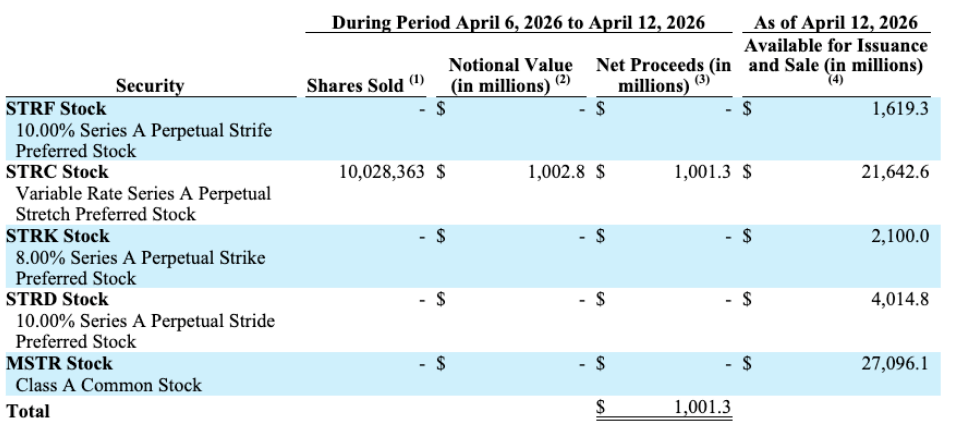
This time, Strategy chose to sell perpetual preferred shares#STRCStock , selling 10 million shares all at once, in exchange for about $1 billion in net funds. What's even more exaggerated is that the issuance volume for this week is almost three times the average level of the past four weeks, reaching the second highest in history.
Why can they suddenly sell so much? The reason is quite simple— at the beginning of March, the company modified the rules and relaxed the sales restrictions, essentially widening the 'financing valve.'
It's worth noting that this round of financing did not involve other stocks, such as MSTR, STRK, etc., none were sold, and the strategy is very clear: use only new tools and do not touch the core chips.
Buying at $71,900 is actually about 'lowering costs.'
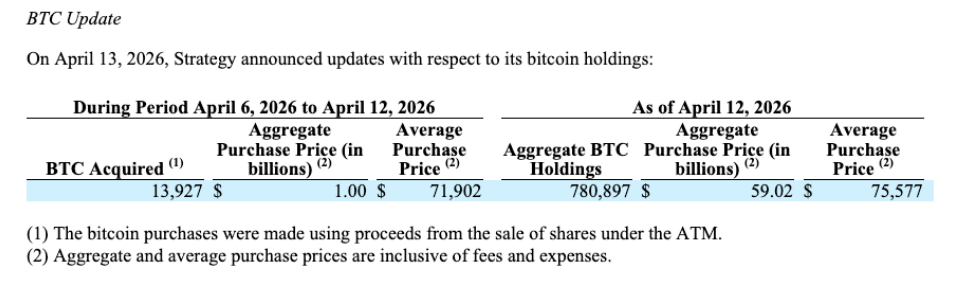
From April 6 to 12, Strategy bought a total of 13,927 bitcoins at an average price of $71,902.
At first glance, it doesn't seem low, but the key point is— this price is below the company's overall holding cost ($75,577). In other words, this round of operations actually pulled the average cost down.
Simply put: although they are at a loss, the more they buy, the 'cheaper' it becomes.
This is also Seiler's consistent approach— as long as they can still raise money, they continuously dilute costs and exchange time for space.
Only a final push is needed to reach 800,000 coins.
Currently, the total holding of Strategy has reached 780,897 bitcoins.#BTC
In other words, by buying another 19,103 coins, they can officially break the 800,000 coin mark. What does this number represent? On a global scale, it is already an extremely exaggerated volume.
What's even more incredible is that in 2026, this company had already purchased over 107,000 bitcoins. Based on current prices, the total value of this holding is approximately $59 billion.
This is not an investment; it feels more like 'controlling the inventory.'
The market is volatile, but they are actually buying more as prices drop.
Looking at the timing, this accumulation actually falls on a rather delicate node.
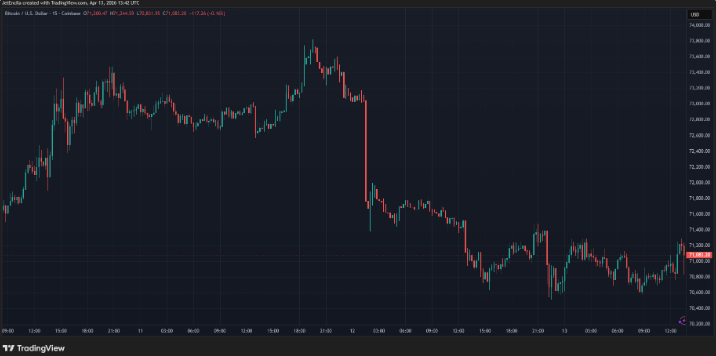
Last week, due to news of easing tensions between the U.S. and Iran, Bitcoin surged to $73,000. But then the market quickly weakened, with news of negotiations breaking down and lockdowns appearing, causing the price to fall back to around $71,000.
Amid such extreme fluctuations, Strategy instead chooses to continue buying.
Including Nomura Securities' Laser Digital, it has also been mentioned that the continuous buying under this strategy actually provides a certain level of 'bottom support' for the market. Additionally, during the same period, the inflow of funds into spot Bitcoin ETFs reached $786 million, indicating that the bullish force is not weak.
With a loss of $14 billion, do they really want to continue doubling down?
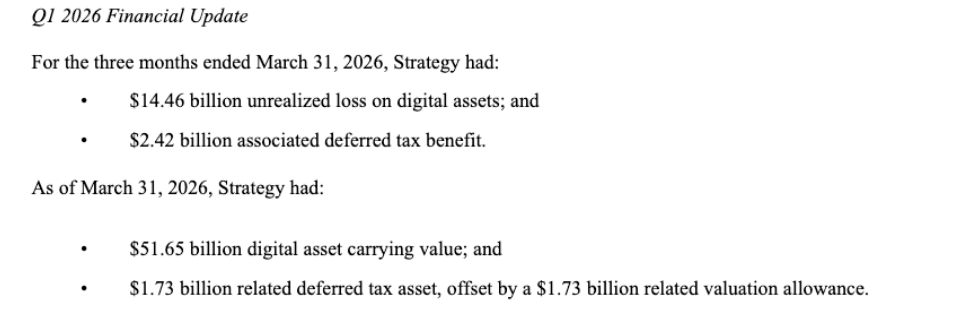
The question arises—having already lost $14.6 billion on paper, why not stop?
The answer is actually very simple: they never intended to 'cut losses.'
From the SEC documents disclosed by Strategy, there are no signs of any slowdown. The latest purchase has also been officially confirmed in the 8-K document.

For Seiler, this is not a short-term trade, but a long-term bet. He is betting that Bitcoin will eventually reach a higher valuation range, and all the current declines are, in his eyes, just 'discounts.'
In conclusion: this is a faith-based investment.
If I were to summarize Strategy's strategy in one sentence, it would be: the more they lose, the harder they buy.
In traditional investment logic, this kind of operation is almost 'counterintuitive.' But in the crypto market, especially in the eyes of extreme bulls like Seiler, this feels more like a faith-driven long-term layout.
The current question is no longer 'Will he continue to buy?' but rather—
Will the next announcement directly push the holdings to 800,000 coins?