
A security crisis concerning the global cryptographic system is approaching.
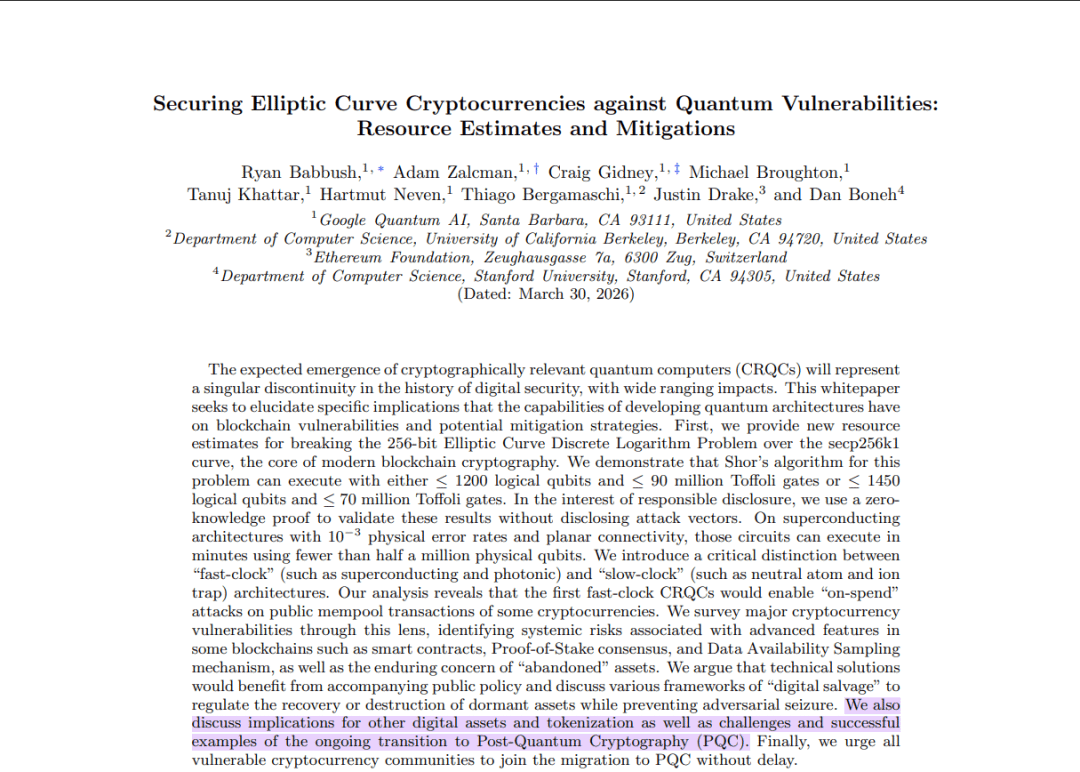
In March 2026, the Google Quantum AI team released a groundbreaking study indicating:
Under specific conditions, quantum computers can crack Bitcoin encryption in just about 9 minutes.
This conclusion directly points to a key fact:
Currently, about 6.9 million bitcoins (nearly 1/3 of the total) are in circulation.
Due to the exposure of public keys, future systems may be directly compromised and transferred.
What is even more concerning is—
"Quantum Doomsday (Q-Day)" is being moved up to around 2029.
What is 'quantum doomsday'? Why does it have such a big impact?
The so-called 'quantum doomsday' essentially means:
The day when quantum computers can crack existing mainstream cryptographic systems
Almost all current security systems in the world are based on:
Elliptic curve encryption (ECC)
RSA encryption
Asymmetric cryptographic system
Once breached, it will impact:
Bank card system
Social accounts (Telegram / WeChat / Email) etc.
Cryptocurrency assets (BTC / ETH / wallet private keys) etc.
That is to say:
It's not just the crypto space having issues, but the entire internet security system is being restructured
Theory has been established, but how far is reality?

From a Tsinghua University professor
Long Guiru's views are very critical:
'It is possible that quantum computers with actual cracking capabilities will appear around 2029.'
More importantly:
Relevant technology has moved from the 'theoretical phase' to the 'engineering advancement phase'
Although quantum computers have not yet reached:
500,000 quantum bits
High stability error correction capability
But:
The tech curve is accelerating, not stagnating
The real question is: not 'will it come', but 'are you prepared?'
The industry is forming a consensus:
Quantum attacks are not a short-term outbreak
Rather, it's a 'systemic risk that will inevitably occur in the medium term'
This means that:
Responding only after risks occur = too late
Must layout an 'anti-quantum security system' in advance
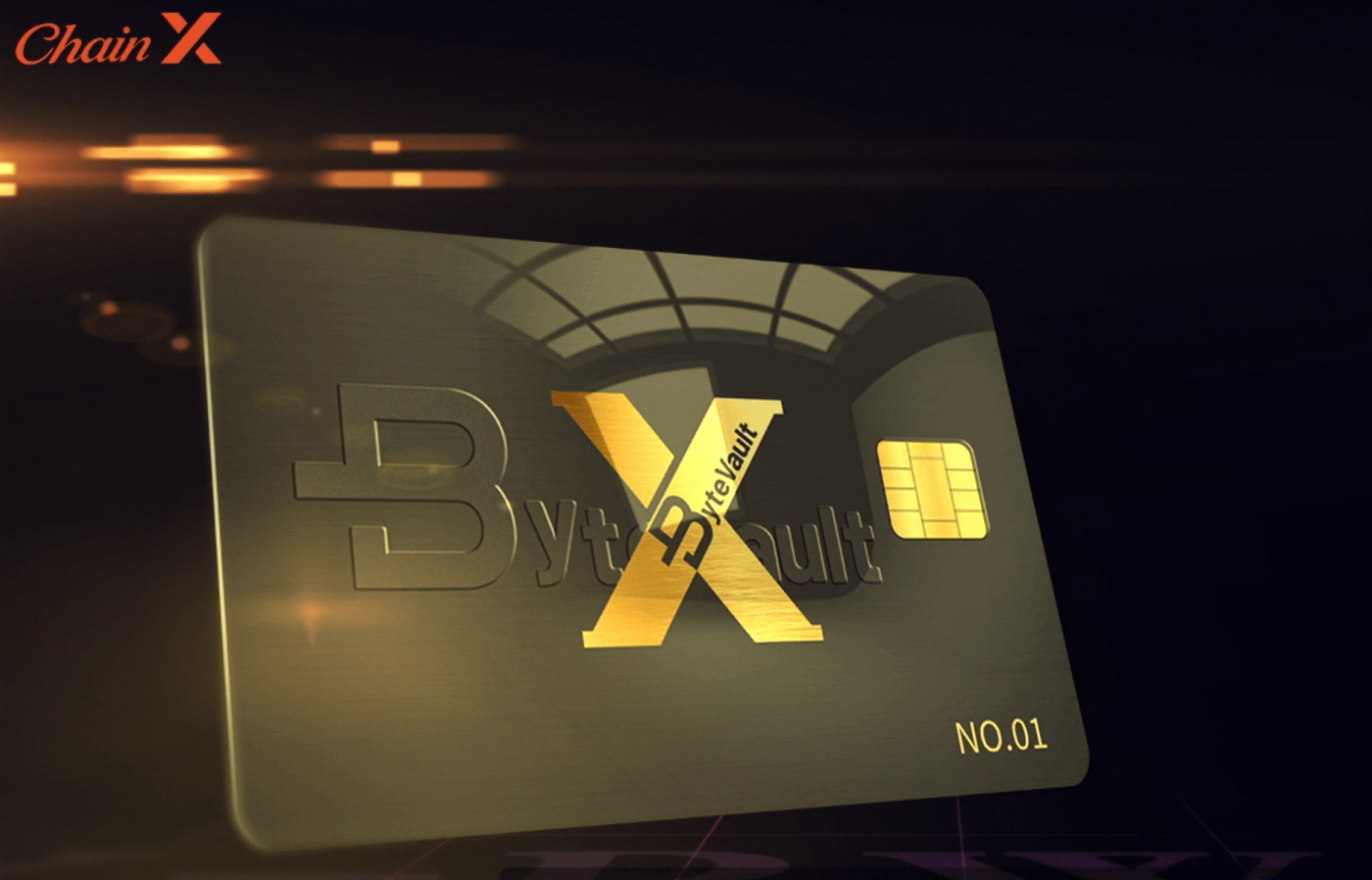
ByteVault: hardware security system designed for the 'quantum era' in advance
While most wallets remain in the 'private key isolation' stage,
ByteVault has moved to the next generation of security architecture:
Technical source: from Long Guiru's team's quantum security system
ByteVault is not just a simple commercial product, but:
Engineering implementation based on Professor Long Guiru's related quantum security research system
Means that:
Not just 'future-compatible'
Instead, consider quantum attack paths from the ground up
Core capability one: post-quantum cryptography (PQC) support has been achieved
ByteVault architecture possesses:
Supports multi-algorithm systems (symmetric / asymmetric / hash)
Has integrated post-quantum cryptography (PQC) algorithm capabilities
Supports flexible algorithm switching and continuous upgrades
Modular design for future security evolution
Essential advantage:
No longer relying on a single traditional cryptographic algorithm
Build a security system for the quantum era
Possessing both current protective capabilities and long-term anti-quantum security capabilities
It is a sustainable evolving security system, not a fixed algorithm device
Core capability two: hardware-level security (unmatched by software wallets)
Based on:
ARM 32-bit secure CPU
Independent encryption processor
True random number generator (TRNG)
Simultaneously possesses:
Voltage / Temperature / Light attack protection
Resistance to side-channel attacks (SPA / DPA / DFA, etc.)
Key point:
Private key generation & storage, never touching the internet
Core capability three: banking-level + military-grade security standards
Security chip level: EAL6+
Data storage: up to about 25 years
EEPROM write cycles: 500,000+
Supports multi-signature mechanisms
Supports offline cold storage
Comprehensive protection from 'physical layer → algorithm layer → application layer'
ChainXVault: making security truly 'usable' in the application layer ecosystem
If ByteVault is the 'shield',
Then ChainXVault is the 'operating system' 👇
Application layer capabilities
ChainXVault provides:
Multi-chain asset management
Receive / send / transaction / authorization
DApp interaction support
Wallet address generation and management
Key capabilities for the future
In the quantum era, the most important thing is:
'Migration capability'
ChainXVault has already laid out in advance:
Supports future key upgrade mechanisms
Supports algorithm migration (traditional → PQC)
Reduce user migration costs
Form a complete security closed loop
Ultimately forming:
ByteVault (hardware) + ChainXVault (application)
= Next-generation asset security system

Conclusion: In the quantum era, it won't wait for you to be ready
The essence of this change is:
Upgrading from 'computational security' → 'physical security + mathematical security'
The future watershed is simple:
People still using traditional wallets
Those who have already laid out anti-quantum systems
Last statement summary
Quantum computing will not destroy the world overnight
But it will quietly eliminate those who are unprepared
What ByteVault + ChainXVault are doing is only one thing:
Ensuring your assets still belong to you in the future.
#私钥破解 #BTC #Bytevault后量子安全 #PQC #Web3安全