
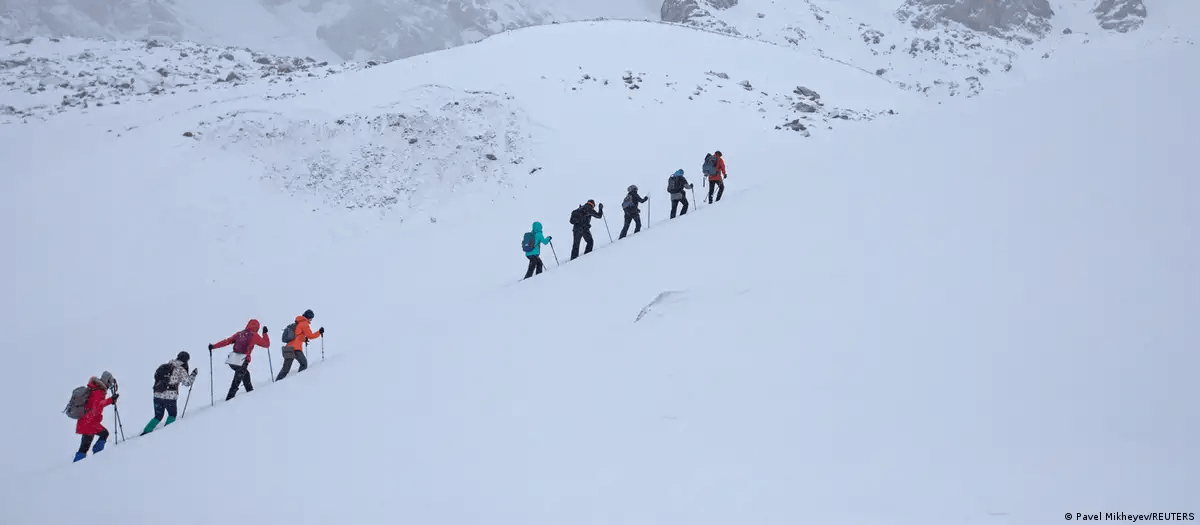
Central Asia is one of the most vulnerable regions to climate change, where the impacts of global warming are manifesting faster than the global average. This is stated in a report by the World Meteorological Organization, published in March 2026.
Against this backdrop, the state of glaciers, which play a key role in the region's water supply, raises serious concern. Their reduction is directly linked to rising air temperatures. The problem of glacier degradation has been discussed for several years by the leaders of the Central Asian republics. For example, in May 2025, the President of Tajikistan, Emomali Rahmon, stated that out of 14,000 glaciers in the country, more than a thousand have already disappeared, and their total volume has decreased by nearly a third, despite the fact that they account for more than 60 percent of the region's water resources. Similar processes are observed in Kyrgyzstan, where over the last 50-70 years, the area of glaciers has decreased by varying estimates from 16 to 30 percent.
Stable decline or accelerated melting?
At the same time, experts' assessments vary. The director of the Central Asian Regional Glaciological Center (CARGC) under the auspices of UNESCO, Takir Balikbaev, asserts that ''in most glacial basins, the reduction of glaciation occurs linearly, without accelerations''. This means that the area and volume of glaciers are reduced annually by a certain percentage. For example, in Kazakhstan, this figure is 0.75% per year in area, in Uzbekistan - 0.45% per year. He explains: ''Due to the different percentages of annual reductions, different figures emerge over 50-70 years''.
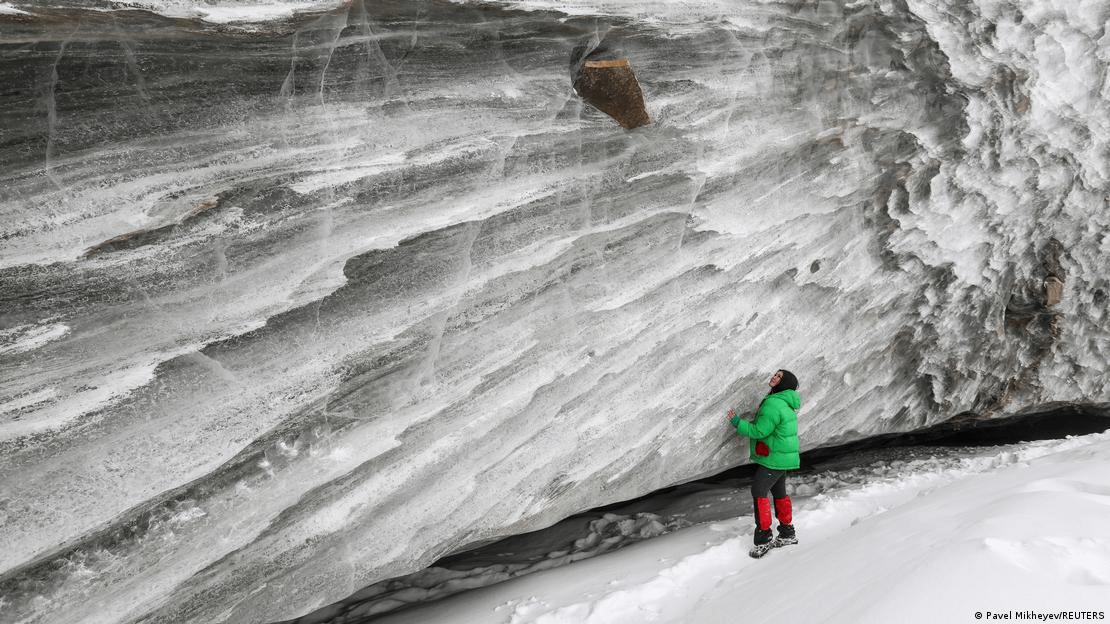
At the same time, according to Kyrgyz specialists, the melting of glaciers in the republic has noticeably accelerated over the past 10 years. According to glaciologist Gulbara Omorova, glaciers are losing mass faster than they can accumulate it, under the influence of a whole range of mutually reinforcing factors - from rising temperatures to pollution of their surfaces with carbon soot. ''Currently, we observe a steady reduction in the area and volume of glaciers. We collect data on mass balance, and it has become negative'', says the expert.
The DW interlocutor also notes that the duration of the ablation season has increased, causing the ice to start melting earlier in the spring. ''Earlier, until the end of May, you could go, and there was snow on the surface of the glacier. Now, by the beginning of May, one must hurry to do snow measurements, as the season has shifted by about three weeks. Moreover, the share of precipitation in the form of snow is decreasing'', she says. According to the glaciologist, even in areas of Kyrgyzstan where permafrost was previously observed, noticeable changes are occurring. While before, ice and permafrost could be found at a depth of 20-40 centimeters, now it requires digging more than a meter.
Risks for farmers and herders
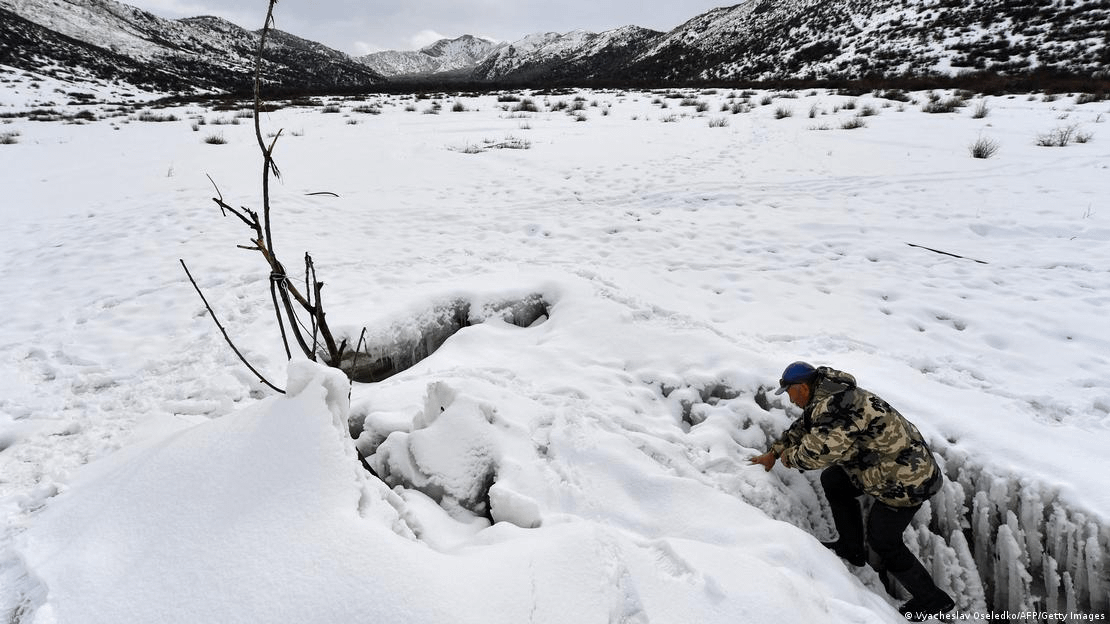
Speaking about the consequences of glacier reduction, the director of CARGC points out that the population and economy of the countries in the region critically depend on the runoff from mountain-glacial basins, a significant portion of which - more than 80% of the annual and up to 50% of the volume during the growing season - is formed from melt snow and glacial waters. In this regard, the issues of water resource distribution in transboundary river basins fed by mountain glaciers remain extremely relevant and can escalate into serious geopolitical conflicts.
Changes in the state of glaciers affect agriculture and create risks for farmers, confirms the glaciologist. At the same time, Gulbara Omorova notes that glacier melting does not begin immediately after the snow melts, but approximately 10 days later. It is during this period that the water shortage is felt most acutely. Therefore, it is important to have data on the beginning of glacier melting so that agricultural producers can accumulate water and use it effectively. ''A couple of years ago, farmers missed this period. As a result, they could not plant beans on time, and due to the lack of water, queues and conflicts arose'', recalls the expert.
Pasture owners also face risks. According to a glaciologist, herders complain about the reduction of water and snow, which affects the state of vegetation in the mountains, and pastures are gradually degrading.
''Glaciers teach us not to be careless''
The problem of how glacier melting directly affects the lives of residents of Kazakhstan and Kyrgyzstan is highlighted in her documentary by author and director Madina Ashilova. Her film ''Alatau: In Pursuit of Disappearing Glaciers'' is dedicated to the rapid degradation of glaciers in the Zailiyskiy Alatau of the Northern Tien Shan. The film's director believes that ''glaciers teach us not to be careless''. The abundant melting of glaciers increases the threat of mudflows, dam breaches, the formation of new moraine lakes in the spring, and also creates a risk not only of acute water shortages but also of drought and desertification in the summer.
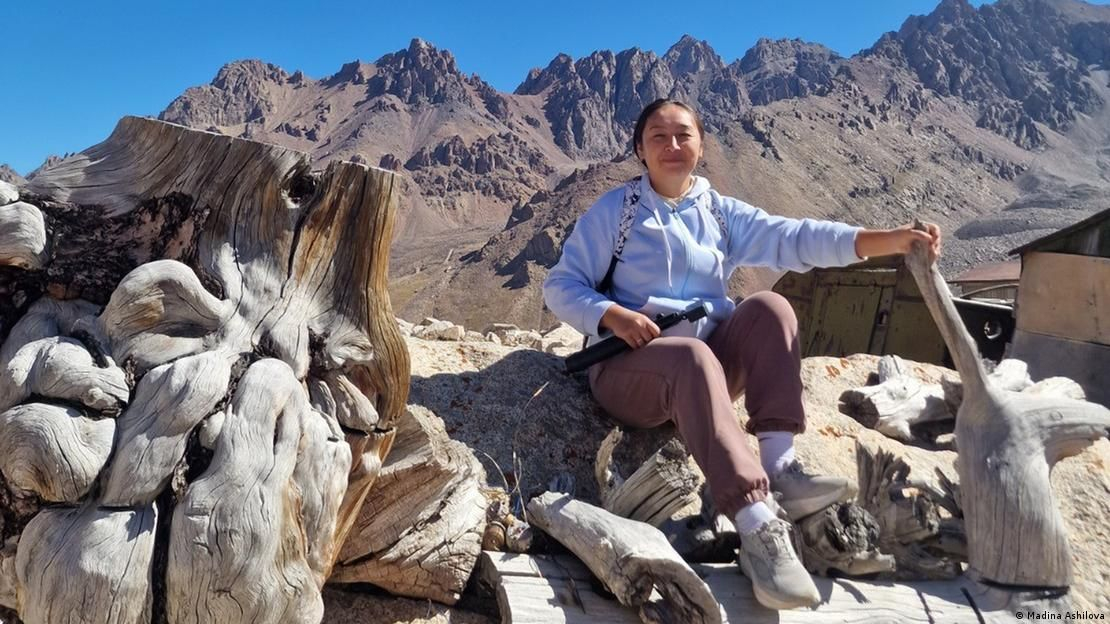
''Living as before is no longer possible'', emphasizes Ashilova. Local residents need to adapt to the changes: to form ecological thinking, revise approaches to water consumption, implement water-saving practices, and much more.
''Climate change and abundant melting should not catch us off guard. We must learn to feel our mountains, live in harmony with them, understand what is happening, adapt and change. Only then can we survive in the future. Otherwise, we will have to become climate migrants, like one of the heroines of our film, who had to flee from her native Batken region, where she and her family were farmers, but left due to the lack of water, and in Bishkek could only find shelter near the city dump...'', shares Madina Ashilova.
Climate adaptation and monitoring of glaciers
Gulbara Omorova also speaks about the importance of preserving natural ecosystems for climate change adaptation. According to her, it is necessary not only to develop monitoring and management of water resources but also to restore forests, prevent deforestation, and avoid the destruction of mountain ecosystems. Forests play a key role in regulating the water regime: they retain moisture, reduce risks, and help maintain the stability of mountain landscapes. Their degradation exacerbates the consequences of glacier melting and increases vulnerability to droughts and natural disasters.
Moreover, one of the key problems, according to the glaciologist, remains the insufficiently regular and systematic monitoring of glaciers in the region. Continuous observations are limited by a lack of funding, personnel, and equipment. In particular, the shortage of drones complicates the study of high-altitude hanging glaciers. In many areas, monitoring has either been interrupted or is conducted episodically, complicating long-term forecasting. The lack of systematic research does not allow for timely recording of changes and assessing risks, concludes the expert.
\u003ct-49/\u003e, \u003ct-51/\u003e?
A group for those who love to stay updated on changes not only in the news agenda of the world of finance, cryptocurrencies, raw materials, and technological changes in the markets but also in the surrounding universe!
🤫
And besides everything else, sometimes in this group we will publish quite intriguing stories...
🙄
Welcome to the club! Our doors are open to subscribers!
😉