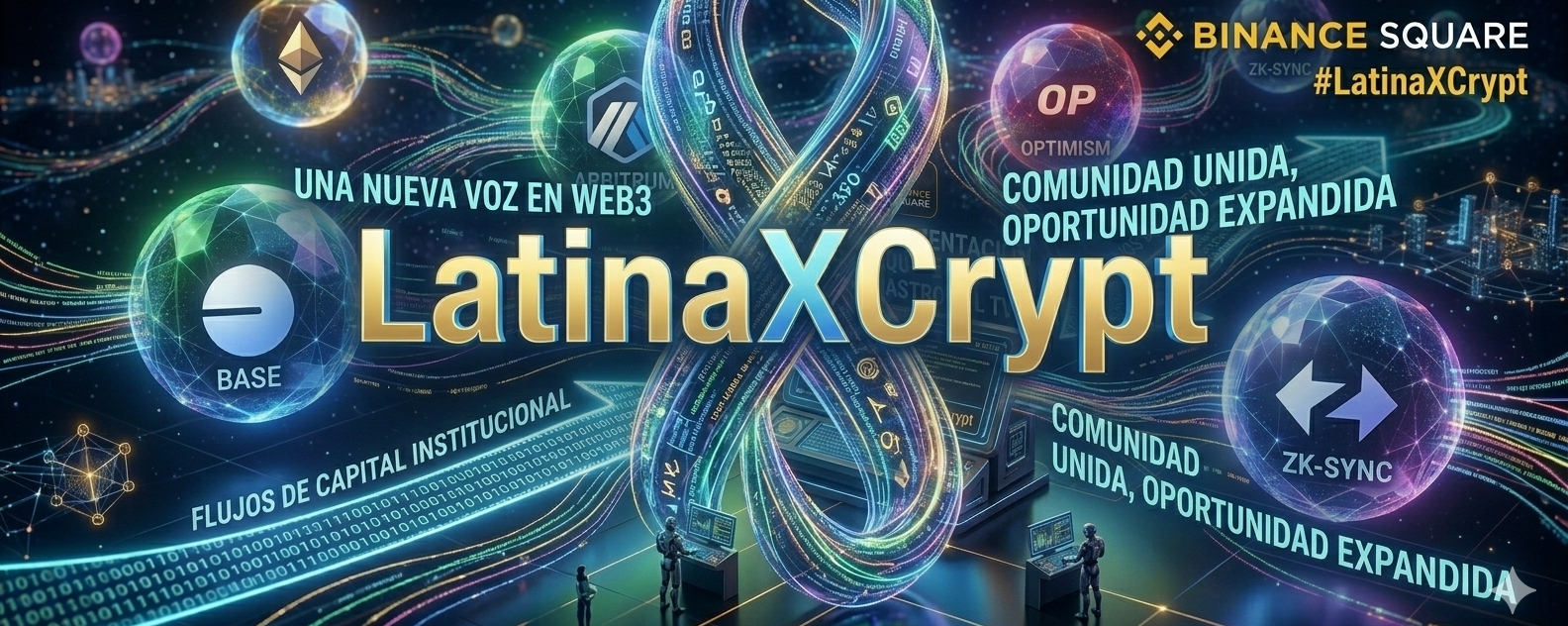
If you feel that the market is "slow" despite Bitcoin's price holding steady, it's not your imagination. In this April 2026, we are facing one of the biggest technical and economic challenges in the sector: the fragmentation of liquidity.
1. The Dilemma of the Thousand Networks
Today we have dozens of Layer 2 (L2) like Base, Arbitrum, Optimism, and the new ZK-Rollups competing for the same capital. The result: money is scattered. What used to be a "sea of liquidity" in Ethereum is now small isolated "pools."
The problem: Less liquidity in one place means more slippage and erratic price movements.
2. The opportunity for the Savvy Trader
This is where it gets interesting. While most expect that "everything will rise", institutional capital flow moves in short cycles between networks:
Incentive Arbitrage: The foundations of these networks launch massive incentive programs to attract liquidity. Following these programs is following the money trail.
Bridges as indicators: The volume on the bridges between networks is our new "technical indicator". If you see a volume spike towards a specific L2, the price movement there is imminent.
3. My Strategy: "Follow the TVL, not the hype"
I do not operate where there is more noise on social media; I operate where the Total Value Locked (TVL) is growing organically.
In 2026, the winner is not the fastest network, but the one that manages to concentrate enough liquidity so that whales can operate without destroying the price.
💡 Conclusion
Fragmentation is a hurdle for mass adoption, but a competitive advantage for those who know how to use on-chain analysis tools. Don't look for the winning coin; look for the network that is capturing capital this week.
Which network are you seeing better yield opportunities right now? Are you sticking to the classics or exploring the new ZK? 👇
#BinanceSquare #Layer2 #Ethereum #CryptoAnalysis #LatinaXCrypt