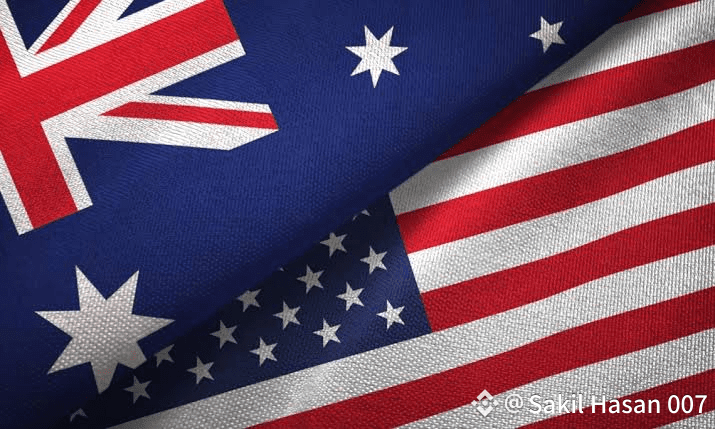
Trump Signs Historic Deal to Break China’s Rare Earth Dominance
A new era in global trade and technology just began.
In a landmark move, President Trump and Australian leaders have signed a strategic critical minerals alliance aimed at dismantling China’s decades-long monopoly over rare earth elements — the essential building blocks of modern technology.
This is not just another trade deal.
It’s a strategic reset — one that could reshape the world’s industrial, defense, and geopolitical balance for years to come. 🌍⚙️
💡 Why This Is a Global Game-Changer
Rare earth elements are the silent engines of the modern world — critical for:
⚡ Electric vehicle (EV) batteries and clean energy tech
🛰️ Satellites, defense systems, and aerospace components
📱 Telecommunications and advanced electronics
For over two decades, China has processed over 80% of the world’s rare earth supply, giving Beijing extraordinary leverage over global manufacturing and technology flows
The U.S.–Australia Critical Minerals Partnership directly challenges that dominance, signaling a new phase in the global supply chain realignment.
🧭 Inside the Deal: Strategic and Economic Core
The agreement is multi-layered and long-term focused:
💰 Massive U.S. funding for Australian mining, refining, and processing facilities
🔋 Technology transfer and research collaboration on sustainable extraction and recycling
🏗️ Infrastructure expansion to link critical mineral routes from Australia to U.S. industrial hubs
🛡️ Supply chain security clause to reduce exposure to Chinese export restrictions
The aim: Build a self-sufficient Western rare earth network — resilient, diversified, and shielded from political coercion.
🌐 The Bigger Picture: Rebalancing Global Power
This partnership is more than economics — it’s geo-strategic maneuvering.
For years, rare earth dominance gave China quiet but formidable influence over:
Defense procurement in NATO nations
Semiconductor and EV supply chains
Clean energy transitions in Europe and the U.S.
By securing new non-Chinese sources, Washington and Canberra are rewriting the resource map.
Experts say it could weaken Beijing’s leverage in trade disputes, bolster Western resilience, and accelerate decoupling in key industries.
📊 Market Implications: Investors Take Notice
Markets are already reacting:
📈 Rare earth stocks and ETFs are seeing bullish inflows
⚙️ Mining and refining firms in Australia, Canada, and the U.S. may experience revaluation
🌏 Manufacturers in Japan, South Korea, and India could shift contracts toward Western-aligned supply chains
Analysts predict that this shift could redraw Asia-Pacific trade corridors, with ripple effects on logistics, shipping, and even commodity pricing.Long term, the deal might spark a rare earth arms race — as other U.S.-aligned economies (like Japan, India, and the EU) pursue similar bilateral frameworks to secure critical resources.
⚠️ Risks and Strategic Friction Ahead
However, the path forward won’t be smooth:
⚔️ China may retaliate with export restrictions or price manipulation
🌱 Environmental challenges in rare earth mining could slow Western scaling
💹 Short-term market volatility is likely as new production ramps up
Still, the direction is clear:
The world is diversifying away from Chinese dominance — and the U.S.–Australia alliance is leading that charge.
🧨 The Bottom Line
This deal is a geopolitical milestone — and perhaps the clearest signal yet of a fractured but rebalanced global economy.
The U.S.–Australia pact isn’t just about minerals — it’s about control, security, and technological sovereignty in the 21st century.
📊 The global supply chain chessboard has been reset.
The next moves — by China, Japan, and the EU — will determine how the next decade of innovation unfolds.
#MarketSentimentToday rketSentimentToday #MarketPullback #BinanceHODLerTURTLE