
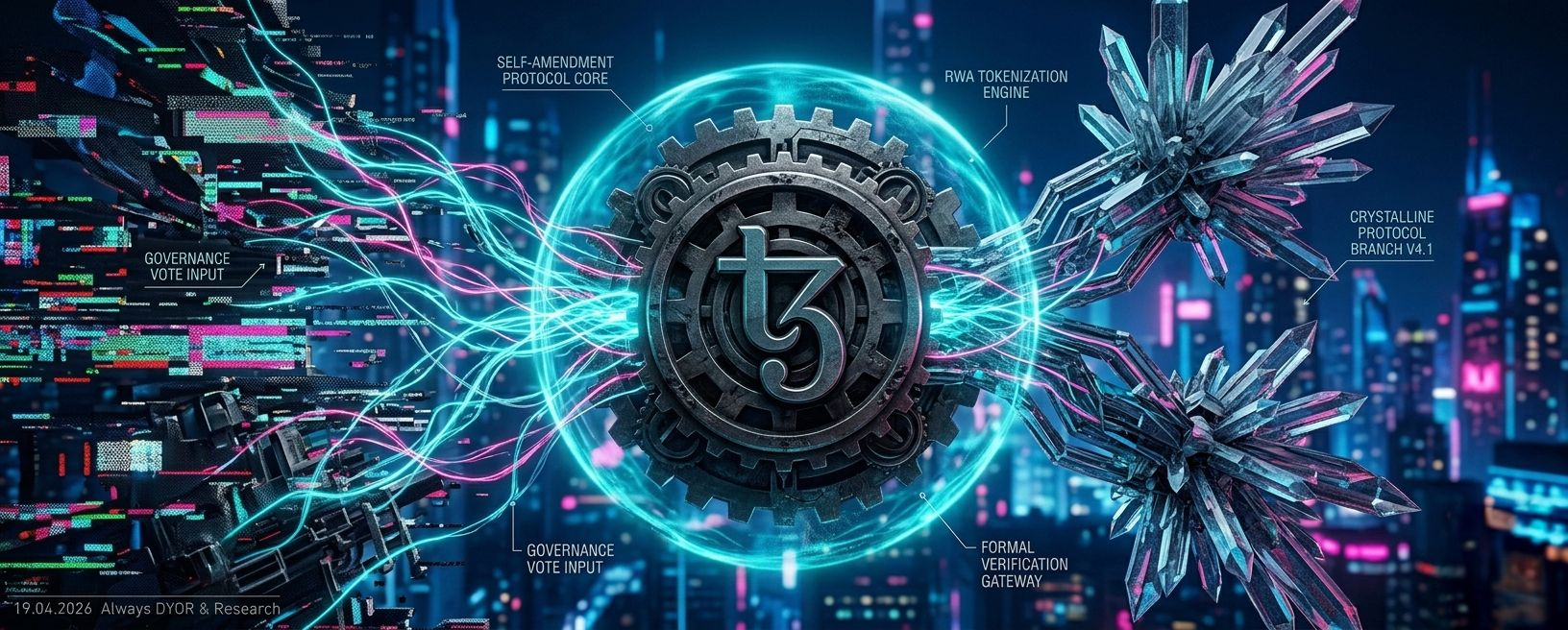
The vision of Tezos creators, Kathleen and Arthur Breitman, arose from the need to create a blockchain that would be resistant to community splits (hard forks) and technological stagnation. The problem faced by older networks is decision paralysis and the risk of censorship when implementing critical updates. Tezos was born as a bold attempt to build a 'smart contract' at the protocol level, which has a built-in self-governance mechanism, allowing the network to evolve and implement fixes without interrupting the continuity of the chain, creating a stable and secure foundation for institutionally verifiable applications.
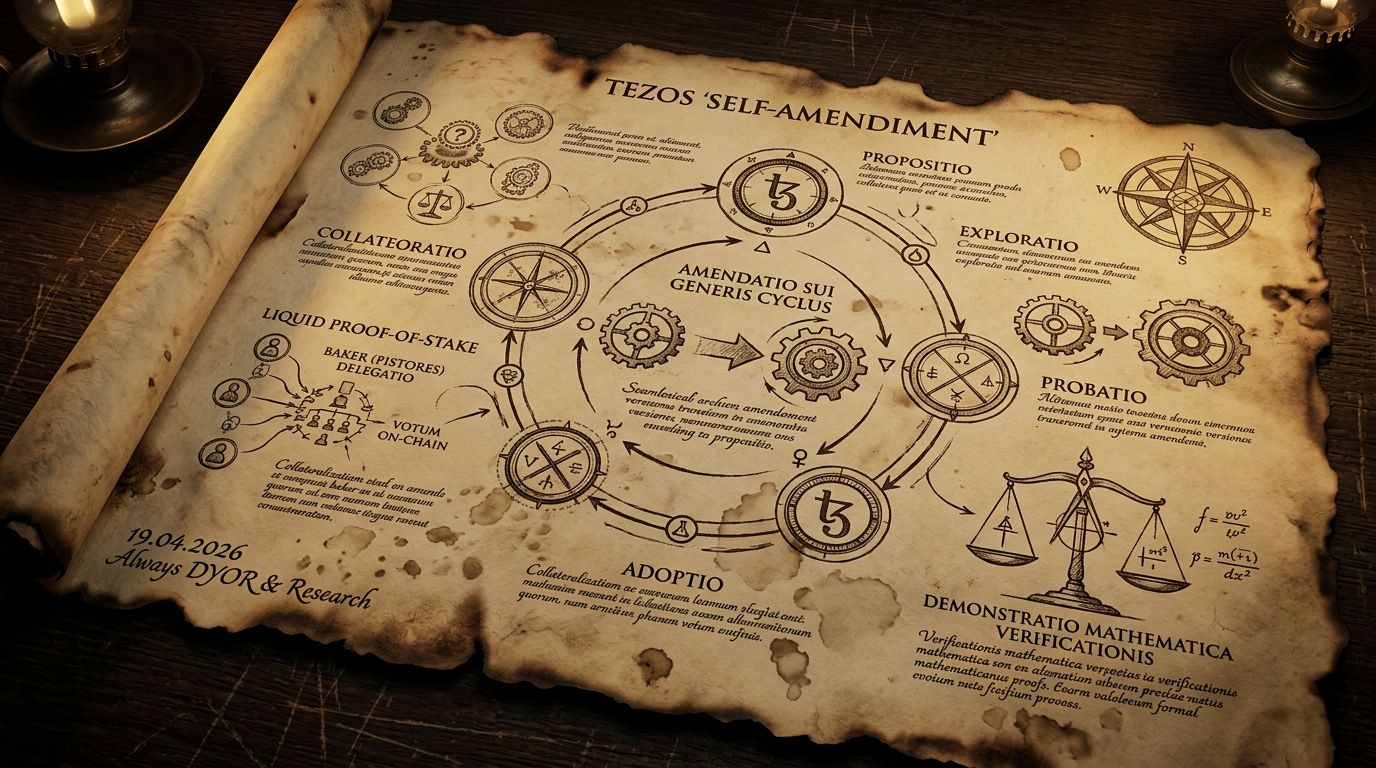
The mechanics of this innovative ecosystem are built on the Liquid Proof-of-Stake (LPoS) consensus, allowing XTZ token holders to delegate their validation rights (baking) without losing control over their assets. At the heart of the on-chain economy is a unique amendment process where proposals for code changes are submitted, tested, and approved by the community through formal voting. Although Tezos offers high resilience against technological pitfalls, the self-modification process requires constant engagement and verification from bakers, which poses a technical challenge for stabilizing mechanisms with complex changes. The project aims to set the standard for the tokenization of real-world assets (RWA) and digital art, transforming formal verification into useful financial tools, where instead of trusting a central council, we rely on mathematically verified quality of self-modifying code, in which each XTZ unit represents a vote in the evolution of the world's safest, open evolutionary system.
Did you know: Tezos was one of the first blockchains in the world to introduce Formal Verification, a mathematical proof of code correctness, which drastically enhances the security of smart contracts against code vulnerabilities?
04/19/2026 | Always DYOR & Research.
$XTZ #xtz #RWA #Tokenization #BinanceSquare #InstitutionalAdoption