
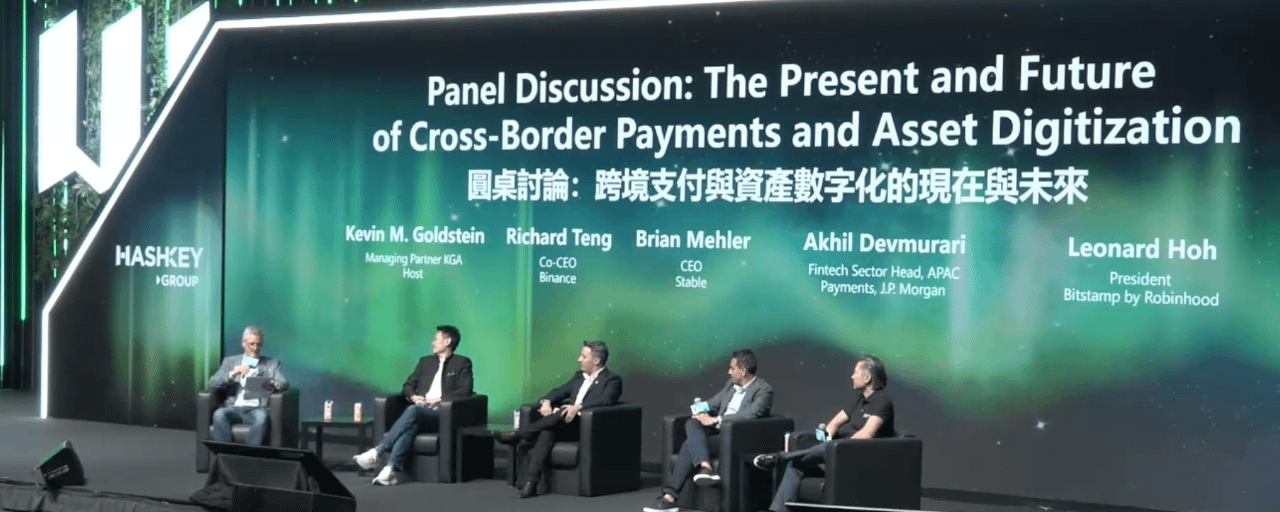

Binance Co-CEO Richard Teng took centre stage at the Hong Kong Web3 Festival 2026, delivering one of the most comprehensive public assessments of where the crypto industry stands today — and where it is headed. Across four wide-ranging topics, Teng addressed the transformative potential of stablecoins for cross-border payments, the dual forces of competition and collaboration reshaping TradFi and crypto, why regulatory clarity is the single most important unlock for mainstream adoption, and a forward-looking prediction: that stablecoins will become the native currency of artificial intelligence.
Stablecoins are the future of cross-border payments
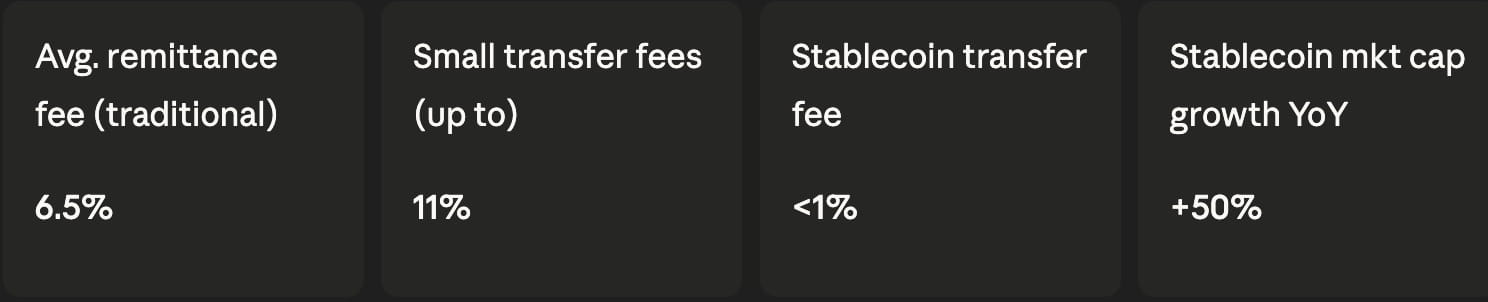
Binance Co-CEO Teng opened with a direct challenge to the global payments status quo. The traditional financial system, he argued, still runs on infrastructure — SWIFT and correspondent banking networks — that was never designed for the speed and scale the modern global economy demands. The result: average remittance fees of 6.5%, rising as high as 11% for smaller transfers, with value routinely absorbed by intermediaries rather than reaching the people who need it.
"Stablecoins represent that alternative. It's totally built on blockchain. If you do a transfer on stablecoin, it's instantaneous at a fraction of the cost."
— Richard Teng, Co-CEO, Binance | Hong Kong Web3 Festival 2026
Binance Co-CEO Teng noted that stablecoin transaction volume has already surpassed Visa's, while market capitalization in the sector has grown more than 50% year over year. Despite this momentum, he identified regulatory fragmentation as the primary barrier to broader adoption — arguing that compliance features such as allowlists, blocklists and travel rule requirements must be built directly into blockchain infrastructure at the protocol level to enable truly seamless global transactions.
"This is not working today because of fragmentation. We think that building it on-chain at the core solves that problem for the larger scale ahead."
— Richard Teng, Co-CEO, Binance | Hong Kong Web3 Festival 2026
Teng's long-term vision is a fully chain-agnostic payments system — where users transact globally without needing to know or care which blockchain they are on. He noted that while around 600 million people globally have some crypto exposure, only 30 to 40 million actively use blockchain applications today, underscoring the scale of the adoption opportunity still ahead.
TradFi and crypto: competition and collaboration, not one or the other
Binance Co-CEO Teng offered a nuanced take on the increasingly blurred boundary between traditional finance and the crypto industry — rejecting the idea that the two are simply converging, and instead framing the relationship as one defined simultaneously by competition and collaboration.
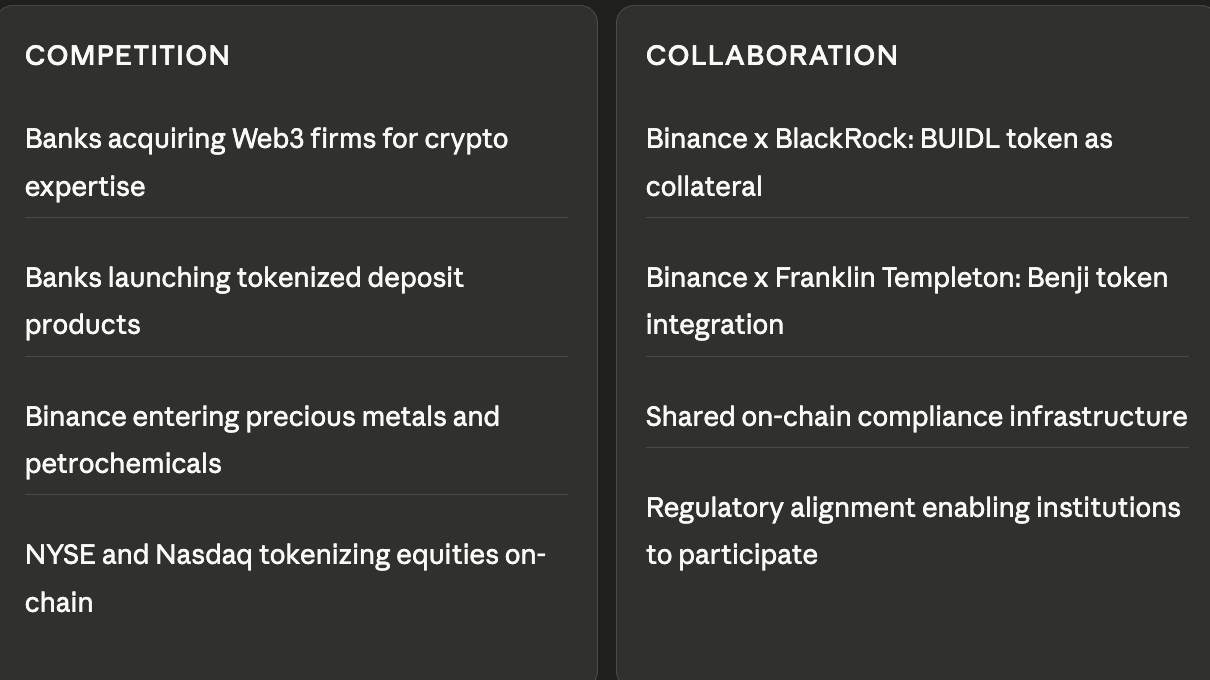
On the competition front, he highlighted the growing interest among banks in tokenized deposits as a direct response to the pressure stablecoins have created. He made a compelling case for why putting assets on-chain benefits financial institutions: it expands user choice, eliminates the liquidity risk of assets sitting idle outside trading hours, and automates the reconciliation, clearing and settlement functions that currently consume significant middle and back office resources. He pointed to Nasdaq and the New York Stock Exchange — both of which have announced plans to put stocks on-chain on an initial 23/5 basis — as a sign of where the industry is heading.
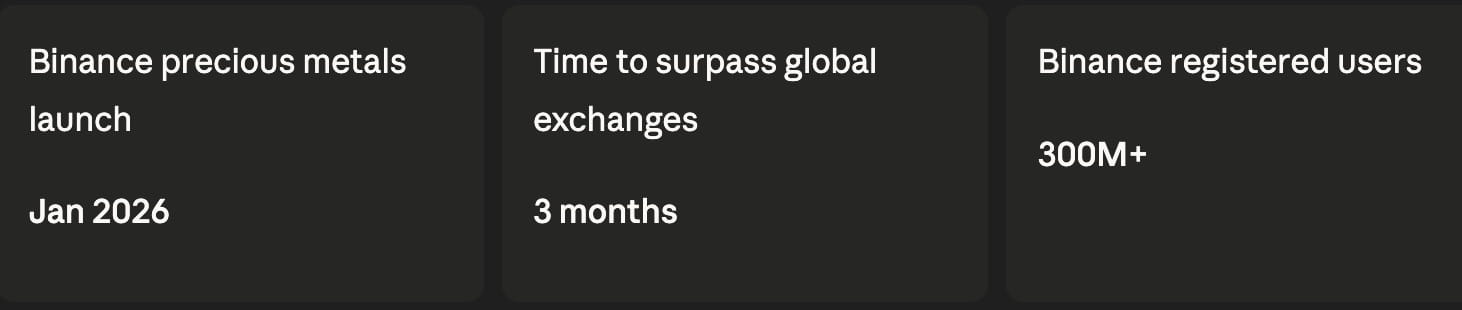
At the same time, Binance has been moving aggressively in the opposite direction. Binance Co-CEO Teng highlighted that Binance launched precious metals trading in January 2026 and within three months surpassed the trading volume of several established global commodities exchanges. Petrochemicals, stocks, tokens and pre-IPOs have followed — all part of Binance's ambition to become a financial super app serving over 300 million customers across every major asset class and jurisdiction.
Butt collaboration is equally in play. Binance Co-CEO Teng cited Binance's active partnerships with BlackRock and Franklin Templeton — with BUIDL tokens and Benji tokens already recognized as trading collateral on the platform — as evidence that institutional-grade tokenized products are moving from concept to live infrastructure.
"You're going to see a lot of areas for collaboration to bring about mass adoption, but at the same time you'll see competitive elements at play as well."
— Richard Teng, Co-CEO, Binance | Hong Kong Web3 Festival 2026
Regulatory clarity is the prerequisite for mass adoption
Binance Co-CEO Teng delivered a strong endorsement of Hong Kong's approach to digital asset regulation, while extending that welcome to emerging frameworks across Europe and the United States. Having been engaged in direct dialogue with Hong Kong policymakers throughout the regulatory development process, Teng praised the city's Virtual Assets (VA) Act as a landmark piece of legislation that gave both crypto-native firms and traditional financial institutions the clarity needed to participate with confidence.
"With the passing of the VA Act, it caused a lot of clarity not only to Web3 players on how we can maneuver, but financial institutions on how they can play within — and what are the user rights on that front. So everybody is willing to partake because of that."
— Richard Teng, Co-CEO, Binance | Hong Kong Web3 Festival 2026
Binance Co-CEO Teng also welcomed MiCA in the European Union, the GENIUS Act in the United States and the forthcoming Clarity Act as further proof that the world's largest markets are heading in the right direction.
Hong Kong's regulatory leadership is already producing tangible results. The city's Stablecoins Ordinance has generated the world's first licensed fiat-backed stablecoin issuers in HSBC and Anchorpoint Financial — a joint venture backed by Standard Chartered, Animoca Brands and HKT — with Hong Kong dollar-backed stablecoins expected to launch later this year for cross-border payments, merchant transactions and digital asset trading.
Stablecoins will be the native currency of AI — and agentic payments are coming
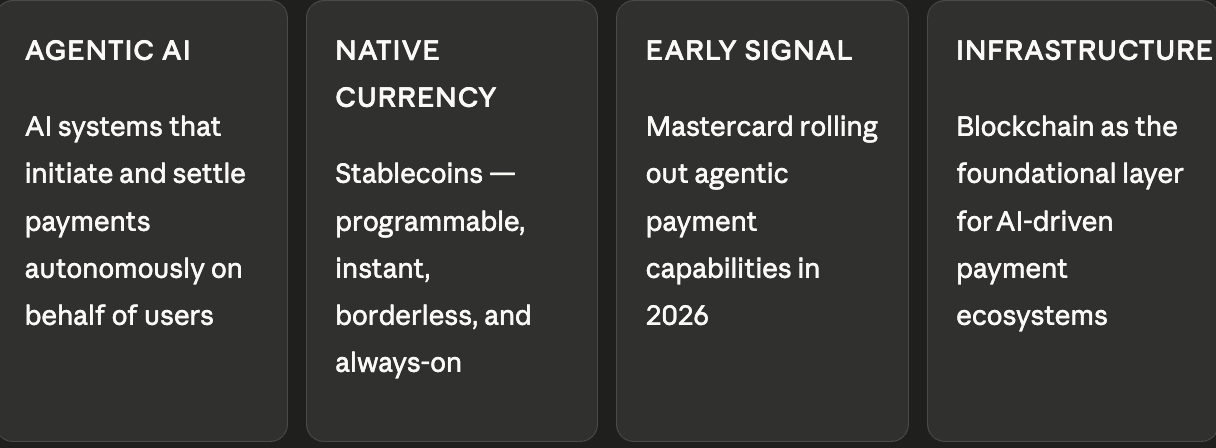
Closing his session with a look two to three years ahead, Binance Co-CEO Teng made a striking prediction: as artificial intelligence — and agentic AI in particular — becomes deeply embedded in the global payments infrastructure, stablecoins will emerge as the natural currency of that ecosystem.
Teng pointed to Mastercard's move into agentic payments as an early signal of where the industry is heading, noting that major payment networks are already beginning to build for a world where AI agents initiate, authorize and settle transactions autonomously. In that world, he argued, blockchain and crypto are not optional — they are foundational.
"If it's AI, the native currency is actually built on blockchain and crypto. So the likes of stablecoins will become the native currency for AI."
— Richard Teng, Co-CEO, Binance | Hong Kong Web3 Festival 2026
The logic is straightforward: agentic AI systems require payment rails that are programmable, instant, borderless and always-on — properties that blockchain-based stablecoins are uniquely positioned to deliver, and that legacy fiat infrastructure cannot. As AI agents increasingly manage financial tasks on behalf of users and businesses, the demand for a programmable, machine-native currency will grow rapidly.
Binance Co-CEO Teng's remarks point to a convergence that is still in its early stages but is accelerating quickly. The same regulatory clarity he championed for stablecoins in cross-border payments will be equally essential for enabling AI-driven payment ecosystems to operate at global scale — making the legislative progress underway in Hong Kong, Europe and the United States all the more consequential.