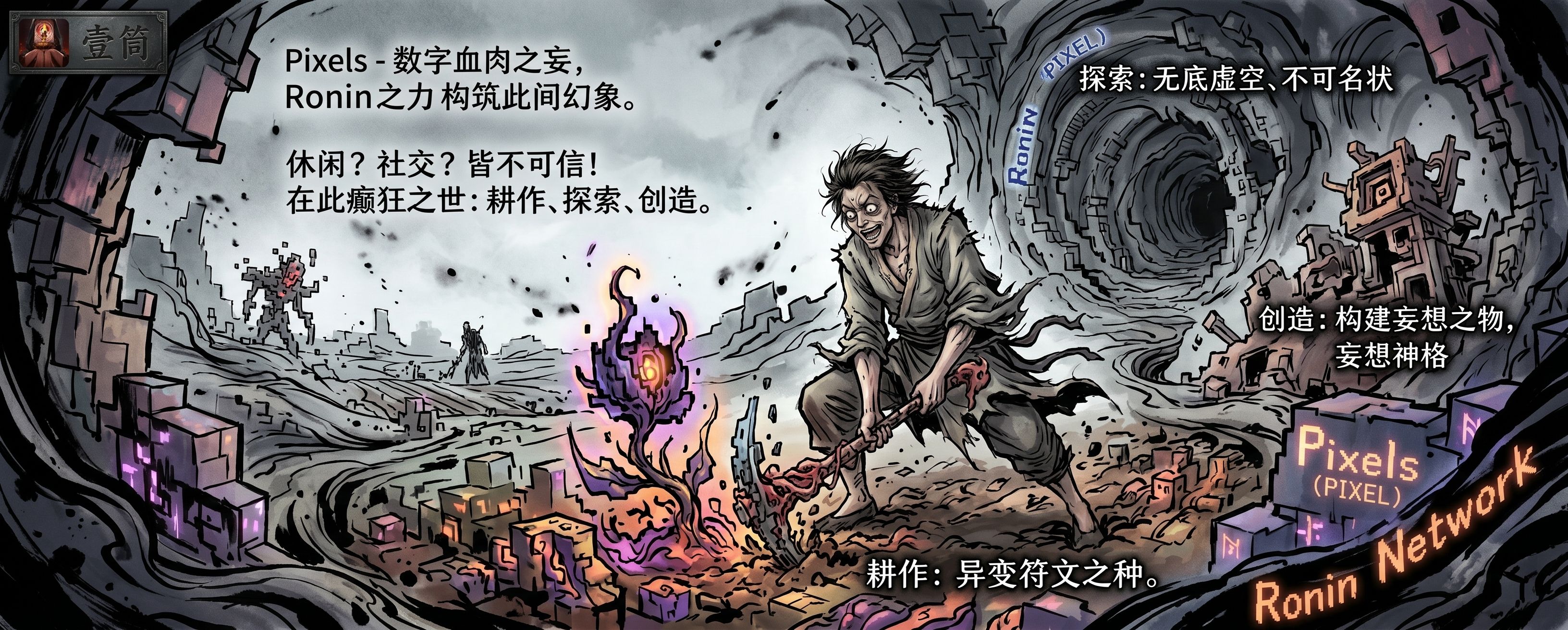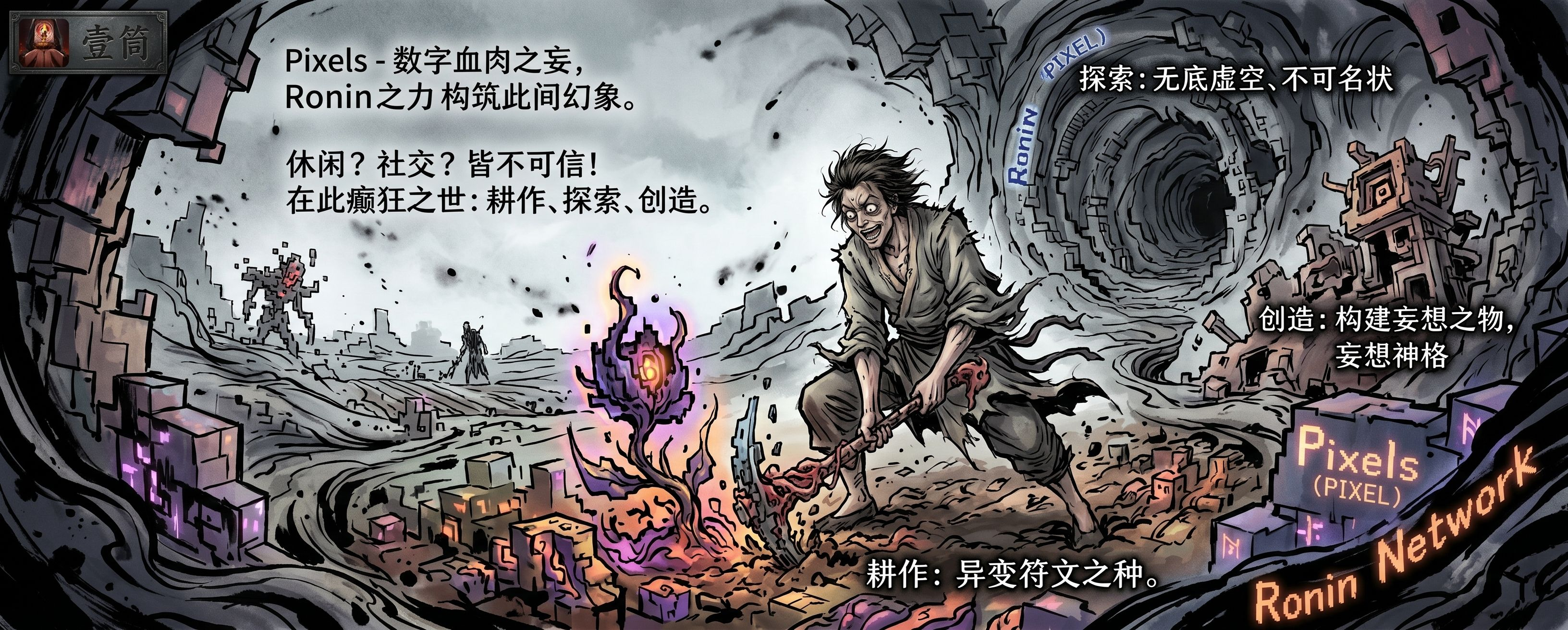
I have been hanging out at the square of Terra Villa frequently these past few nights, watching the little characters running around on the screen. On the surface, it seems like just a particularly laid-back farming mini-game where everyone grows berries and chops down trees, but its underlying economic logic is clearly designed. After moving from Polygon to Ronin, the environment here has clearly changed. Previously, there were truly idle players purely experiencing the game, but after the migration, the number of gold farming players has noticeably increased, and on-chain data shows a significant structural increase in the number of active wallets.
Web3 chain games have always faced a core challenge, which is that it is difficult to completely separate pure entertainment players from users who aim for profit. When I reviewed their original white paper, I found that the development team had a clear foresight about this. There is a passage in the official documentation that says, $PIXEL is a premium in-game currency in Pixels. $PIXEL is used to buy items, upgrades, and cosmetic enhancements that are outside of the core gameplay loop of Pixels and it's much harder to come by. This indicates that the project team originally did not intend for the core token to be completely tied to the most basic farming actions.
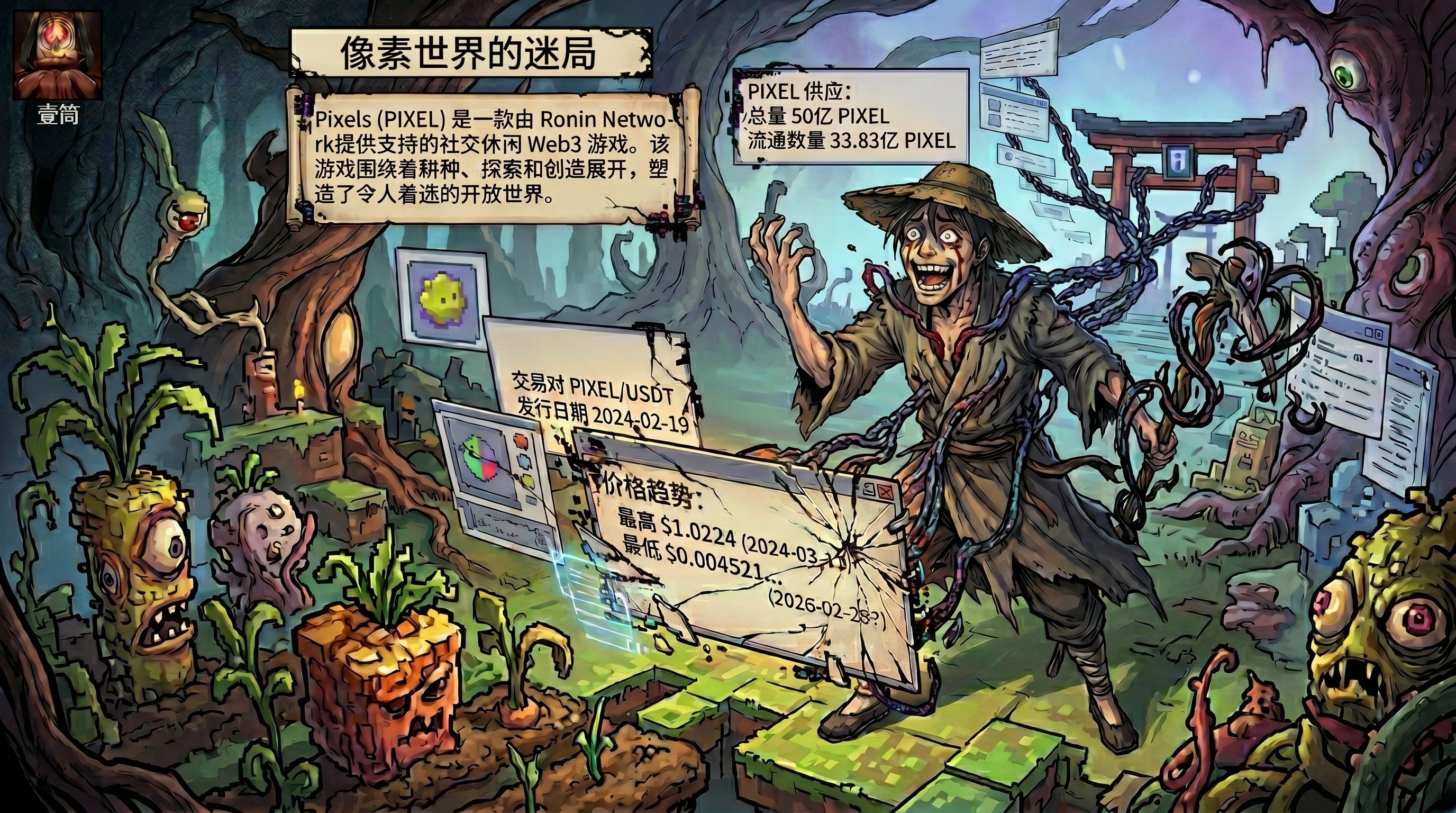
The core mechanism currently worth paying attention to is whether the token consumption scenarios can effectively balance continuous output.
Traditional blockchain games often overly rely on new funds.@Pixels Attempts to change this model aim to bind tokens with privileges and identities within the game. You don't need to hold tokens to experience basic functions, but if you want to save time or gain a higher-level experience, you need to consume. To practically test the conversion effect of this setting, I personally recharged and purchased a VIP pass and some acceleration items. The experience indeed became smoother, reducing tedious repetitive labor. However, this logic of driving consumption through experience upgrades, in the current environment of extreme pursuit of capital returns in the cryptocurrency market, still requires continuous observation of its long-term conversion rate.
The official white paper clearly defines the economic model being benchmarked. The document retains this sentence intact: It's analogous to GEMS from the game Clash of Clans. Their idea is to emulate the gem mechanism in Clash of Clans: free players trade time for progress, while paying players buy efficiency with funds. However, traditional game players primarily pay for game experience and social display, whereas a significant proportion of users participating in the Ronin network interactions are calculating input-output ratios in hopes of obtaining arbitrage in the secondary market.
There are essential differences in the behavioral motivations of these two types of users. I have observed many projects attempting to reconcile these motivations, most of which ultimately get stuck in the real ledger of output and consumption.
The current token consumption mechanism design has its rationality, with advanced manufacturing, guild access, and cosmetic decorations set as channels for token consumption. When users purchase pets or upgrade plots in the game, these tokens exit circulation. This design does alleviate selling pressure in the secondary market to some extent, but it also makes in-game behavior highly data-driven. Observing major discussion areas now, there is relatively little discussion on farm aesthetic design, with most users accurately calculating the payback cycle corresponding to stamina values.$RAVE
This shift in user composition has far-reaching implications for the entire project. The Ronin network has injected significant liquidity and a mature gold farming community, bringing this game, originally focused on casual experiences, directly into a high-frequency trading and profit-oriented market environment. The advantage lies in increasing the user base and activity data, but the potential risk is that the loyalty of this profit-seeking capital is relatively low, and fund retention is easily affected by other high-yield competing products.
For blockchain games using dual-token or multiple asset models, liquidity management directly determines the success or failure of the project. In this context, a long-term moat is not a complex production line design but whether enough users who are willing to make real purchases for in-game experiences and social attributes can be consolidated.$PIEVERSE
To further understand the team's intentions, I revisited the original settings regarding game experience. The white paper includes this core principle: Our design team needs to focus on creating real value for our users - by creating a game that people genuinely enjoy and want to spend time playing. Creating pure gaming fun is not easy under the current industry infrastructure. When users' gaming behavior is directly linked to the token prices in the Binance spot market, the way they derive enjoyment will inevitably change.
The direct link between tokens and gaming behavior may weaken some players' intrinsic enjoyment. Currently, users whose core goal is to obtain profits have already taken the dominant position in the game. If, in future developments, the consumption of advanced gameplay fails to match the output scale, or if high-net-worth users' willingness to spend declines, the entire economic cycle of the system will face significant pressure.#pixel
The flow of market funds often reflects the fundamentals most objectively. Whether this project can achieve long-term stability within the current cycle depends on whether the development team can continuously iterate on consumption scenarios, guiding profit-seeking funds to consolidate tokens within the gaming system rather than directly releasing liquidity to the secondary market. The essence of blockchain games is not only a test of smart contracts but also a real test of token economics and user behavior. For ordinary participants, continuously tracking the movements of top wallet addresses and the real changes in daily token destruction data is the most effective indicator of the project's economic health.