
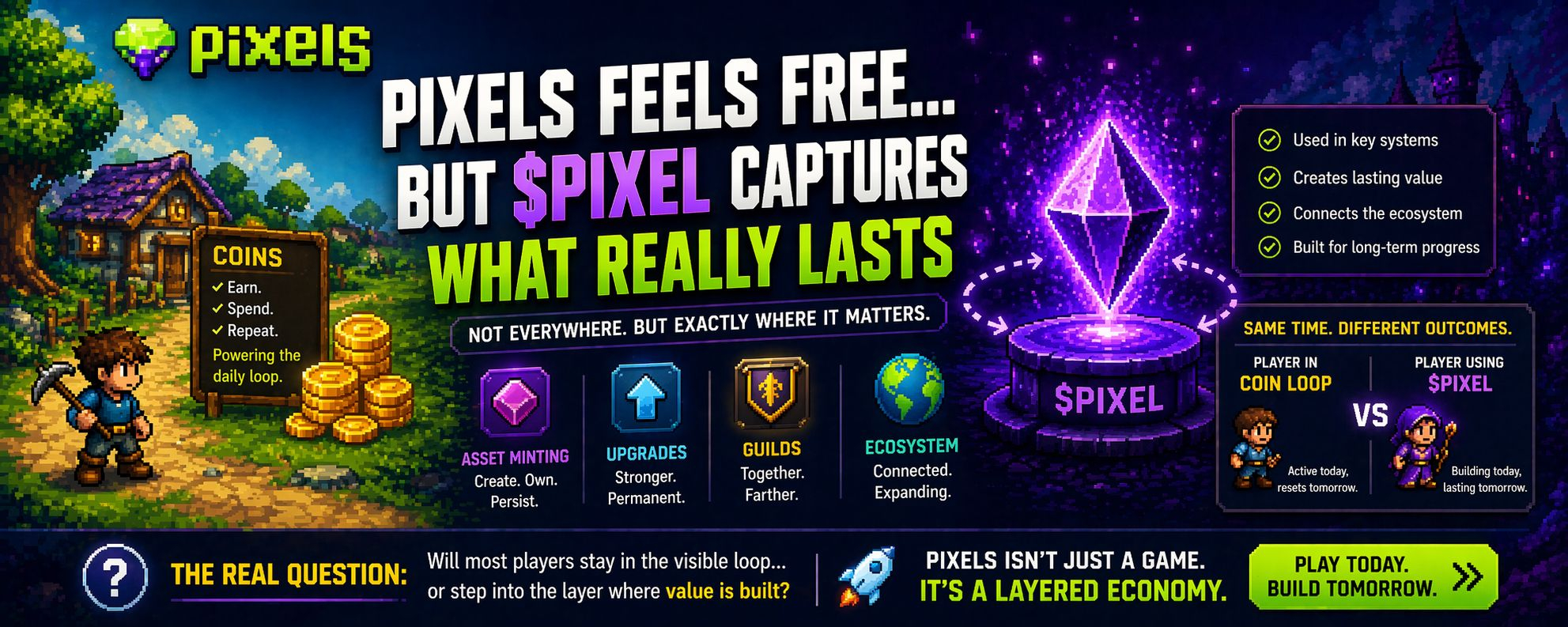
The more I watch Pixels, the more I feel like a lot of people are reading the economy too simply. On the surface, it looks generous. You can log in, farm, earn Coins, trade, and stay active for hours without ever feeling forced to touch That @Pixels makes it feel more open than most free-to-play systems, and honestly, that’s probably why so many players are comfortable staying inside the visible loop. But the longer I sit with it, the less I think the real story is about freedom alone. It feels more like the game gives everyone access to activity, while quietly separating which parts of that activity actually hold value over time.
That’s where Coins and start looking very different to me. Coins clearly run the day-to-day rhythm of the game. They keep the loop moving, they keep players engaged, and they make the economy feel alive. But Coins also feel temporary. They do their job in the moment, then the cycle starts again. $PIXEL feels different. It doesn’t show up everywhere, and it doesn’t interrupt your experience, but it tends to appear in places that feel more permanent like minting, upgrades, guild functions, and other parts of the game that seem tied to longer-term positioning. That’s why I don’t really see it as just another premium token. It feels more like the layer where effort begins to stick.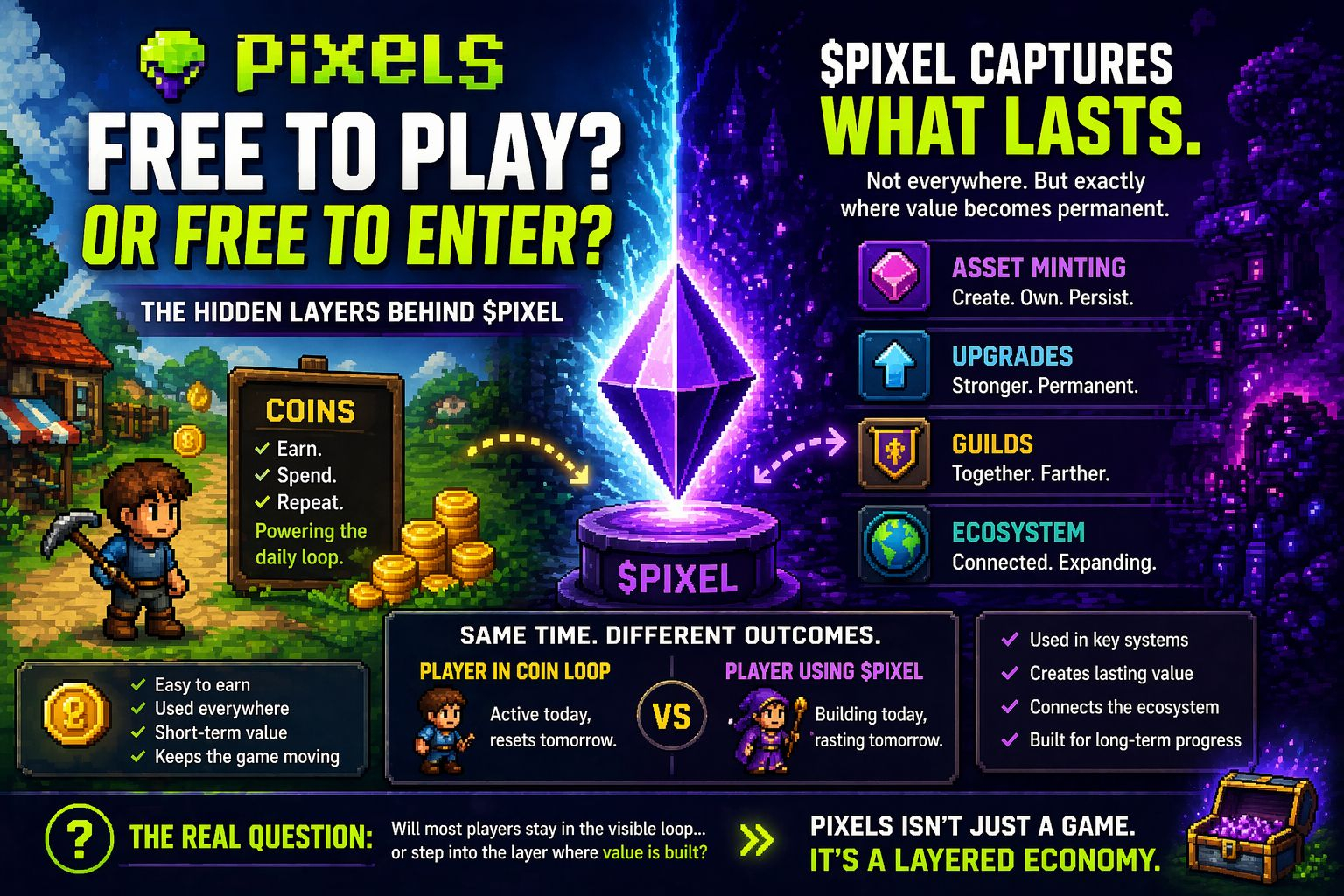
And that’s what makes Pixels interesting. Two people can spend the same number of hours playing, but they may not be building the same kind of outcome. One player stays deep in the Coin loop, always active, always progressing, always participating. Another player uses $PIXEL only from time to time, but in ways that connect their effort to systems that look more durable. At first, you barely notice any real gap between those two players. Later on, that gap may become the most important thing in the economy. To me, that’s a much smarter structure than the usual paywall model, because it doesn’t force the difference on you early. It lets the difference emerge slowly.
The problem, though, is that subtle systems only work if players eventually understand them. Most people are not going to sit around analyzing economic layers while they play. They respond to the loop in front of them. So if the gap between Coins and $PIXEL remains too abstract, then a big part of the player base may never engage with the deeper layer in a meaningful way. And if that happens, the token can start feeling disconnected from the actual behavior driving the game every day. That’s where things get risky, because supply and unlocks keep moving whether or not players fully grow into the design. A clean structure is not enough on its own if demand does not deepen with it.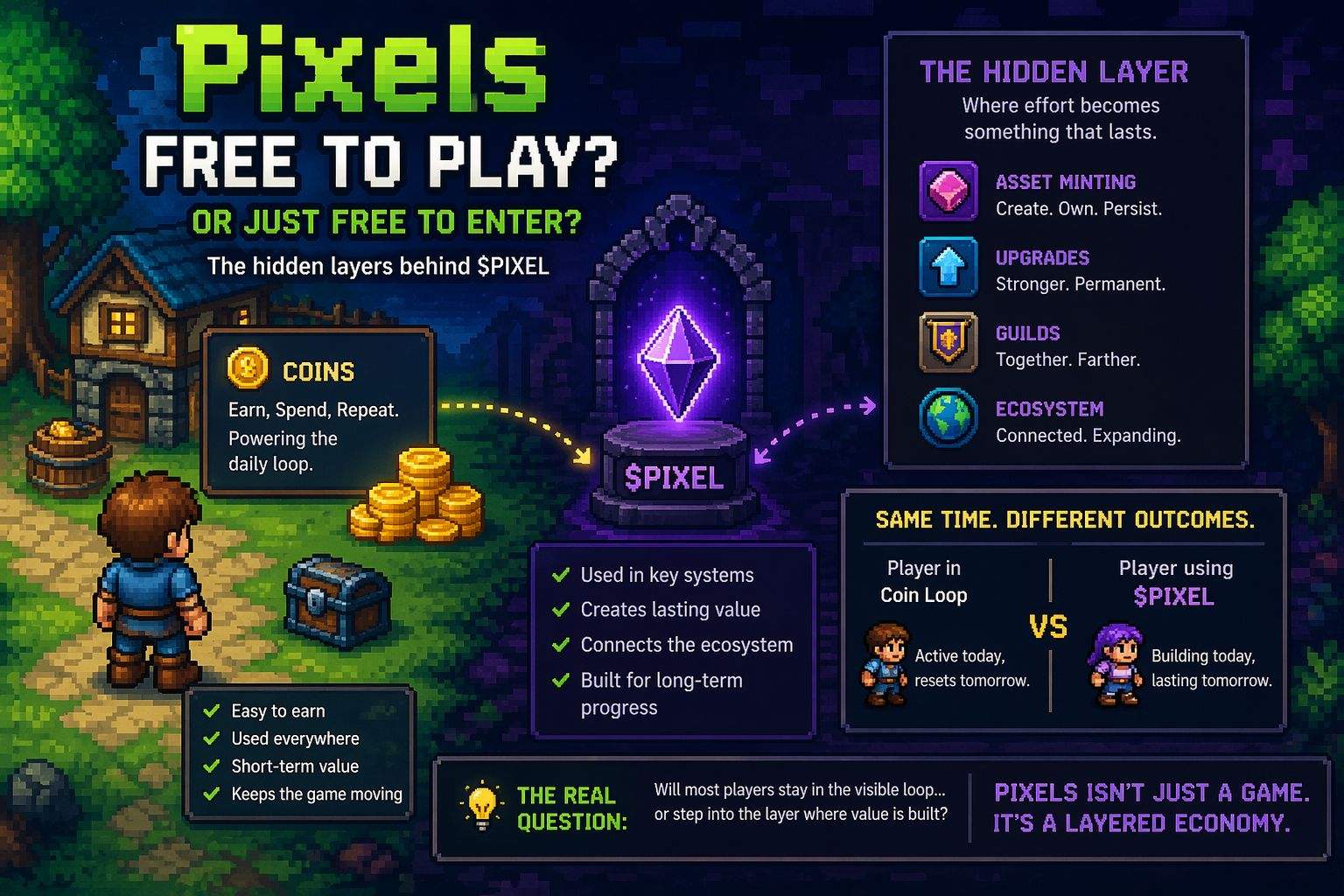
That’s why I think Pixels is both impressive and vulnerable at the same time. If the ecosystem keeps expanding and $PIXEL becomes the thread connecting value across more systems, then this model could become much stronger than people expect. But if most players stay in the surface economy while the deeper value layer remains limited to a smaller group, then the token may struggle to stay tightly linked to the broader player base. So when I look at Pixels now, I don’t really see a simple free-to-play economy anymore. I see a layered system where everyone can participate, but not every kind of participation carries the same long-term weight. That may be the brilliance of the design, but it may also become its biggest test.
Do you think Pixels is building one of the smartest GameFi economies right now, or is still too disconnected from everyday player behavior?