
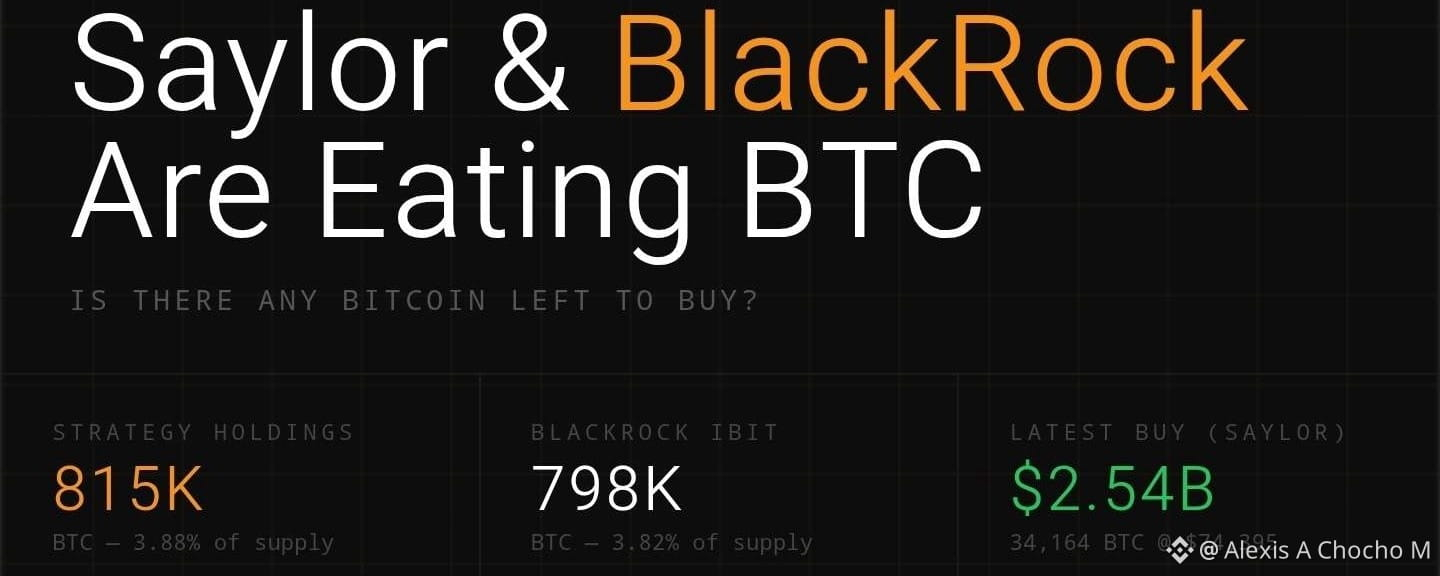
The idea that institutions are "gobbling up" retail Bitcoin is less of a threat and more of a signal. When names like Michael Saylor maintain aggressive accumulation and giants like BlackRock funnel billions through ETFs, it points to one thing: conviction at the highest level. This isn't short-term speculation; it's strategic positioning for a long-term monetary shift.
As more BTC gets absorbed by institutional hands, the circulating supply continues to dwindle, quietly setting the stage for a classic supply shock.
The advantage we often overlook
But here's the overlooked detail: Bitcoin was never about owning 'a whole coin.' Its divisibility ensures that retail players are never left out; you're just 'early' or 'late.' What’s happening now is a transition phase where 'weak hands' distribute and 'strong hands' consolidate.
Historically, these are the exact moments when smart money builds positions before the next big expansion. Scarcity isn't eliminating opportunity; it's amplifying the value of a timely entry.
Asset maturation
Looking at the big picture, this is how any maturing asset behaves. Liquidity shifts from speculative traders to long-term holders with deeper pockets and broader time horizons. Instead of stunting growth, this reduces volatility over time and strengthens floor prices.
Bitcoin isn't running out; it's anchoring. And anchored assets tend to move less frequently but with a lot more conviction when they do.
Conclusion: The real question isn't whether there's Bitcoin left to buy, but whether you're positioned before the next wave of demand collides with an ever-decreasing supply. Because if institutions are accumulating at this pace, they aren't gearing up for a sideways move; they're positioning for what's coming next.