

Text by Lin Wanwan
"Integration is only one-way; you can integrate with Wall Street, but Wall Street cannot integrate with you."
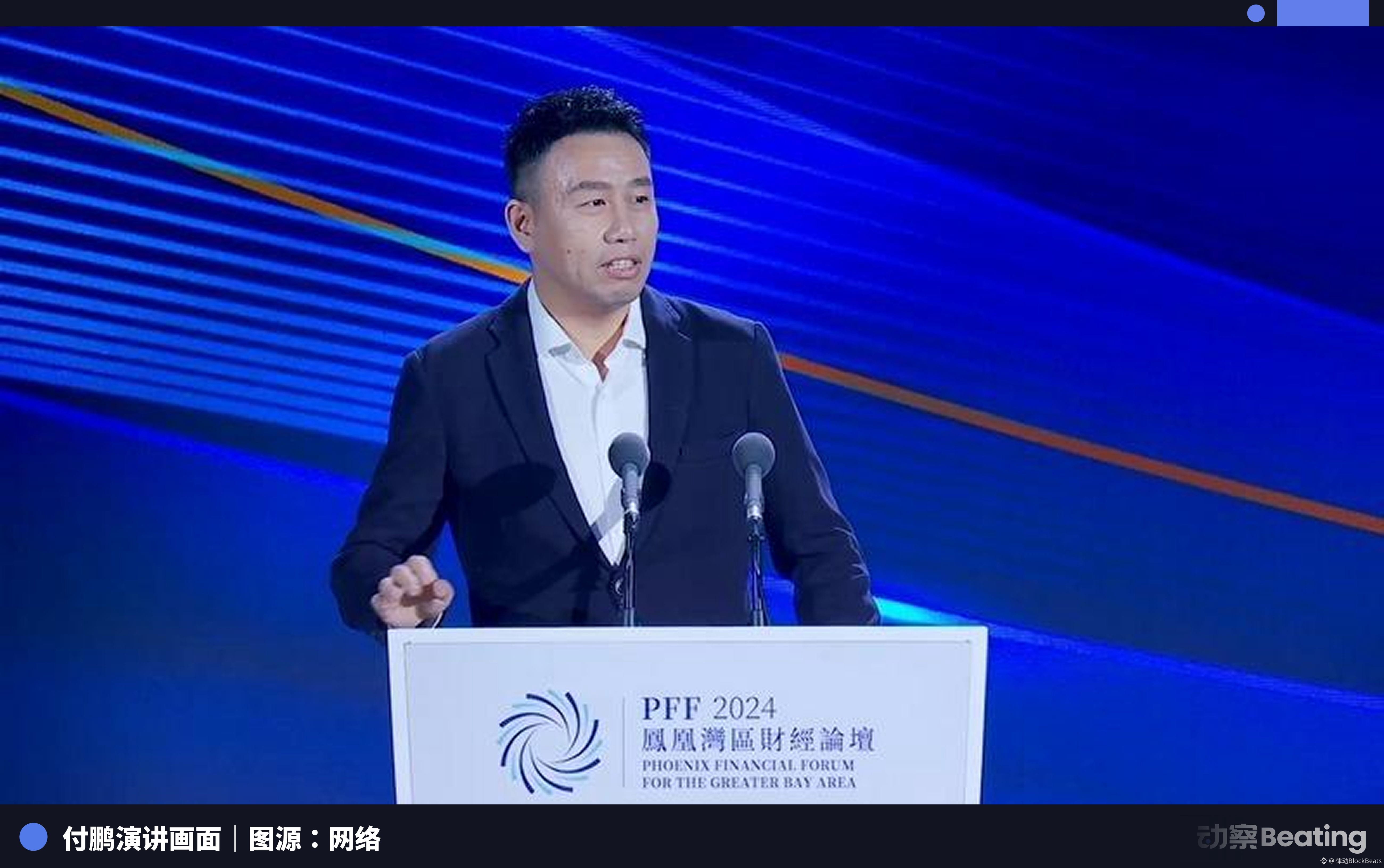
On the morning of April 23, 2026, at the Hong Kong Convention and Exhibition Centre, Fu Peng was giving a speech on the integration of FICC and crypto assets.
This was Fu Peng's first public interview since joining Xinhuo Group earlier this year. His title at Xinhuo is Chief Economist. Xinhuo's stock price rose on the day the news was announced. He waved his hand, saying it had nothing to do with him, "The market is just interpreting FICC+C."
Newfire Group is a Hong Kong-listed cryptocurrency financial company with deep ties to the Huobi Group. Its current business focus is to transform cryptocurrency asset management, custody, and exchange into a compliant platform that traditional financial institutions can understand and are willing to enter.
FICC (Fixed Income, Foreign Exchange, and Commodities) is a framework for trading major asset classes that emerged on Wall Street after the decoupling from the Bretton Woods system in the late 1970s. Fu Peng began working in this field in 1995, before China had stock index futures.
Now, he is focusing his attention on crypto assets.
Fu Peng's entry into the crypto space has nothing to do with his faith. He stated it extremely bluntly: he is not a believer, nor could he be. "Religious faith cannot baptize the greedy Wall Street," he repeatedly said in the interview. "If religious faith could baptize the greedy Wall Street, then wouldn't Wall Street just donate all its profits to churches?"
His deep interest in crypto began around the time of the crash in 2022.
In late 2021, Fu Peng made a "blind guess" in an interview with a traditional financial media outlet that Bitcoin would halve in value. His logic was very FICC (Fixed Income, Currency, and Commodity)-like: if Bitcoin, along with ARKK (a stock market speculator) and early AI assets, plummeted due to tightening liquidity, then it would be a tradable asset tied to liquidity and valuation, not a matter of faith. Later, Bitcoin fell from $60,000-$70,000 to $20,000.
After the price plummeted, a few surviving leading figures in the crypto industry began searching the entire internet for the person who had predicted in late 2021 that "Bitcoin would be halved." They found Fu Peng.
"They started to think deeply about the reasons for asset volatility," Fu Peng said. "You can't just hold onto hundreds of thousands of dollars worth of Bitcoin without doing anything, can you? To manage it, you have to understand what it is first."
In his view, 2026 will be the "Year Zero of Chinese Crypto," and the key lies in regulation.
The United States spent a full decade completing the tiered regulatory framework for crypto assets, leaving the payment function entirely to stablecoins, and clearly defining Bitcoin as a commodity with value preservation capabilities. Only after this framework was clearly defined did traditional finance have a reason to enter the market.
"It's like when Wall Street suddenly had currency assets, commodity assets, and interest rate swaps after the Bretton Woods system decoupled in the late 1970s," Fu Peng said. "JP Morgan's Blythe Masters didn't invent financial derivatives; she just seized that historical opportunity."
Fu Peng believes that what he needs to seize now is the next opportunity like this.
The following is a transcript of the conversation between BlockBeats and Fu Peng.
1. "The crash of 2022 was the starting point for me and the crypto world to sit down together."
Q: Why did you want to join Newfire at this time?
Fu Peng: The earliest one was in 2022. At that time, Bitcoin's valuation plummeted from 60,000-70,000 to over 20,000, which definitely shocked hodlers. But I think the bigger impact on them wasn't making or losing money, but rather that they started to think deeply about one thing: what exactly is the reason for this asset volatility?
You absolutely must find the reason for its fluctuations. Otherwise, you'll be completely lost. If you have hundreds of thousands of dollars worth of cryptocurrency, how do you manage your assets? You can't just hold onto it without doing anything, right? If you're going to manage it, you need to know what it is in order to manage it effectively.
Later I learned that they were searching the entire internet for who had predicted in late 2021 that Bitcoin would be halved in value. They were trying to understand the logic behind that person's statement. They found my interview from back then, thought it sounded the most plausible, and started contacting them.
The idea of "getting in touch" is simple: we sit down and ask each other, "What was the state of the crypto world like before? How do we in traditional finance view this now?"
I have a traditional finance background. You mentioned exchanges; I was involved in all the over-the-counter (OTC) and commodity exchanges approved by provincial financial offices back in the day. So, from the ground up, I immediately understand the core of what you call a blockchain exchange. It's easy for us to resonate with each other. Although you're in the crypto world and I'm in traditional finance, we've found the same underlying principles.
After exchanging ideas, we started to complement each other. You tell me about your experiences and understanding during your development, and I'll share my current understanding of it. This exchange led to a consensus. Once that consensus was reached, everyone felt that both sides had benefited.
For me, adding a new type of crypto asset to my portfolio will become a new component of Wall Street. Just like in the late 1970s, after the Bretton Woods system was decoupled, there were currency assets, commodity assets, and interest rate swaps.
Blythe Masters of JP Morgan was a figure of that era. She capitalized on the historical opportunity of the late 1970s and early 1980s to essentially create the core of Wall Street's financial derivatives and FICC (Financial Institutional Components, Currencies, and Commodities).
With the support of current AI technology, the integration of both sides will bring the same opportunities. Isn't a powerful alliance the best solution? 1+1 is greater than 2.
That's what I meant; they are very different now than they were in the past. Very different.
Second, "fundamentalism is a religion, not an asset."
Q: You just used a very crypto-sounding word, "fundamentalism." Who did you learn that word from?
Fu Peng: It must be you guys, the old crypto buddies. I'm friends with them all.
Those of you who know me know that we conduct on-site research before making any strategic trades. In 2012, when Abe came to power and the yen depreciated, Bessant (the current US Treasury Secretary) went to Tokyo from Hong Kong to conduct research, and I immediately followed suit and went back to Beijing to do the same. What we like to do is never fight a battle unprepared.
Do you know where I was 15 to 20 days before the attack on Iran? I was in Abu Dhabi, gazing at Iran across the border. It's not that I was going to run away. Many friends have said, "In our observation over the past ten years, Mr. Fu is always there before any major event."
I want to understand the crypto community, and I won't look for information online. The simplest way is to get to know the few big names who are still active in the crypto world. Knowing just one is enough to know everyone; you can chat with them all.
Q: After talking with them for more than a year, what is your biggest takeaway?
Fu Peng: Let me tell you clearly, the people at the top are different now. It's the people below who still think they're the same group who stuck to fundamentalism back then, but you're not anymore. They're no different from Wall Street or Wall Street people now.
Q: Among these influential figures, who has touched you the most?
Fu Peng: They all realized it, and their understanding is roughly the same. I don't care what people say outside, but when they talk about it privately, their understanding is pretty much the same. It's definitely not the story you're thinking of, the story of what happened to them in the past.
Of course, some people haven't kept up with the times and are still stuck in the old ways. They haven't realized that the times are changing, the market is changing, the structure is changing, and the participants are changing. So, their public and private behavior gives you the impression that they still adhere to the old concepts. But the ones I've met are not like that.
That's what I meant when I said they've actually integrated with Wall Street.
Q: With this amount of funding, the old methods are no longer viable?
Fu Peng: It's not a matter of whether it's tolerated or not. I think it's like this: look at China, the Shanghai Stock Exchange, Shenzhen Stock Exchange, Zhengzhou Commodity Exchange, Dalian Commodity Exchange, Shanghai Futures Exchange, and now there's the Guangzhou Futures Exchange. Do you think these are all compliant?
Did China ever experience that period of unbridled growth? Of course it did. What was the stock market like in the 1990s?
However, after the two rounds of financial regulation in 2002 and 2003, and then in 2014 and 2015, is it still the same era? Of course not.
Those who used their ID cards to participate in Shanghai stock subscriptions, warrants, and treasury bond futures trading back then, and even those who participated in Hainan red and green bean trading, if they adhered to the principles they held back then and went to play in this market now, would it still be the same thing? Of course it would be the same thing; it's just a product of that stage.
From our perspective, there is no difference between Bitcoin and cryptocurrencies.
Third, "2026 is the first year; everyone will remember this event in the future."
Q: Why were most of the people in the crypto community young people or middle-aged and elderly people with religious beliefs in the early years?
Fu Peng: There's a reason why people in the real financial field haven't gotten involved. In the early stages, we might not necessarily win, or the cost would be very high.
Haven't these bigwigs paid a price? They have. For people in traditional finance, paying that price isn't worth it.
But now, people are starting to get involved. I personally believe that 2026 will be a pivotal year. Looking back, 2026 will likely be remembered as the year a traditional FICC practitioner entered the crypto world, marking the beginning of crypto in the Chinese community, the year of integration between traditional and crypto finance, and also heralding a completely different stage for the crypto market and crypto assets.
Q: What are the key variables you see?
Fu Peng: The biggest variable in this industry is that the tiered compliance and regulatory framework established over the past decade has made its logical attributes as a trading asset very clear. Secondly, Wall Street and traditional funds are increasingly involved, and its proportion as an asset allocation is rising. Naturally, we will enter this market.
Q: So this won't be easily removed from the transaction layer anymore?
Fu Peng: It's like 50 years ago, before the 1970s, you could at most trade stocks using vests, hand gestures, and blackboards. But after the 1970s and 1980s, you could start trading exchange rates, commodities, and bonds, using interest rate swaps, swaps, and financial derivatives. It naturally entered your trading sequence.
Did it disappear? It certainly didn't. It only increased. Now it's like it's increased again.
4. "Bitcoin is not digital gold; it is an AI asset."
Q: If you don't consider Bitcoin to be "digital gold," then where exactly is its price anchored?
Fu Peng: It is anchored to liquidity and valuation.
Q: What is the valuation logic?
Fu Peng: It's not "its" valuation. It's the valuation of an AI asset.
Think about the creation of Bitcoin. Essentially, it's just a set of computing power plus an algorithm, and finally, a "value maintenance" mechanism. I don't know who Satoshi Nakamoto is, but we are very clear about its design path because this path is the same as the core logic of designing any type of financial asset.
For a financial asset to generate price fluctuations and to create a sense of value resonance among people, or what you call "consensus," it must possess several attributes.
Let me give you an example: the Butterfly Knife in CS:GO. Its spawn rate is constantly decreasing, making it difficult to obtain, which causes its price to fluctuate and rise because it has intrinsic value. If 1000 Butterfly Knives were suddenly released onto the market today, it would be a miracle if the market didn't crash.
Bitcoin, by its very design, has seamlessly integrated all aspects of AI assets: front-end hardware, intermediate computing power, back-end algorithms, value generation, and limiting the number of units created to maintain that value. Looking at this chain, it's a standard example of an AI-generated asset with value preservation capabilities. This is the model we're looking for.
Q: So does it really have no "value"?
Fu Peng: What is the value of Bitcoin? Its payment function has been stripped away. So where is its value function? Actually, it's just like gold.
Then tell me, what is the value or function of gold? It's in faith. Would you really use a gold bar to buy coffee? Impossible.
5. "Stablecoins are an offensive strategy, not a defensive one."
Q: There's a view in the industry that Bitcoin will become a reservoir for stablecoins issued to support the US dollar. In this round of efforts to resolve the US debt problem, the value of the excess stablecoins will ultimately be reflected in the price of Bitcoin. Do you agree?
Fu Peng: I disagree.
While stablecoins are essentially pegged to US Treasury bonds, their true function is payment. Therefore, the real goal of stablecoins is to bring regions previously inaccessible through traditional financial infrastructure into the US dollar payment system.
If you think of it as defense, you should understand it as offense. It's not defense; it's offense.
What is the traditional financial path? Applying for a license, opening branches, safe deposit boxes, ATMs, tellers, back-end data, fiber optic cables. Now look at Africa in the future, no banks, no branches, just a Starlink cable installed in a supermarket, and the supermarket becomes a trading venue. I buy a bottle of water from you, and the transaction is completed with a tap of my wallet.
Why can't stablecoins fluctuate? Because only those that don't fluctuate are most easily accepted by the public as a payment tool. This also answers the earlier question: why can't Bitcoin be used for payments? Because its volatility is too high.
Q: If Bitcoin is not a reservoir, where does it stand as an asset in the entire system?
Fu Peng: Bitcoin will ultimately be part of a diversified asset allocation.
If you have substantial income on your left, either in the current account or capital account, you'll allocate it to US Treasury bonds, US stocks, gold, and crypto assets. Within your reserve assets, the proportion of crypto assets will slowly increase, much like gold. The largest increase will actually come from stocks—equities, not commodities.
The total supply of Bitcoin is finite. If you think of it as "US Treasury bonds," its price could rise indefinitely. But is that possible? No. Is all value pegged to a single entity? Impossible; if the server crashes, everything is lost.
So you can say it will be included as one of the reserve assets, which is fine. But that's a completely different concept from "it will become a reserve asset." The former leads to the imagination of unlimited price increases; the latter is just an extension of the normal framework and doesn't change the fundamental logic of asset price fluctuations.
6. "Integration is only one-way; you integrate with Wall Street."
Q: This conference is noticeably different in that people with traditional financial backgrounds (including you and Xiao Feng) are all here. What kind of environmental change is this?
Fu Peng: It has nothing to do with the "conference". When we make choices, we don't consider our own reasons, but rather the times.
It's like when you asked me why I went from London to China in May or June of 2009. The official titles you see don't describe what we were doing. The core opportunity at that time was a single transaction in global assets: the shift from low-interest dollars to high-interest yuan.
The US subprime mortgage crisis will take 6 to 8 years to resolve. During this period, interest rates will remain very low, and the core of financial transactions will be carry trading. Low-interest US dollars will be channeled into Chinese households to leverage their assets, while RMB assets will become high-interest assets with high returns. The key is to match borrowers and asset holders effectively. Borrowers will be located overseas, while assets will be held domestically.
With such a great opportunity, why stay in London? Of course, you should go to a first-tier city.
The same applies now. We chose this direction because we have seen that crypto assets will rapidly become part of Wall Street in the next 5 to 10 years.
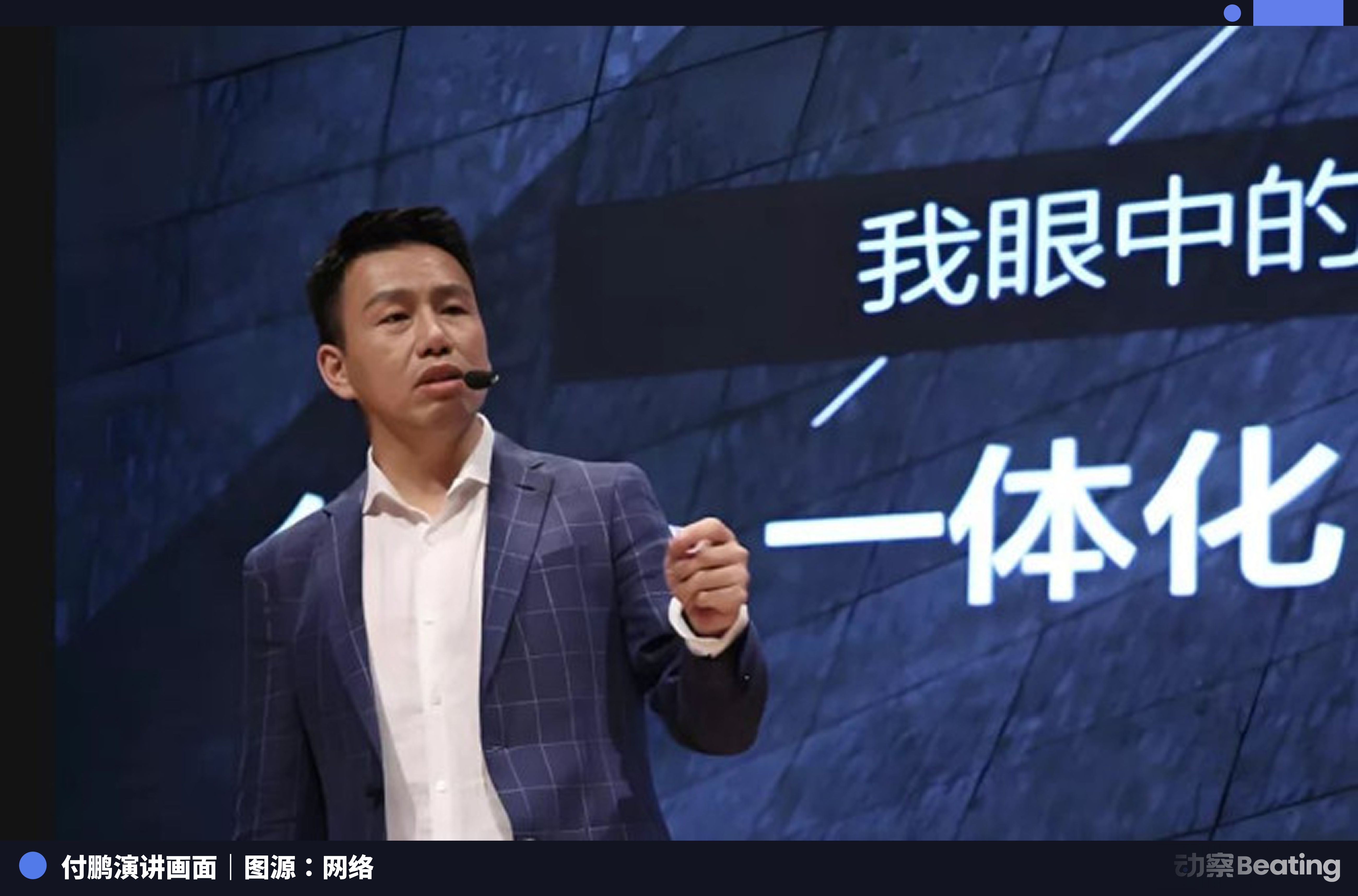
I said integration, and ultimately, integration can only go in one direction: you integrate with Wall Street, not Wall Street integrating with you. You're overthinking it. Wall Street will change because of blockchain technology and AI; it will change, but it won't integrate with you. It's you integrating with it.
Since we're all going to merge into one, how can we fall behind? Whoever takes the first step will leave a mark on history. Xiao Feng and his group were among the earlier ones.
7. "We hold Bitcoin, but not in the way you understand it."
Q: Do you hold Bitcoin and Ethereum?
Fu Peng: Yes, we hold it. But our understanding of "holding" is different from yours.
In the crypto industry, it's called holding onto faith. In our world, it's absolutely not, and it can't be. It's simply part of asset allocation.
Just like when I manage a FICC (Fixed Income, Currencies, and Commodities) asset class, I allocate assets to currency pairs, interest rate assets, commodities, equities, bonds, stocks, and commodity ETFs, and use various instruments such as swaps, options, and forwards. For me, Bitcoin is simply an asset, so I will also allocate to it.
CME offers Bitcoin futures, while you offer Bitcoin spot trading. Will we use perpetual contracts? No. Those tools are for high leverage, and we won't use them for asset allocation. Will you trade Bitcoin options? Yes.
So to be precise, it's just one aspect of our asset allocation. My allocation means I hold it. But this holding is a different concept from the holding of the previous generation.
Q: What is the appropriate Bitcoin allocation ratio?
Fu Peng: There isn't a single suitable one. It depends on your overall portfolio strategy.
For example, a newly established fund might have a strategy that leans more towards Crypto, with a higher weighting. If I were to focus on traditional FICC (Fixed Income, Currencies, and Commodities), the weighting would be relatively lower. It's just a matter of one entering the room from the east and the other from the west.
There's no such thing as "most suitable." Like I joked, which boyfriend or girlfriend is the most suitable for you? The one you feel comfortable with is the most suitable. Everyone is different; there's no absolute ratio, only relative.
8. "Ethereum and BNB are essentially Bitcoin with even higher volatility."
Q: So what's your opinion on Ethereum? Many people feel that its logic is quite different from Bitcoin's.
Fu Peng: None of them are the same. To be precise, they are all "Bitcoin concepts" on various blockchains.
Ethereum, and even BNB, are essentially Bitcoin with higher volatility.
If you want excess returns and valuation gains within normal volatility, that's Bitcoin; if you want 2x, 3x, or 5x, that's Ethereum; if you want 10x, that's BNB; if you want 100x, that's Pulsecoin. It's that simple. It's just a difference in volatility because all their sources, their sources of belief, are in Bitcoin.
If Bitcoin crashes, rest assured, everything will crash. The problem now is that it doesn't crash. It fluctuates by 2%, while on the other side it might fluctuate by 5%, 10%, or 30%, but it's two-way; if it goes up, it goes up a lot on one side, and if it goes down, it goes down a lot on the other side.
So ultimately it comes down to what you want to achieve. Your asset allocation will most likely only include Bitcoin; the rest you can pursue as your risk appetite expands. That's the answer.
9. "After becoming retail-oriented, it will inevitably de-retailize. This is a harsh truth, but it's reality."
Q: You said 2026 is the first year. Can this be interpreted as the crypto market undergoing institutionalization and de-retailization?
Fu Peng: To be precise, institutionalization will inevitably reduce retail participation. And frankly, it doesn't matter whether institutionalization exists or not; as long as leverage and volatility are so high, retail investors will be eliminated sooner or later. This is harsh, but it's the reality.
Just like in the days when countless ordinary people in China risked their lives in the mung bean and red bean contest, how many of them survived? Very few. Only a very few big shots emerged. But remember, the real big shots all made their first fortune through gambling and then quickly specialized.
10. "MSTR's ultimate fate is to become a bank stock."
Q: What is your opinion of MSTR as a company?
Fu Peng: Let me think about it. In the future, it should be a company that, after expanding to a certain scale, eventually becomes a company with guaranteed revenue. So it's more like a bank stock. At some point in the future, its valuation will be like that of a bank stock.
Of course, it is still in the early growth stage, with the market size and valuation expanding. This is no different from the industry life cycle of Carlota Perez in traditional finance: early growth, market expansion, and valuation expansion, but once it enters the mature stage, it will become a typical bank stock.
Q: How do I determine when it has reached maturity?
Fu Peng: According to the industry life cycle, generally speaking, in the early stage, there is valuation expansion and market expansion, and then there is a wave of valuation correction. After the valuation correction, the best companies that can survive are identified and start to move on to the "value part". Reaching the top of the value part is called the maturity stage.
You may not be familiar with MSTR, but Nvidia certainly is.
Nvidia has now become a "value stock" for old-school investors. When will its valuation be nerfed? In 2022, when Bitcoin fell to $20,000, Nvidia's value dropped by 70%. That phase was the "early stage" within the Perez framework, when everyone had expectations for its future as the leader in AI computing power, pushing it to $1 trillion. With tightening liquidity, it had to discard the old valuation model (graphics cards), ending the valuation nerf. With the emergence of ChatGPT, Nvidia's position as the leader in AI was confirmed, and Nvidia reconstructed its value, reconstructing the core value of computing power, initiating value growth to $1 trillion, $2 trillion, and $3 trillion. Around the $3 trillion mark, the valuation clearly stopped expanding. If you make money, the market capitalization rises; if you don't make money, it doesn't. At this point, the valuation has become a certainty.
What is certainty? When you were in high school, the expectation for you was "to get into Tsinghua or Peking University." In the end, you got into Renmin University, and that became certainty. People no longer had any expectations about whether you would get into Tsinghua or Peking University; at that point, they looked at how well you did at Renmin University.
Nvidia's journey from 2016 to 2022 and up to now follows a standard industry life cycle. Good companies in the US stock market all follow this standard path. Is analyzing US stocks simple? Extremely simple. You just need to know which stage a company is in and what kind of influences it will be affected by. Valuation stages are easily influenced by liquidity and sentiment; value stages are easily influenced by industry and sector cycles. The methodology is that simple.
These "hardware companies" (DAT companies) in the crypto space are actually still in their early stages.
11. "Being the chief economist at Xinhuo is no different from before."
Q: After joining Newfire, how will your work differ from your previous job as an economist at a securities firm?
Fu Peng: Nothing's different.
Don't be misled by the title and the job. For the past 20 years, we have been doing the same thing consistently. What you see is just the title on the surface; the work we do underneath has never changed.
The same applies to joining Newfire today. What I need to do is simply integrate with Newfire, not change my title and quit FICC to become a Creator. No. I only came here because of this era of integration.
When I returned to China in 2009 and 2010, my official title was "futures company consultant." Why? Because a large amount of offshore US dollars needed to enter the country, either through the capital account (which the People's Bank of China had to regulate) or the trade account. If it went through the trade account, I would have to deal with commodity traders. And what was the fastest way to reach these commodity traders? Aren't these traders the clients of futures companies?
The same applies to FICC+C. I need to find the giants in the crypto space—that's my capability; I can directly reach these big names. Then we can merge. After merging, you draw from FICC, and we draw from Crypto, completing the entire architecture. There's no difference.