

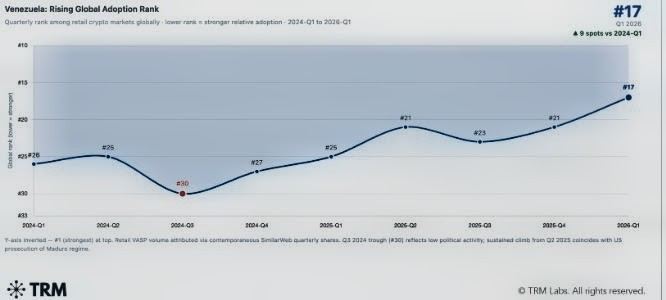
Venezuela jumped from 22nd to 17th in global crypto adoption during the first quarter of 2026, according to TRM Labs.
USDT accounts for 90.2% of active listings on Binance P2P for trades denominated in bolivars.
Global crypto adoption fell by 11% year-over-year while Venezuela maintained a trading volume of $17.9 billion.
Venezuela climbed to the 17th spot in the global crypto adoption ranking in Q1 2026, according to TRM Labs, driven by stablecoins like USDT and USDC amid an ongoing political crisis.

The data contrasts with the widespread decline in the retail market and reveals how USDT dominates everyday transactions in Venezuela.
What does the TRM Labs report reveal about Venezuela?
The TRM Labs report measures retail adoption of cryptocurrencies in over 200 jurisdictions each quarter. In the first quarter of 2026, global volume fell to $979 billion, an 11% year-over-year contraction.
This downturn is the second consecutive one and the most pronounced since the bear market of 2022. The macroeconomic environment was the main trigger, marked by trade tensions, a strong dollar, and elevated real yields internationally.
Bitcoin followed this trend with a 22% drop during the quarter, closing near $68,000. The United States retained the top spot with $213 billion, although it fell 11% year-over-year. South Korea, Russia, India, and Brazil completed the top five spots on the list.
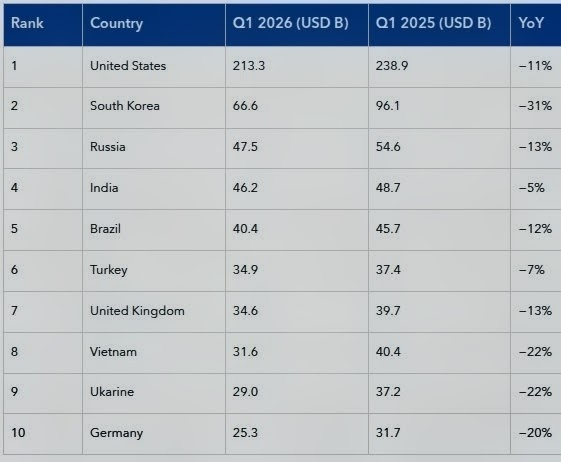
Amid that global contraction, Venezuela climbed five spots to 17th place, with an attributed volume of $17.9 billion during the quarter.
The advancement coincides with an explosive political context: in January 2026, the United States executed a military operation that resulted in the capture and removal of Nicolás Maduro from power.
Why does USDT dominate the crypto economy in Venezuela?
Stablecoins are cryptocurrencies pegged to the value of traditional currencies like the dollar, designed to maintain a stable price. In Venezuela, they serve as the primary transactional and savings tool for millions.
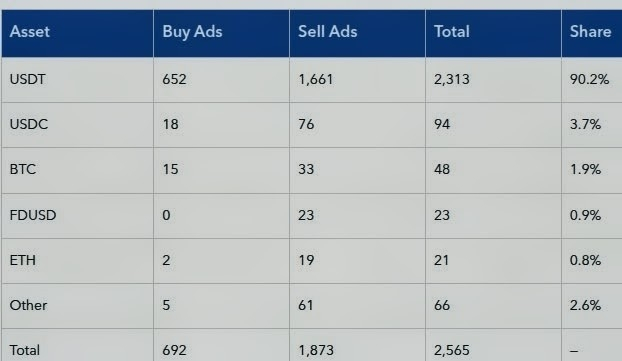
Data from Binance's P2P order book confirms this emphatically. In April 2026, the platform recorded 2,565 active listings in bolívares in Venezuela, of which 90.2% were denominated in USDT.
Other stablecoins like USDC and FDUSD occupy marginal spaces, while Bitcoin accounts for less than 2% of retail operations.
Three structural factors explain this almost absolute concentration. The persistent depreciation of the bolívar pushes citizens toward dollarized assets as a value refuge. Capital controls and banking restrictions hinder access to foreign currency through formal channels.
Additionally, Venezuela has had consolidated parallel markets for years, facilitating the transition to crypto rails. Stablecoins became a natural extension of pre-existing financial habits among the population.
TRM Labs notes that Venezuelan crypto demand responds to internal needs, not to global speculative cycles. This independence explains why the country resisted the contraction affecting developed economies.
Contrast between emerging and developed markets
The report shows a clear divergence between jurisdictions. Developed markets with stablecoins and competitive financial alternatives suffered the largest declines. The United States fell by 11%, South Korea by 28%, Germany by 25%, and the United Kingdom by 17% during the analyzed quarter.
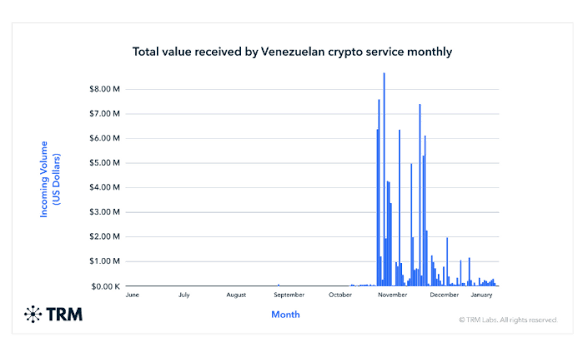
Emerging markets showed a different behavior. India barely fell by 6%, Turkey grew by 7% to $40 billion, and several Latin American countries maintained their volumes in terms adjusted for purchasing power.
This pattern reinforces a central thesis of TRM Labs. Where national monetary policy is restricted or capital controls exist, cryptocurrencies function as a store of value and a parallel dollar system. In such environments, adoption responds to real necessity rather than speculative appetite.
In summary
Venezuela climbed from 22nd to 17th place in the global crypto adoption ranking by TRM Labs during Q1 2026.
Retail volume attributed reached $17.9 billion despite the widespread contraction of the international market.
Stablecoins represent 90.2% of active listings on Binance P2P for bolívar-denominated operations.
Three factors drive this adoption: devaluation of the bolívar, strict capital controls, and historically consolidated parallel markets.
Emerging markets withstand the global crypto contraction better than developed economies with robust financial alternatives.
#MarketRebound #P2PScam #P2P #venezuela #venezuelap2p @CoinDesk @Cointelegraph @CoinDesk $USDC $BFUSD