
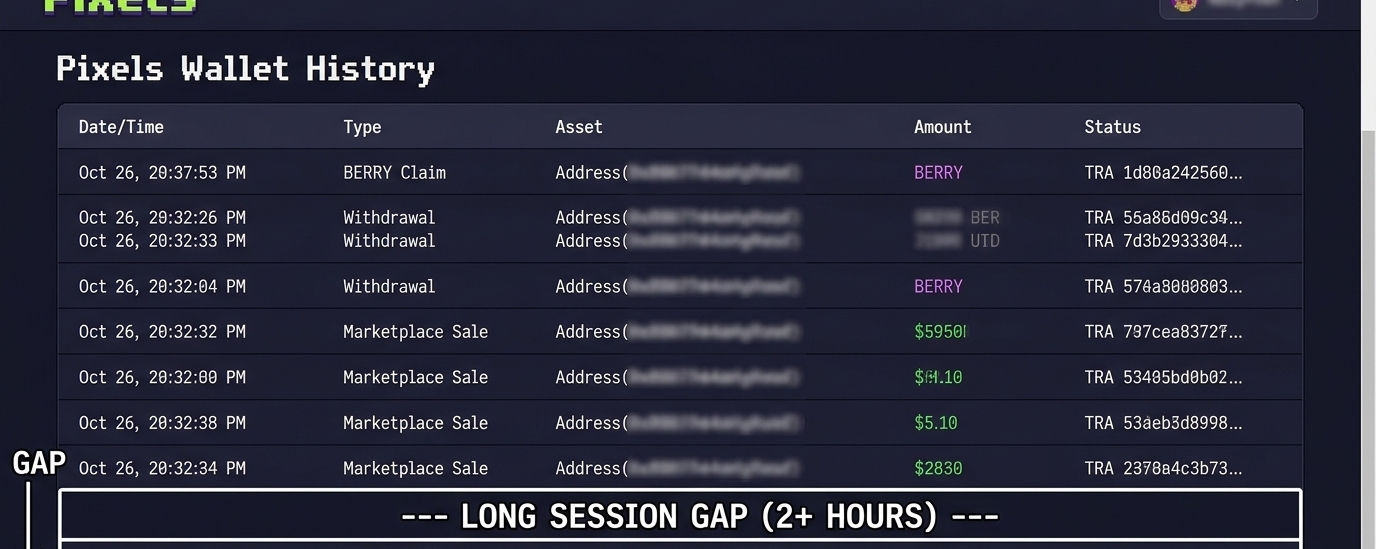
one on-chain finalization event. two hours of gameplay before it.
everything between login and that moment — the farming queue, the crafting cycles, the resource decisions — happened completely outside the token. PIXEL didn't exist for any of it. then one action, one conversion, and it was over.
i've been trying to figure out what that ratio actually means for the token's demand structure.
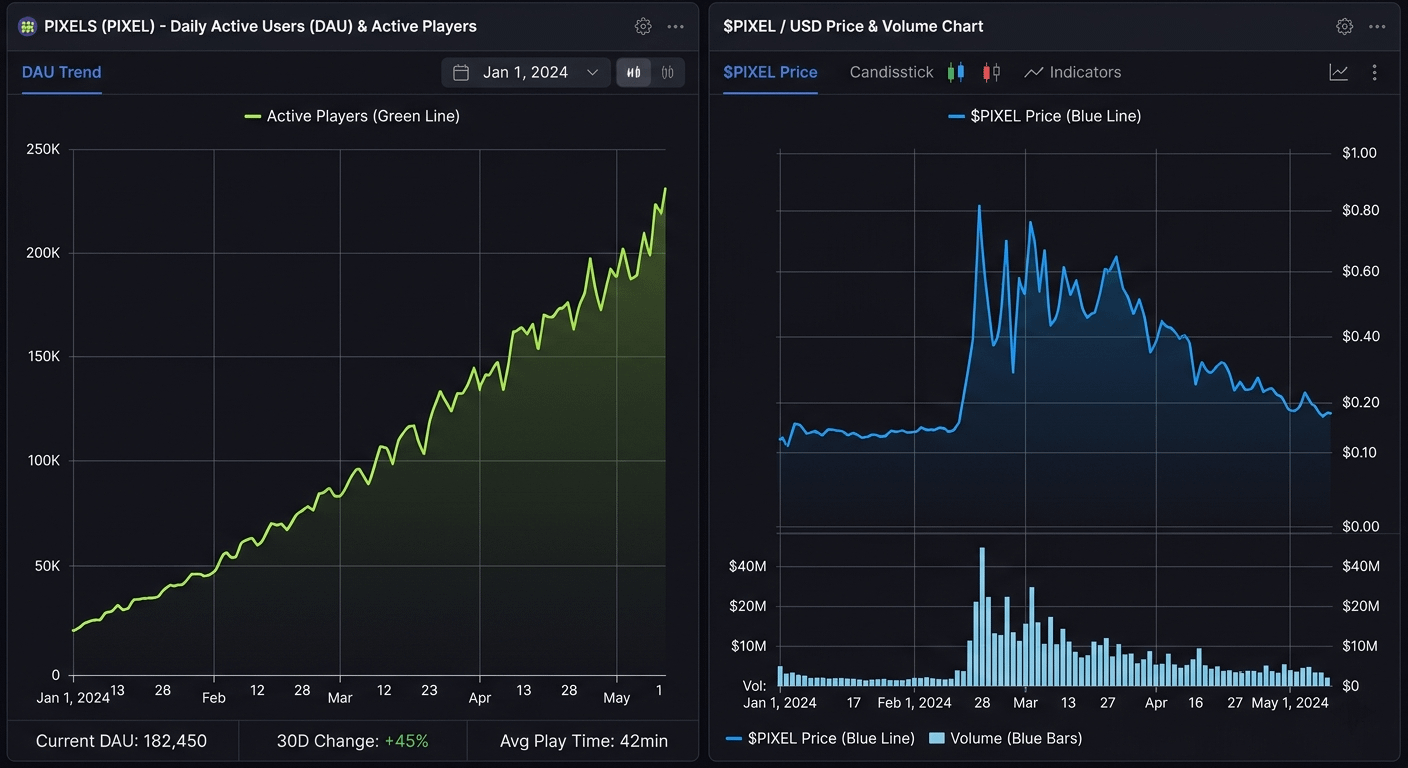
the standard read on GameFi tokens is that activity drives demand. more players, more volume. it's intuitive and it's usually wrong in the specifics.
pixels has a layer architecture that breaks this assumption quietly. the off-chain layer — which is where most of gameplay lives — runs independently of $PIXEL.
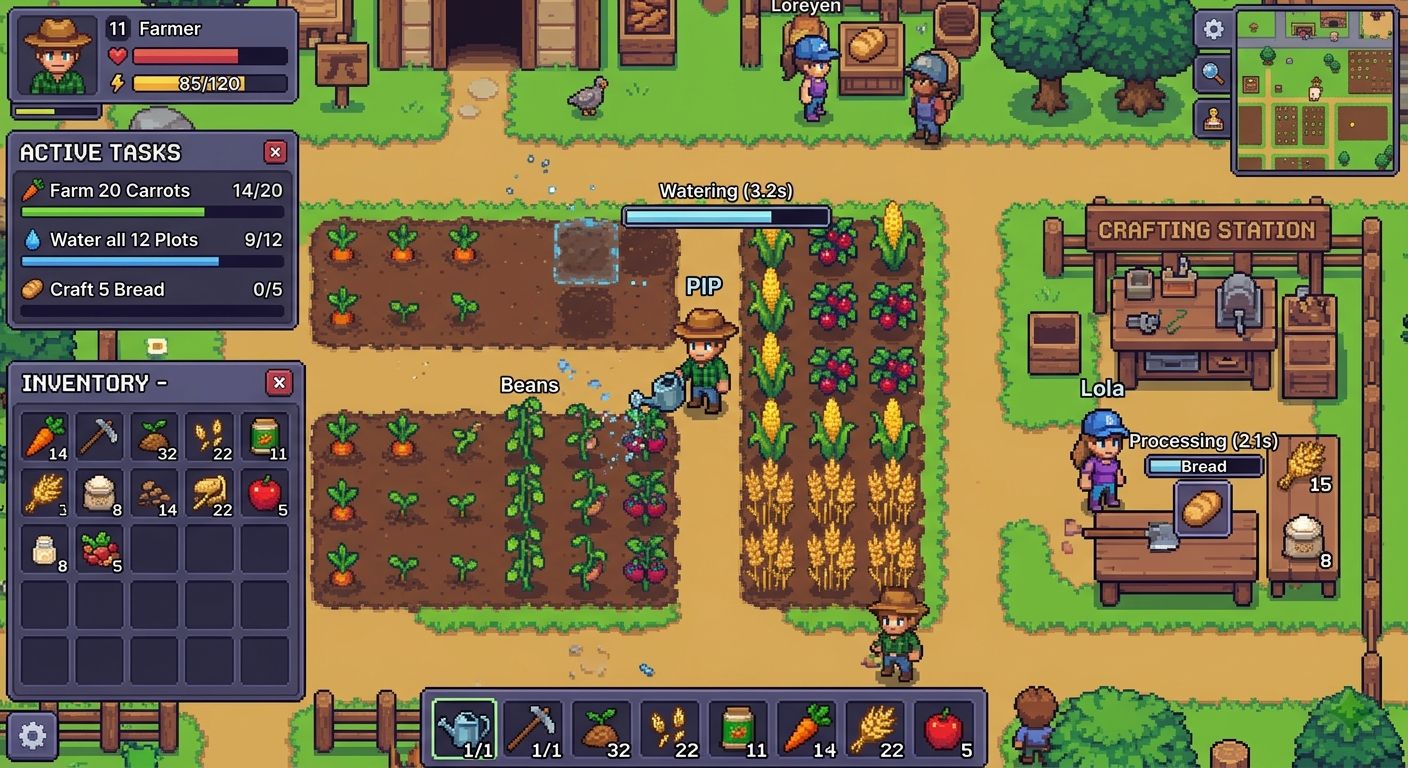
farming produces resources without touching the token. crafting consumes those resources without touching the token. the entire progression loop can run, and in many sessions does run, without a single PIXEL moving anywhere.
demand appears at one boundary. when a player decides something needs to leave the off-chain layer and become permanent on-chain record. that's the conversion event. that's the entire token demand mechanism compressed into a single action type.
what this means
mechanically is that $PIXEL is not an activity token. it's a finalization token. and finalization tokens have a specific vulnerability that activity tokens don't — players can optimize around them without visibly breaking the game.
if i learn that delaying my conversion event costs me little in actual gameplay progression, i delay it. if a guide tells me which items are worth finalizing and which aren't, i skip the rest.
if the off-chain layer is rewarding enough on its own, a meaningful portion of the playerbase never reaches the conversion threshold in a given session. the game stays active. the token demand quietly thins.
in the best case, pixels has constructed the competitive meta around on-chain permanence in a way that makes finalization unavoidable for anyone playing seriously.
land ownership disputes, ranked progression, rare blueprint exclusivity — if these are structurally tied to conversion events, the token captures real sustained demand from the player segment that actually drives retention.
in the less good case, the off-chain layer is complete enough that casual and mid-level players — the majority of DAUs — extract most of their enjoyment without ever triggering a finalization event. demand concentrates in a thin layer of whales and completionists.
the chart looks disconnected from the user metrics because it genuinely is.
i don't know which case pixels is in right now. what i do know is that the team has never published conversion funnel data in any form i can find.
no breakdown of what percentage of active wallets triggered on-chain events this week versus last. no ratio of sessions to finalizations. that number would resolve most of the uncertainty around the token's demand durability. the fact that it isn't public is itself information.
the other thing this framework surfaces is that game design patches become token risk events in non-obvious ways. a content update that makes off-chain crafting more rewarding looks like positive news.
better retention, more engagement, healthy DAU growth. but if it reduces the frequency of conversion events at the margin, it's quietly bearish for $PIXEL in a way that almost nobody models before the patch drops.
$PIXEL is structurally interesting if the conversion step becomes harder to avoid as the game matures. that's the condition. not the roadmap. not the partnerships.
the ratio of sessions to finalizations, and which direction it's moving.