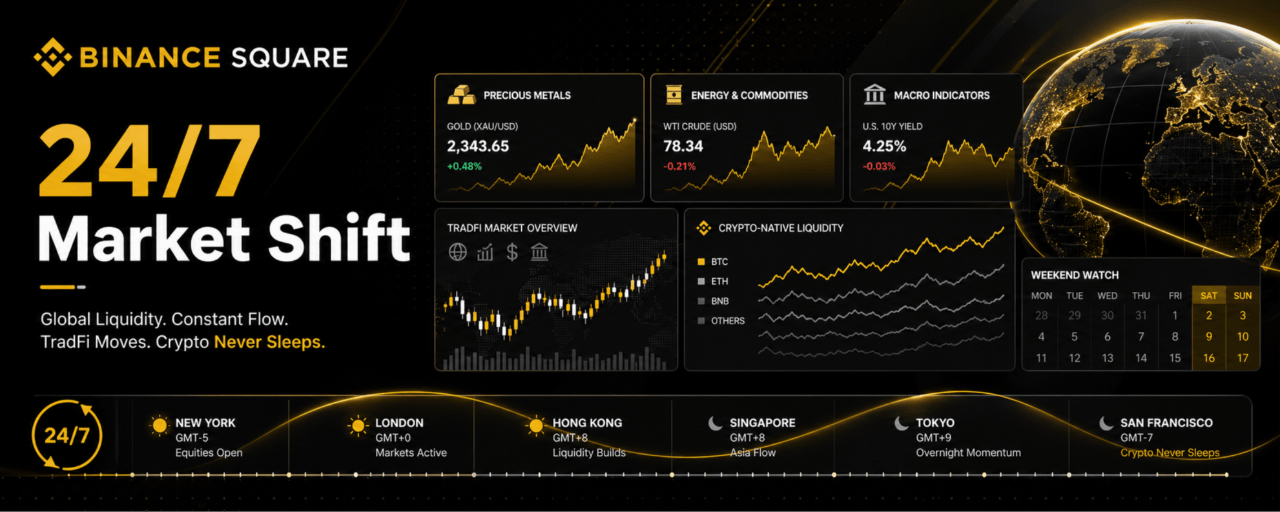

Binance's TradFi perpetual volume has reportedly grown by around 300%, and that number points to a bigger story: more traders are watching traditional assets through crypto-native, 24/7 markets.
This is not just about weekend trading. It is about where global price discovery may be shifting when markets never really close.
What changed?
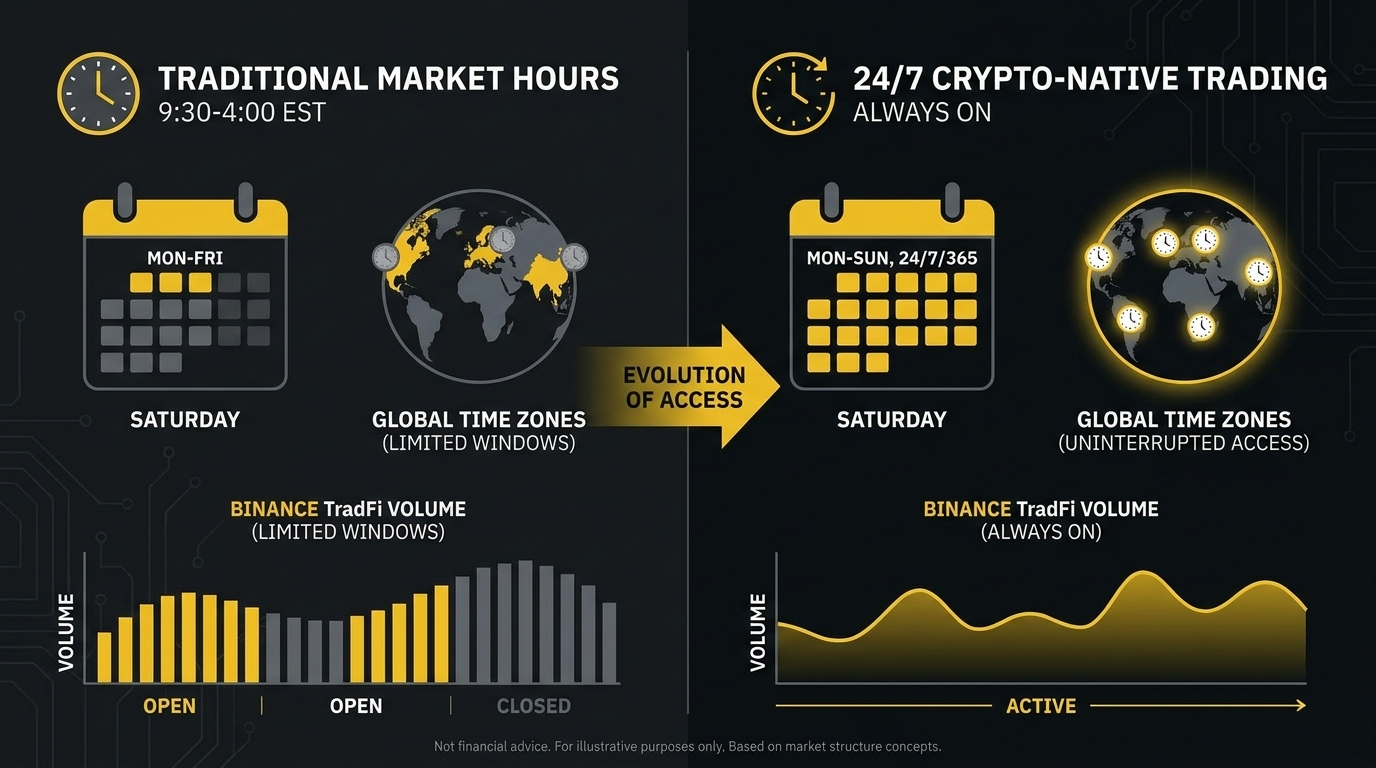
Traditional finance has always had strong infrastructure, but most major markets still follow fixed trading hours. Crypto changed user expectations. People now expect real-time access, weekend movement, and global liquidity across time zones.
That is why TradFi-style derivatives on a CEX are worth watching. A category that barely existed a short time ago is now being discussed next to major commodity venues. For users, the key question is simple: what happens when commodities, gold, and other traditional market narratives meet 24/7 crypto liquidity?
Why traders are paying attention
- 24/7 access changes behavior. Weekend gaps, delayed reactions, and after-hours headlines can become active discussion points instead of waiting periods.
- Crypto communities move fast. Traders on Binance Square, Telegram, and X often react to macro news before traditional sessions reopen.
- Liquidity attracts attention. When volume grows quickly, more users start watching the same charts, spreads, and narratives.
- Price discovery becomes global. A trader in Cambodia, Europe, or Latin America can discuss the same market move at the same time.
What this could mean for Binance users
For beginners, TradFi perpetuals should not be treated like simple spot buying. They are derivatives, and derivatives can carry higher risk. Users should understand margin, funding, liquidation, volatility, and product rules before interacting with them.
For content creators, the story is bigger than "volume is up." The stronger angle is this: Binance is becoming one of the places where crypto users discuss traditional market exposure in real time. That makes the platform part of a broader conversation about access, liquidity, and market structure.
The safety check
Before using any derivative product, users should:
- Read the official Binance product page and risk disclosure.
- Understand margin, leverage, liquidation, and funding fees.
- Avoid treating volume growth as a signal to enter a trade.
- Use educational content to understand the market, not as financial advice.
- Protect funds by learning the product before considering any action.
Local context for Cambodia and SEA
For Cambodia and SEA users, this topic matters because many people first hear about gold, commodities, and macro news through social media or local chat groups. A fast-moving post about "gold on Binance" or "weekend trading" can sound exciting, but users should check what product is being discussed.
If the product is a perpetual contract, it is not the same as buying physical gold or holding a spot asset. Users should check the contract details, risk page, and Binance app or Binance web product information before forming an opinion.
The bigger discussion
The interesting question is not whether weekend trading is popular for one week. The bigger question is whether crypto platforms are becoming part of global TradFi price discovery.
If more users watch commodities through Binance 24/7, conversations around gold, macro events, and market sentiment may become more global, faster, and more retail-driven. That does not remove risk, but it does change how communities talk about traditional assets.
My takeaway: weekend trading may be only the visible part of a deeper shift. The real story is how 24/7 crypto infrastructure is changing the way users follow traditional markets.
Do you think 24/7 crypto markets will influence how people follow gold and commodities, or will traditional exchanges remain the main reference point? Share your view below.
#Binance #BinanceSquare #cryptoeducation