

There's a number buried in the Pixels economy that nobody seems to publish. Not daily actives. Not land parcel counts. Not quest completions.
The number I mean is simpler and harder to find: how many players, in a given week, actually convert their off-chain progress into something on-chain and permanent.
That conversion rate is the only moment $PIXEL demand actually exists. And I haven't seen the team put it front and center once.
That's the thing that started bothering me.
Most of what happens inside Pixels doesn't touch the token. You farm. You craft. You grind through quests. All of it runs off-chain, inside Pixels' own economy.
The blockchain — and by extension $PIXEL — only enters the picture at the last step, when a player decides to make something permanent. Mint an asset.
Lock in progress. Cross from the game world into something that lives on a ledger. That's the only real demand event. Everything before it is just activity.
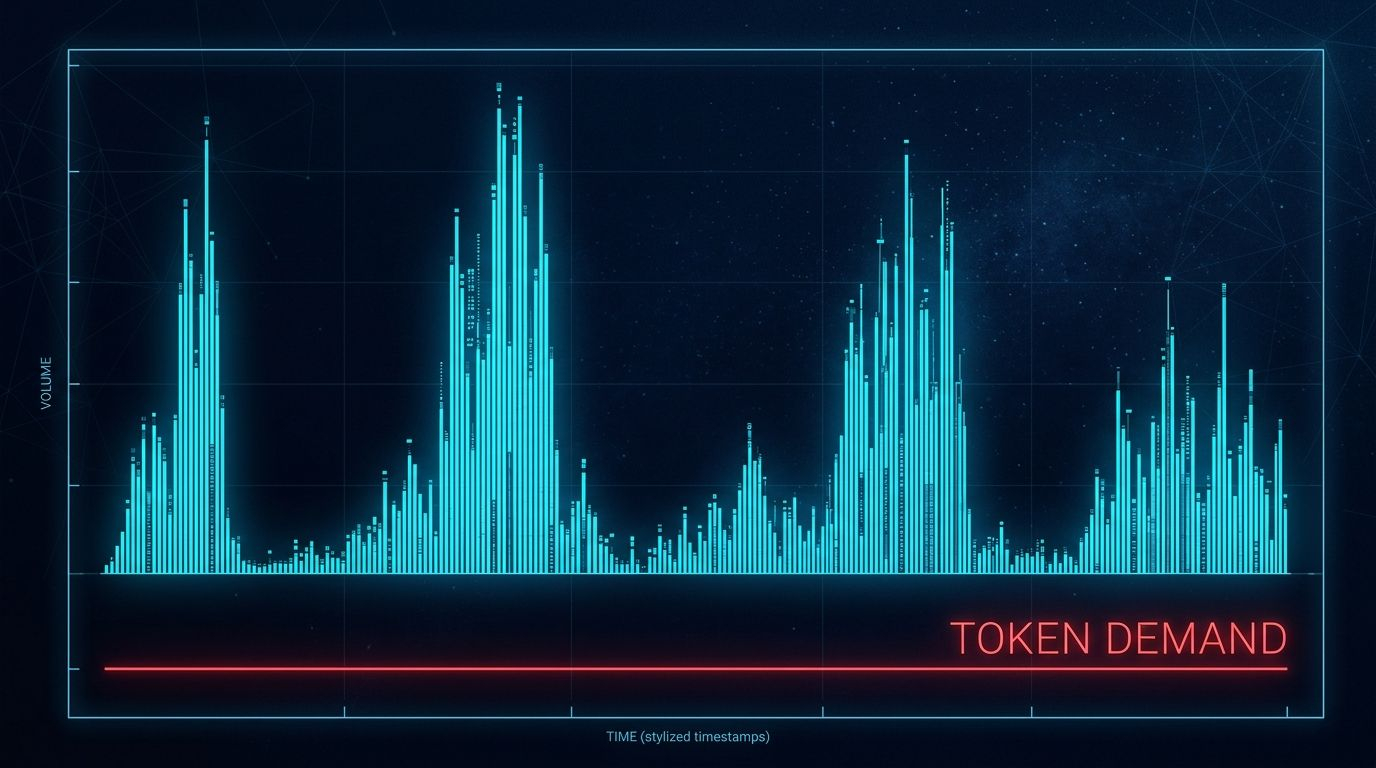
"$PIXEL doesn't price how active the game is. It prices how often players are willing to cross that final step."
Mechanically, this means the token and the game can diverge in ways that don't show up in standard metrics.
The game can be packed with players, quest activity climbing, land utilization up — and PIXEL demand can still be hollowing out quietly if players are getting better at optimizing around the conversion step.
It's not dishonest. It's rational player behavior. If the cost of minting exceeds the perceived value of permanence, players just… don't mint. The game still looks alive. The demand signal disappears.

What this assumes, underneath, is that the conversion step has enough pull to keep players coming back to it. That on-chain permanence means something to a meaningful percentage of the player base.
That assumption is untested publicly. The team hasn't shown conversion rate trends over time. They haven't shown what percentage of active players ever cross that step even once. Without that, activity numbers are a proxy that might not be proxying the right thing.
And the question no one has answered: does the game design actually create recurring conversion pressure, or only one-time pressure early in a player's journey?
In the best case, Pixels builds loops where players repeatedly want to lock things in — new items, upgraded land, seasonal achievements — and conversion pressure compounds as the game grows.
Demand scales with activity. The divergence risk closes. In the less good case, most of the conversion events front-load into the first few weeks of a new player's experience, and after that the player stays active but stops generating token demand. The game grows its user base. PIXEL doesn't feel it.
I don't know which case is true. That's the problem. The team probably knows, because they can see wallet-level behavior. But that number hasn't made it into any narrative I've seen around the token.

If Pixels publishes conversion rate data — not player counts, not total transactions, but the specific rate at which active players cross into on-chain actions over time then the thesis for PIXEL either gets much stronger or much more complicated. That's the number worth waiting for.