
An old hand in the cryptocurrency market who has been through the grind for a full decade. I have witnessed Bitcoin rise from below $1,000, experienced the madness of 2017 and the silence of 2018, and forged my trading soul with real money during the peak of 2021 and the subsequent 'winter.'
Like most people, my starting point was not glorious. When I first entered the market, I also chased highs and lows due to FOMO (Fear of Missing Out), over-leveraged out of greed, and ultimately faced a margin call, suffering heavy losses.
Those dark days, looking back now, have become my most precious wealth. They made me realize deeply: in this most volatile market in the world, which never sleeps, relying solely on luck and intuition will ultimately be devoured by the market.
After reflecting on my pain, I began systematically learning, reviewing, and summarizing. I combined traditional financial trading theories with the unique volatility and periodicity of cryptocurrencies, forming a replicable trading system through countless practices and revisions. Over the past six years, I have imparted this system unreservedly to thousands of students.
What comforts me is that many of them have successfully turned small amounts of capital into multiple rounds of doubling their assets by applying these mental methods and strategies.
Today, I have decided to share this system, which condenses ten years of blood, sweat, and six years of teaching essence, with everyone without reservation. This is not just a piece of 'dry goods,' but a 'map' that can save you five years of detours.
It is recommended to save and repeatedly read, practice, and internalize.
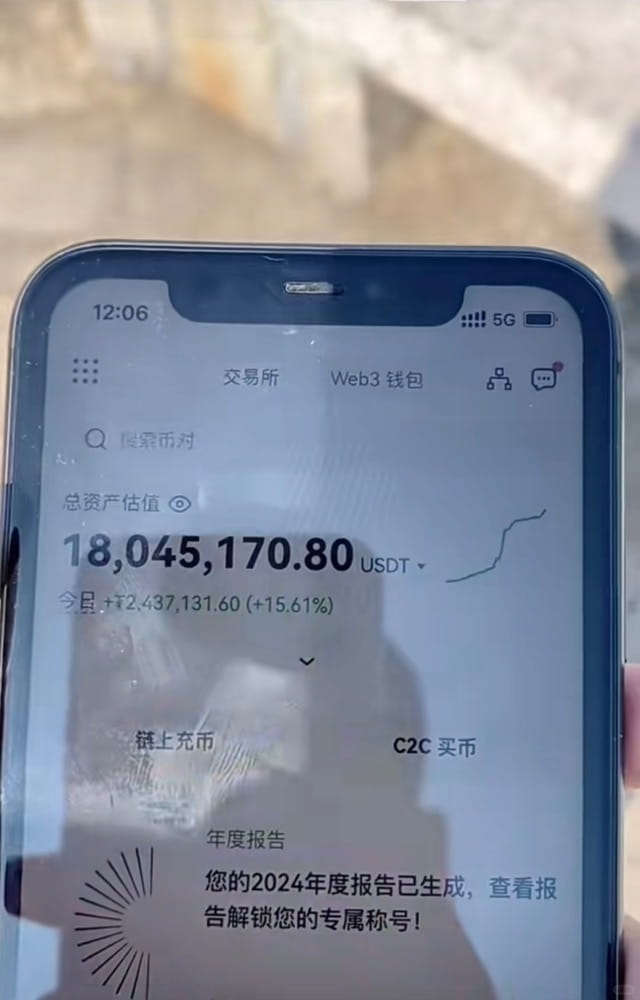
The Core Mental Method of Traders: The Transformation from 'Gambler' to 'Trader.'
Before imparting any specific strategies, I must emphasize the importance of 'mental methods.' Techniques can be learned quickly, but cultivating the right mindset takes time. If you cannot overcome human weaknesses, no matter how good the technique, it is just a castle in the air.
Survival first, profit second: always respect the market.
Early Lesson: The core reason for my early losses was losing my respect for the market. Thinking I had grasped the 'Holy Grail,' I began to heavily invest and use high leverage, trying to get rich overnight. The market always teaches you a lesson in an unexpected way.
Mental Method Interpretation: Treat each trade as a business, and your capital is your entire fortune. Your primary task is not how much money you can make with your fortune, but how to protect it so it is not confiscated by the market. Only by ensuring survival can you seize those truly yours trends.
Practical Guide: The risk exposure of a single trade should never exceed 2% of the total capital. This means that even if you have consecutive stop losses 10 times, your total capital drawdown is controlled within 20% and will not harm your core capital.

Abandon the 'get-rich-quick' mentality and embrace the miracle of 'compound interest.'
Early Lesson: Always thinking about going all-in to achieve financial freedom. This mentality leads to frequent trading, not being able to hold profitable trades, and also cutting losses.
Mental Method Interpretation: In the cryptocurrency space, one day equals a year in the human world. High volatility is both risk and opportunity. We do not need to catch every fluctuation; we only need to steadily earn when our high win-rate opportunities arise. A stable income of 10%-20% per month, compounded, yields several times the return after a year. This is the only right path for small funds to grow.
Practical Guide: Set monthly profit targets (e.g., 15%) and break them down into your trading system. After achieving the target, you can appropriately reduce operations to lock in profits rather than being greedy.

Plan your trades, trade your plans.
Early Lesson: I used to impulsively place orders due to sudden news or a candlestick pattern, resulting in being passive as soon as I entered the market.
Mental Method Interpretation: Professional traders are 'plan-driven,' while amateur gamblers are 'feel-driven.' Your trading plan is your battle map in this campaign; it includes: entry point, stop loss point, target profit point, and position size. Once the plan is made, it must be executed strictly like a robot.
Practical Guide: Establish your trading journal. Record the reasons for entering and exiting each trade, profit and loss results, and changes in mindset. Regularly review to find gaps between planning and execution; this is the fastest way for you to improve.
Profit and Loss are Interlinked: Accept imperfection, embrace uncertainty.
Core Understanding: No system can capture 100% of the market. Your trading system will inevitably miss some major rallies and face some consecutive stop losses. This is normal; it is the 'cost' of trading.
Mental Method Interpretation: The trades that make you money and those that make you lose may stem from the same pattern. If you doubt and change your system because of a few stop losses, when the big market that this system is supposed to capture comes, you will miss it. What you need to do is ensure that your system has a 'positive expected value' over the long term.
Practical Guide: Conduct historical backtesting and real-time verification of your trading system to clarify its win rate and risk-reward ratio. As long as the long-term expected value is positive, you must persist and accept imperfections in the process.

System Section - Build Your Exclusive Trading System (The Four Pillars of Trading Systems)
A complete trading system is like the four wheels of a car; none can be missing.
Pillar One: Trend Identification - Follow the trend, never go against it.
In the cryptocurrency space, the trend is your friend, and it is your only friend.
Core Method: Multi-Timeframe Analysis
Think Long, Act Short: Use weekly and daily charts to judge the main trend. Only when the main trend is upward (bull market) do we mainly consider going long; when downward (bear market), we mainly consider going short or staying in cash. This is our 'strategic direction.'
Precise Positioning: Use 4-hour (4H) and 1-hour (1H) charts to find entry opportunities. This is our 'tactical level.'
Trend Judgment Tools:
Moving Average (MA): I often use MA50 and MA200. When MA50 is above MA200 and both are diverging upwards, it indicates a typical bullish trend; conversely, it indicates a bearish trend. If the price is above MA50, it is considered a short-term strength.
Trend Line & Channel: Connect consecutive high points (resistance line) and low points (support line) to form a trend channel. In an ascending channel, buy on dips; in a descending channel, sell on rallies.
MACD Indicator: Mainly look at the position of the DIFF and DEA lines (above the zero line is strong) and the golden cross and death cross (especially the golden cross above the zero line is stronger).
Pillar Two: Entry Timing - No Eagle Before Seeing the Rabbit
After finding the trend, the next step is to identify an entry point with the best risk-reward ratio.
Core Strategy 1: Support Level Buying Method
Situation: In an upward trend, the price tests a key support level.
Key Support Levels Include:
Previous dense transaction area (chip area)
Important Moving Averages (e.g., MA50, MA200)
Trend Line or Channel Lower Bound
Fibonacci Retracement Levels (e.g., 38.2%, 50%, 61.8%)
Entry Signal: A bullish candlestick pattern, such as a hammer, bullish engulfing, or morning star, appears near the support level. This signals the market is telling us: 'Here, the selling pressure is exhausted, and buying pressure is starting to enter.'
Core Strategy 2: Breakout Buying Method
Situation: The price has undergone a period of consolidation (forming ranges, triangles, etc.) and begins to choose a direction.
Entry Signal: Price with volume (significantly increased trading volume) breaks through the key resistance level of the pattern.
Key Points: False breakouts are the biggest risk of this strategy. Therefore, we can use the 'breakout + pullback confirmation' method to enter, waiting for the price to break out and then pull back to the broken resistance level (which has turned into support) and stabilize before entering; this is safer.
Pillar Three: Risk Control - A Brake System That Never Loses Control.
This is the lifeline of your trading system and the key element in my transition from loss to profit.
1. Stop Loss: Never ask 'Should I stop loss?' The answer is 'You must stop loss.'
How to Set: Your stop loss must be placed at a technically 'invalid' position. That is, if the price reaches here, it proves your entry judgment is wrong.
For example: If buying at the support level, place the stop loss below the support level with a certain margin (e.g., 3%-5%) to prevent spikes from triggering the stop loss.
Discipline: Once the stop loss is set, never move the stop loss level, especially not because of expanding losses. That is called 'holding a position,' which is akin to a brother of liquidation.
2. Position Sizing: This is both an art and a science.
Fixed Risk Ratio Method: As mentioned above, ensure that the single trade loss does not exceed 2% of the total capital.
Position Size = (Total Capital * 2%) / (Entry Price - Stop Loss Price)
Pyramid Adding Method: Only add positions on a profitable basis, never average down on losses.
For example: After a base profit of 5%, add positions when the price tests the confirmation again, but the total position risk after adding must still conform to the fixed risk ratio principle.
Pillar Four: Exit Strategy - How to Put Profits in Your Wallet.
Those who can buy are apprentices; those who can sell are masters.
1. Target Profit Method:
Based on Risk-Reward Ratio: Before entering, determine your target profit level. I strongly recommend that the risk-reward ratio be at least 1:2. That is, you are willing to risk losing 1 unit to earn at least 2 units of profit.
How to Set Targets: Look towards previous resistance levels, Fibonacci extension levels, or calculate based on the theoretical height of the pattern.
2. Trailing Stop-Loss Method:
Purpose: Let profits run while protecting most of the profits.
Methods:
Moving Average Tracking: When the price consistently moves along a certain short-term moving average (like MA20), the stop loss can be moved below that moving average. If the price falls below the moving average, take profit and exit.
Trend Line Tracking: In an upward trend, draw an upward trend line and place the stop loss below the trend line. Exit if the trend breaks.
High Point Retracement Method: Take profit when the price retraces by a fixed percentage (e.g., 10%) from the highest point.
Recommendation: Adopt a partial profit-taking strategy. For example, when the first target is reached, close half of the position to secure some profits, move the stop loss of the remaining position to the cost price, and then use the trailing stop method to let the remaining profits run.

Strategy Section - High-Win-Rate Practical Models under Classic Market Conditions
Here are several high-success practical models that I and my students have verified over the years under specific market conditions.
Strategy One: 'Trend Pullback' Model (Pillar in the Stream)
Applicable Environment: Clear one-sided upward or downward trend.
Core Logic: Every pullback in a trend is an opportunity for you to enter.
Specific Steps (taking a long position as an example):
Define Trend: Daily chart confirms a bullish trend above MA50.
Wait for Pullbacks: Patiently wait for the price to pull back to key support on the daily or 4-hour levels (such as MA50, previous high converted support, trend line).
Find Signals: On the 1-hour or 15-minute chart, observe whether a bullish candlestick pattern (such as bullish engulfing) appears when the price tests the support level, while also paying attention to whether the volume shrinks and then expands again.
Execution: Enter after the signal appears, place the stop loss below the support level, and target the previous high or set according to the risk-reward ratio.

Student Case: A student entered when BTC retraced to MA50 on the daily chart and showed a bullish engulfing pattern in October 2023, with a stop loss of 300 points, ultimately gaining 1500 points with a risk-reward ratio of 1:5.
Strategy Two: 'Breakout Capture' Model (Chasing the Dragon)
Applicable Environment: After a long period of sideways consolidation.
Core Logic: The longer the horizontal, the higher the vertical. The energy accumulated during consolidation will be released in concentration during the breakout.
Specific Steps:
Identify Patterns: On daily or 4-hour charts, identify clear consolidation patterns such as ranges, triangles, and flags.
Observe Volume: At the moment of a breakout, the trading volume must significantly increase (at least 1.5-2 times the average volume); a breakout without volume is likely a false breakout.
Seize Opportunities: Aggressive traders may enter directly when the volume breaks through the key neckline; conservative traders may wait for pullback confirmation after the breakout before entering.
Execution: After entering, place the stop loss within the pattern (proving the breakout has failed), and set the target at least to the vertical height of the pattern.

Risk Warning: This strategy has many false breakouts; be sure to strictly control position sizes and stop losses.
Strategy Three: 'V-Turn Bottom Fishing' Model (A Dangerous Game with High Risk and High Reward)
Applicable Environment: The market experiences panic selling, showing extreme overselling.
Core Logic: Extremes must reverse; the end of panic selling is the time for smart money to buy the dip.
Specific Steps:
Determine Extremes: Use RSI (Relative Strength Index) or KDJ to judge oversold conditions (e.g., RSI below 20). Also, observe whether market sentiment is extremely fearful.
Seek Divergence: On the 1-hour or 4-hour chart, look for price making new lows while the indicators (like RSI, MACD) do not make new lows, indicating a bullish divergence structure. This is a core signal of declining momentum.
Wait for Confirmation: After a bullish divergence appears, you must wait for a strong bullish candlestick (e.g., a large up candle) to confirm the reversal, and this candlestick must be able to break the short-term downtrend line.
Execution: After confirming the signal, enter with a light position, placing the stop loss below the previous low. This strategy is very high risk and must use small positions with strict stop losses, suitable for traders with some experience.

Advanced Section - Perspectives on Crossing Bull and Bear Cycles and Maintaining Mental State
Understanding the Four-Year Cycle of Cryptocurrencies:
In the cryptocurrency space, cycles cannot be avoided. The Bitcoin halving event is the core engine of the cycle.
About 1 year before halving: The bottoming period is the golden time for dollar-cost averaging and accumulating positions.
About 1-1.5 years after halving: The main rising wave, a stage for trend traders to show their skills and let profits run.
After the Bull Market Peak: Entering a bear market lasting 1-2 years is a time for rest, learning, and summarizing.
Your trading system should have different focuses in different cycles: In a bull market, primarily trade trends; in a bear market, primarily trade counter-trend rebounds or stay in cash; in a bottoming period, primarily do dollar-cost averaging.

Maintaining Trader Mentality and Energy Management
Continuous Loss Period: This is the system's 'recession period,' a normal phenomenon. At this time, you should actively reduce your position or even stop trading, go travel, exercise, stay away from the market until confidence is restored.
Continuous Profit Period: Beware of the 'overconfidence' trap. Do not arbitrarily increase position size; adhere to established rules.
Maintain physical and mental health: Trading is a high-pressure job. Regular routines, sufficient sleep, and regular aerobic exercise are the foundation for maintaining trading focus.
Conclusion: From knowing to doing, your trading success is just a step away from 'action.'
Friends, this content of over 5000 words is a distillation of my ten years of trading career. It outlines a clear path from mental methods to systems to strategies. But remember, there is no perfect 'Holy Grail' in this world, and my system may not be 100% suitable for you.
The most critical steps are: Absorb -> Practice -> Summarize -> Internalize -> Formulate your own system.
From now on, pick up your trading journal and use a simulated account or very small position to verify every idea and strategy mentioned in the text. Record your successes and analyze your failures. This process is your 'alchemy' from small capital to stable profitability.
The path in the cryptocurrency world is long and arduous, but it will lead to success. Let us encourage each other!