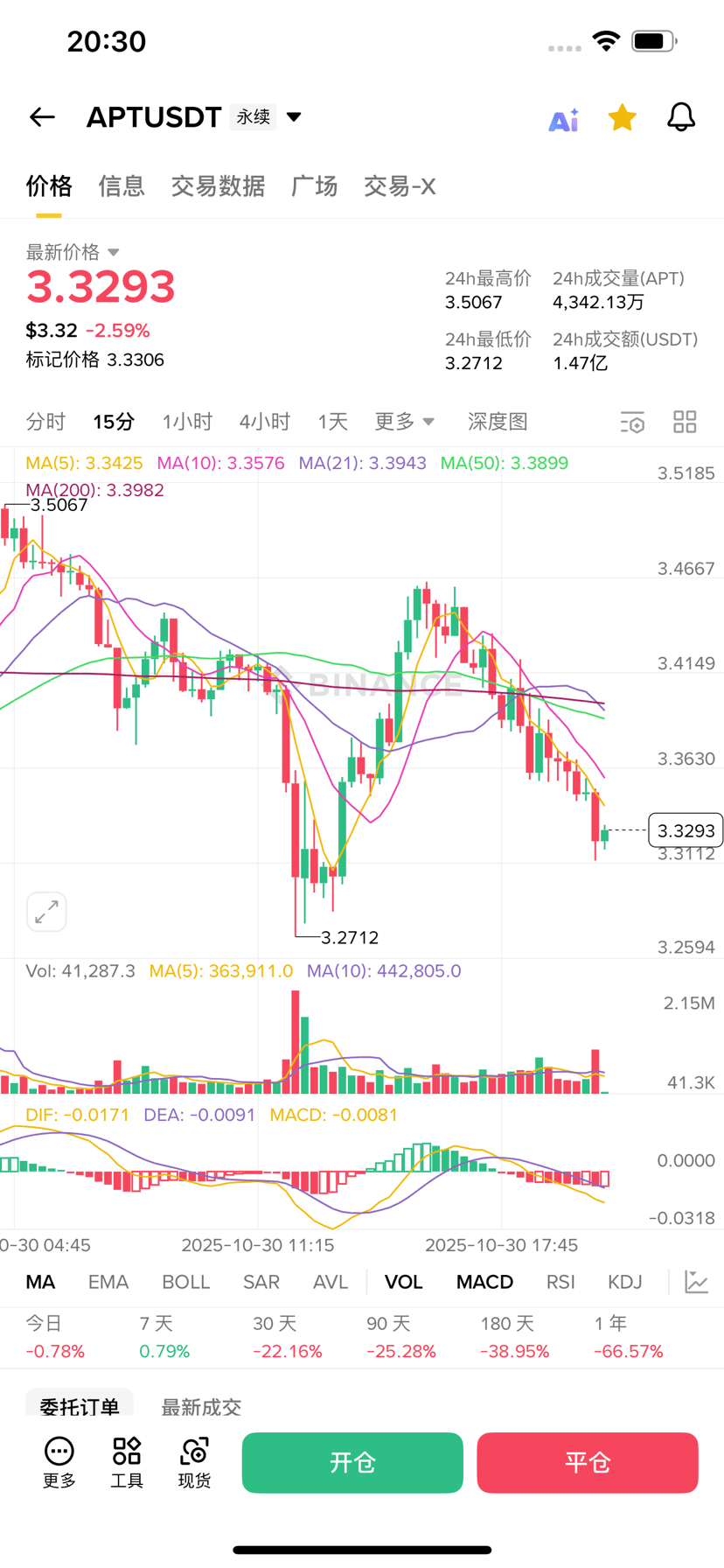
In the volatile investment market, we often hear this summary filled with hard-earned experience: "Once a strategy is set, it should be strictly executed. Constantly changing will only disrupt your steps and lead to losses." This statement, seemingly simple and straightforward, reveals the core issue of most investors' losses—lack of discipline.
1. Why do we always find it hard to "keep changing"?
Before executing a strategy, each of us is rational. We study fundamentals, analyze technical patterns, and set strict entry points, stop-loss points, and take-profit points. We firmly believe that this strategy is well thought out and can lead us to profit, serving as a guiding beacon.
However, once real money is invested in the market, the tide of emotions will surge.
* When the market soars far beyond expectations, greed whispers on the sidelines: 'Just wait, you can earn more!' Thus, we forget the discipline of taking profits, and the result is often a 'roller coaster' ride, returning all profits.
* When the market falls and hits the stop-loss point, fear grips our hearts: 'What if this is a false drop? What if I sell and it goes up?' Thus, we move the stop-loss position, praying for a market rebound, which may ultimately turn a small loss into an unbearable huge loss.
* When we hear an astonishing opinion from a certain 'expert' or 'insider information' from a friend, we begin to doubt our judgment, abandoning our original strategy in panic, chasing rises and selling on dips.
This kind of 'frequent change' is not based on logical optimization but stems from **emotional swings and weak willpower**. It disrupts all our planning and rhythm, reducing us from 'executors' of strategies to 'slaves' of emotions.
Two, strict execution is the 'anchor' that navigates through the fog.
What kind of magic does a pre-established and executed investment strategy have?
1. It is the 'calming agent' of emotions. In times of collective frenzy or panic in the market, the strategy is your only reliance. It helps you filter out the 'noise' of the market, countering human weaknesses, allowing you to remain calm and objective in decision-making.
2. It is the principle of 'consistency' in trading. Investment is a game of probability; no strategy can guarantee a win every time. But strictly executing a strategy can ensure your operations are consistent. Only in this way can you effectively review: when making money, knowing where the profits come from; when losing, understanding that this is a necessary cost of the strategy. In the long run, you rely on the system's 'positive expected value,' not on a stroke of luck.
3. It is the 'fuse' of assets. The stop-loss rules in a strategy are the 'fuse' installed for the safety of your funds. Strictly executing the stop-loss may incur small, planned losses, but it can completely eliminate the catastrophic blow of 'margin call.'
Discipline is the railing on the bridge. You may not usually hold onto it, but without it, you will struggle to move forward.
Three, can strategies really never change?
Here, a key distinction needs to be made. What we oppose as 'change' is arbitrary alteration based on emotions and short-term fluctuations. However, a mature strategic system itself should include an evolution mechanism based on data and review.
This is called 'Plan your trades, trade your plan. And regularly review and optimize your plan.'
* At the 'tactical' level (with each operation): it must be a strict law, executed rigorously.
* At the 'strategic' level (long-term planning): regular (e.g., quarterly, annually) calm reviews are needed:
* How did the strategy perform in the past cycles? Is the win rate and profit-loss ratio within a reasonable range?
* Has there been a structural change in the current market environment (e.g., bull market, bear market, volatile market) that renders the original strategy ineffective?
* Are there any aspects that can be systematically improved and optimized?
This kind of 'change' is thoughtful evolution and iteration, not whimsical swings and betrayal.
The biggest enemy of investment is never the unpredictable market, but rather the self that is filled with greed and fear.
'The set strategy must be strictly executed,' these ten characters are distilled from countless lessons into true gold. It requires us to become a steadfast 'executor,' guarding our capital and confidence with the armor of discipline.
Remember: in the long-term survival law of the market, a stable system is always more important than a one-time windfall. Sticking to your strategy is like maintaining the strongest 'moat' in the market.