
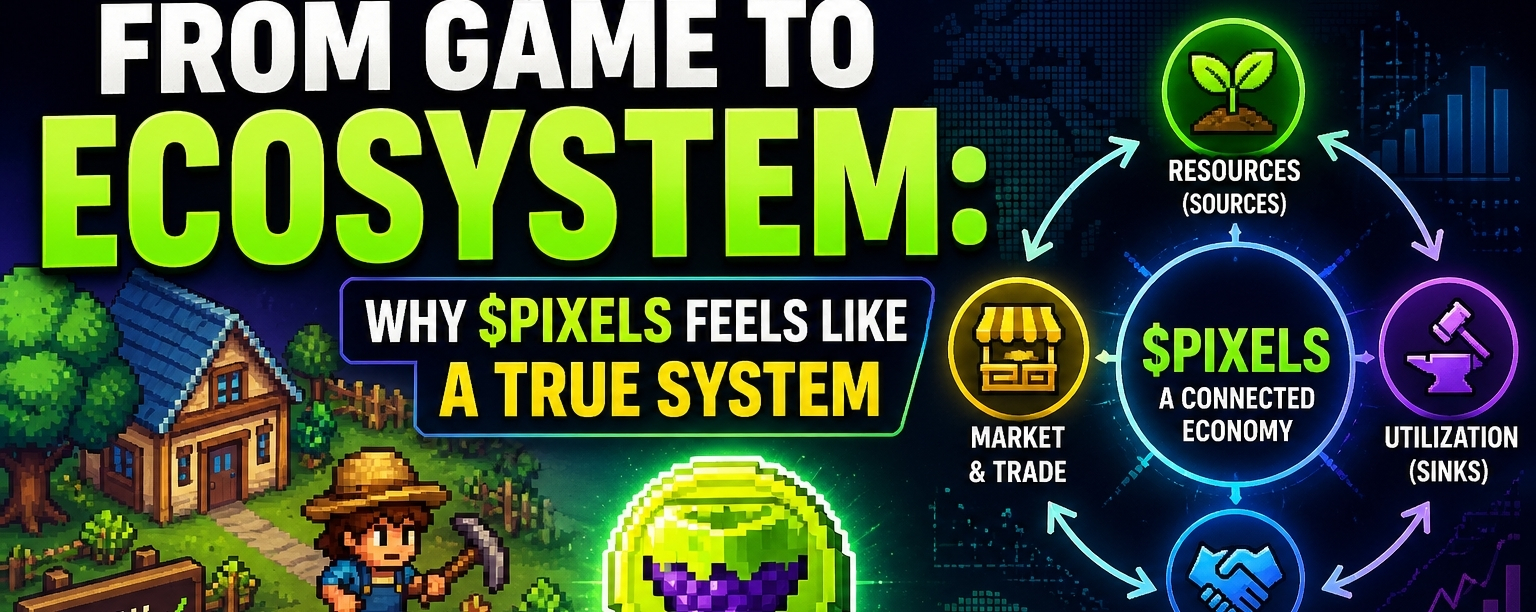
Introduction: From Game to System
At first glance, $Pixels looks like a typical farming and resource-management game. However, over time, many players begin to experience it differently. It stops feeling like a casual game and starts functioning more like a structured system. This shift happens because of how its mechanics are interconnected, creating consistency, value flow, and long-term engagement.
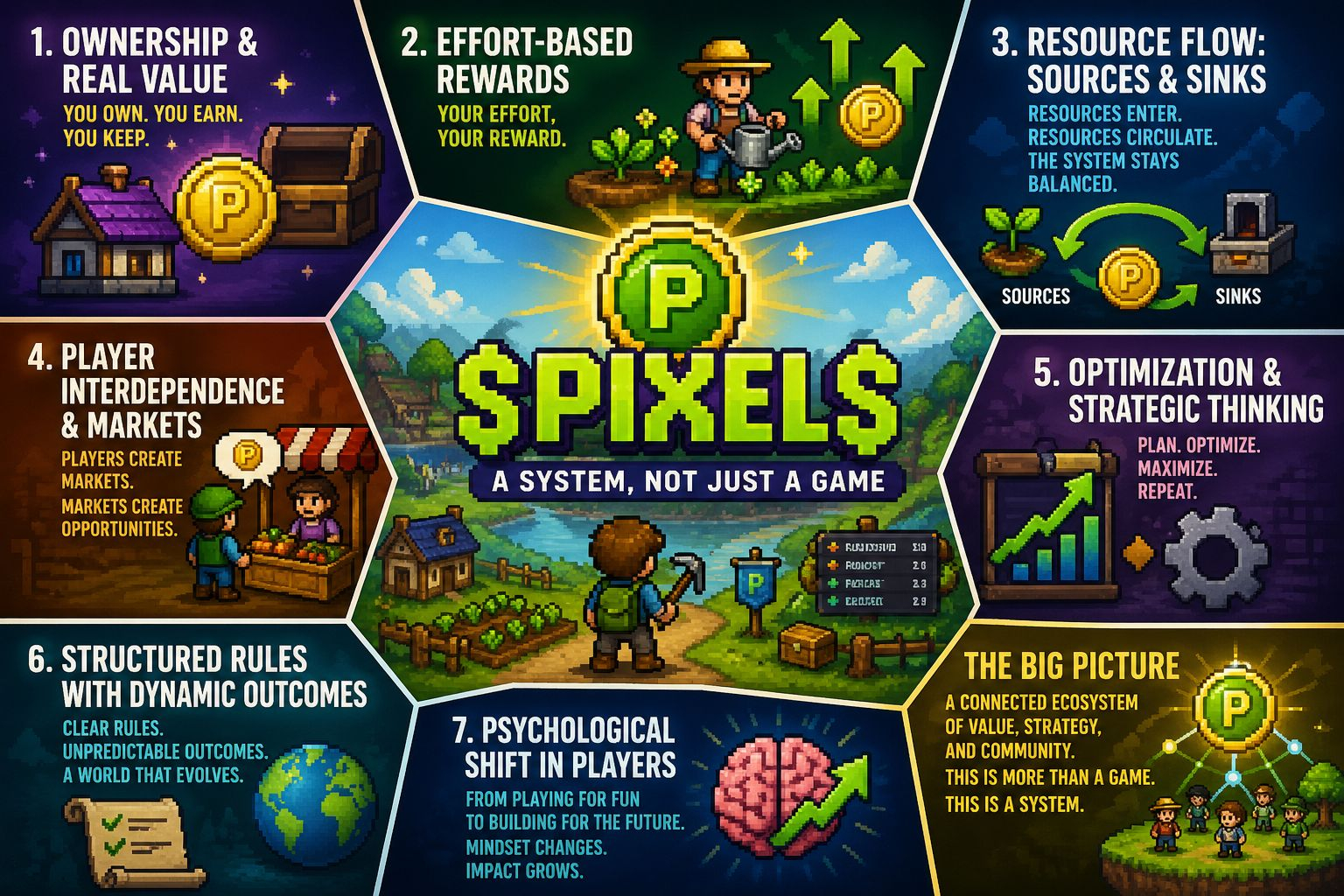
1. Ownership and Real Value Integration
One of the strongest reasons Pixels feels like a system is the concept of ownership. Unlike traditional games where progress is locked inside the game, Pixels connects actions to assets and tokens that hold value.
Every activity—farming, crafting, or trading—produces something that can be used, exchanged, or saved. This creates a value-driven environment, where effort is not wasted but instead contributes to a broader economy.
Because of this, players begin to think in terms of investment and return, rather than just entertainment.
2. Effort-Based Reward Structure
In most games, rewards can sometimes feel random or disconnected from effort. Pixels changes this by emphasizing active participation.
Players who engage more strategically—by managing time, resources, and decisions—tend to earn more. This introduces a system where input (effort) is closely tied to output (reward).
Such consistency is a key characteristic of any real system, making the experience feel structured and predictable.
3. Resource Flow: Sources and Sinks
A defining feature of any system is how resources move. Pixels creates a balance through:
Sources: Activities like farming, quests, and events that generate value
Sinks: Actions like upgrades, crafting, and land usage that consume value
This ensures that resources don’t just accumulate endlessly. Instead, they circulate, helping maintain balance.
When players start managing scarcity and planning usage, they are interacting with a dynamic economic loop, not just playing a game.
4. Player Interdependence and Market Behavior
Pixels introduces strong social and economic interaction between players.
Some players focus on production, others on trading, and some on optimization. This creates a natural division of roles, similar to real-world systems.
Markets emerge where supply and demand influence decisions. Players must adapt based on what others are doing, which builds a living ecosystem rather than a fixed gameplay path.
5. Optimization and Strategic Thinking
As players progress, their mindset begins to change. Instead of playing casually, they start asking:
How can I maximize output?
How do I reduce wasted resources?
What is the best long-term strategy?
This shift toward optimization is a key sign that the game is functioning as a system. Players are no longer just reacting—they are planning and refining processes.
6. Structured Rules with Dynamic Outcomes
Pixels operates on clear and consistent rules—how resources are earned, used, and traded. At the same time, outcomes are not fixed.
Market conditions, player behavior, and updates introduce variability. This combination of predictability (rules) and change (outcomes) is essential for any system to remain both stable and engaging.
7. Psychological Shift in Players
Perhaps the most important transformation happens in the player’s mindset.
At the beginning, players focus on fun and exploration. Over time, they begin to:
Track performance
Measure efficiency
Plan ahead
This turns them from casual gamers into active participants in an ecosystem. The game becomes less about short-term enjoyment and more about long-term positioning and decision-making.
Conclusion: A Living, Connected System
$Pixels feels like a system because it combines multiple elements into a unified whole:
Real value integration
Effort-based rewards
Balanced resource flow
Player-driven markets
Strategic optimization
Together, these features create an experience where every action connects to a larger structure. Instead of isolated gameplay, players engage with a continuous loop of decisions, value, and interaction.
That is the moment Pixels stops being “just a game” and starts becoming a functional system.
#penAIReportedlyWorkingonanAISmartphone
