
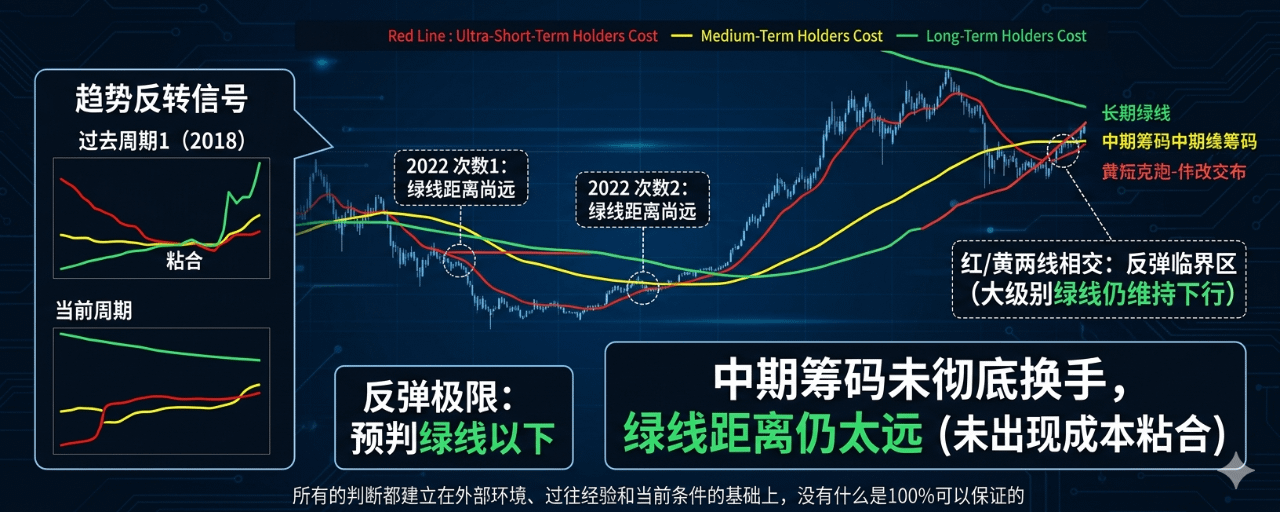

The interrelationship and changes in the 'cost basis of different holding groups' is one of my key conditions for judging bounces/reversals.
The red/green/yellow lines represent the cost bases for ultra-short-term and medium-term holding groups (see notes in the chart). Currently, with BTC's price bouncing back, the red line is moving up and crossing the yellow line (Chart 1).
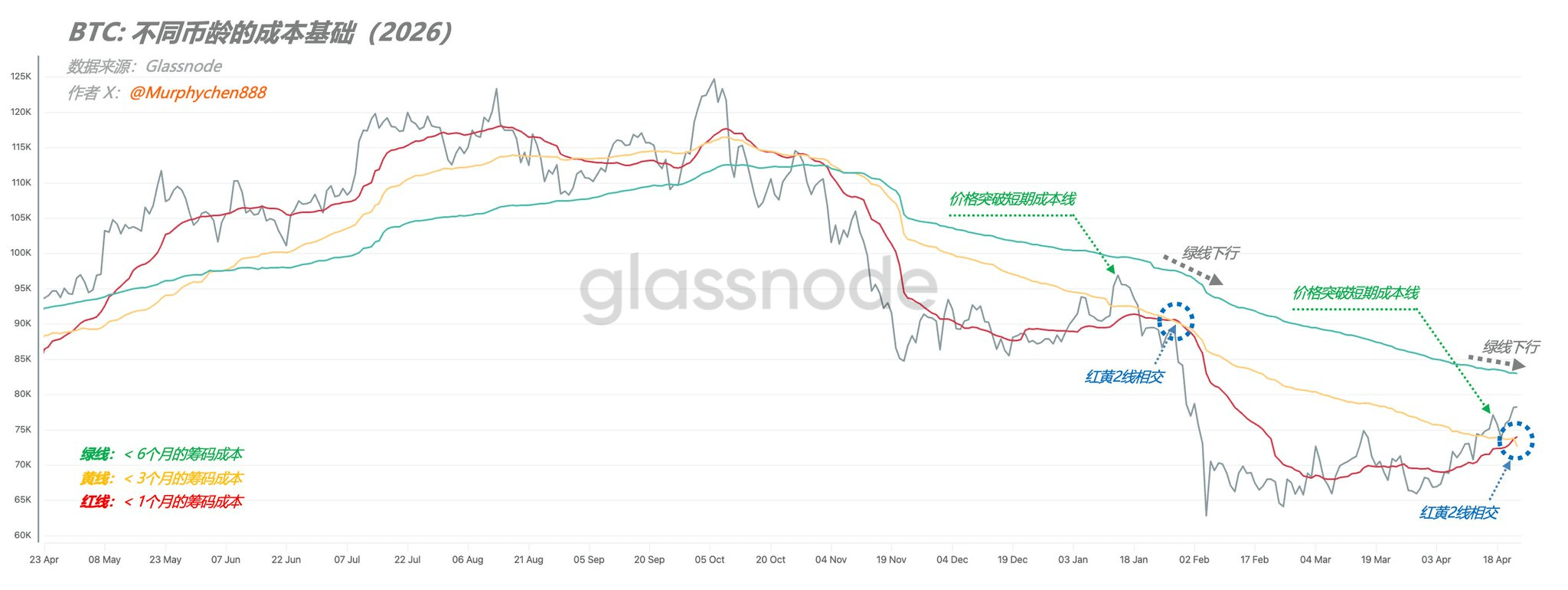
When the larger time frame green line continues to trend downwards, the crossing of the red and yellow lines usually signals a bounce into a critical zone.
Compared to 2022, there were three instances in the entire bear market where price bounces caused the red and yellow lines to cross; each time the green line was trending down, but the distance between the green line and the red/yellow lines got closer with each instance!
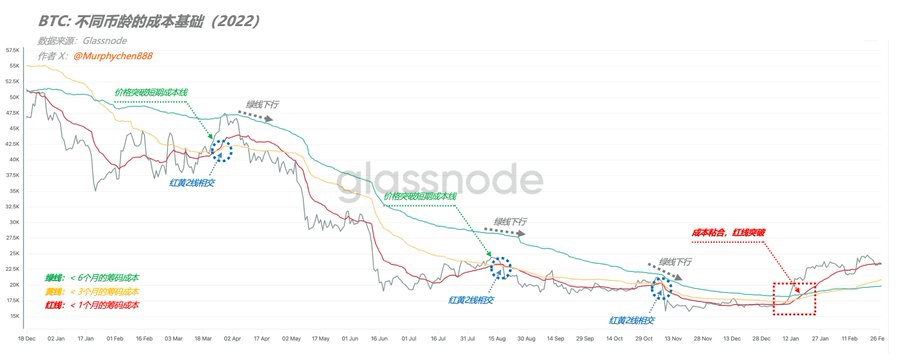
This is an extremely important observation point!
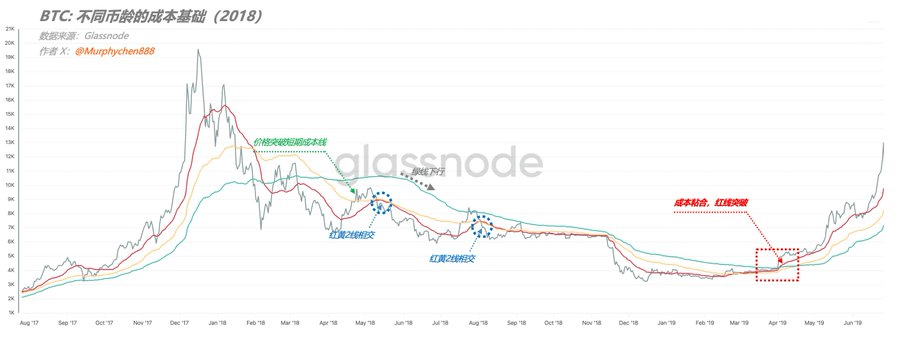
If we consider the previous 'red and yellow crossover' as a buy signal, funds will get repeatedly worn out. It's not until the green line and the red-yellow lines fully merge that the breakout of the red line signals a trend reversal.
(The 2018 cycle follows the same logic, but I won't elaborate here; you can check Chart 3 yourself.)
Clearly, the 'mid-term chips' haven't completed a thorough handover yet, leaving the green line still too far from the red-yellow lines (no cost merging has occurred).
Therefore, I believe this isn't a clear buy point before a trend reversal. Based on historical data, the maximum height of the rebound should be just below the green line.
Maybe some of you are wondering: could this time be different, with prices breaking directly above the green line, causing the red line to continuously break and form a trend reversal?
Of course, that's possible. All judgments are based on external conditions, past experiences, and current circumstances—nothing is 100% guaranteed.
I can only say that if that happens, it really exceeds my capacity and understanding.