

According to CoinMarketCap data, the global cryptocurrency market cap now stands at $2.56T, up by 0.59% over the last 24 hours.
Bitcoin (BTC) traded between $75,667 and $77,456 over the past 24 hours. As of 09:30 AM (UTC) today, BTC is trading at $76,320, up by 0.37%.
Most major cryptocurrencies by market cap are trading mixed. Market outperformers include NOM, BROCCOLI714, and BIO, up by 25%, 19%, and 17%, respectively.
Bitcoin Freezes at $76K as Fed Day Meets Iran Deadline, Brent Tops $114, and Warsh Clears Senate Committee
Bitcoin is holding near $76,300 on the lowest trading volume since 2023, with thin liquidity setting the stage for violent moves as the Fed delivers its statement today and Iran faces a Friday deadline to submit a revised peace proposal — with Brent above $114 and the White House's patience visibly running out.
Away from the price action, the Senate Banking Committee advanced Kevin Warsh's Fed chair nomination to a full Senate vote, Wall Street launched its first political prediction market ETFs, and the US tapped its Strategic Petroleum Reserve at the highest rate since 2022 in a bid to cool oil prices.
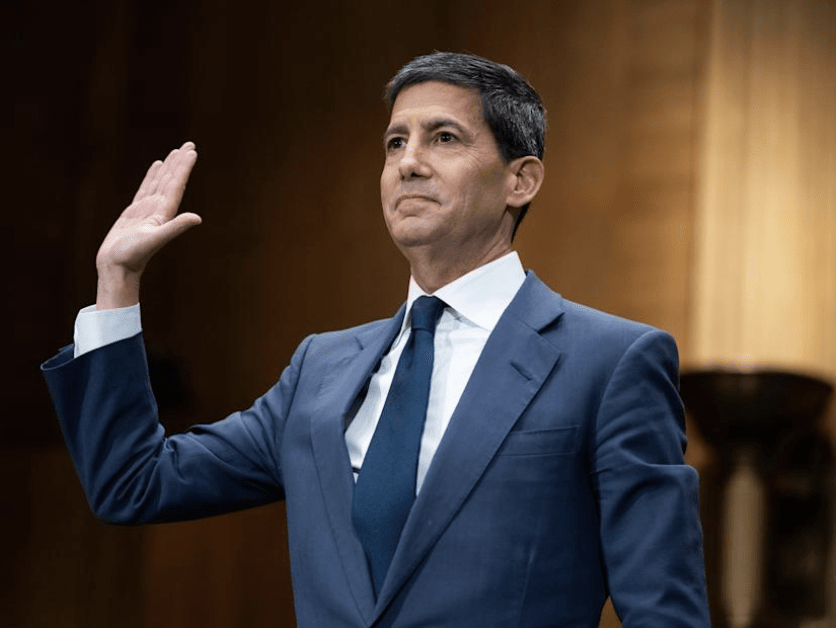
Senate Banking Committee Approves Warsh Fed Chair Nomination, Sending It to Full Senate Vote
Key Takeaways:
The Senate Banking Committee voted April 29 to advance Kevin Warsh's Fed Chair nomination to the full Senate floor
The approval clears the final procedural hurdle before a full Senate confirmation vote — the last step before Warsh can succeed Powell
Powell's chair term expires in May, creating urgency around the confirmation timeline
Polymarket had priced a 43% probability of Warsh being confirmed before May 15 prior to the committee vote
Summary:
Warsh's committee approval moves the Fed leadership transition into its final stretch. For markets, the key risk is a confirmation gap — any delay in the full Senate vote that leaves the chair role uncertain as Powell exits would add an institutional uncertainty layer on top of an already complex macro backdrop. The 43% Polymarket odds ahead of the vote suggest the market still sees meaningful confirmation risk before the May deadline.
Key Takeaways:
Bitcoin spot trading volume has fallen below $8B — the lowest since October 2023 when BTC was below $40,000 — down from $25B+ in early February, per Glassnode
Low volume reduces market depth, making prices more sensitive to large orders and increasing the risk of sharp, disorderly moves
Bitcoin's 30-day implied volatility index (BVIV) has dropped to three-month lows below 42% — options markets are pricing calm even as macro risks build
Brent crude topped $114 as Trump issued a new threat to Iran; Treasury yields continue to creep higher while the Dollar Index stays below 100
Marex: Bitcoin is "trading like a market that does not want to commit ahead of the Fed" — the next impulse is macro, not crypto-native
Santiment flagged a surge in $90K+ Bitcoin social media posts as a potential contrarian sell signal
Summary:
The combination of collapsed volume, suppressed implied volatility, and a live Fed catalyst is a textbook setup for an outsized move in either direction. When liquidity is this thin, the Fed statement doesn't need to be a shock — it just needs to be definitive enough to trigger a cascade of orders into a market with very little depth to absorb them. The Santiment retail euphoria signal adds a behavioral warning on top of the structural fragility.

U.S. Strategic Petroleum Reserve Releases Hit Highest Level Since October 2022
Key Takeaways:
SPR releases have reached their highest level since October 2022, per the US Energy Information Administration
The move signals the administration is actively deploying emergency oil reserves to counter the Hormuz-driven price surge
Brent crude remains above $114 despite the releases, suggesting supply from the SPR alone is insufficient to offset the Hormuz disruption
Summary:
The SPR release at a two-and-a-half-year high is a clear signal the White House is pulling every available lever to bring oil prices down ahead of the Fed meeting and the Iran negotiation deadline. The fact that Brent is still above $114 despite the releases underscores how dominant the Hormuz supply shock is — and why a diplomatic resolution remains the only real fix for the energy inflation problem weighing on crypto and risk assets.

Key Takeaways:
Roundhill Investments launches six political prediction market ETFs on May 5, tracking Democratic and Republican control of the White House, Senate, and House
Funds gain exposure via swap agreements tied to binary event contracts on CFTC-regulated markets — settling at $1 if the outcome occurs, $0 if it doesn't
Prospectus warns in capitalized text: if the targeted party doesn't win, "the fund will lose substantially all of its value"
Bitwise (PredictionShares) and GraniteShares filed identical six-fund slates; Bitwise terminates post-outcome, Roundhill and GraniteShares roll into the next cycle
The CFTC withdrew a Biden-era ban on political event contracts in February; state regulators in NY, MA, and NV continue to challenge the underlying contracts in court
Summary:
Prediction market ETFs bring election outcome trading into ordinary brokerage accounts for the first time — a significant convergence of regulated finance and the binary event contract space that Polymarket and Kalshi pioneered. For crypto markets, the broader legitimization of on-chain prediction market mechanics through SEC-regulated products could accelerate institutional awareness of platforms like Polymarket, while expanding the universe of retail participants familiar with binary settlement structures.
Pakistan Expects Iran to Submit Revised Peace Proposal by Friday as Khamenei Access Delays Talks
Key Takeaways:
Pakistani mediators expect Iran's revised peace proposal to arrive as early as Tuesday or by Friday at the latest, per CNN
The primary bottleneck: difficulty reaching Supreme Leader Khamenei, whose sign-off is required for any formal Iranian response
Trump previously rejected an earlier Iranian offer, making this revised proposal a critical test of whether negotiations can advance
Pakistani PM Sharif publicly stated Iran's Foreign Minister personally assured him a reply is coming — adding diplomatic pressure on Tehran
The White House has signaled its patience is wearing thin, framing Friday as a de facto deadline
Summary:
The next 48–72 hours represent one of the most consequential diplomatic windows of the Iran conflict for financial markets. A revised proposal that gains White House approval could immediately ease the geopolitical risk premium in oil — Brent above $114 — and provide a meaningful tailwind for Bitcoin and risk assets into the May open. A second rejection or a failure to respond would extend the energy price spike and keep macro conditions hostile for risk-on positioning. With Khamenei access as the bottleneck, the outcome hinges on factors well outside the market's control.

Market movers:
ETH: $2327.68 (+1.75%)
BNB: $626.49 (+0.40%)
XRP: $1.3967 (+0.40%)
SOL: $84.71 (+0.99%)
TRX: $0.323 (-0.19%)
DOGE: $0.10732 (+7.69%)
WBTC: $76925.53 (+0.50%)
U: $1.0002 (+0.03%)
XAUT: $4564.53 (-1.05%)
BCH: $452.9 (+1.25%)