
A federal judge has sentenced Sze Man Yu Inos — also known as “Yuki” — to 71 months in prison for running a Bitcoin investment fraud that targeted elderly women across U.S. territories and states. Prosecutors say the 30-year-old built trust with victims in Saipan and Guam between November 2020 and January 2022 by posing as a wealthy Chinese investor who owned multiple businesses and had lucrative Bitcoin successes — claims she used to induce victims to hand over money. How the scheme worked - Inos allegedly befriended older women and pitched cryptocurrency investments, presenting herself as a trusted, successful investor. - Prosecutors say she even forged a federal judge’s signature to further her scheme. - After leaving the Marianas, Inos continued defrauding victims in Washington and California while her federal case was pending — a cross-jurisdiction pattern that elevated the federal response and contributed to the harsher sentence. Financial penalties and additional punishment - Prison term: 71 months (just under six years) - Restitution to victims: $769,355.67 - Criminal forfeiture judgment: $684,848.34 (funds seized as part of the criminal judgment) - Supervised release: 3 years after prison - Community service: 100 hours - Special assessment fee: $200 Law enforcement response FBI Honolulu Special Agent in Charge David Porter condemned the conduct: “The defendant built a career out of deception, leaving a trail of financial ruin stretching across several states and impacting dozens of innocent victims. By forging a federal judge’s signature to facilitate her schemes, the defendant acted with complete contempt for both the victims she exploited and the rule of law.” Porter underscored that Inos deliberately targeted vulnerable elderly victims with fabricated stories about cryptocurrency success. U.S. Attorney Shawn Anderson added: “Criminals engaged in affinity fraud prey on our willingness to trust others. This defendant chose to target older women across multiple jurisdictions, resulting in substantial financial losses. She continued her scams while this case was pending. The punishment imposed by the court is well-deserved.” Why this matters for the crypto space This case highlights two persistent threats in the cryptocurrency ecosystem: affinity fraud — where scammers exploit personal relationships or shared community ties — and schemes that prey on older, more vulnerable investors. While crypto’s pseudonymous, digital nature can enable legitimate investment, it also provides fertile ground for fraudsters who manufacture credibility and use forged documents to deceive victims across state lines. Takeaway For investors, especially older adults and their families, the case is a reminder to verify credentials, avoid unsolicited investment pitches, and treat too-good-to-be-true crypto success stories with skepticism. If targeted, report suspicious offers to local law enforcement and federal agencies like the FBI, which continue to pursue cross-jurisdictional cryptocurrency fraud aggressively. Read more AI-generated news on: undefined/news

Article
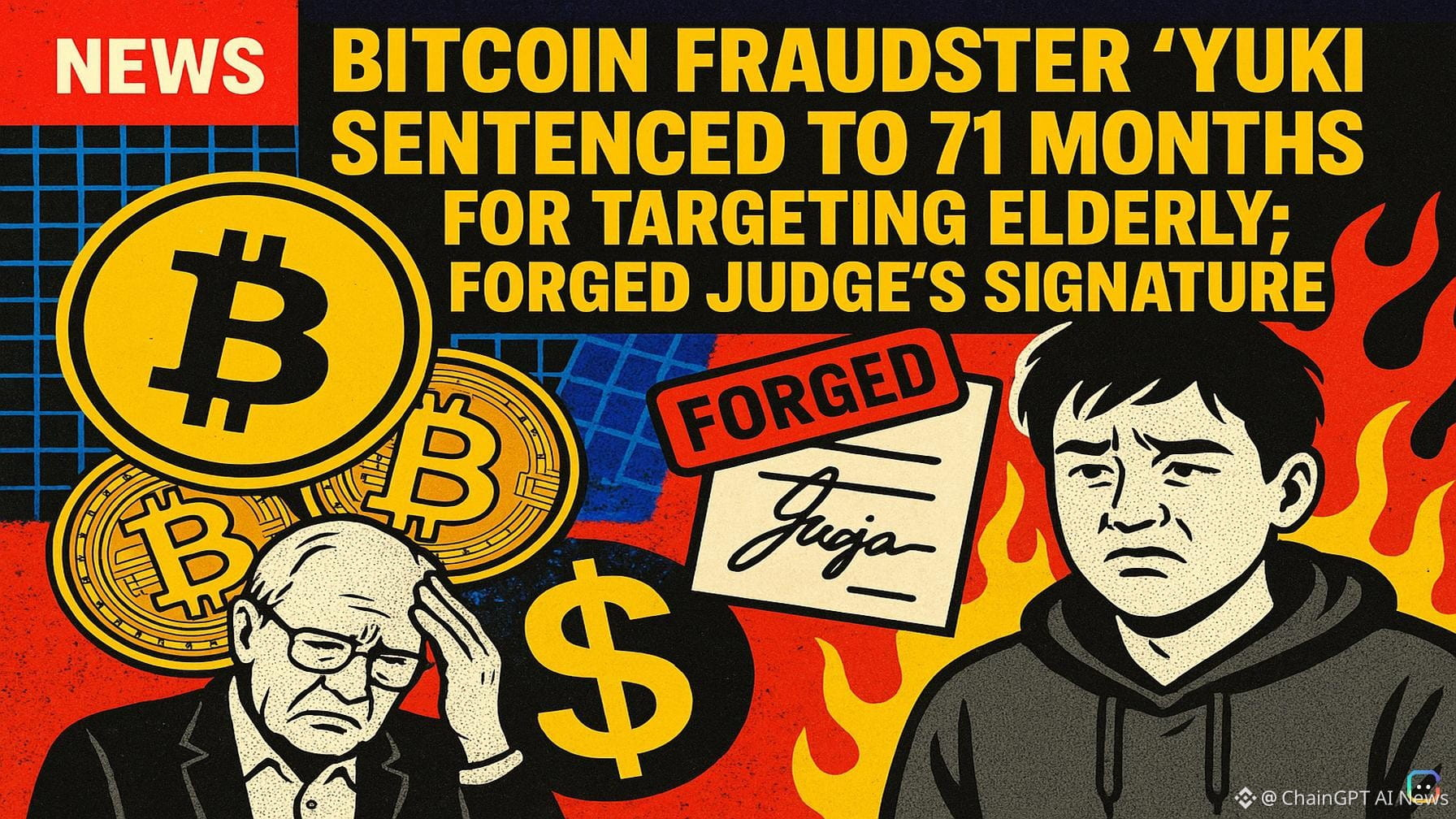
Bitcoin Fraudster "Yuki" Sentenced to 71 Months for Targeting Elderly; Forged Judge’s Signature