
The final list includes Kevin Hassett, Christopher Waller, Kevin Warsh, Rick Reed, and Michelle Bowman.
A choice between economic expertise and political visions when selecting the head of the world's most powerful central bank.
Kevin Hassett has the closest relationship with the president among the final candidates, which puts him at the forefront of the nominations.
Michelle Bowman is the only woman among the candidates, and Trump has given her a larger and more influential role within the Federal Reserve.
As the term of the current Federal Reserve Chair Jerome Powell nears its end in May, the decision on who will become the world's most important central banker is imminent.
U.S. Treasury Secretary Scott Bisant announced the names of five final candidates for the Federal Reserve Chair position to succeed Powell, and President Donald Trump stated he expects to make a decision on the nominee before the end of the year, according to Bloomberg.
The next Federal Reserve Chair is likely to be appointed to his position in early 2026, although Jerome Powell's term ends next May, according to Bloomberg.
In the following report, we highlight the tasks of the Federal Reserve Chair and the characteristics of the most prominent candidates and Federal Reserve Chairs in recent years.
What are the duties of the Federal Reserve Chair?
The Chair of the U.S. Federal Reserve possesses exceptional authority and independence within Washington, exceeding that of most other officials. He is the official spokesperson for the central bank, negotiates with the executive branch and Congress, and sets the agenda for meetings of the Board of Governors and the Open Market Committee, according to the Council on Foreign Relations (CFR), based in the United States.
Analysts and investors are closely following his statements, with markets reacting immediately to any signal from him, even if it is slight, regarding interest rate policy, according to the research center.
The Federal Reserve Chair is appointed by the U.S. President, while the central bank enjoys significant financial independence from Congress as it manages its budget independently. After the appointment is ratified, the Federal Reserve Chair is also insulated from White House control, as there is no established mechanism allowing the president to dismiss him, and this matter is subject to legal debate regarding its possibility from the outset.
Trump had said he "does not plan to do anything" to dismiss Powell, after a White House official indicated that the president is likely to seek to dismiss him soon, according to Bloomberg on July 16.
Powell also insisted that the president does not have the legal authority to remove or demote officials in the Federal Reserve leadership. In April, he stated, "We can only be removed under legal provisions." Trump has repeatedly expressed his frustration with the central bank's decision to keep interest rates unchanged before beginning to lower them later.
Who are the final candidates for the position of Federal Reserve Chair?
The final list of candidates announced by Bisant includes:
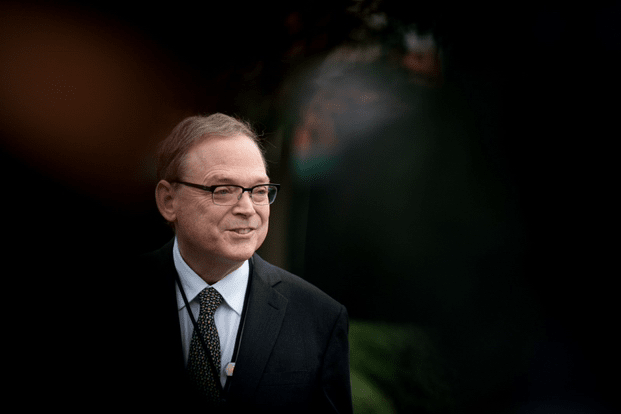
1-Kevin Hassett
Kevin Hassett, one of Trump's oldest economic advisors, tops the list of most likely candidates to succeed Powell as Federal Reserve Chair, according to Bloomberg in July.
Hassett was previously viewed as a moderate conservative economist, compatible with politicians like Mitt Romney. However, he has been within Trump's circle for nearly 10 years. He took a different approach in managing the National Economic Council than his predecessor Gary Cohn, who tried to curb Trump's tariff tendencies and did not last long in his position.
As for Hassett, he has fully engaged in the "Make America Great Again" approach, dedicating himself to Trump's positions on trade, taxes, and inflation in the United States and the Federal Reserve, during his repeated appearances on television.
Hassett also enjoys the advantage of daily proximity to the president, as he has an office in the West Wing of the White House. Hassett previously chaired the Council of Economic Advisors during Trump's first term. His previous experience included working as an economist at the U.S. Federal Reserve and as a research director at the American Enterprise Institute, according to Bloomberg.
Hassett is known for his expertise in tax issues and has authored several books in this field. However, his most famous—and perhaps controversial—book was titled "Dow at 36,000," in which he predicted a significant surge in the U.S. stock market, published just before the explosion of the internet bubble. The "Dow" index did not reach that level until more than two decades later.
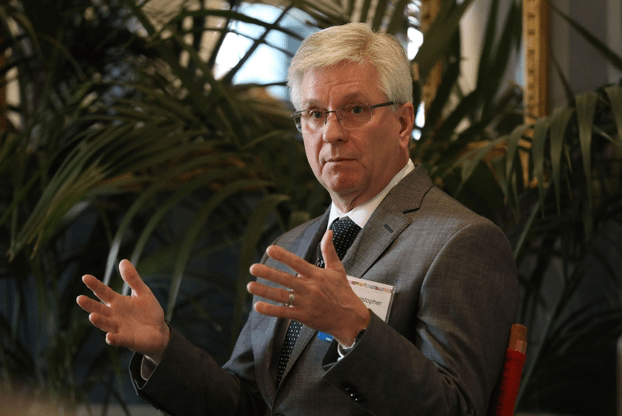
2-Christopher Waller
He currently serves on the Federal Reserve Board after being nominated by Trump in January 2020, and his appointment was confirmed by the Senate in December of the same year. Prior to that, Waller served as the executive vice president and director of research at the Federal Reserve Bank of St. Louis. Waller held the prestigious academic chair named after Gilbert Schaefer in the Department of Economics at the University of Notre Dame, and the Carol Martin Gatton Chair in Macroeconomics and Monetary Theory at the University of Kentucky in the United States, according to his LinkedIn profile.
Waller earned his bachelor's degree from Bemidji State University and his Ph.D. from Washington State University. His research interests include the political economy of central banks, negotiation theory, and the integration of international banking systems, according to his social media profile.
His deep knowledge of the Federal Reserve may help him manage monetary policy efficiently, and his understanding of how the Federal Reserve operates may assist him in how it can be reformed to align more with Trump's administration's directions, according to Axios.
Waller shows genuine enthusiasm for making the Federal Reserve's payment systems available to decentralized finance companies associated with cryptocurrencies, helping him garner support from a significant part of Trump's coalition, according to the American website. However, Waller remains the dark horse in the race to be the unexpected winner of the position, as Bloomberg reported in July.
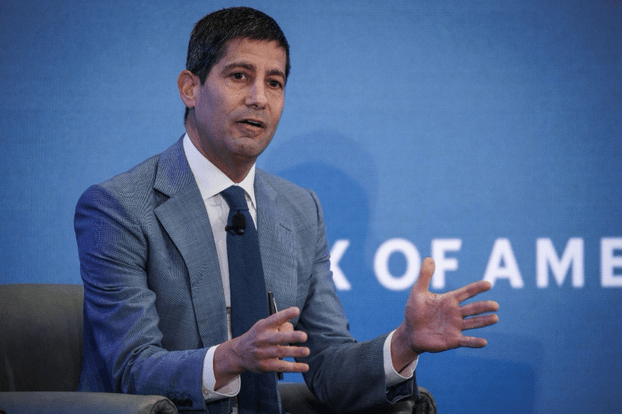
3-Kevin Worch
In 2017, Trump met with Worch, among the candidates for Federal Reserve Chair, but ultimately chose Powell because he saw Worch's ideas as too hawkish and his demeanor did not suggest sufficient maturity, according to Bloomberg in July.
In February 2002, Worch left his position as Vice President and Executive Director at "Morgan Stanley" to join the administration of former President George W. Bush. He served as a special assistant to the president on economic policy and an executive secretary at the National Economic Council, according to the Federal Reserve website.
At that time, Worch advised the president and senior officials on issues related to the U.S. economy, particularly in the area of capital market flows, securities, banking, and insurance. During that period, he was also a member of the presidential task force on financial markets.
George W. Bush nominated Worch to serve on the Federal Reserve Board of Governors in 2006. He held this position from February 24, 2006, to March 31, 2011, according to the Federal Reserve website.
Worch studied public policy with a focus on economics and statistics at Stanford University, where he graduated with honors in 1992. He continued his studies at Harvard Law School, focusing on the intersection of law, economics, and regulatory policies, and earned his law degree in 1995, according to the Federal Reserve website.
In November 2024, some of the prominent advisors of then-elected President Trump expressed their support for Kevin and Worch to take the position of U.S. Treasury Secretary, according to Bloomberg. Worch is related by marriage to the Lauder family, known for their famous cosmetics empire "Estée Lauder," according to the same source.
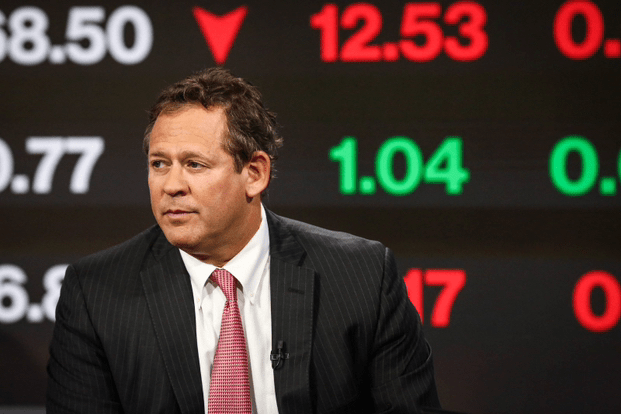
4-Rick Reader
Reader is among the leading executives at "BlackRock," overseeing the company's fixed income activities. He joined the firm in 2009 after nearly two decades at "Lehman Brothers." An official in the U.S. administration stated that Reader is advancing on the list of candidates to take over as Federal Reserve Chair after Powell's term ends next May, according to Bloomberg in September.
During an extensive two-hour interview in New York, Treasury Secretary Scott Bisant discussed with Reader monetary policy, the structure of the U.S. Federal Reserve Bank, and regulatory policies.
Bisant expressed admiration for Reader's long career in the markets and his management of large teams, in addition to his deep understanding of the micro and macro factors affecting the economy. If Reader assumes the presidency, he will bring a calm approach and extensive knowledge of financial companies outside the banking system, according to Bloomberg.
Bisant believes that one of Reader's strengths is his reliance on forward-looking frameworks to assess the economy rather than solely relying on past data. It is noted that Trump expressed his frustration with Powell's reliance on data to guide Federal Reserve decisions, labeling him as "always behind the curve."
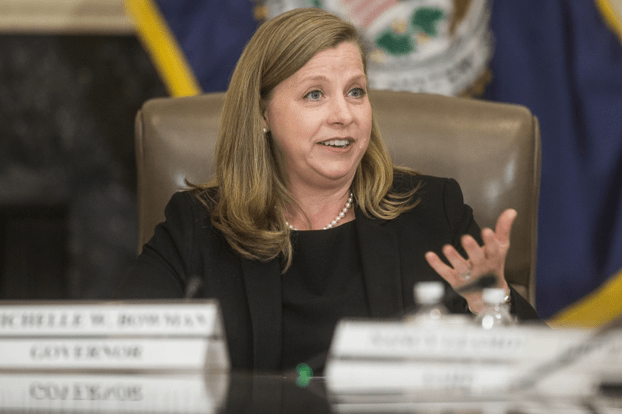
5-Michelle Bauman
Trump appointed her to the Federal Reserve Board during his first term as a specialist in community banking issues serving neighborhoods and small businesses. Trump also gave her a larger and more influential role within the Federal Reserve, appointing her as Vice Chair of Supervision earlier this year, according to Axios.
Bauman assumed her new position on June 9, 2025, for a term of four years, according to the Federal Reserve website. She served on the Federal Reserve Board of Governors in 2018 during Trump's first term. Before her appointment to the board, Bauman served as the Kansas State Banking Commissioner from January 2017 to November 2018, according to the Federal Reserve website.
In addition to her experience in the banking sector, Bauman worked in Washington, D.C. for Senator Bob Dole of Kansas between 1995 and 1996. She also served as a consultant for the U.S. House of Representatives Transportation and Infrastructure Committee and the Government Reform and Oversight Committee from 1997 to 2002.
Bauman earned her bachelor's degree in advertising and journalism from the University of Kansas and her law degree from Washburn University School of Law. She is a member of the New York State Bar Association. She is also married and has two children, according to the same source.
What are the main challenges facing the next Federal Reserve Chair?
Ongoing inflationary pressures are one of the biggest challenges, as inflation rates remain above the Federal Reserve's target of 2%. Core consumer price inflation fell slightly in September, but at 3%, which has stabilized over the past year, it is still well above the central bank's target.
On September 17, the Federal Reserve cut interest rates by 25 basis points for the first time during Trump's presidency, who had repeatedly called for a "strong" cut of at least 300 basis points during the current year.
Weak labor market poses a source of concern, with declining employment growth and slowing economic performance. Federal Reserve officials have confirmed that the labor market has slowed, yet the unemployment rate, which reached 4.3% in August, remains consistent with the bank's goal of "maximum employment."
The absence of complete data due to the shutdown of the U.S. government or lack of transparency makes monetary decision-making more complicated. The government shutdown has led to the delay or cancellation of many scheduled statistical releases, and understanding the state of the economy will be very difficult when data flows as usual; in its absence, the task is nearly impossible.
In conclusion, as the nominations and consultations continue, global markets will closely monitor the name of the next Federal Reserve Chair, given the direct impact of this position on capital flows, the dollar's value, and the global economy as a whole.
#FederalReserve #Federal_Reserve #BinanceSquareFamily #BinanceSquare #BinanceHerYerde