
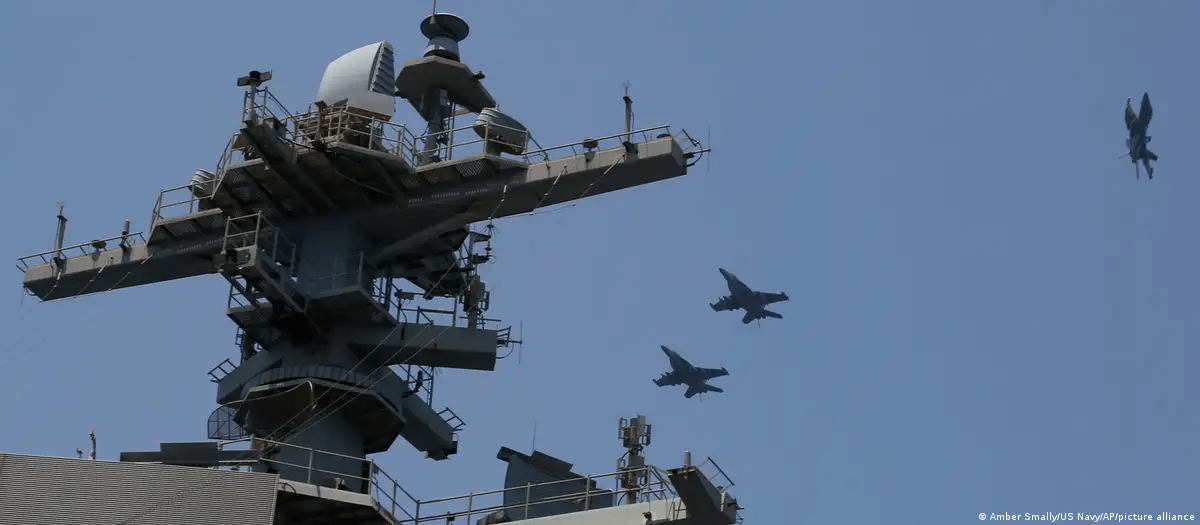
The U.S. war against Iran, which kicked off on February 28 under Operation 'Epic Fury', has cost the American treasury about $50 billion - nearly double the official figures provided by the Pentagon, CBS News reported on Thursday, April 30, citing U.S. officials.
The CFO of the U.S. Department of Defense, Jules Hurst, officially told Congress on April 29 that the figure stands at $25 billion, but sources from CBS News pointed out that it does not account for either destroyed or damaged equipment or the damage inflicted on American military bases.
Drones, ammunition, fuel
The largest expense item is ammunition, which needs to be constantly replenished. The losses of drones alone amounted to at least $720 million: American forces lost at least 24 MQ-9 Reaper reconnaissance-strike drones valued at around $30 million each.
Additional costs are tied to fuel, troop redeployment in the region, and the establishment of military infrastructure. The expenses are borne not only by the Pentagon but also by the U.S. Department of Homeland Security, noted senior advisor at the Center for Strategic and International Studies (CSIS) Mark Cancian. According to his assessment, rebuilding the depleted arsenals will take 'several years' - especially considering that even pre-war levels were deemed insufficient.
Congress demands answers
Democratic Senator Chris Coons called the official estimate of $25 billion obviously underestimated, pointing out that it does not include the costs of maintaining troops in the region for two months.
The question of the war's cost for ordinary Americans - considering the rise in prices for gasoline and food - was raised at the Senate Armed Services Committee hearings by Congressman Ro Khanna. Defense Secretary Pete Hegseth dodged a direct answer, suggesting that they consider 'what the cost would be if Iran were to acquire nuclear weapons.'
The cost of restoring and constructing military bases at the Pentagon is currently incalculable. 'We don't know what our future force configuration will be and what bases will need to be built,' Hurst admitted.
Blockade instead of negotiations
The hearings are taking place against the backdrop of discussions regarding a request for additional funding - according to Politico, the administration intends to request up to $200 billion from Congress. On April 28, Trump rejected Tehran's peace plan, which proposed opening the Strait of Hormuz in exchange for postponing negotiations on the nuclear program.
According to The Wall Street Journal, President Donald Trump has ordered preparations for a prolonged maritime blockade of Iran, aiming to strangle its economy through restrictions on oil exports.
Simultaneously, the possibility of resuming strikes using the latest hypersonic missiles Dark Eagle is being considered, as well as sending special forces to seize Iranian uranium stockpiles if Tehran does not make concessions.
#USIsraelStrikeIran , #FreedomOfNavigation , #ArmsTechnologyMarket
There can be a lot of news. News can be quite diverse.
There are many changes in the economies of states and politics, in high technology, as well as in financial and cryptocurrency markets. But our subscribers have the opportunity to stay informed about all the major market changes!!!
The main thing is that they no longer need to monitor dozens of information and news websites on their own. Everything is already gathered in a single feed here.
Enjoy the viewing, everyone!